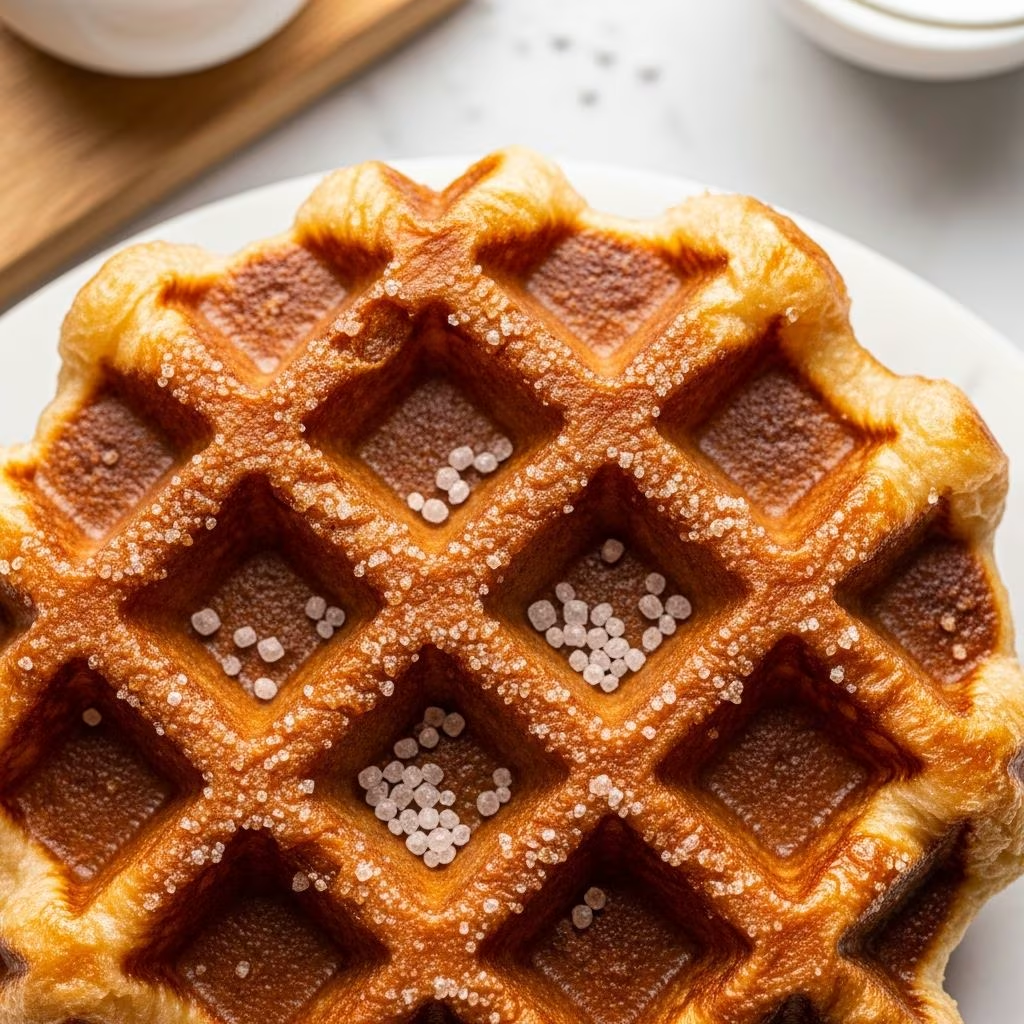
Belgian Liège waffles represent a sophisticated departure from ordinary breakfast fare, transforming simple ingredients into an indulgent delicacy that has captivated food enthusiasts worldwide. Unlike their lighter cousins, these waffles feature a distinctive brioche-inspired yeast dough enriched with butter and eggs, creating a tender crumb that contrasts beautifully with their defining exterior characteristic. The magic ingredient that sets these waffles apart is pearl sugar—irregular granules that refuse to dissolve during cooking, instead caramelizing into crispy, sweet clusters that deliver satisfying texture with every bite.
The appeal of Liège waffles extends beyond their superior taste profile. Street vendors throughout Belgium and Scandinavia have built entire businesses around these treats, selling them fresh from mobile waffle irons to crowds who queue specifically for their caramelized perfection. Once you understand the fundamental techniques behind their creation, you can replicate this European tradition in your own kitchen, impressing family and guests with an authentic culinary experience.
Understanding the Foundation: Dough Characteristics
The dough foundation distinguishes Liège waffles from standard waffle recipes. This yeast-based mixture resembles enriched brioche dough rather than simple pancake batter, incorporating substantial quantities of butter and eggs to develop richness and moisture retention. The yeast activation creates lift through fermentation rather than chemical leavening, producing a more complex flavor profile and superior crumb structure compared to conventional waffles.
Proper dough development requires understanding how each component contributes to the final product. The butter provides richness and helps create the tender interior, while eggs contribute structure and binding. Sugar feeds the yeast and adds subtle sweetness that complements rather than overwhelms. Salt enhances flavor development and regulates yeast fermentation, preventing excessive rise. Milk hydrates the flour and activates the yeast, creating the environment necessary for successful fermentation.
Temperature control proves critical throughout this process. Ingredients should reach room temperature before combining—this ensures even mixing and predictable fermentation rates. Cold ingredients slow yeast activation and produce inconsistent results, while excessively warm temperatures can damage yeast cells and accelerate fermentation beyond your control.
The Pearl Sugar Element: What Sets Them Apart
Pearl sugar exists in a unique category of baking ingredients, occupying the space between regular granulated sugar and coarse decorative sugars. These irregular white pearls are created through a specialized crushing and sifting process applied to large sugar blocks, producing fragments large enough to maintain their structural integrity during baking. Unlike granulated sugar, which dissolves into the dough, or superfine caster sugar, which incorporates seamlessly, pearl sugar resists both moisture and heat, remaining distinct throughout the cooking process.
The distinctive texture and appearance of pearl sugar transforms during waffle cooking. As the waffle maker’s heat reaches the dough surface, the sugar crystals undergo caramelization—a chemical transformation that produces the dark golden-brown exterior and creates those signature crunchy clusters that give Liège waffles their textural appeal. This caramelization delivers complex flavor notes beyond simple sweetness, incorporating subtle bittersweet elements reminiscent of toffee or burnt sugar.
Finding pearl sugar requires navigation beyond conventional supermarket baking aisles. Specialty baking supply stores, European import shops, and online retailers maintain inventory specifically for waffle enthusiasts and professional bakers. When purchasing, examine the granule size carefully—properly sized pearl sugar ranges from small pea-sized to lentil-sized particles. Oversized granules may not caramelize evenly, while undersized particles defeat the textural purpose.
For those unable to source authentic pearl sugar, creative substitutions exist with varying degrees of success. Crushed sugar cubes approximate the texture and behavior of pearl sugar, though they produce less consistent results. Some adventurous bakers report success with nib sugar or pearl couscous shaped from sugar, though these represent compromises rather than optimal solutions. The authentic ingredient truly produces superior outcomes.
Ingredient Selection and Preparation Strategy
Success with Liège waffles begins before you combine ingredients, requiring thoughtful selection and deliberate preparation. Each component influences the final result in measurable ways, making ingredient quality and condition essential considerations.
Flour Fundamentals
All-purpose flour provides the structure necessary for supporting the enriched dough’s weight while allowing tender crumb development. This intermediate protein content (approximately 10-12%) balances structure with tenderness—lower protein pastry flour would produce fragile dough prone to spreading, while higher protein bread flour would create excessive gluten development resulting in tough, chewy texture.
Flour measurement technique influences hydration ratios and dough consistency. Weight-based measurements (approximately 375-440 grams depending on recipe variations) provide greater accuracy than volume measures. If using volume measurements exclusively, spoon flour into measuring cups and level rather than scooping directly from the bag, which compacts flour and inflates measurements.
Butter Selection and Conditioning
Unsalted butter gives you complete control over salt levels and allows the subtle butter flavor to express itself without competing ingredients. Butter must reach genuine room temperature—not merely softened on the counter but actually pliable and spreadable without requiring pressure. Cold butter incorporates unevenly, creating streaks and inconsistent texture, while melted butter separates during mixing and compromises dough structure.
To achieve proper butter conditioning, remove from refrigeration 30-60 minutes before mixing, depending on your kitchen temperature. The properly tempered butter should yield easily to finger pressure while maintaining shape. You can accelerate this process by cutting butter into small cubes, increasing surface area exposure to room temperature air.
Eggs and Milk Temperature Control
Room temperature eggs blend seamlessly into butter and sugar, incorporating more evenly than cold eggs and producing superior emulsification. Cold eggs create separation in the dough, resulting in grainy texture and potentially incomplete incorporation. Place eggs in warm water for 5-10 minutes to raise their temperature before cracking.
Milk similarly contributes to successful fermentation when slightly warm (approximately 100-110°F or 37-43°C). Excessively hot milk damages yeast cells, preventing fermentation, while cold milk inhibits yeast activation. Use a quick-read thermometer for accuracy, or test temperature by dipping your clean finger—the liquid should feel comfortably warm without being hot.
Mixing and Initial Fermentation: Building the Foundation
The mixing stage establishes the dough structure and fermentation foundation. This process differs significantly from quick-method batters, requiring deliberate technique and patience.
Yeast activation: Dissolve yeast in warm milk and allow 5-10 minutes for activation. During this rest period, yeast cells become hydrated and begin reproducing, producing visible bubbles or foam on the surface. This visual confirmation indicates active yeast ready to ferment your dough.
Combining wet ingredients: In a stand mixer bowl, combine activated yeast mixture with sugar, butter, eggs, salt, and vanilla. Mix on low speed until these components integrate into a cohesive mixture. The butter breaks into smaller pieces, distributing evenly throughout the wet ingredients. This stage produces an emulsified base that will support flour incorporation.
Flour incorporation: Add flour gradually while mixing on medium-low speed, continuing for 8-10 minutes until dough pulls from bowl sides but remains perceptibly sticky. Adequate mixing develops gluten structure without overdeveloping, creating appropriate extensibility and elasticity. The dough should feel tacky rather than stiff, indicating proper hydration for this enriched yeast formula.
First rise management: Transfer dough to an oiled bowl, cover tightly with plastic wrap, and position in a warm, draft-free environment. Optimal fermentation temperature ranges from 75-80°F (24-27°C). Allow 2 hours or until dough visibly doubles in size. This timeframe varies based on room temperature and yeast viability—some kitchens may require 90 minutes, while others need 2.5 hours.
Sugar Integration and Cold Fermentation: Patience Yields Results
After the initial rise, the dough undergoes dramatic transformation through sugar incorporation and extended cold fermentation. This stage requires careful handling to preserve the yeast’s fermentation progress while distributing pearl sugar throughout the dough matrix.
Punch down the risen dough firmly but without aggressive kneading. This releases carbon dioxide accumulated during fermentation while redistributing yeast and nutrients. The dough collapses from approximately double its original volume to roughly its starting size.
Flatten the dough into a rough rectangle on a lightly floured surface. Distribute approximately half the pearl sugar across the surface, fold the dough in thirds (bottom third up, then top third over that), and press gently to compress. Rotate the dough 90 degrees and repeat this folding sequence with remaining pearl sugar. This lamination technique mimics croissant preparation, creating pockets of sugar distribution while gently incorporating the pearls without crushing them.
Form the pearl sugar-studded dough into a log approximately 12-14 inches long, then divide into 12 equal pieces (or according to your preferred waffle size). Shape each piece into a ball, then gently flatten into a disc approximately half an inch thick. Place discs on parchment paper, cover with lightly oiled plastic wrap, and refrigerate overnight or for up to 24 hours.
This extended cold fermentation accomplishes multiple objectives: it allows gluten to relax, making the shaped dough easier to cook without tearing; it provides additional fermentation time in a controlled environment, developing complex flavors through slow yeast activity; and it enables you to bake waffles over an extended period rather than completing all waffles in a single session. Chilled dough also cooks more evenly, as the exterior caramelizes before the interior over-expands.
Waffle Iron Selection and Preparation Techniques
Not all waffle makers suit Liège waffle preparation equally. Belgian waffle irons with deeper wells and larger chambers accommodate the enriched dough without overflow, while standard American-style waffle makers may prove too small or shallow for optimal results. Look for irons with adjustable heat settings—this control allows careful attention to caramelization without burning.
Proper iron conditioning prevents sticking and ensures even browning. Preheat the iron according to manufacturer specifications, typically 5-10 minutes at medium-high temperature. Brush the interior grid surfaces with oil or melted butter, coating crevices thoroughly. Non-stick spray works effectively, though actual oil produces superior results in some applications.
Temperature management requires experimentation with your specific iron. Begin at lower temperatures and gradually increase until sugar caramelizes to deep golden brown without charring. Higher temperatures caramelize sugar faster but risk burning exteriors before interiors cook through. Each iron behaves differently based on construction and age, requiring individual calibration.
Cooking Process and Texture Development
Remove dough discs from refrigeration 10-15 minutes before cooking, allowing partial warming without full room-temperature adjustment. Place one disc in the center of the preheated waffle iron and close firmly but without applying excessive force. Gentle pressure ensures even contact between dough and iron surfaces, promoting uniform cooking and caramelization.
Most Belgian waffle irons require 4-5 minutes cooking time, though this varies based on your specific equipment and temperature setting. The waffle is complete when it releases easily from the iron and exhibits deep golden-brown coloration, typically appearing darker than conventional waffles. The exterior should feel rigid and crispy when first removed, while the interior remains soft and bread-like.
Immediately transfer cooked waffles to a wire cooling rack rather than stacking on a plate. This prevents steam condensation from softening the crispy exterior. If serving multiple waffles simultaneously, keep finished waffles warm in a 200°F (93°C) oven on a wire rack or paper towel-lined baking sheet, allowing air circulation to maintain crispness.
Serving Suggestions and Flavor Enhancements
Liège waffles showcase their caramelized pearl sugar beauty best in their purest form—served warm with minimal accompaniments that complement rather than mask their inherent flavor. A light dusting of powdered sugar emphasizes elegance, while fresh whipped cream provides cooling contrast to warm waffles. Vanilla ice cream melts into warm crevices, creating an indulgent dessert interpretation.
For breakfast applications, a small dollop of Greek yogurt and fresh berries add nutritional balance and bright flavors. Maple syrup represents an optional addition for those preferring classic waffle accompaniments, though purists argue the pearl sugar’s caramelized sweetness eliminates this necessity.
Troubleshooting Common Challenges
| Challenge | Likely Cause | Solution |
|---|---|---|
| Dough sticks to waffle iron | Insufficient oiling or dough too warm | Apply generous oil coating; refrigerate dough longer |
| Waffles cook unevenly | Temperature too high or inconsistent iron contact | Reduce heat; ensure firm but gentle iron closure |
| Sugar doesn’t caramelize | Temperature too low or insufficient pearl sugar | Increase heat incrementally; verify pearl sugar amount |
| Waffles taste yeasty | Over-fermentation or excessive yeast | Reduce initial rise time or use less yeast |
| Dough overflows waffle iron | Too much dough per disc or excessive rise | Use smaller dough pieces; reduce cold fermentation time |
Frequently Asked Questions
Can I prepare dough in advance for busy mornings?
Yes, prepared dough discs can refrigerate for 24-48 hours or freeze for up to one month. Frozen dough requires no thawing—place frozen discs directly into the preheated waffle iron and add 1-2 minutes to cooking time. This makes Liège waffles surprisingly convenient for advance preparation.
What if I cannot find pearl sugar locally?
Online retailers specializing in baking supplies maintain consistent inventory. European import shops and bakery supply stores typically stock pearl sugar year-round. While crushed sugar cubes provide textural approximation, they lack the consistency and appearance of authentic pearl sugar.
How do I store leftover waffles?
Room-temperature storage in an airtight container maintains acceptable quality for one day. For longer storage, refrigerate in airtight containers for up to three days or freeze on a parchment-lined tray before transferring to freezer bags for up to one month. Reheat in a toaster oven at 300°F (149°C) for 5-10 minutes, restoring crispness without overdrying.
Can I make these waffles without a stand mixer?
Yes, a hand mixer with dough attachments works effectively, though mixing requires greater manual effort. Mixing by hand with a wooden spoon is possible but labor-intensive and produces less consistent results due to difficulty developing adequate gluten structure without mechanical agitation.
What causes excessive spreading during cooking?
Overly warm dough or excessive initial rise causes aggressive spreading in the waffle iron. Ensure proper refrigeration before cooking and monitor fermentation time carefully during the initial rise stage.
References
- Authentic Belgian Waffle Recipe – The Kitchen Whisperer — The Kitchen Whisperer. 2020-10-21. https://www.thekitchenwhisperer.net/2020/10/21/authentic-belgian-liege-waffles-with-caramelized-pearl-sugar/
- Belgian Liège Waffles (with pearl sugar) – Ana’s Baking Chronicles — Ana’s Baking Chronicles. https://www.anasbakingchronicles.com/belgian-liege-waffles/
- Homemade Belgian Liège Waffles (with Pearl Sugar) — Snappy Gourmet. https://snappygourmet.com/how-to-make-homemade-belgian-liege-waffles/
- Liege Waffles Recipe – The Food Charlatan — The Food Charlatan. 2013-11-06. https://thefoodcharlatan.com/liege-waffles-with-pearl-sugar/
- Belgian Pearl Sugar Liege Waffles – Lars Own — Lars Own. https://larsown.com/recipes/lars-own-liege-sugar-waffles/
- Belgian Liège Waffles – Dish ‘n’ the Kitchen — Dish ‘n’ the Kitchen. https://dishnthekitchen.com/belgian-liege-waffles/