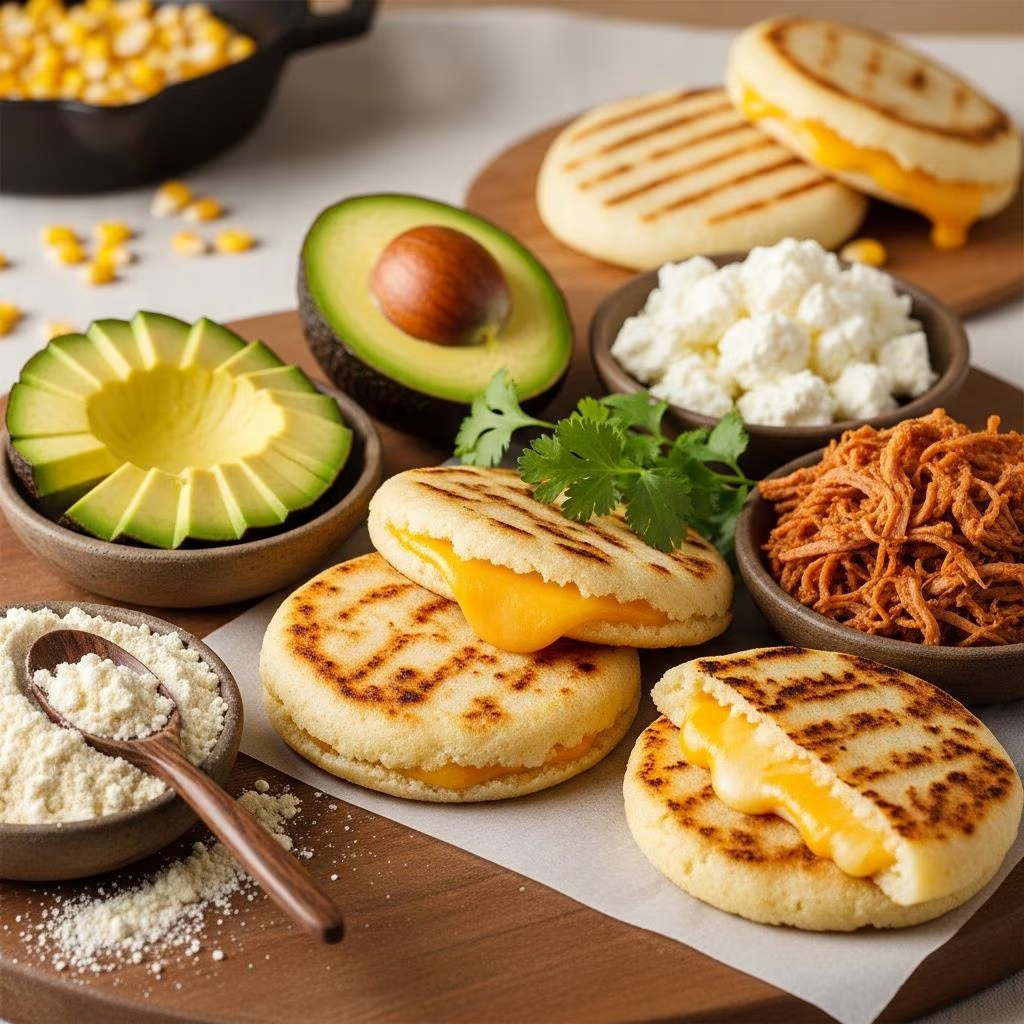
Arepas are versatile cornmeal patties central to Venezuelan and Colombian cuisines, enjoyed plain, grilled, or stuffed with endless fillings. These gluten-free delights offer a chewy interior and crispy exterior, making them ideal for any meal.
The Origins and Cultural Significance of Arepas
Arepas trace their roots to indigenous peoples of present-day Venezuela and Colombia, who ground corn into meal long before European contact. Over centuries, they evolved into a daily staple, symbolizing comfort and community. In Venezuela, they’re often called the country’s “daily bread,” cooked on a traditional griddle known as a budare. Colombian versions frequently incorporate cheese, adding a gooey twist. Today, arepas unite families and represent Latin American heritage worldwide.
Their simplicity—typically just corn flour, water, and salt—belies their adaptability. From street food vendors to home kitchens, arepas adapt to local tastes, filled with meats, cheeses, beans, or vegetables. This enduring popularity stems from their nutritional profile: corn provides fiber and energy, while being naturally gluten-free.
Essential Ingredients for Authentic Arepas
The key to great arepas lies in quality ingredients. The cornerstone is masarepa, a precooked cornmeal distinct from corn flour or masa harina. Brands like Goya or P.A.N. ensure the right texture—moist yet moldable.
- Masarepa: 2 cups (white or yellow for subtle flavor variations).
- Warm water: 2-2.5 cups, to hydrate the flour without cooking it prematurely.
- Salt: 1-2 teaspoons, for flavor enhancement.
- Optional add-ins: Butter, oil, or shredded cheese for richness.
Avoid substitutes; regular cornmeal won’t yield the same pliability. Warm water is crucial—it activates the starch for a smooth dough.
Step-by-Step Guide to Making Classic Arepas
Perfect arepas require patience and technique. Start with a large bowl: dissolve salt in warm water, then gradually whisk in masarepa to prevent lumps. Knead briefly until a soft, non-sticky dough forms. Let it rest 5-10 minutes; this hydrates the flour fully.
- Portion the dough: Divide into 6-10 balls, about 65g each for uniform size.
- Shape patties: Flatten each into 1/2-inch thick disks, 3-4 inches wide. Wet hands prevent sticking.
- Cook: Heat a greased cast-iron skillet or griddle over medium-high. Fry 4-5 minutes per side until golden. For fluffier interiors, bake at 410°F for 10 minutes post-frying.
Result: Crispy outside, steamy inside. Oil sparingly for health-conscious versions.
Variations: Cheesy, Sweet, and Vegan Arepas
Customize arepas endlessly. For Colombian cheese arepas (arepas con queso), knead in shredded mozzarella or Jarlsberg before shaping. Stuff extra slices inside for melty centers.
Vegan options shine with just three ingredients: masarepa, water, salt. They’re naturally plant-based and pair with bean or veggie fillings. Experiment with yellow masarepa for a sweeter note.
For gourmet twists:
| Variation | Key Addition | Cook Time |
|---|---|---|
| Cheesy | 1/4 cup shredded cheese + slices | 2-3 min/side |
| Sweet Potato | Mashed sweet potato in dough | 5 min/side + bake |
| Herbed | Chopped cilantro or scallions | 4 min/side |
Creative Filling Ideas for Every Meal
Arepas truly shine when split and stuffed. Classic Venezuelan reina pepiada features shredded chicken, avocado, and mayo. Colombian huesitos include eggs and cheese.
- Breakfast: Scrambled eggs (huevos pericos), avocado, fresh cheese.
- Lunch: Black beans, carnitas or chipotle chicken, pickled onions, green sauce.
- Dinner: Pulled pork, sweet potatoes, salsa.
- Vegan: Refried beans, plantains, guacamole, dairy-free cheese.
Slice horizontally post-cooking, steam briefly to open pockets, then layer fillings. Pro tip: Balance flavors—creamy, tangy, spicy.
Nutrition and Health Benefits
Arepas are gluten-free, vegan-friendly, and nutrient-dense. A basic arepa (2 cups masarepa) yields about 200 calories per patty, with 40g carbs, 3g protein, and fiber from corn. Cheese versions add calcium and protein.
Health perks:
- High in resistant starch for gut health.
- Low glycemic index for steady energy.
- Customizable for low-fat or high-protein diets.
Opt for minimal oil frying to keep them light.
Troubleshooting Common Arepas Problems
Cracking edges? Dough too dry—add water teaspoon by teaspoon. Dense texture? Over-knead or insufficient rest. Soggy? Cook hotter, longer.
- Dough sticks: Wet hands and work surface.
- Not crispy: Use cast-iron; don’t overcrowd pan.
- Raw inside: Finish in oven at 400°F.
Storage, Freezing, and Reheating Tips
Cooked arepas store in airtight containers up to 3 days in fridge or freeze (unfilled) for 3 months. Reheat in a dry skillet or oven to restore crispness—microwaving makes them chewy. Dough balls freeze well; thaw before shaping.
Pairing Arepas with Drinks and Sides
Complement arepas with Colombian coffee, fresh juices like papelón con limón, or beer. Sides: Plantain chips, ensalada de coco, or yuca fries elevate the meal.
FAQs
What is the difference between Venezuelan and Colombian arepas?
Venezuelan arepas are plainer, often split for fillings; Colombian ones frequently include cheese in the dough.
Can I make arepas without masarepa?
No—masarepa’s precooking process is essential for texture. Substitutes like corn flour result in gritty or crumbly patties.
Are arepas gluten-free?
Yes, when made with pure masarepa and no wheat add-ins.
How do I know when arepas are done?
Golden brown exterior and hollow sound when tapped. Internal temp should reach 200°F.
Best oil for frying arepas?
Neutral oils like vegetable or avocado; butter for cheesy versions adds flavor.
With practice, arepas become a kitchen staple. Experiment freely—their forgiving nature welcomes creativity.
References
- Venezuelan Arepas – Healthier Steps — Healthier Steps. 2023-05-15. https://healthiersteps.com/venezuelan-arepas/
- Arepas – A Cozy Kitchen Recipe Colombian-Style Arepas — A Cozy Kitchen. 2022-08-10. https://www.acozykitchen.com/cheesy-arepas
- Arepas with Carnitas and Sweet Potato – Pinch of Yum — Pinch of Yum. 2021-11-20. https://pinchofyum.com/arepas
- How to Make Venezuelan Arepas – Familia Kitchen — Familia Kitchen. 2023-02-14. https://familiakitchen.com/how-to-make-arepas/
- How To Make Arepas + Filling Ideas – Elavegan — Elavegan. 2024-01-08. https://elavegan.com/how-to-make-arepas/