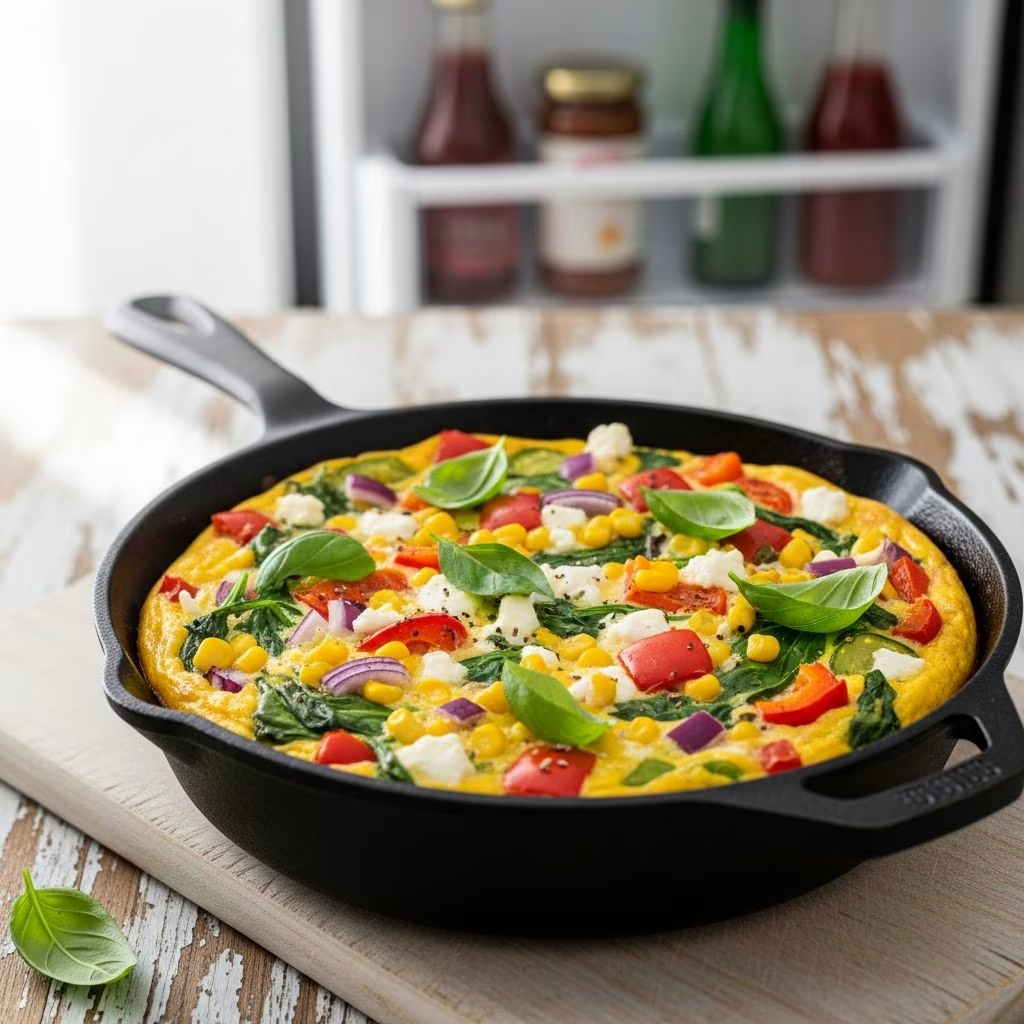
The frittata stands as one of the most versatile dishes in home cooking, offering a blank canvas for creativity while tackling the common problem of food waste. At its core, this Italian-inspired egg bake combines beaten eggs with an array of fillings, baked or cooked on the stovetop to golden perfection. What makes it truly special is its ability to absorb whatever lingers in your refrigerator—wilted greens, half-used cheeses, stray bits of cooked protein, and more. In this extensive guide, we’ll explore everything from foundational techniques to inventive combinations, ensuring you can whip up a satisfying meal with minimal effort and maximum flavor.
Why Frittatas Are Your Kitchen’s Best Friend
Frittatas shine in their simplicity and adaptability. Unlike quiches, they skip the crust, making them quicker to prepare and lighter on calories. They’re ideal for any meal: a protein-packed breakfast, a light lunch, or a casual dinner alongside a green salad. Nutritionally, eggs provide high-quality protein and essential nutrients like choline for brain health, while vegetables add fiber, vitamins, and antioxidants. According to the USDA, Americans waste about 30-40% of their food, much of it produce that could find new life in a frittata. By using leftovers, you not only save money but also contribute to sustainability efforts.
Beyond practicality, frittatas encourage culinary experimentation. The egg base binds everything together, mellowing bold flavors and elevating humble ingredients. Whether you’re a beginner cook or a seasoned home chef, mastering the frittata opens doors to endless meal possibilities without recipes.
Mastering the Essential Ingredients
A great frittata starts with quality basics. Eggs form the foundation—use 8-12 large ones for a standard 10-12 inch skillet serving 4-6 people. For creaminess, whisk in a splash of milk, cream, or even yogurt (about 1/4 cup per dozen eggs). Season generously with salt, pepper, and herbs like thyme or chives for depth.
The magic happens with fillings. Aim for 2-3 cups total, a mix of vegetables (1.5-2 cups) and proteins/cheeses (0.5-1 cup). Sauté fillings first to remove excess moisture, preventing a soggy frittata. Here’s a breakdown:
- Vegetables: Bell peppers, onions, zucchini, spinach, broccoli, mushrooms, tomatoes, or potatoes. Chop into bite-sized pieces; denser veggies like potatoes need par-cooking.
- Proteins: Ham, bacon, sausage, smoked salmon, tofu, or chickpeas. Use pre-cooked to save time.
- Cheeses: Cheddar, feta, goat cheese, mozzarella, or parmesan. Grate or crumble for even melting.
- Flavor Boosters: Garlic, herbs (basil, dill, rosemary), spices (paprika, cumin), or sun-dried tomatoes.
Pro tip: Balance textures and flavors—crisp veggies with creamy cheese, tangy pickles with rich meats.
Step-by-Step Cooking Techniques
There are two primary methods: stovetop-to-oven (foolproof for even cooking) and fully stovetop (quicker, no oven needed). Both yield excellent results.
Stovetop-to-Oven Method
- Preheat oven to 375°F (190°C). Heat 2 tbsp oil or butter in a 10-12 inch oven-safe skillet over medium heat.
- Sauté veggies and proteins for 8-10 minutes until softened and golden. Add garlic/herbs in the last minute.
- Whisk eggs with dairy and seasonings; pour over fillings. Cook 2-3 minutes until edges set.
- Sprinkle cheese on top; transfer to oven. Bake 10-15 minutes until puffed and just set (center should jiggle slightly).
- Broil 1-2 minutes for a browned top, if desired. Cool 5 minutes before slicing.
Fully Stovetop Method
Ideal for smaller frittatas or no-oven setups. Follow steps 1-3 above, then cover skillet with a lid or foil. Cook on low 10-12 minutes until set. For a crisp top, invert onto a plate and slide back into skillet for 1-2 minutes.
Use a non-stick or well-seasoned cast iron skillet to avoid sticking. Test doneness by inserting a knife in the center—it should come out clean.
Seasonal and Themed Frittata Ideas
Draw inspiration from what’s abundant. Here are original combinations:
| Theme | Key Ingredients | Flavor Profile |
|---|---|---|
| Spring Garden | Asparagus, peas, leeks, feta, dill | Fresh, bright, herbaceous |
| Summer BBQ | Corn, zucchini, bacon, cheddar, BBQ sauce drizzle | Smoky, sweet, hearty |
| Fall Harvest | Sweet potatoes, kale, sausage, gouda, sage | Earthy, comforting, savory |
| Winter Mediterranean | Artichokes, olives, spinach, goat cheese, oregano | Tangy, briny, robust |
| Meatless Monday | Mushrooms, peppers, black beans, cotija, cilantro | Umami-rich, plant-powered |
Customize endlessly: swap in whatever you have. For spice lovers, add chili flakes or harissa.
Advanced Tips for Frittata Perfection
To elevate your game:
- Temperature Control: Low and slow prevents rubbery eggs. Never boil.
- Moisture Management: Salt veggies beforehand to draw out water, or pat dry after washing.
- Cheese Strategy: Mix some into eggs for even distribution, top with the rest for a melty crust.
- Add-Ins Timing: Delicate herbs at the end; hearty roots first.
- Scaling: For 2 people, halve ingredients and use an 8-inch skillet; bake time reduces to 8-10 minutes.
Common pitfalls: Overcooking (eggs continue cooking off-heat) or overcrowding (stick to the 2-3 cup filling rule).
Storage, Reheating, and Make-Ahead Strategies
Frittatas are meal-prep superstars. Cool completely, then store in an airtight container in the fridge for up to 4 days. Freeze slices wrapped in foil for 2-3 months; thaw overnight before reheating.
Reheat gently: microwave (covered, 1-2 minutes), oven (350°F for 10 minutes), or skillet (low heat, covered). Serve cold in sandwiches or salads for picnics.
Make-ahead: Prep fillings a day early. Assemble and bake fresh for best texture.
Nutritional Breakdown and Health Benefits
A 1/6 slice of a veggie-packed frittata offers ~250 calories, 18g protein, 15g fat, 10g carbs (varies by fillings). Eggs support muscle repair; veggies boost immunity. Opt for olive oil and whole-milk dairy for heart-healthy fats. Per Harvard T.H. Chan School of Public Health guidelines, such balanced meals aid weight management and reduce chronic disease risk.
Frequently Asked Questions
Can I make a frittata without an oven?
Yes! Use the stovetop method with a lid for even cooking.
What if I don’t have an oven-safe skillet?
Transfer to a baking dish; increase bake time by 5 minutes.
Is it safe to use day-old leftovers?
Absolutely, as long as they’re not spoiled. Sautéing kills most bacteria.
How do I make it dairy-free?
Swap milk for plant-based alternatives like almond or oat milk; use vegan cheese.
Can frittatas be sweet?
Experiment with fruit like apples, cinnamon, and maple syrup for a brunch twist.
Conclusion: Embrace the Frittata Lifestyle
Incorporating frittatas into your routine transforms fridge foraging into an art form. This dish embodies resourceful cooking, delivering nourishment and joy with every slice. Next time you’re staring at questionable produce, grab those eggs and get cracking—you’ll be amazed at the delicious results. Experiment boldly, waste less, and savor the satisfaction of a home-cooked triumph.
References
- Food Waste FAQs — United States Department of Agriculture. 2024-01-15. https://www.usda.gov/foodwaste/faqs
- Egg Nutrition Overview — USDA FoodData Central. 2023-06-01. https://fdc.nal.usda.gov/fdc-app.html#/food-details/171287/nutrients
- Healthy Eating Plate — Harvard T.H. Chan School of Public Health. 2025-02-10. https://www.hsph.harvard.edu/nutritionsource/healthy-eating-plate/
- Food Waste Reduction Strategies — United Nations Environment Programme. 2024-11-20. https://www.unep.org/resources/report/food-waste-index-report-2024