A strawberry milkshake represents one of the most accessible yet satisfying frozen desserts anyone can prepare at home. Unlike complex recipes requiring specialized equipment or rare ingredients, a quality strawberry shake needs only a handful of pantry staples and a blender. What distinguishes an exceptional milkshake from a mediocre one, however, involves understanding how to select the right ingredients, balance proportions, and execute proper blending techniques.
Understanding Your Foundation Ingredients
The core components of any strawberry milkshake remain consistent, but the quality and type of each ingredient significantly impact the final product. Rather than viewing these elements as interchangeable commodities, recognizing their individual roles creates a framework for making intentional choices that elevate your shake.
The Role of Ice Cream in Structure and Creaminess
Ice cream serves as more than just a sweetening agent—it functions as the structural backbone of your milkshake, providing body, texture, and that signature creamy mouthfeel. The fat content in ice cream, typically between 14-17% for premium varieties, emulsifies the mixture and prevents it from becoming watery as the ice cream melts during blending. Most recipes rely on vanilla ice cream as the neutral base, allowing fresh strawberry flavor to remain the primary taste note. However, using strawberry-flavored ice cream can intensify the berry character when you prefer a more pronounced strawberry profile. The quantity of ice cream directly determines thickness—three cups creates a spoonable shake requiring a spoon, while two cups yields a drinkable consistency suitable for a straw.
Milk Selection and Consistency Control
The type of milk you select fundamentally affects both mouthfeel and consistency. Whole milk produces the richest, most indulgent shake due to its higher fat content, which contributes to perceived creaminess and smoothness. Lower-fat alternatives like 2% or skim milk result in thinner shakes that require less overall liquid to achieve proper consistency. For those avoiding dairy, plant-based milks like oat or almond milk function adequately, though they may require adjusting quantities slightly since they lack the fat-based emulsifying properties of dairy milk. The standard ratio begins with half a cup of milk per serving, with flexibility to add more liquid if your shake becomes too thick or reduce it if the mixture seems too thin.
Fresh Versus Frozen Strawberries: Making Your Choice
The strawberry selection influences both flavor intensity and practical blending considerations. Fresh, ripe strawberries deliver superior flavor because their natural sugars provide inherent sweetness without requiring additional sugar or syrups, simplifying the ingredient list. Fresh berries must be hulled, rinsed, and sliced into smaller pieces before blending, adding minimal prep time. Frozen strawberries offer convenience and consistent availability year-round, functioning equally well in milkshakes when mostly thawed before blending. Some recipes specifically recommend frozen berries because they’re often picked at peak ripeness and frozen immediately, potentially containing comparable flavor to fresh berries purchased during off-season months.
Enhancement Through Vanilla Extract and Optional Additions
Vanilla extract adds subtle depth without overwhelming the strawberry character, typically requiring only half a teaspoon to one teaspoon depending on recipe proportions. Almond extract provides an alternative that creates interesting complexity when used sparingly. Beyond these traditional enhancements, heavy cream can be incorporated alongside milk to create an ultra-luxurious texture, though this remains optional for those seeking lighter results.
The Science Behind Proper Blending Technique
Understanding blending mechanics prevents common mistakes that result in either unpleasantly thick, chunky shakes or watery, deflated drinks that lack body. The sequence in which you add ingredients, the duration of blending, and the power setting all influence outcomes.
Layering Ingredients for Optimal Blending
Beginning with sliced strawberries at the blender bottom creates a foundation that breaks down effectively as the blades start rotating. This approach distributes fruit pieces more evenly throughout the final mixture compared to adding berries last. Adding ice cream and milk afterward ensures they can coat and lubricate the fruit pieces as blending commences. Some recipes suggest processing strawberries with a small portion of milk first, creating a fruit purée before introducing the ice cream and remaining liquid. This method proves particularly effective when using frozen berries that benefit from initial breakdown before mixing with ice cream.
Blending Duration and Texture Development
Over-blending represents a common pitfall that results in a drink becoming overly thin as air incorporates and the ice cream over-melts. Most recipes recommend blending for merely 10-12 seconds after all ingredients combine, resulting in smooth texture while maintaining thickness. If your shake appears too chunky after this duration, pulse the blender 2-3 times rather than running it continuously. Conversely, if the shake seems too thick, add milk in quarter-cup increments and pulse briefly between additions until reaching your preferred consistency. This cautious approach prevents accidentally over-thinning your shake.
Pre-Preparation Methods That Enhance Results
Several preparatory steps, though optional, meaningfully improve the drinking experience and prevent issues like rapid melting.
The Benefit of Chilled Serving Glasses
Freezing the glasses you’ll serve shakes in represents an underutilized technique that maintains temperature longer and prevents unnecessary melting during consumption. Simply place glasses in the freezer for 10-15 minutes before blending your shake. This simple step demonstrates visible benefits, particularly during warm weather consumption.
Softening Ice Cream to Optimal Temperature
Using ice cream directly from the freezer often results in chunks that resist blending, creating texture inconsistencies. Allowing ice cream to sit at room temperature for 3-5 minutes creates a slightly softened state that blends smoothly without becoming runny. Finding this balance point—soft enough to blend easily but firm enough to maintain structure—ensures superior results.
Creating Flavor Variations Beyond Traditional Strawberry
While the classic strawberry milkshake deserves appreciation, understanding how to incorporate complementary flavors expands your repertoire and prevents monotony.
Chocolate Integration for Sophisticated Sweetness
Chocolate and strawberry represent a classic pairing that elevates a basic shake into something more refined. Melted chocolate can be drizzled into the blender during the final seconds of blending or swirled into the finished shake before serving. This approach prevents chocolate from overwhelming delicate strawberry notes while creating visual appeal through contrasting colors.
Adjusting Sweetness Levels
Fresh, ripe strawberries typically provide sufficient natural sweetness, eliminating the need for added sugar in most recipes. However, less-flavorful berries or personal preference may warrant additions. Sugar should be added in small increments—beginning with one tablespoon and tasting before adding more—to prevent an overly sweet, cloying result. Strawberry syrup can replace sugar, intensifying berry flavor while contributing sweetness.
Serving Strategies and Presentation
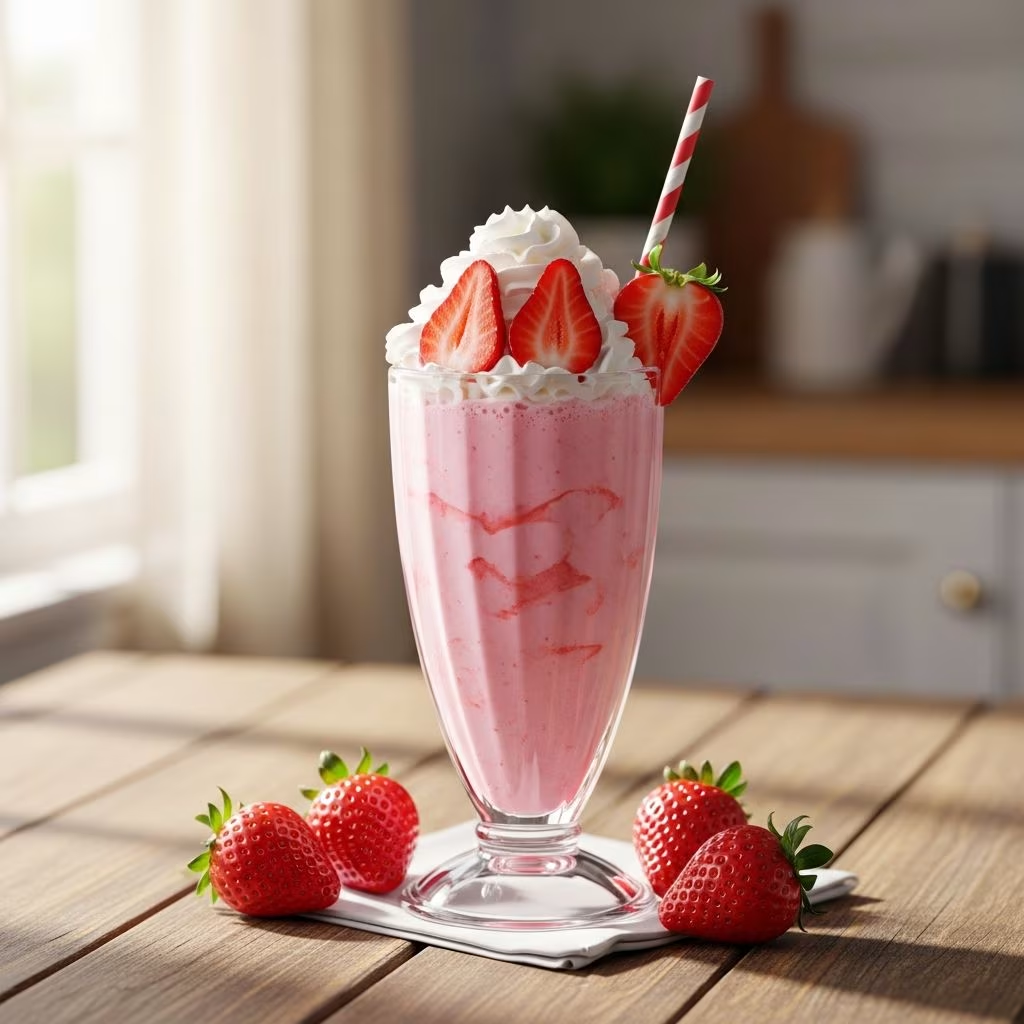
The moment between blending and consuming represents the critical window for optimal texture and temperature. Serving immediately after blending ensures maximum thickness and coldness. Transferring to pre-chilled glasses further extends this optimal window. Toppings like whipped cream and fresh strawberry slices add visual appeal and textural contrast, though they remain entirely optional for those preferring simplicity.
Troubleshooting Common Issues
| Problem | Cause | Solution |
|---|---|---|
| Shake too thin/watery | Excessive milk or over-blended | Add more ice cream in small increments or reduce blending time in future batches |
| Shake too thick/difficult to drink | Insufficient milk or too much ice cream | Add milk by quarter-cup increments and pulse gently |
| Unpleasant chunky texture | Inadequate blending or frozen berries not thawed | Partially thaw frozen berries before use; blend longer but avoid over-blending |
| Weak strawberry flavor | Using poor-quality or off-season berries | Use frozen berries picked at peak ripeness or add small amount of strawberry syrup |
| Shake melts too quickly | Warm serving glasses or room-temperature ingredients | Freeze serving glasses and allow ice cream to soften rather than fully melt beforehand |
Frequently Asked Questions
Can I make strawberry milkshakes dairy-free?
Yes, plant-based milks like oat, almond, or coconut milk substitute for dairy milk successfully. Dairy-free ice cream or frozen yogurt replaces traditional ice cream, though results may vary slightly in texture depending on the specific product chosen.
How far in advance can I prepare ingredients?
Fresh strawberries can be hulled, washed, and refrigerated for up to two days before blending. Allowing them to return to room temperature for a few minutes before blending improves blending consistency.
What ratio of ingredients works best?
A general starting point uses 2-3 cups ice cream per 2 servings, with 2 cups fresh or frozen strawberries and 0.5-1 cup milk, adjusting based on desired thickness.
Is a regular blender sufficient, or do I need a high-powered version?
A standard household blender handles strawberry milkshakes effectively. High-powered blenders provide advantages when dealing with frozen ingredients but aren’t necessary for this application.
How do I store leftover milkshake?
Ideally, consume immediately for optimal texture. If storage becomes necessary, refrigerate in an airtight container for up to 4 hours, understanding that separation and textural changes will occur as ingredients settle.
References
- Strawberry Milkshake Recipe — Tastes of Lizzy T. 2024. https://www.tastesoflizzyt.com/strawberry-milkshake/
- Strawberry Milkshake Recipe — Rachel Cooks. 2024. https://www.rachelcooks.com/homemade-strawberry-milkshake/
- Chocolate Covered Strawberries Milkshake Recipe — Sarah’s Cucina Bella. 2016. https://sarahscucinabella.com/2016/02/12/chocolate-covered-strawberries-milkshake-recipe/
- Strawberry Milkshake — The Recipe Critic. 2024. https://therecipecritic.com/strawberry-milkshake/
- Best Ever Homemade Strawberry Milkshake Recipe — Flour On My Fingers. 2024. https://flouronmyfingers.com/strawberry-milkshake-recipe/
- Easy Strawberry Milkshake — Meatloaf and Melodrama. 2024. https://www.meatloafandmelodrama.com/easy-strawberry-milkshake/