Introduction to Elevated Milkshake Craftsmanship
The strawberry milkshake represents one of the most approachable yet rewarding beverages to prepare in a home kitchen. While the concept appears deceptively simple, creating a truly exceptional version requires understanding the interplay between ingredient selection, proportions, and preparation technique. This guide explores the nuances that transform a basic blended drink into a restaurant-quality experience that delights the palate and satisfies cravings for indulgence.
The allure of a premium strawberry milkshake lies in its versatility and accessibility. Whether served as a morning refreshment, afternoon treat, or elegant dessert, this beverage adapts to various occasions while maintaining its core appeal. Understanding the fundamental principles of milkshake construction empowers home cooks to experiment confidently and develop preferences aligned with their taste sensibilities.
Selecting and Preparing Your Base Ingredients
Choosing Quality Ice Cream
The foundation of any exceptional milkshake begins with premium ice cream. The base dairy product contributes not only creaminess but also flavor depth and overall texture quality. Full-fat vanilla ice cream serves as the gold standard because it provides richness without overwhelming the strawberry flavor profile. The vanilla undertones complement berry notes naturally, creating harmonious complexity that enhances rather than masks the primary ingredient.
When shopping for ice cream, prioritize products with shorter ingredient lists and higher cream percentages. Premium brands typically contain more milk fat and fewer stabilizers, resulting in superior blending characteristics and smoother mouthfeel. The ice cream should be stored at optimal freezing temperature to maintain structural integrity during blending, preventing premature melting that compromises texture.
Fresh Versus Frozen Strawberries
Both fresh and frozen strawberries produce excellent results, though each offers distinct advantages. Fresh strawberries, available during peak season, provide vibrant color, delicate flavor notes, and appealing texture when partially visible in the final beverage. Their natural juiciness contributes subtle complexity that enhances the overall drinking experience.
Frozen strawberries offer year-round availability and convenience while maintaining nutritional integrity and concentrated flavor. Since freezing preserves berries at peak ripeness, frozen varieties often deliver more consistent taste profiles than fresh specimens that may have traveled extensively. Additionally, frozen strawberries require no additional preparation and integrate smoothly into blended mixtures. For maximum flavor impact, avoid strawberry products containing added sugar or syrups, which compromise the drink’s balance.
Milk Selection and Ratios
The milk component requires careful consideration because it directly influences consistency and drinkability. Whole milk produces the most luxurious texture with optimal fat content that enhances creaminess and mouthfeel. The higher milk fat percentage creates a coating sensation on the palate that distinguishes premium beverages from thinner, less satisfying versions. If dietary preferences preclude whole milk consumption, two-percent milk serves as a reasonable alternative, though some richness diminishes in the final product.
Plant-based milk alternatives including oat, coconut, and almond varieties accommodate various dietary requirements while introducing nuanced flavor profiles. Oat milk particularly complements strawberry well, adding subtle nuttiness that amplifies complexity. The general principle involves using minimal milk to maintain thickness while ensuring the mixture reaches blendable consistency. Typically, one-third cup of milk per serving prevents excess liquidity that undermines the indulgent character of the finished beverage.
Mastering the Blending Process
Ingredient Sequencing and Timing
Professional blending technique significantly impacts final texture and ingredient integration. The optimal sequence begins by placing strawberries directly into the blender jar. This positioning allows berries to break down and release their natural juices before ice cream introduction, establishing a strawberry-forward flavor foundation. Adding milk follows, creating a liquid medium that facilitates even berry distribution.
After the initial combination of strawberries and milk, blend for approximately thirty seconds to one minute. This timeframe allows complete strawberry disintegration while avoiding oxidation that can diminish color vibrancy and introduce undesirable metallic notes. Once strawberries achieve smooth integration, add ice cream scoops directly to the prepared mixture.
The final blending phase, lasting thirty to sixty seconds, transforms the combination into a unified, creamy beverage. During this stage, resistance will be noticeable as the dense ice cream incorporates; this indicates proper progress rather than mechanical difficulty. If blending becomes laborious, briefly stop, use a tamper tool to push mixture toward the blades, and resume blending. Avoid extended blending that incorporates excessive air, which creates an undesirably thin, foamy consistency.
Achieving Optimal Texture
The target consistency should present slight resistance when drinking from a straw, requiring gentle suction without requiring excessive force. This texture indicates proper air incorporation and ingredient integration. If the mixture appears too thick, introduce additional milk in quarter-cup increments, blending briefly between additions until the desired consistency emerges. Conversely, if the beverage seems too thin, add additional frozen strawberries or a supplementary ice cream scoop, blending thoroughly until proper thickness returns.
Enhancement Techniques and Flavor Amplification
Aromatics and Extracts
Vanilla extract, when included in modest quantities of approximately one tablespoon per serving, provides subtle depth without creating artificial undertones. The vanilla compounds work synergistically with strawberry’s delicate flavor profile, enhancing natural sweetness while adding complexity. Select pure vanilla extract rather than imitation varieties, as the superior flavor justifies the additional cost in a beverage this simple.
Sweetening Considerations
Quality strawberries possess natural sweetness that frequently requires no supplementary sugar. However, if using less flavorful specimens or preferring additional sweetness, introduce a strawberry simple syrup in measured quantities. This specialized syrup maintains thin consistency that blends seamlessly while concentrating strawberry flavor. Create this syrup by combining equal parts sugar and water, heating until sugar dissolves, then adding fresh strawberry puree and simmering for several minutes before cooling completely.
Presentation and Topping Strategies
Whipped Cream Integration
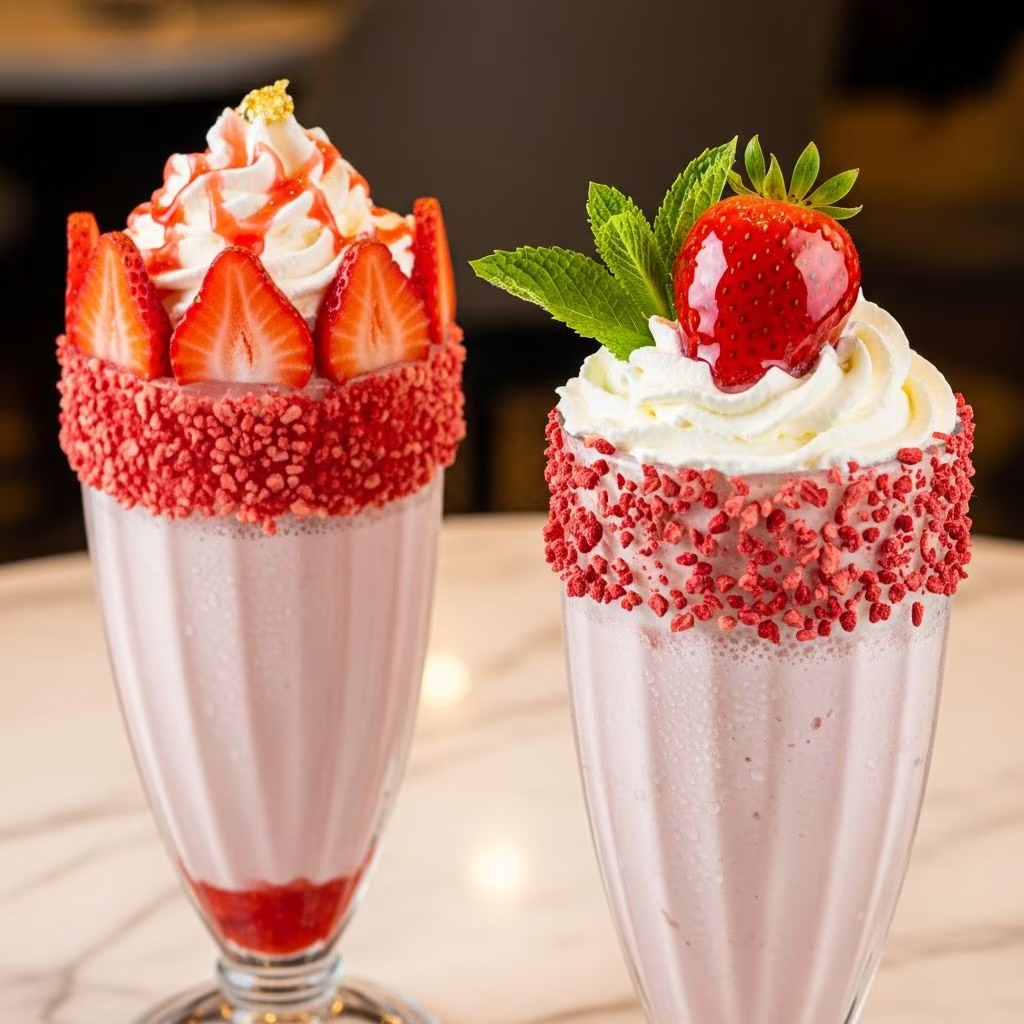
Topping with whipped cream elevates the visual appeal and textural experience. Homemade whipped cream, prepared by whipping heavy cream with minimal powdered sugar, provides superior flavor and texture compared to commercial alternatives. For a sophisticated presentation, layer the shake and whipped cream by pouring portions alternately, creating distinct strata visible through clear glassware.
An elegant technique involves pouring approximately three ounces of shake into a sixteen-ounce glass, topping with a substantial dollop of whipped cream, then repeating this pattern. This method creates visual interest while ensuring each sip combines cool shake with the richness of whipped cream.
Garnish Options
Fresh strawberries provide the most traditional garnish, offering visual confirmation of the beverage’s primary ingredient while providing an additional textural element. Position a complete berry atop the whipped cream crown, creating an Instagram-worthy presentation. Additional options include light cocoa powder dusting for visual contrast, chocolate syrup drizzles for complementary flavor, or crystallized sugar rimming for textural sophistication.
Variations and Creative Interpretations
Chocolate-Covered Strawberry Version
Introduce chocolate elements to create a sophisticated flavor combination. Add one tablespoon of high-quality cocoa powder to the blender during the final blending phase, or pour homemade chocolate syrup into the finished beverage, creating visual swirls. Top with chocolate whipped cream prepared by folding cocoa powder into fresh whipped cream, completing the chocolate-strawberry experience.
Advanced Flavor Combinations
Experimental enthusiasts may explore complementary flavors that enhance rather than overshadow strawberry’s primary role. A small pinch of black pepper introduces subtle heat and complexity. Fresh basil leaves, blended sparingly, provide herbaceous intrigue. Balsamic vinegar, added by the teaspoon, creates sophisticated sweet-tart interplay. These additions require careful measurement to maintain balance and prevent dominating the delicate strawberry foundation.
Practical Tips for Consistent Success
Equipment Considerations
A high-powered blender generates superior results, efficiently breaking down frozen berries and ice cream while incorporating appropriate air. While standard blenders suffice, premium models create notably smoother textures. Ensure the blender vessel accommodates ingredients without overflow during blending, typically requiring four to six cup capacity for four servings.
Ingredient Temperature Management
Remove ice cream from the freezer immediately before blending to ensure optimal texture during preparation. If ice cream has begun softening, return it to the freezer for fifteen-minute intervals before attempting blending. This temperature control prevents premature melting that creates thin, disappointing results.
Timing and Serving Suggestions
Prepare milkshakes immediately before serving to preserve textural integrity and prevent separation. If brief delays become necessary, cover the blender jar with plastic wrap and refrigerate for brief periods. Avoid preparing multiple batches in advance, as texture deterioration occurs as the beverage gradually separates and the ice cream melts.
Frequently Asked Questions
Can I make strawberry milkshakes without ice cream?
Yes, though the result differs significantly from traditional preparations. Substitute ice cream with frozen milk or yogurt to create a lighter beverage. However, the resulting drink lacks the luxurious creaminess that defines premium milkshakes.
How far in advance can I prepare strawberry milkshakes?
Ideally, prepare milkshakes immediately before serving for optimal texture. If necessary, you may prepare the blended mixture up to two hours in advance, storing it in the refrigerator in a sealed container. Expect some separation and texture degradation with extended storage.
What should I do if my milkshake is too thick?
Add milk in small increments, blending briefly between additions until the desired consistency emerges. Begin with quarter-cup additions to avoid over-thinning.
Can frozen and fresh strawberries be combined?
Absolutely. Combining both varieties creates interesting textural contrast and balanced flavor. Use frozen strawberries as the primary component for structure, adding fresh berries for delicate flavor notes.
What alternatives exist for vanilla ice cream?
Strawberry ice cream creates intense berry flavor, though it can overpower the fresh fruit notes. Cream-based ice cream without specific flavorings provides neutral backdrop. Some enthusiasts enjoy specialty varieties like honey or lavender ice cream for sophisticated variation.
Nutritional Considerations
Traditional strawberry milkshakes inherently contain moderate calorie content primarily from ice cream and milk components. A typical serving prepared with these recipes contains approximately 300-400 calories, though variations occur based on specific ingredient selections and portion sizes. The beverage provides valuable calcium from dairy components and vitamin C from fresh strawberries. For lighter interpretations, substitute full-fat ice cream with frozen yogurt, reducing caloric density while maintaining creamy characteristics.
Conclusion: Elevating Your Milkshake Experience
Creating luxurious strawberry milkshakes represents an accessible entry point into beverage craftsmanship. By understanding ingredient interactions, respecting proper blending technique, and appreciating textural nuances, home cooks transform simple components into exceptional treats. Whether served as simple summer refreshment or elegant dessert finale, properly prepared strawberry milkshakes deliver consistent satisfaction and create opportunities for creative exploration. Experimentation with ingredient proportions, flavor additions, and presentation methods encourages personalization while building confidence in kitchen technique. The techniques described throughout this guide establish foundations upon which countless variations flourish, ensuring this timeless beverage remains relevant across seasons and occasions.
References
- The Slow Roasted Italian – Dreamy Creamy Strawberry Milkshake Recipe — The Slow Roasted Italian. Accessed April 7, 2026. https://www.theslowroasteditalian.com/dreamy-strawberries-and-cream-shake-recipe/
- Confessions of a Baking Queen – The Easiest And Most Delicious Strawberry Milkshake Recipe — Confessions of a Baking Queen. Accessed April 7, 2026. https://confessionsofabakingqueen.com/strawberry-milkshake/
- Combine Good Flavors – Easy Homemade Strawberry Milkshake with Ice Cream — Combine Good Flavors. Accessed April 7, 2026. https://combinegoodflavors.com/strawberry-milkshake-with-ice-cream/