The appeal of a well-executed grilled chicken sandwich extends far beyond its simplicity. What distinguishes a memorable sandwich from an ordinary one lies in the attention to detail—from selecting quality ingredients to understanding proper cooking temperatures and timing. This guide explores the techniques and methods used by professional kitchens to create the satisfying, flavorful sandwiches that keep customers returning.
Understanding the Foundation: Quality Ingredients Matter
The foundation of any excellent grilled chicken sandwich begins with thoughtful ingredient selection. Rather than viewing a grilled chicken sandwich as a basic meal, professional preparation recognizes that each component contributes meaningfully to the final result.
Selecting Your Chicken
Boneless, skinless chicken breasts serve as the primary protein in most café-style preparations. The thickness of the chicken breast significantly impacts cooking time and final texture. Breasts that measure approximately 7 ounces each provide an ideal balance—thick enough to remain juicy throughout the cooking process while thin enough to cook evenly without drying out the exterior.
Professional kitchens often prefer breasts of uniform thickness, as this consistency allows for predictable cooking times and prevents some pieces from overcooking while others remain undercooked. When possible, request chicken breasts of similar dimensions from your butcher or select carefully at the market.
Bread Selection and Preparation
The bread serves as more than mere structure—it contributes texture, flavor, and visual appeal. Quality sandwich buns or rolls with a slightly sturdy crumb hold up well to toppings and grilling without becoming soggy. Toasting the bread creates a textural contrast and provides a subtle flavor enhancement through caramelization.
Consider bread options that complement your chosen flavor profile. Ciabatta rolls offer an Italian sensibility, while traditional sandwich rolls provide a neutral canvas. Some establishments use focaccia or artisan rolls to elevate the sandwich experience.
Supporting Ingredients
Fresh, crisp vegetables and quality condiments round out the ingredient list. Iceberg lettuce provides a satisfying crunch that maintains its texture even when dressed with sauces. Ripe tomatoes, when in season, contribute both flavor and moisture. Cheese selection ranges from classic cheddar to specialty options like pepper jack or provolone, each bringing distinct flavor characteristics.
Preparing Your Cooking Station
Professional sandwich preparation requires proper equipment setup and heat management.
Grill Preheating and Temperature Control
Whether using a charcoal grill, gas grill, or indoor griddle, achieving the correct temperature marks the first critical step. The grill surface should reach high heat—typically between 400-450 degrees Fahrenheit—before chicken contacts the cooking surface. This temperature promotes proper browning and creates the characteristic grill marks that indicate professional preparation.
Listen for the distinctive sizzle when chicken first touches the grill. This sound confirms sufficient surface temperature. Without this auditory confirmation, the grill requires additional preheating time.
Creating Temperature Zones
Advanced grilling employs two-zone heating—direct heat for searing and indirect heat for gentler cooking. This approach allows cooks to develop a flavorful crust on the chicken while ensuring the interior cooks through without overcooking the exterior. Position the chicken over direct heat initially, then move it to the cooler side if it shows signs of burning before reaching proper internal temperature.
Mastering the Cooking Process
Seasoning Strategy
Simple seasoning allows the chicken’s natural flavor and the grill’s char to shine. Kosher salt and freshly ground black pepper applied generously to both sides of each breast create the foundation. Some preparations incorporate subtle spice rubs featuring garlic powder, oregano, or paprika for added complexity.
Apply seasonings immediately before grilling rather than in advance. Excessive advance seasoning can draw moisture from the chicken surface, potentially compromising texture.
Grilling Duration and Heat Management
Cooking time depends on chicken thickness but typically ranges from 4-6 minutes per side over direct heat. The key indicator of doneness is internal temperature. A reliable meat thermometer inserted into the thickest portion should read 165 degrees Fahrenheit (74 degrees Celsius). This temperature ensures food safety while maintaining optimal juiciness.
Resist the urge to flip frequently. Each flip disrupts the browning process and prolongs cooking time. A single, decisive flip midway through cooking proves most effective. After flipping, reduce heat slightly to prevent the underside from burning while the interior continues cooking.
The Melting Cheese Step
Immediately upon removing the chicken from direct heat, place cheese slices on top of each breast. The residual heat melts the cheese to creamy perfection. Allow 2-3 minutes for complete melting. This timing ensures the cheese bonds with the chicken before assembly.
Bread Treatment and Toasting Technique
While the chicken rests, prepare the bread for toasting. Brush the cut sides of buns or rolls lightly with olive oil—this promotes even browning and prevents sticking. Place prepared buns on the grill, cut sides down, over medium heat for approximately 2-3 minutes until golden marks appear.
Alternatively, indoor toasting methods work well. A toaster oven set to medium-high heat or a stovetop skillet with butter creates comparable results. The goal involves achieving light browning that adds textural appeal without making the bread brittle.
Sauce Preparation and Flavor Enhancement
Classic Condiment Combinations
A honey-mustard sauce exemplifies the balanced flavor profile favored in café-style preparations. Combining three tablespoons of mayonnaise with two tablespoons of Dijon mustard and two tablespoons of honey creates a spreadable sauce with sweet, tangy, and creamy notes. Adding a quarter teaspoon of kosher salt and quarter teaspoon of freshly ground black pepper rounds out the flavor.
This sauce adheres well to toasted bread surfaces and pairs harmoniously with crisp lettuce and grilled chicken. The honey provides subtle sweetness that complements mustard’s sharpness while mayo delivers richness and spreadability.
Alternative Sauce Options
Professional kitchens experiment with various sauce preparations to differentiate their offerings. Sun-dried tomato aioli brings Mediterranean influence. BBQ sauce paired with bacon and grilled onions creates a bolder profile. Pesto mayo offers herbaceous complexity. Lime-cilantro crema introduces bright, fresh notes suitable for Southwestern-inspired variations.
Assembly and Presentation
Component Layering Order
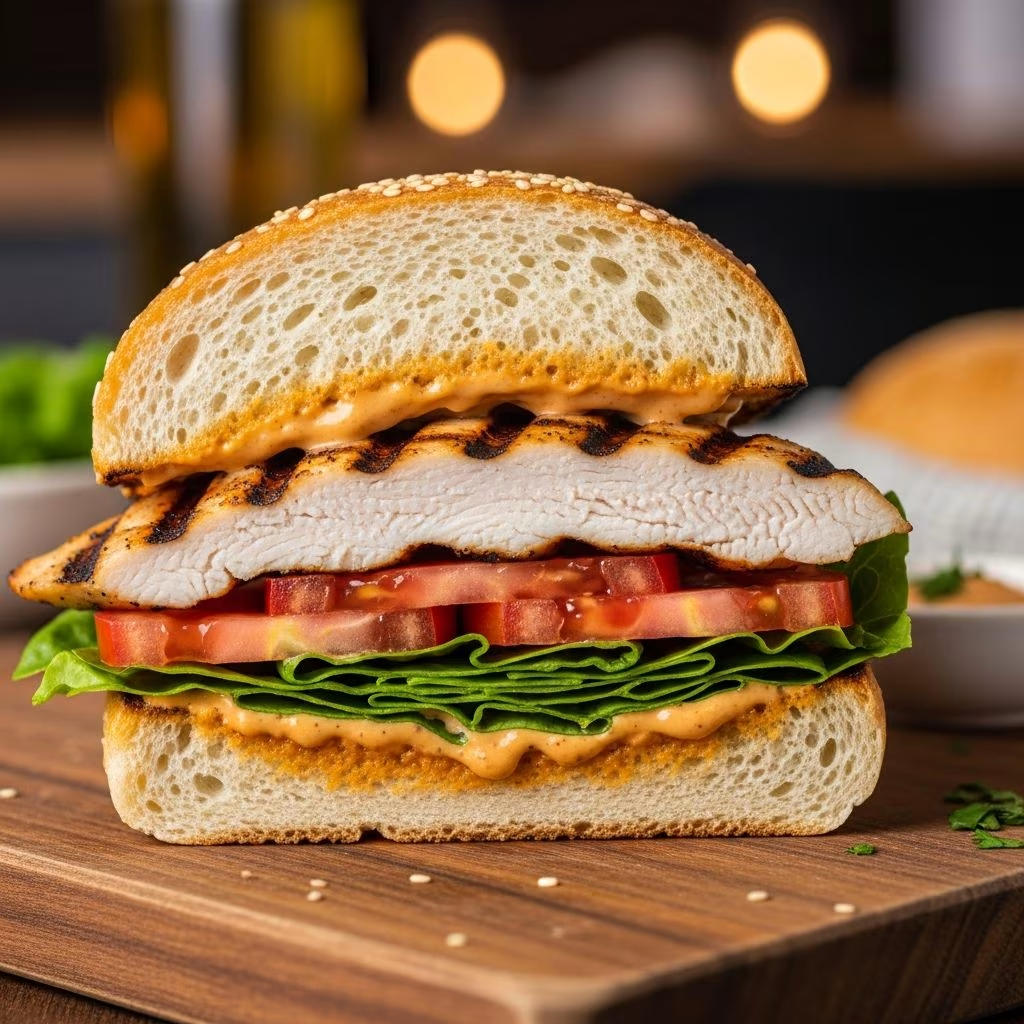
Proper assembly sequence prevents ingredient displacement and optimizes flavor distribution. Begin with sauce applied to both bread surfaces. Layer lettuce on the bottom bun—this creates a moisture barrier protecting the bread from saturating. Position the warm, cheese-topped chicken breast on the lettuce layer. Add additional toppings such as tomato slices, grilled onions, or bacon atop the chicken. Complete the sandwich with the top bun, pressed gently to secure all components.
Aesthetic Considerations
Presentation influences the eating experience and perceived quality. Toasted bread showing subtle browning appears more appetizing than pale surfaces. Visible grill marks on the chicken demonstrate proper cooking technique. Neat, organized layering conveys attention to detail. If cutting the sandwich, diagonal cuts create visual interest and facilitate handling.
Troubleshooting Common Issues
Dry Chicken
Overcooking represents the primary cause of dry chicken. Prevention involves using reliable thermometers and removing chicken from heat at exactly 165 degrees Fahrenheit. Additionally, maintaining consistent thickness throughout the chicken breast promotes even cooking. Pounding slightly thicker sections to match thinner areas prevents the thinner portions from overcooking before thicker sections reach proper temperature.
Soggy Bread
Moisture penetration degrades bread texture. Creating a moisture barrier through proper sequencing—lettuce between bread and wet toppings—helps considerably. Toasting bread beforehand increases its structural integrity. Serving immediately after assembly prevents extended exposure to moist ingredients.
Uneven Cooking
Non-uniform chicken thickness creates inconsistent results. Selecting breasts of similar size and thickness addresses this issue. If only thicker breasts are available, gently pound them to achieve more uniform dimensions. This step requires minimal effort but substantially improves cooking consistency.
Frequently Asked Questions
Can I use chicken thighs instead of breasts?
While chicken thighs contain more fat and remain juicier, they require longer cooking times and can prove less convenient for sandwich applications. Thigh meat’s darker color and stronger flavor profile changes the sandwich’s character. Breasts remain the professional standard, though personal preference may guide individual choices.
What’s the best way to marinate chicken for this sandwich?
A simple marinade featuring olive oil, acidic components like vinegar or lemon juice, garlic, and herbs penetrates the meat within 2-8 hours. Avoid marinating longer than 8 hours, as excessive acid can compromise texture. Pat the chicken dry before grilling to promote proper browning.
How far in advance can I prepare components?
Grilled chicken can be cooked several hours ahead and reheated gently before assembly. Sauces store well in the refrigerator for several days. Lettuce and fresh vegetables should be prepped shortly before assembly to maintain freshness and crispness. Bread should be toasted just before serving.
Can this sandwich be made indoors without a grill?
Absolutely. A cast-iron skillet or stovetop griddle heats properly and develops satisfactory browning. Indoor methods may produce less dramatic grill marks but deliver comparable results. Finishing under a broiler with melted cheese works effectively for indoor preparation.
What beverage pairs well with this sandwich?
Refreshing options like iced tea, lemonade, or light sodas complement the sandwich’s flavors without overwhelming the palate. Cold beer suits bolder variations featuring BBQ sauce or spicy toppings. Sparkling water with lemon offers a crisp, neutral pairing.
Scaling Your Sandwich Production
The techniques described scale well from single-sandwich preparation to batch cooking for gatherings. Organization proves essential—prepare all ingredients and assemble components in order before beginning heat-based cooking. Designate separate work stations for grilling, assembly, and plating to maintain efficiency and safety.
For larger quantities, establish an assembly line where one person manages grilling while others handle toasting, sauce preparation, and assembly. This approach maintains consistency and keeps the process flowing smoothly.
Variations and Creative Interpretations
While the classic preparation holds timeless appeal, creative variations cater to diverse preferences. Italian-inspired versions incorporate basil pesto and provolone. Southwestern adaptations feature pepper jack cheese, jalapeños, and cilantro mayo. Asian-influenced versions employ ginger-soy marinades and sesame-topped buns.
These variations maintain the core technique—properly grilled chicken breast topped with complementary flavors—while offering flavor exploration opportunities. Understanding the fundamental method allows confident experimentation with diverse ingredients and cuisines.
Conclusion: Elevating the Everyday Sandwich
Creating café-quality grilled chicken sandwiches at home requires attention to seemingly small details that collectively produce exceptional results. Quality ingredients, proper equipment usage, precise temperature management, and thoughtful assembly transform a basic sandwich into a satisfying meal worthy of restaurant comparison. Whether preparing a single sandwich for a quick lunch or hosting guests, these techniques ensure consistently delicious outcomes that elevate the everyday sandwich into something genuinely special.
References
- Safe Internal Temperature for Chicken — United States Department of Agriculture Food Safety and Inspection Service. 2024. https://www.fsis.usda.gov/food-safety/safe-food-handling-and-preparation/cook-beef-safely
- Principles of Food Cookery and Meat Preparation — The Culinary Institute of America. 2023. Educational Resource on Professional Cooking Techniques.
- Grilling Best Practices and Temperature Guidelines — Weber Grills Official Technical Documentation. 2024. https://www.weber.com/en-US/grills