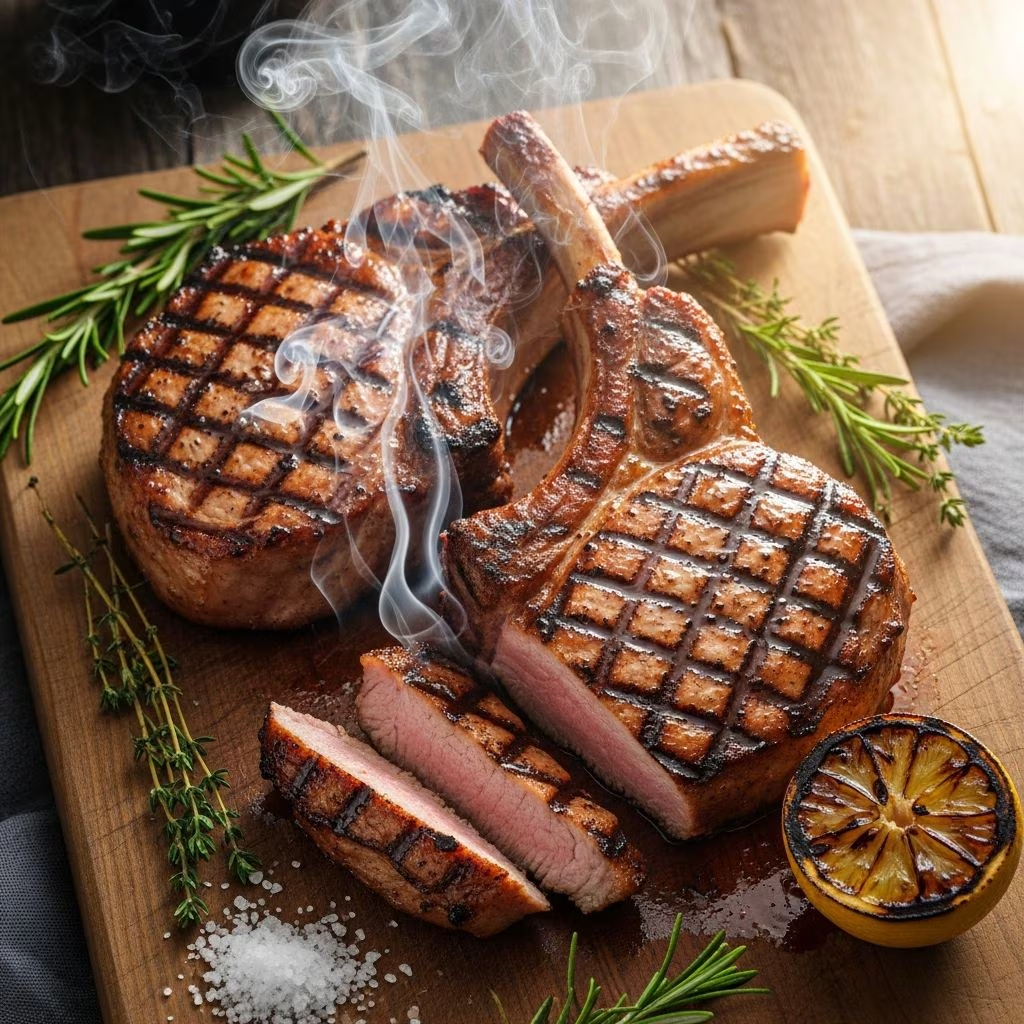
Grilled pork chops with smoky character represent one of the most satisfying proteins you can prepare on a barbecue. The combination of high-heat searing and controlled medium-temperature cooking creates a flavorful exterior while maintaining a tender, juicy interior. This comprehensive guide explores the techniques, ingredient combinations, and timing strategies that transform ordinary pork chops into an impressive meal worthy of any dinner table.
Understanding Your Pork Chops: Selection and Preparation
The foundation of successful grilled pork chops begins with selecting the right cut. Bone-in chops, typically ranging from one to one-and-a-half inches thick, provide superior flavor and moisture retention compared to their boneless counterparts. The bone acts as an insulator during cooking, allowing the meat to cook more evenly while protecting it from overcooking on the exterior.
Before grilling, allow your pork chops to rest at room temperature for approximately 30 minutes. This crucial step ensures even cooking throughout the thickness of the meat. Cold meat taken directly from refrigeration tends to cook unevenly, developing an overcooked exterior before the interior reaches the proper temperature. Room temperature meat also responds better to the initial sear, creating those desirable caramelized surfaces that contribute to the overall smoky profile.
Pat your chops thoroughly dry using paper towels before seasoning. Moisture on the surface creates steam rather than the high-heat browning reaction necessary for developing smoky flavor compounds. Once dried, apply a light coating of olive oil to all surfaces, then season generously with salt and pepper. This simple preparation creates an ideal foundation for more complex flavor additions.
Creating Bold Smoky Seasoning Combinations
The smoky character in grilled pork chops primarily comes from two sources: the cooking method itself and the seasonings you apply. Smoked paprika serves as the cornerstone ingredient for achieving authentic smoky flavor without requiring specialized smoking equipment. This spice delivers concentrated smoke essence through the drying and smoking process used during its production.
Beyond smoked paprika, several complementary seasonings amplify and balance the smoky notes. Consider these powerful combinations:
- Brown sugar base: Combines smoked paprika, brown sugar, garlic powder, cumin, and cayenne pepper for a sweet-and-spicy profile that caramelizes beautifully during grilling
- Herb-forward approach: Pairs smoked paprika with fresh or dried thyme, oregano, and basil to create an earthy, Mediterranean-influenced smoky flavor
- Heat-focused blend: Layers smoked paprika with chili powder, red pepper flakes, and black pepper for those who prefer bold, spicy smokiness
- Honey-enhanced glaze: Combines smoked paprika with honey, balsamic vinegar, and aromatic spices to create a glossy, caramelized surface
Apply your chosen seasoning blend generously to both sides of the prepared pork chops, rubbing it into the meat so the flavors integrate rather than simply sitting on the surface. For thicker cuts, you can afford more liberal seasoning since the flavors will distribute throughout the cooking process.
Mastering Grill Temperature and Initial Searing
Achieving the perfect smoky exterior requires understanding and controlling grill temperature. Preheat your grill to high heat before placing the pork chops on the grates. This high-heat searing step, lasting just 30 seconds per side, creates the Maillard reaction—the chemical process responsible for developing complex, smoky flavors through browning.
Once you achieve a good sear with visible grill marks, lower your grill temperature to medium heat. This temperature reduction prevents the exterior from burning while allowing the interior to cook through to the proper doneness. The two-stage cooking method—hot sear followed by medium-temperature cooking—remains the most reliable approach for achieving both exterior color and interior moisture.
For boneless pork chops, which are typically thinner (around half-inch thickness), adjust your timing accordingly. These cook more quickly than bone-in varieties, requiring approximately 3 to 4 minutes total per side over medium heat rather than the extended cooking periods needed for thicker cuts.
The Complete Cooking Timeline and Technique
| Stage | Temperature | Duration | Action |
|---|---|---|---|
| Initial Sear | High Heat | 30 seconds per side | Place chops on grill, flip once to create grill marks |
| Primary Cooking | Medium Heat | 2.5-3 minutes | First side, no flipping |
| Secondary Cooking | Medium Heat | 2.5-3 minutes | Second side with glaze application if using |
| Temperature Check | N/A | Ongoing | Insert meat thermometer in thickest section near bone |
| Resting Period | Off Heat | 5-10 minutes | Tent with foil to retain warmth and moisture |
Following this structured approach ensures consistent results across multiple grilling sessions. The specific timing varies based on pork chop thickness, grill characteristics, and ambient temperature, but these general timeframes provide reliable starting points. Always verify doneness using an instant-read meat thermometer rather than relying solely on visual cues or cooking time.
Achieving Perfect Internal Temperature
The USDA recommends cooking pork to an internal temperature of 145 degrees Fahrenheit, measured in the thickest portion of the meat away from bone contact. At this temperature, the meat achieves food safety while remaining tender and juicy. Overcooking to higher temperatures results in drier meat that loses the desirable texture developed through proper grilling.
Insert your meat thermometer into the thickest section of the pork chop, positioning it perpendicular to the surface and ensuring it doesn’t touch the bone, which conducts heat differently than muscle tissue and provides inaccurate readings. Check temperature during the final minutes of cooking rather than repeatedly opening and closing the grill, which disrupts heat maintenance.
Glazing and Flavor Enhancement During Cooking
Creating a glaze transforms basic grilled pork chops into restaurant-quality dishes. A simple yet effective approach combines honey, balsamic vinegar, and your chosen aromatics in a small saucepan. Bring these ingredients to a boil over medium-high heat, stirring constantly, then reduce to low and simmer for approximately 5 minutes until the mixture achieves a syrup-like consistency that coats the back of a spoon.
Apply the glaze during the final minutes of grilling, typically during the second side cooking phase. Use a pastry brush to coat both sides evenly, allowing the glaze to caramelize and create a glossy, flavorful exterior. The natural sugars in honey and balsamic vinegar undergo caramelization at high temperatures, developing deeper, more complex smoky flavors that complement the seasoned meat.
For those preferring acid-based marinades instead of glazes, combine elements like lime juice, red pepper flakes, and brown sugar. These marinades develop flavor through enzymatic action over 20 to 30 minutes before grilling, penetrating the meat more deeply than surface applications.
The Critical Resting Phase
After removing pork chops from the grill, resist the urge to serve immediately. Instead, tent the chops loosely with aluminum foil and allow them to rest for 5 to 10 minutes. During this resting period, the residual heat distributes evenly throughout the meat while muscle fibers relax, reabsorbing juices that were driven to the surface during high-heat cooking.
Cutting into meat too quickly after grilling causes these valuable juices to escape onto the plate rather than remaining in the meat, resulting in a drier final product. The resting phase is non-negotiable for achieving optimal texture and moisture in your finished dish.
Complementary Sides and Serving Suggestions
Smoky grilled pork chops pair beautifully with a variety of accompaniments that either balance or amplify the smoky character. Fresh fruit preparations like peach salsa provide bright acidity that cuts through rich, smoky flavors. Applesauce offers subtle sweetness that complements the seasoning profile without overwhelming the meat.
Vegetable sides benefit from similar grilling techniques. Grilled vegetables develop their own smoky character when exposed to direct heat, creating harmonious flavor combinations. Consider grilled asparagus, zucchini, or bell peppers seasoned with the same spice blends used on your pork chops for cohesive plate presentation.
Troubleshooting Common Grilling Challenges
- Dry, overcooked meat: This results from cooking beyond 145°F or insufficient resting time. Use a meat thermometer consistently and prioritize the resting phase
- Pale exterior lacking smoky appearance: Ensure your grill reaches high heat before searing and allow adequate time for browning reactions to develop
- Uneven cooking: Verify that pork chops are uniform thickness and at room temperature before grilling. Bone-in cuts naturally cook more evenly than boneless options
- Flare-ups and charring: Reduce grill temperature after the initial sear and monitor the cooking process to prevent excessive flame contact
- Glaze burning before meat cooks through: Apply glaze during the final cooking phase rather than at the beginning to prevent excessive charring
Equipment Considerations for Optimal Results
While high-end grilling equipment isn’t necessary, certain tools significantly improve consistency and outcomes. An instant-read meat thermometer eliminates guesswork regarding doneness. A pastry brush facilitates even glaze application. A grill brush ensures proper grate cleaning and conditioning before cooking, preventing sticking that compromises sear quality.
Grill type influences cooking characteristics. Gas grills offer precise temperature control and consistent results. Charcoal grills develop superior smoky flavor through charcoal combustion but require more active temperature management. Both approaches yield excellent smoky grilled pork chops when proper techniques are followed.
Flavor Variations and Experimentation
Once you master the foundational technique, explore variations that keep grilled pork chops interesting across multiple preparations. Experiment with different wood smoke elements by adding wood chips to charcoal grills or using specialized smoker equipment. Maple, apple, and pecan woods each impart distinct smoky characteristics that pair well with pork.
Marinades introduce additional flavor dimensions beyond dry rubs. Combine soy sauce, Worcestershire sauce, and smoky ingredients for umami-forward profiles. Asian-inspired marinades with ginger, garlic, and sesame create entirely different flavor experiences while maintaining the smoky grilled foundation.
References
- USDA Food Safety and Inspection Service — United States Department of Agriculture. 2024. https://www.fsis.usda.gov/food-safety/safe-food-handling-and-preparation/pork/pork-food-safety
- McGee, Harold. On Food and Cooking: The Science and Lore of the Kitchen — Scribner. 2004. [Reference for Maillard reaction and meat cooking science]
- National Pork Board — Official industry source. 2024. https://www.porkboard.org/cooking-pork
- Academy of Nutrition and Dietetics — Professional dietetics organization. 2023. https://www.eatright.org