Flatfish represents one of the most versatile and elegant proteins available to home cooks and professional chefs alike. Whether working with sole, flounder, turbot, or other delicate varieties, the key to exceptional results lies in understanding both the unique characteristics of the fish and the complementary flavors that enhance its natural qualities. Grilling flatfish presents particular challenges and rewards, requiring attention to timing, temperature control, and proper technique to achieve a dish that showcases the fish’s tender flesh and subtle taste profile.
The combination of perfectly grilled flatfish with a well-crafted spoon sauce creates a restaurant-quality meal that impresses diners while remaining accessible to home cooks willing to invest in learning proper methodology. This comprehensive guide explores the essential techniques, ingredient selection, and preparation methods that transform simple ingredients into an unforgettable culinary experience.
Understanding Flatfish Characteristics and Selection
Flatfish species share distinctive anatomical features that influence both their flavor profile and cooking requirements. These fish possess delicate, lean flesh that cooks quickly and requires careful attention to prevent overcooking. The thin profile of most flatfish varieties means that cooking time remains relatively brief, typically ranging from five to ten minutes depending on thickness and heat intensity.
Selecting quality flatfish begins with visual inspection. Look for specimens with clear, bright eyes, translucent flesh, and a pleasant ocean aroma rather than a strong fishy smell. The skin should appear moist and intact, with vibrant coloration appropriate to the species. When purchasing from a fishmonger, request whole fish rather than pre-cut fillets when possible, as whole fish allows for better assessment of freshness and offers the option to cut planks of consistent thickness for even cooking.
The size of your flatfish matters considerably. Medium-sized whole fish weighing between two and four pounds offers ideal proportions for grilling. Smaller specimens may overcook before developing proper browning, while larger fish present challenges in achieving even cooking throughout.
Essential Preparation Techniques
Cleaning and Sectioning
Proper flatfish preparation begins with thorough cleaning. Rinse the whole fish under cool running water, removing any residual scales or debris. Using a sharp chef’s knife or cleaver, cut the fish crosswise into planks approximately two to four inches wide. This sectioning method proves superior to traditional filleting for grilling applications because the cross-sections maintain structural integrity during cooking and allow for more even heat distribution.
For particularly large specimens, halving each plank creates smaller portions that cook more uniformly. The natural bones present in cross-cut sections actually aid in cooking by conducting heat toward the center of each plank and providing structural support that prevents the delicate flesh from falling apart.
Moisture Management
Moisture control represents a critical step often overlooked by home cooks. After cutting and cleaning, pat the flatfish planks thoroughly dry using paper towels. Excess surface moisture creates steam during grilling, which prevents proper browning and can cause sticking to the grill grate. Complete drying ensures that the fish can make direct contact with the heat source, allowing for proper caramelization and development of complex flavors through the Maillard reaction.
Seasoning Approach
Simple seasoning allows the delicate flatfish flavor to shine while supporting rather than overwhelming the natural taste. Light application of kosher salt and freshly ground black pepper before grilling provides adequate seasoning. Optional additions might include Aleppo-style pepper for subtle fruity heat or finely grated lemon zest for bright acidity. Reserve more complex flavoring for the accompanying spoon sauce rather than applying heavy seasoning directly to the fish.
Grilling Fundamentals for Flatfish
Temperature and Equipment Setup
Successful flatfish grilling requires medium heat rather than the high temperatures often used for thicker fish steaks or heartier proteins. Medium heat allows the exterior to develop gentle browning while the thin flesh cooks through without drying out. For gas grills, this typically means setting burners to medium, allowing the grill to preheat for ten to fifteen minutes until the grate reaches approximately 400°F. Charcoal grills should be prepared with medium-density coals positioned to create an even, moderate heat zone.
Proper grill preparation prevents sticking and promotes even cooking. Oil the grill grate thoroughly using a high-smoke-point oil such as avocado oil or refined vegetable oil. Allow the oiled grate to heat for several minutes until the oil begins to smoke slightly, indicating that the surface has reached proper temperature and the oil has polymerized into a non-stick coating.
Cooking Sequence and Timing
Place prepared flatfish planks directly on the oiled grill grate without moving them. Resist the urge to rotate or flip the fish during the initial cooking phase. Leave the fish undisturbed for approximately five minutes, allowing the bottom surface to cook and the skin to release naturally from the grate. You can test readiness by gently attempting to slide a fish spatula underneath the flesh; if it resists, the fish requires additional time. Once the skin releases easily and a knife inserted into the flesh shows the fish cooked approximately seventy percent through, flip each plank carefully using a wide fish spatula.
After flipping, cook for an additional two to three minutes until the flesh becomes completely opaque and a paring knife easily pierces the meat with minimal resistance. The entire cooking process typically requires eight to ten minutes from start to finish. Overcooked flatfish becomes dry and loses its delicate texture, while undercooked fish presents food safety concerns, making proper timing essential.
Doneness Indicators
Visual assessment provides the most reliable indicator of flatfish doneness. The flesh should transition from translucent to opaque, and the thickest portions should flake gently when pressed with a fork. Using a meat thermometer offers additional confidence; flatfish reaches food-safe temperatures at 145°F according to food safety guidelines. However, many chefs prefer to cook flatfish to slightly lower internal temperatures, around 140°F, to preserve moisture and delicate texture while remaining within safety parameters when using exceptionally fresh fish from reputable sources.
Crafting the Perfect Spoon Sauce
Sauce Philosophy and Components
The term “spoon sauce” refers to a pourable sauce designed to be spooned over finished dishes rather than used as a dip or coating. An effective spoon sauce for grilled flatfish balances richness, acidity, and flavor complexity while respecting the fish’s delicate nature. Rather than heavy cream-based preparations, contemporary spoon sauces often incorporate aromatic elements, textural contrasts, and bright acidic notes that complement rather than mask the fish’s inherent flavors.
Ingredient Selection Strategy
Quality ingredients form the foundation of memorable sauce preparation. Fresh herbs contribute aromatic complexity and visual appeal. Parsley, mint, tarragon, and cilantro work particularly well with grilled flatfish, each contributing distinct flavor profiles that can be used individually or in combination. Nuts such as pistachios or almonds add textural interest and richness when finely chopped and incorporated into the sauce base.
Acidic elements prove essential for cutting through richness and brightening overall flavor. Champagne vinegar, white wine vinegar, or fresh citrus juice serves this purpose effectively. Aged vinegars contribute additional complexity and subtle sweetness that complements delicate fish preparations.
Fruity or umami-rich additions create depth without heaviness. Dried fruits such as prunes or apricots, when chopped finely and incorporated into the sauce, contribute natural sweetness and textural complexity. Fermented elements such as soy sauce, miso paste, or kimchi brine introduce savory notes and umami character that enhance the overall eating experience.
Sauce Construction Method
Begin by toasting any nuts specified in your sauce recipe in a dry skillet over medium-low heat, stirring occasionally until fragrant and lightly browned. This toasting process awakens the nuts’ natural oils and intensifies their flavor significantly compared to using raw nuts. Allow toasted nuts to cool briefly, then finely chop them to distribute evenly throughout the sauce.
In a medium mixing bowl, combine chopped herbs, processed nuts, minced garlic, and any dried fruits or textural elements. Using a gentle folding motion rather than vigorous stirring, incorporate acidic components such as vinegar or citrus juice along with any fermented ingredients. This careful mixing preserves the distinct flavors of individual components while allowing them to meld subtly.
In a slow stream, whisk in quality extra-virgin olive oil, which serves as the sauce’s fat component and carries flavors while creating a pleasant mouthfeel. Taste the sauce and adjust seasoning with additional salt as needed. Allow the finished sauce to rest for several minutes before spooning over grilled flatfish, permitting flavors to develop and integrate.
Plating and Service Recommendations
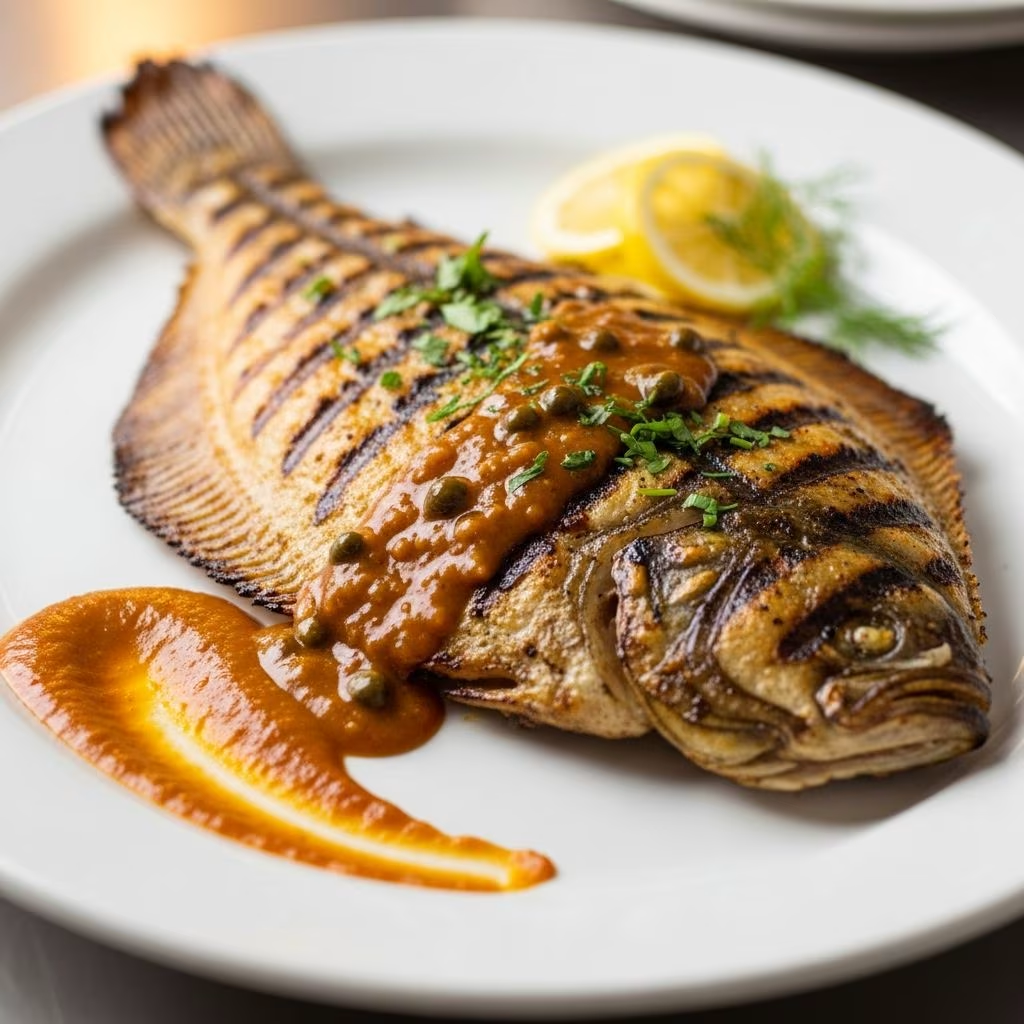
Transfer grilled flatfish planks to a warmed serving platter or individual plates while still hot. This timing ensures that the sauce, when spooned over the fish, adheres properly and maintains its flavor impact. Spoon the prepared sauce generously over each plank, distributing nuts, herbs, and fruity elements evenly. Reserve some sauce-soaked herbs and nut pieces for visual appeal and additional flavor complexity in each serving.
Complement grilled flatfish with thoughtful side dishes that enhance rather than compete with the main components. Light grain preparations such as couscous or quinoa, simple green salads with vinaigrette, steamed or roasted vegetables, or legume-based sides all work effectively. The goal remains allowing the grilled flatfish and spoon sauce to serve as the dish’s focal points.
Frequently Asked Questions
Can I use frozen flatfish for this preparation?
Frozen flatfish works acceptably if thawed properly, though fresh fish generally produces superior results. Thaw frozen flatfish in the refrigerator overnight rather than at room temperature to minimize texture degradation. Pat thoroughly dry before proceeding with preparation.
What if my spoon sauce seems too acidic?
Acidity can be balanced by incorporating additional olive oil, which creates richness that buffers acid perception. Alternatively, add finely minced herbs or nuts to dilute the acidic components. Taste frequently during adjustment to avoid overcorrecting.
How can I prevent my flatfish from sticking to the grill?
Thorough drying before grilling, proper oiling of the grill grate, and allowing adequate time before flipping all contribute to preventing sticking. Patience during the initial cooking phase ensures that the surface develops sufficient browning before attempting to flip.
Can the spoon sauce be prepared in advance?
Yes, spoon sauce can be prepared several hours ahead of grilling and stored at room temperature or in the refrigerator. If refrigerated, allow the sauce to return to room temperature before serving to optimize flavor perception and texture. Stir gently before serving to recombine components if separation occurs.
Troubleshooting Common Issues
Overcooked, dry flatfish typically results from excessive heat or prolonged cooking. Reduce grill temperature and monitor cooking time carefully on subsequent attempts. Undercooked fish suggests insufficient heat or inadequate cooking duration; ensure grill reaches proper temperature and cook for adequate time until the fish becomes completely opaque.
Uneven cooking across a large flatfish plank indicates temperature inconsistency across the grill surface. Position planks in the hottest area for initial cooking, then move to slightly cooler zones if browning appears excessive. Alternatively, cut larger fish into smaller planks for more uniform cooking.
Sauce that appears watery or separates suggests inadequate whisking of oil into other components. Rewhisk separated sauce vigorously to recombine, or add additional finely chopped herbs and nuts to absorb excess liquid and restore desired consistency.
Advanced Variations and Adaptations
Once comfortable with basic grilled flatfish preparation, explore variations by adjusting spoon sauce components based on available ingredients and personal preferences. Mediterranean versions incorporate sun-dried tomatoes, capers, and lemon; Asian-inspired variations feature ginger, soy sauce, and sesame oil; herbaceous versions emphasize fresh herbs with minimal additional ingredients.
Experiment with different flatfish species to observe how subtle flavor variations influence the overall dish. Sole offers delicate, slightly sweet flavor; flounder provides firmer texture with milder taste; turbot contributes more pronounced, richer flavor suitable for bolder sauce components.
The grilling methodology described here adapts well to other mild, lean fish species, including halibut and branzino, expanding your repertoire of dishes that showcase fresh fish prepared with technical skill and thoughtful ingredient combinations.
References
- Grilled Flatfish with Pistachio and Herb Sauce — Patient.info. Recipes. https://patient.info/recipes/heart-healthy-recipes/grilled-flatfish-with-pistachio-herb-sauce
- United States Department of Agriculture Food Safety and Inspection Service Guidance on Seafood Cooking Temperatures — USDA FSIS. Official Government Food Safety Resource. https://www.fsis.usda.gov/food-safety/safe-food-handling-and-preparation/food-safety-basics/safe-internal-temperature-chart
- Mediterranean Fish in Tomato Sauce — Tori Avey Recipes. https://toriavey.com/mediterranean-tomato-garlic-fish/
- How to Prepare a Flatfish for Grilling — Rick Stein Cookery School. Educational Culinary Content. https://www.youtube.com/watch?v=BcBfMeEekvQ