Costco represents one of the most challenging yet rewarding retail opportunities for product manufacturers and suppliers. With millions of members shopping at Costco warehouses worldwide, securing shelf space can dramatically expand a brand’s market reach. However, the path to getting your product stocked at Costco requires careful planning, understanding of their stringent requirements, and a well-executed strategy. This comprehensive guide outlines the essential steps and considerations for bringing your product to Costco’s shelves.
Understanding Costco’s Vendor Landscape
Costco maintains one of the most selective product portfolios in retail. The warehouse operator carefully curates its inventory to provide exceptional value to members while maintaining quality standards. This selective approach means that breaking into Costco’s distribution network demands more than just a quality product—it requires understanding their business model, customer expectations, and operational requirements.
The retailer’s philosophy centers on offering bulk quantities at competitive prices, which fundamentally shapes how suppliers must approach their products. Unlike traditional retailers that may stock multiple brands within a category, Costco typically limits shelf space to one or two options per product type. This creates significant competition among potential vendors and underscores the importance of thorough preparation before pursuing Costco as a sales channel.
Phase One: Comprehensive Product and Business Preparation
Evaluating Your Product’s Costco Readiness
Before initiating contact with Costco representatives, suppliers must honestly assess whether their product aligns with the warehouse’s model. This evaluation involves examining several critical factors:
- Market differentiation: Does your product offer something genuinely different from existing Costco offerings? Attempting to introduce a product category already well-served significantly reduces approval chances.
- Quality standards: Your product must consistently meet or exceed Costco’s rigorous quality benchmarks, which typically exceed industry standards.
- Pricing competitiveness: Can you deliver your product at a price point that demonstrates clear value compared to competitors and other retail channels?
- Demand potential: Is there sufficient customer interest to justify inventory investment and shelf allocation?
Building Your Vendor Application Foundation
The vendor application process requires detailed information about your business, manufacturing capabilities, product specifications, and financial stability. Prepare comprehensive documentation including:
- Complete company registration and business licensing information
- Manufacturing facility details and capacity specifications
- Product formulations, nutritional information, and safety certifications
- Pricing structures and cost breakdowns
- Distribution and logistics capabilities
- Financial statements demonstrating business stability
- Insurance and compliance certifications
Conducting Market Research and Competitive Analysis
Effective preparation includes thorough market research demonstrating customer demand and competitive positioning. Document consumer interest through surveys, sales data from other channels, social media engagement metrics, and market trend analysis. This information becomes crucial when presenting to Costco buyers, as it provides evidence that members would purchase your product at the proposed price point.
Phase Two: Strategic Approach and Buyer Contact
Deciding Between Direct and Broker-Assisted Approaches
Suppliers can pursue two distinct pathways when approaching Costco. Direct applications allow companies to submit products independently through Costco’s vendor portal or regional managers. However, Costco buyers receive substantial volumes of direct applications daily, making it challenging for submissions to receive adequate attention.
Alternatively, working with a Costco broker—specialists who maintain relationships with regional buyers and understand internal approval processes—often yields superior results. Brokers possess established credibility with decision-makers and can navigate the complex approval workflow more effectively. While brokers require compensation, their expertise frequently justifies the investment through higher approval rates and faster timelines.
Identifying and Contacting the Appropriate Category Buyer
Whether pursuing direct or broker-assisted approaches, success requires reaching the correct category buyer responsible for your product type. Costco organizes purchasing by product categories, with dedicated buyers for segments such as grocery, health and beauty, specialty foods, and seasonal items. Submitting your proposal to the wrong department wastes time and reduces approval likelihood.
Through your broker or regional manager contact, identify the specific buyer whose category encompasses your product. This precision ensures your proposal receives consideration from decision-makers with authority over your product type.
Crafting a Compelling Product Proposal
Your formal proposal to Costco should be thoroughly professional and strategically structured. Include the following essential components:
- Executive summary highlighting key product benefits and value proposition
- Detailed product specifications, packaging, and sizing information
- Competitive analysis demonstrating market advantages
- Pricing structure and profit margin information for Costco
- Manufacturing capabilities and capacity documentation
- Market research data supporting demand projections
- Marketing and merchandising recommendations
- Supply chain and distribution logistics overview
The proposal should emphasize why Costco members would purchase your product and how it enhances their warehouse shopping experience.
Phase Three: Manufacturing Compliance and Product Modification
Achieving Manufacturing Facility Compliance
Once a buyer expresses interest, Costco typically requires manufacturers to achieve specific facility compliance certifications. These requirements ensure products meet safety, quality, and operational standards. Compliance verification may include inspections of manufacturing facilities, review of quality control procedures, and certification from recognized standards bodies.
For international manufacturers, this compliance phase can extend several months or even years, particularly if significant facility upgrades or operational modifications are necessary. Companies must budget adequate time and resources for this critical phase before expecting final approval.
Reformulating and Resizing for Bulk Distribution
Costco’s bulk warehouse model requires products optimized for their specific distribution framework. This frequently necessitates product reformulation or resizing to align with bulk packaging conventions. Considerations include:
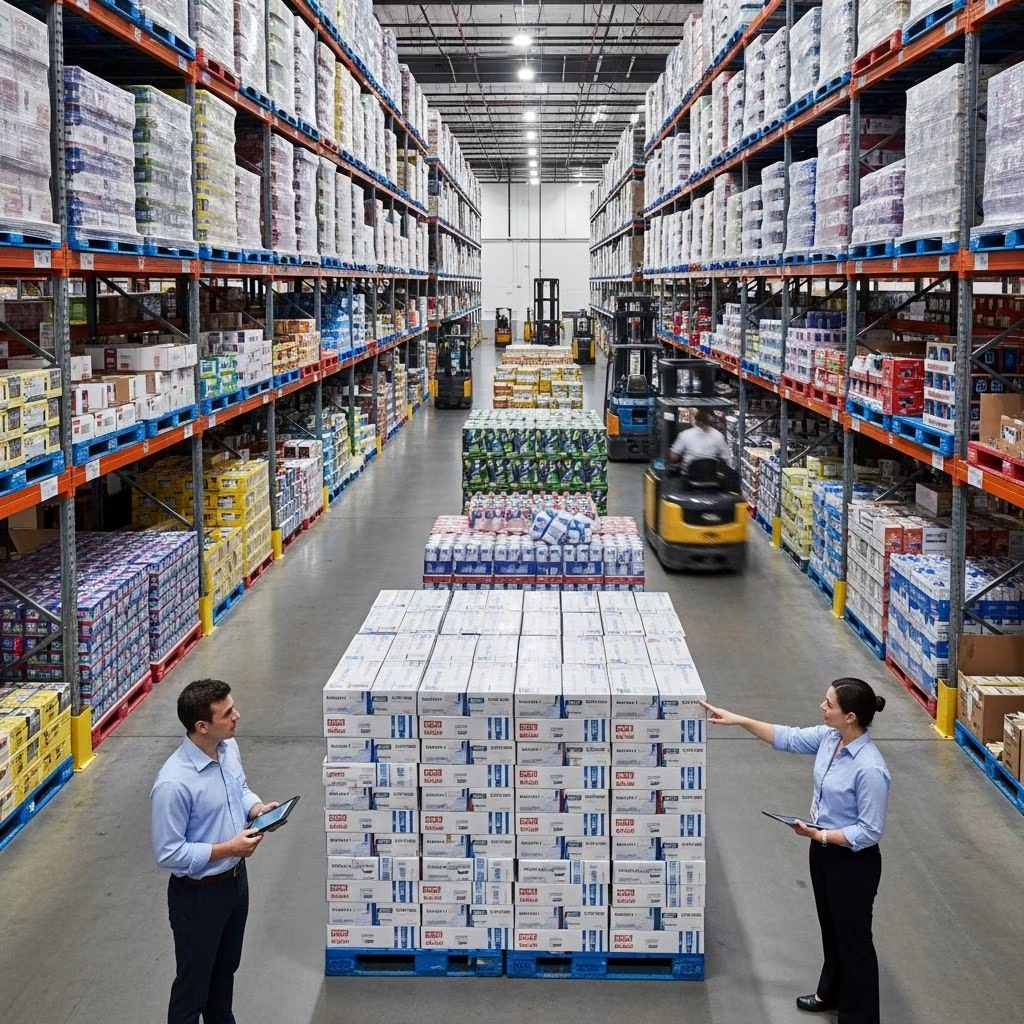
- Package sizing: Products must fit Costco’s standard pallet configurations and warehouse storage systems
- Bulk quantity economics: Ensure per-unit costs remain competitive when manufacturing larger quantities
- Shelf life requirements: Products must maintain at least 80% of their stated shelf life upon warehouse arrival, which becomes particularly complex for internationally-sourced items requiring extended transit times.
- Storage stability: Products must withstand warehouse storage conditions without quality degradation
Pricing Strategy for Costco Distribution
Costco typically requires wholesale pricing at least 30% lower than competitor retail channels, reflecting their value-focused positioning. This aggressive pricing requirement demands careful financial analysis to ensure profitability. Manufacturers must evaluate:
- Volume economies of scale to offset lower unit prices
- Elimination of middleman distribution costs through direct Costco supply
- Marketing fee implications discussed below
- Long-term profitability despite reduced margins
Phase Four: Sample Submission and Regional Evaluation
The Eight-Region Trial System
When your broker submits product samples, they typically distribute them across all eight Costco geographic regions simultaneously. Each regional buyer independently evaluates the product for their market area. This parallel approach allows Costco to assess product performance across diverse consumer demographics and regional preferences.
Regional buyers interested in carrying your product typically place initial trial orders projecting approximately eight weeks of sales. This trial period provides essential data regarding customer demand and sell-through rates.
Understanding Marketing and Placement Fees
Successful Costco suppliers must budget for mandatory marketing and promotional fees. These fees support in-warehouse sampling programs and strategic product placement within high-traffic locations. While these fees represent additional investment, they significantly impact product visibility and sales performance. Marketing fees are deducted from your sales revenues, effectively reducing your net margin.
Phase Five: Approval and Warehouse Integration
Facility Inspections and Workplace Verification
Following product approval, Costco dispatches teams to inspect your manufacturing facilities and verify workplace conditions. These inspections examine compliance with labor laws, workplace safety standards, quality control procedures, and operational practices. Ensure your facility meets all regulatory requirements and demonstrates commitment to employee welfare and product quality before inspection.
Initial Product Placement and Roadshow Opportunities
Approved products may initially appear through roadshows or promotional events rather than permanent shelf placement. Roadshows allow Costco to test customer reception in specific warehouses before committing to shelf space. Strong roadshow performance increases the likelihood of securing permanent placement. This staged approach helps Costco minimize risk while giving products opportunity to demonstrate market viability.
Pathway to Permanent Shelf Space
Securing permanent shelf allocation requires strong sales performance during trial periods. If your product sells through the initial 8-week allocation and receives reorders, other regions may begin carrying the product. Conversely, products failing to demonstrate adequate sales velocity may be discontinued after a single trial period, making sales performance during initial placement critically important.
Operational Requirements for Ongoing Success
Logistics and Shipping Compliance
Costco requires suppliers to utilize only Costco-approved third-party logistics providers and specific pallet configurations. Shipments failing to meet these logistics standards may be rejected or incur additional fees. Before finalizing purchase orders, verify that your logistics provider appears on Costco’s approved vendor list and confirm pallet specifications match Costco requirements.
Maintaining Quality and Consistency
Costco’s reputation depends on consistent product quality. Maintain rigorous quality control procedures ensuring every unit meets Costco’s exacting standards. Consistency in taste, appearance, functionality, and shelf life directly impacts customer satisfaction and repeat purchases—critical factors in warehouse renewal decisions.
Alternative Member Request Channel
Beyond vendor applications, an often-overlooked avenue exists for product placement: member requests. Costco accepts product suggestions through their mobile application and in-warehouse feedback systems. Members successfully using this channel report that Costco occasionally stocks requested items, sometimes within remarkably short timeframes. While not guaranteed, this grassroots approach can complement formal vendor applications, particularly for products with passionate customer advocacy.
Key Success Factors Summary
| Success Factor | Critical Requirement |
|---|---|
| Product Differentiation | Unique offering not duplicating existing Costco inventory |
| Quality Standards | Meets or exceeds Costco’s rigorous benchmarks |
| Pricing Strategy | At least 30% below competitor retail pricing |
| Manufacturing Compliance | Certified facilities meeting Costco standards |
| Logistics Capability | Costco-approved 3PL and pallet specifications |
| Shelf Life Management | Minimum 80% remaining shelf life upon warehouse arrival |
| Market Research | Data demonstrating customer demand and viability |
Frequently Asked Questions
How long does the approval process typically take?
Timeline varies significantly based on product complexity and manufacturing compliance status. Simple products with compliant facilities might achieve approval within months, while products requiring manufacturing modifications or international compliance verification can take one to two years.
What percentage of vendor applications receive approval?
Costco receives thousands of applications annually but approves only a small percentage. While specific approval rates remain proprietary, the competitive nature of the process suggests single-digit approval percentages for most categories.
Can small manufacturers successfully sell through Costco?
Yes, but small manufacturers face challenges regarding manufacturing capacity, compliance certification, and pricing requirements. Establishing broker relationships and demonstrating exceptional product quality increases success likelihood for smaller operations.
What happens if products don’t sell during the trial period?
Products failing to achieve adequate sales velocity during the initial 8-week trial typically receive discontinuation notices. This single opportunity underscores the importance of strong marketing preparation and realistic sales projections.
Are there ways to request specific products as a Costco member?
Yes, members can submit product requests through the Costco mobile application and in-warehouse feedback channels. While not guaranteed for fulfillment, Costco does respond to member requests and occasionally stocks suggested items.
References
- How to Get Your Product into Costco: Discover 3 Steps — Orders in Seconds. Retrieved from https://ordersinseconds.com/how-to-get-your-product-into-costco/
- How to Get Your Product on Costco’s Shelf — YouTube. Retrieved from https://www.youtube.com/watch?v=PGc0P77cUoE
- Costco Shoppers Just Revealed How to Get In-Demand Items — Eat This Not That. Retrieved from https://www.eatthis.com/costco-shoppers-reveal-how-to-get-in-demand-items/