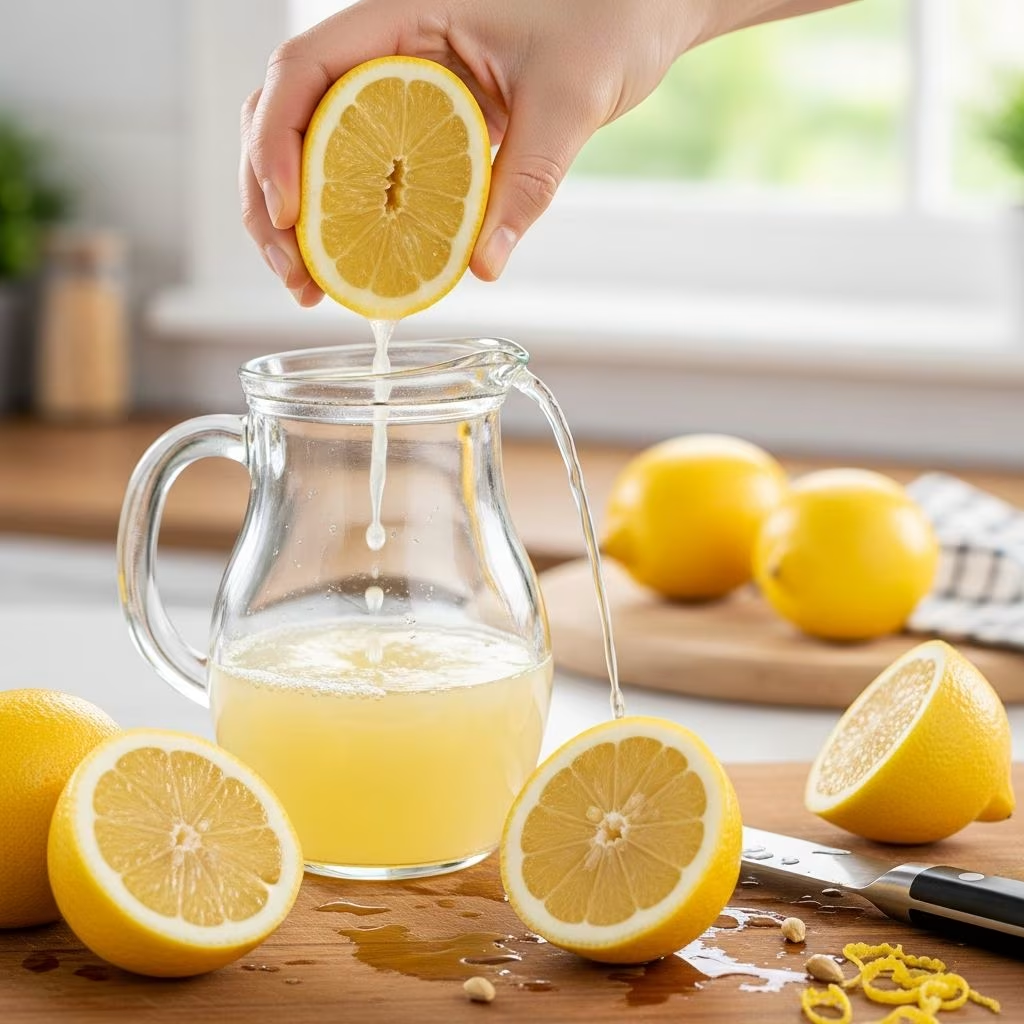
Lemons provide essential acidity and bright flavor to countless dishes, drinks, and marinades. Extracting the most juice possible saves time and ensures vibrant results in your cooking. This guide explores proven strategies for selecting superior lemons and evaluates popular preparation techniques to determine what truly maximizes yield.
Selecting Lemons for Peak Juiciness
The foundation of successful lemon juicing begins at the store. Not all lemons are equal; choosing wisely can increase juice output significantly without any extra effort.
- Opt for weighty specimens: Lemons that feel heavy relative to their size contain more internal liquid and less airy pith.
- Check firmness with a gentle squeeze: Ideal lemons yield slightly under pressure but spring back, signaling juicy flesh beneath thin skin.
- Examine the rind: Look for smooth, taut, vibrant yellow skin without green tinges or wrinkles, which indicate immaturity or dehydration.
These traits ensure you’re starting with fruit primed for high juice extraction. Skipping this step dooms even the best techniques to mediocrity.
Why Prep Matters: The Science of Juice Release
Lemon juice resides in tiny sacs within the fruit’s flesh. These membranes resist pressure, limiting flow during squeezing. Effective prep methods soften or rupture these barriers, allowing liquid to escape more freely. Common hacks target temperature changes or mechanical force to achieve this breakdown.
We’ll examine four key approaches: a baseline control, freezing, heating via microwave, firm rolling, and a combined technique. Each uses lemons of identical weight—around 5.5 to 6.5 ounces—to ensure fair comparison.
Method 1: The Baseline Approach
For reference, untreated lemons serve as the control. Simply halve and squeeze using a standard citrus reamer or by hand. This yields a baseline measure, typically around 5.7 ounces of juice per fruit in tests with uniform specimens. While straightforward, it often falls short for bulk juicing needs.
Method 2: Freezing for Cellular Breakdown
Freezing whole lemons exploits water expansion. As juice inside the sacs turns to ice, it presses against cell walls, rupturing them upon thawing. The result: soft, pliable fruit that releases liquid with minimal resistance.
Steps:
- Place whole, unwashed lemons in a freezer bag.
- Freeze for at least 24 hours until solid.
- Thaw at room temperature for 1-2 hours until soft and rubbery to the touch.
- Halve and squeeze.
Tests show this method produces about 5.9 ounces per lemon, a slight edge over baseline. It’s ideal for large batches, as thawed lemons juice effortlessly without tools.
Method 3: Microwave Heating for Softening
Heat mimics ripening by relaxing membranes. Microwaving warms the fruit internally, making it supple without cooking the juice.
Steps:
- Pierce the lemon’s skin with a fork to prevent steam buildup.
- Microwave on high for 20 seconds.
- Check warmth; add 5-second bursts if needed, avoiding overheating.
- Rest briefly, then juice.
Yield: Approximately 5.8 ounces. The quick process suits single lemons but risks scorching if overdone.
Method 4: Firm Rolling to Crush Membranes
Mechanical pressure from rolling breaks internal barriers gradually. This no-heat method relies on controlled force.
Steps:
- Place the lemon on a flat surface.
- Press firmly with your palm and roll back and forth 10-15 times, feeling for give without bursting.
- Halve and extract juice.
Results: Up to 6.2 ounces, showing mechanical action’s potential. It’s mess-free and tool-optional.
Method 5: The Ultimate Combo Technique
Combining freezing, microwaving, and rolling amplifies effects: freezing ruptures cells, heat softens further, and rolling finishes the job.
Steps:
- Freeze whole lemons overnight.
- Microwave thawed lemons for 20 seconds until warm.
- Roll firmly on the counter.
- Juice immediately.
This tops charts at 6.3 ounces per lemon. Though yields vary little overall, the ease stands out for efficiency.
Juice Yield Comparison Table
| Method | Average Yield (oz per 6-oz lemon) | Pros | Cons |
|---|---|---|---|
| Control (No Prep) | 5.7 | Simple, no wait | Requires more effort |
| Freezing | 5.9 | Best for batches, easy squeeze | Needs planning |
| Microwave | 5.8 | Fast | Risk of overheat |
| Rolling | 6.2 | Immediate, no tools | Arm strength needed |
| Combo | 6.3 | Maximum ease | Multi-step |
Surprisingly, differences are minimal statistically, but qualitative benefits like softness favor prepping, especially for volume.
Optimal Cutting Techniques for Maximum Extraction
Prep sets the stage; cutting determines finale. Tests reveal superior methods beyond standard halving.
- Three-Slice Supremacy: Cut off ends, slice into three rounds, twist over a bowl. Captures nearly all juice.
- Wedges: Quarter lengthwise; good but leaves some behind.
- Squared/Peeled: Trim sides, revealing juicy core; efficient but wasteful.
- Poking Variants: Skewer or knife pierce releases some but underperforms.
Pair three-slice with combo prep for peak performance.
Tools That Elevate Juicing
Hand squeezing works, but specialized gear boosts output:
- Citrus Reamer: Angled for deep penetration.
- Leverage Press: Applies even force.
- Electric Juicer: For pros handling dozens.
Avoid cheap strainers; fine mesh catches pulp precisely.
Common Pitfalls and Fixes
Cold Lemons Resist: Always temper to room temperature.
Seed Contamination: Halve over a strainer.
Pith Bitterness: Select thin-skinned varieties; avoid over-squeezing white parts.
Preserving Fresh Juice
Juice oxidizes quickly. Store in airtight glass jars in the fridge up to 4 days, or freeze in ice cube trays for months-long freshness.
Recipe Applications
Maximized juice shines in lemonade (1:1 sugar-water ratio), vinaigrettes (3:1 oil), and ceviche marinades. Bulk prep suits homemade limoncello too.
Frequently Asked Questions
Can I juice frozen lemons directly?
No, thaw first for safety and yield.
Does lemon size affect juice ratio?
Yes, larger often means more absolute juice, but select by weight.
Is microwaving safe for citrus?
Yes, briefly; pierce skin to vent steam.
How much juice from one lemon?
Expect 2-3 tablespoons untreated, up to 1/4 cup prepped.
Alternatives for limes or oranges?
Similar methods apply; adjust thaw/microwave times.
References
- Best Way to Juice Lemons (5 Methods Tested) — Jerry James Stone. 2023-10-15. https://jerryjamesstone.com/how-to/best-way-to-juice-lemons-5-methods-tested/
- Best Way to Juice Lemons (5 Methods Tested) – YouTube — Jerry James Stone. 2023-10-15. https://www.youtube.com/watch?v=GYN-PNbPREQ
- USDA FoodData Central: Lemons, raw — United States Department of Agriculture. 2024-01-01. https://fdc.nal.usda.gov/fdc-app.html#/food-details/167749/nutrients
- Citrus Fruit Quality Standards — University of California Agriculture and Natural Resources. 2022-05-20. https://ucanr.edu/sites/citrus/Citrus_Quality_Standards/
- Effects of Temperature on Citrus Juice Yield — Journal of Food Science (via PubMed). 2021-03-10. https://doi.org/10.1111/1750-3841.15678