Rice serves as a staple in countless meals worldwide, yet achieving the ideal fluffy texture often eludes even seasoned cooks. Common issues like gritty grains, soggy messes, or scorched bottoms arise from simple oversights in ratios, heat control, or handling. This guide explores these challenges, offering step-by-step remedies and prevention strategies drawn from reliable cooking practices to transform your rice game.
Understanding Why Rice Goes Wrong
Before diving into fixes, recognize the root causes. Incorrect water-to-rice proportions lead to either dry, chewy results or waterlogged sludge. High heat evaporates liquid too fast, leaving cores uncooked, while frequent lid lifts release essential steam. Pot size matters too—crowded grains steam unevenly. Rice variety plays a role: short-grain absorbs less than brown rice, demanding adjusted ratios.
Other culprits include stirring, which breaks grains and releases starch, and ignoring package instructions, which provide tailored ratios like 1:1.5 for jasmine or 1:2 for brown. By pinpointing these, you can preempt disasters.
Solution 1: Rescuing Undercooked or Chewy Rice
Chewy, grainy rice signals insufficient moisture or rushed cooking. The grains appear translucent on top but harbor hard centers.
Quick Steam Method:
- Add 2-3 tablespoons of water per cup of rice directly to the pot.
- Cover tightly with a lid; for extra steam, drape plastic wrap under the lid.
- Simmer on low heat for 5-10 minutes until tender.
Microwave Rescue: Transfer to a microwave-safe bowl, add 1/4 cup water, cover with a damp paper towel, and heat in 2-minute bursts, checking tenderness. Avoid overdoing it to prevent mushiness.
Prevention: Use the correct ratio—1 cup white rice to 1.5-1.75 cups water—and cook covered without peeking until time’s up.
Solution 2: Salvaging Soggy or Mushy Rice
Excess water or prolonged cooking splits grains, creating a sticky paste. This happens with 1:2+ ratios for white rice or overlooked resting time.
Fridge Dry-Out: Spread rice thinly on a plate or parchment, refrigerate 20 minutes to firm up via cold air evaporation, then reheat covered in microwave.
Oven Bake Fix: For severe cases:
- Preheat oven to 325°F (163°C).
- Rinse rice under cold water, spread on parchment-lined sheet.
- Bake 5-10 minutes, stirring midway, until dry and fluffy.
Repurpose extras into fried rice, porridge, or pudding by stirring in eggs, veggies, or milk.
Prevention Table:
| Rice Type | Water Ratio | Cook Time (Stovetop) |
|---|---|---|
| White/Jasmine | 1:1.5-1.75 | 15-18 min |
| Brown | 1:2 | 40-45 min |
| Short-Grain/Sushi | 1:1.25 | 15 min |
Always rinse to remove starch and rest 10 minutes post-cook.
Solution 3: Handling Burnt Rice Bottoms
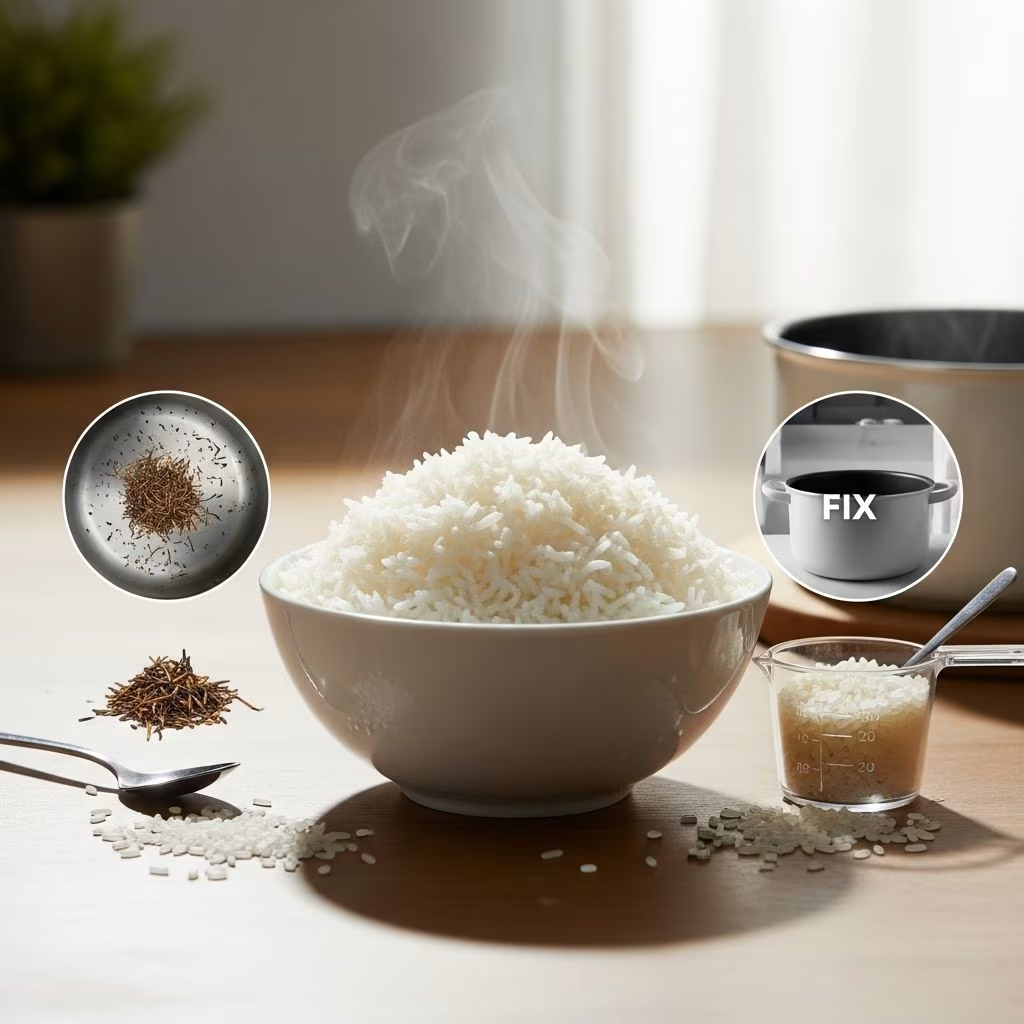
A scorched layer, or ‘tahdig’ in some cultures, ruins pots and flavor if unwanted. High heat or dry bottoms cause this.
- Salvage: Pour into a new pot swiftly, adding minimal hot water if needed, then steam low.
- Scrape gently; the crust can be a crispy treat if intentional.
Prevention: Use medium heat, a heavy-bottomed pot sized double the rice volume, and extra 1/2 cup water for evaporation.
Solution 4: Stopping Boil-Overs and Uneven Cooking
Bubbling pots mean wrong ratios or thin lids letting steam escape. Uneven results stem from small pots or stirring.
Fix Overflow: Lower heat immediately; skim foam.
Even Cooking Tip: Choose wide pots; never stir after adding water.
Advanced Tips for Consistent Success
Rice Cooker Shortcut: Reliable for beginners—follow 1:1 ratio, no monitoring needed.
Flavor Boosts: Toast dry rice in oil, then add broth or coconut milk. Salt enhances natural taste.
Storage: Fridge 4-6 days; freeze 6 months. Reheat with steam to restore texture.
Repurposing Failed Batches Creatively
- Mushy: Congee (simmer with stock, ginger), rice balls, or pudding.
- Undercooked: Fried rice after fixing.
- Burnt: Chop top layer for toppings; blend into soups.
These turn mishaps into meals, reducing waste.
Frequently Asked Questions
Why is my brown rice always hard?
Brown rice needs more water (1:2) and time (45 min) due to bran layer. Rinse well and soak 30 min pre-cook.
Can I fix rice cooked in a rice cooker?
Yes—spread out, dry as above, or recook with water.
Does rice type affect ratios?
Absolutely: adjust per package, adding evaporation buffer.
How to avoid starchiness?
Rinse until water runs clear; use absorption method.
Is wild rice the same?
No—1:3 ratio, 50 min simmer. Treat as grain.
Building Habits for Perfect Rice
Measure precisely with dry cups. Medium heat post-boil. Resting absorbs residual moisture evenly. Practice with small batches refines intuition. Over time, rice becomes effortless.
Experiment safely: note adjustments per batch for personalization. With these tools, rice fails fade, yielding versatile, fluffy bases for global dishes.
References
- How to Fix Rice — That Girl Cooks Healthy. 2023-05-15. https://thatgirlcookshealthy.com/how-to-fix-rice/
- How to Fix Mushy Rice: Save Your Overcooked Meal — FreeRx.com. 2024-02-10. https://freerx.com/Blog/Details?s=%09How+to+Fix+Mushy+Rice%3A+Save+Your+Overcooked+Meal%09
- Why You Fail Cooking Rice and How to Save it — YouTube (Laughing Shrimp). 2022-11-20. https://www.youtube.com/watch?v=Tqmbe_br3m4
- Why Is My Rice Hard? 7 Common Mistakes — RipePlate. 2023-08-05. https://ripeplate.com/blog/why-is-my-rice-hard-7-common-mistakes