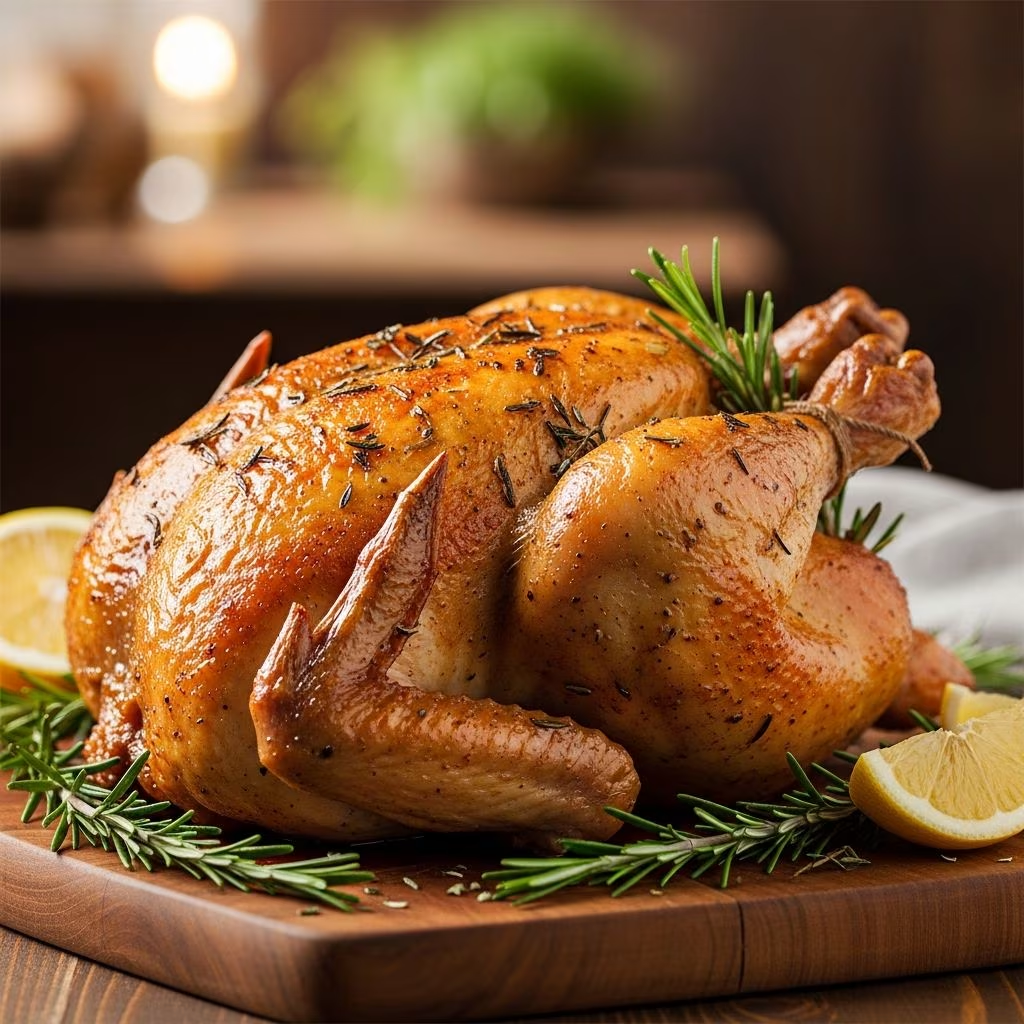
Transform a basic whole chicken into a culinary standout using the dry brining method. This technique seasons deeply, tenderizes meat, and crisps skin without the mess of wet brines. Ideal for home cooks seeking professional results.
The Science Behind Dry Brining
Dry brining involves applying salt directly to the chicken’s surface and cavity, then refrigerating uncovered. Salt draws out moisture, which dissolves it and gets reabsorbed, seasoning evenly and breaking down proteins for tenderness. This process enhances juiciness by redistributing natural juices while drying the skin for crispiness during roasting.
Unlike wet brining, which adds water weight, dry brining concentrates flavors. Enzymes activated by salt tenderize muscle fibers, mimicking overnight marination. Air circulation in the fridge evaporates surface moisture, setting up Maillard reaction for golden browning.
Essential Ingredients and Tools
Start with a 3.5-4 pound whole chicken, giblets removed. Core brine: 1 teaspoon kosher salt per pound (about 4 teaspoons total), plus 1 teaspoon black pepper. Optional enhancements include baking powder for extra crispiness or herbs like thyme.
Tools needed:
- Wire rack and sheet pan
- Paper towels
- Instant-read thermometer
- Roasting pan or skillet
High-quality chicken yields best results; pasture-raised options offer superior flavor and texture.
Step-by-Step Dry Brining Process
- Prepare the chicken: Rinse if desired, then pat thoroughly dry inside and out with paper towels. Excess moisture hinders crisping.
- Apply seasoning: Place on wire rack over sheet pan. Sprinkle salt evenly, massaging into skin and cavity. Add pepper or spices. Aim for uniform coverage.
- Refrigerate uncovered: Chill 4-24 hours (overnight ideal). Skin dries while salt penetrates. For pieces: bone-in 1-4 hours, boneless 30 minutes-2 hours.
- Preheat and oil: Remove from fridge 30-60 minutes before cooking. Pat dry again if needed. Rub lightly with olive oil.
Roasting for Perfection
Preheat oven to 425°F. Roast on rack in pan, breast-side up, 50-70 minutes until thigh reaches 165°F and breast 160°F. High heat first crisps skin; rest 10-15 minutes for juices to settle.
| Method | Temperature | Time | Internal Temp |
|---|---|---|---|
| Oven Roast | 425°F | 50-70 min | 165°F thigh |
| Low & Slow | 300°F initial, then 425°F | 1 hr + 15 min | 165°F thigh |
| Smoker | 375-400°F | 45-60 min | 160°F breast, 165°F thigh |
Spatchcock by removing backbone for even cooking and faster roast (400°F, 45 minutes).
Flavor Variations to Elevate Your Roast
- Herb-Infused: Mix salt with dried thyme, rosemary, garlic powder. Stuff fresh herbs in cavity.
- Spicy Kick: Add chili, coriander, black pepper to brine. Pairs with lime rinse pre-brine.
- Sweet Heat: Incorporate mustard powder, onion powder, sage in rub post-brine.
- Smoked: Dry brine, apply oil rub, smoke at 375°F for wood-fired essence.
For pieces: Brine thighs/drumsticks 2-4 hours, roast at 400°F until 165°F.
Tips for Crispy Skin and Juicy Meat
- Avoid rubbery skin: Ensure fully dry pre-roast; uncovered fridge time is key.
- Salt ratio: 1 tsp/lb prevents over-salting. Taste-test post-brine.
- Resting: 10 minutes minimum; carve against grain.
- Baking powder trick: 1 tbsp with salt crisps via pH change, accelerating browning.
Make-Ahead and Storage Guide
Dry brine up to 24 hours ahead. Cooked chicken stores in fridge 3-4 days. Reheat covered at 350°F with broth to retain moisture, 20-30 minutes.
Freeze uncooked brined chicken up to 3 months; thaw in fridge before roasting.
Common Mistakes and Fixes
| Issue | Cause | Solution |
|---|---|---|
| Dry Meat | Overcooking | Use thermometer; pull at 160-165°F |
| Soggy Skin | Undried surface | Longer fridge time, pat dry |
| Uneven Flavor | Patchy salting | Massage evenly, including cavity |
| Too Salty | Excess salt | Rinse post-brine or wipe off |
Nutritional Profile and Pairings
A 4-oz serving offers ~25g protein, low carbs. Skin adds healthy fats. Pair with roasted veggies, gravy from pan drippings, or simple salad.
Gravy: Simmer drippings with flour, broth, herbs until thickened.
Why Dry Brining Beats Other Methods
Simpler than wet brining (no liquid mess), superior to plain seasoning. Results in fall-off-bone tenderness and crackly skin. Versatile for oven, grill, smoke.
Frequently Asked Questions
Can I dry brine frozen chicken?
No; thaw fully first for even salting.
How long is too long for dry brining?
Up to 48 hours max; beyond risks mushiness.
Does baking powder affect taste?
No noticeable flavor; only enhances crisp.
Best chicken for dry brining?
Whole roasters or bone-in pieces; air-chilled preferred.
Grill instead of oven?
Yes; indirect medium heat, 165°F internal.
References
- Dry Brine Chicken Recipe — Chef Billy Parisi. 2023. https://www.billyparisi.com/dry-brine-chicken/
- Dry Brined Roasted Chicken — Most Hungry. 2022. https://mosthungry.com/dry-brined-roasted-chicken/
- Dry-Brined Roast Chicken — Grass Roots Farmers’ Cooperative. 2024. https://grassrootscoop.com/blogs/recipes/dry-brined-roast-chicken
- Juicy Dry Brine Roast Chicken — YouTube (Feed & Teach). 2023. https://www.youtube.com/watch?v=7amoAVTNIM0
- Dry Brine Chicken – Spatchcocked & Smoked — That Zest Life. 2023. https://www.thatzestlife.com/dry-brine-chicken-spatchcocked-smoked/