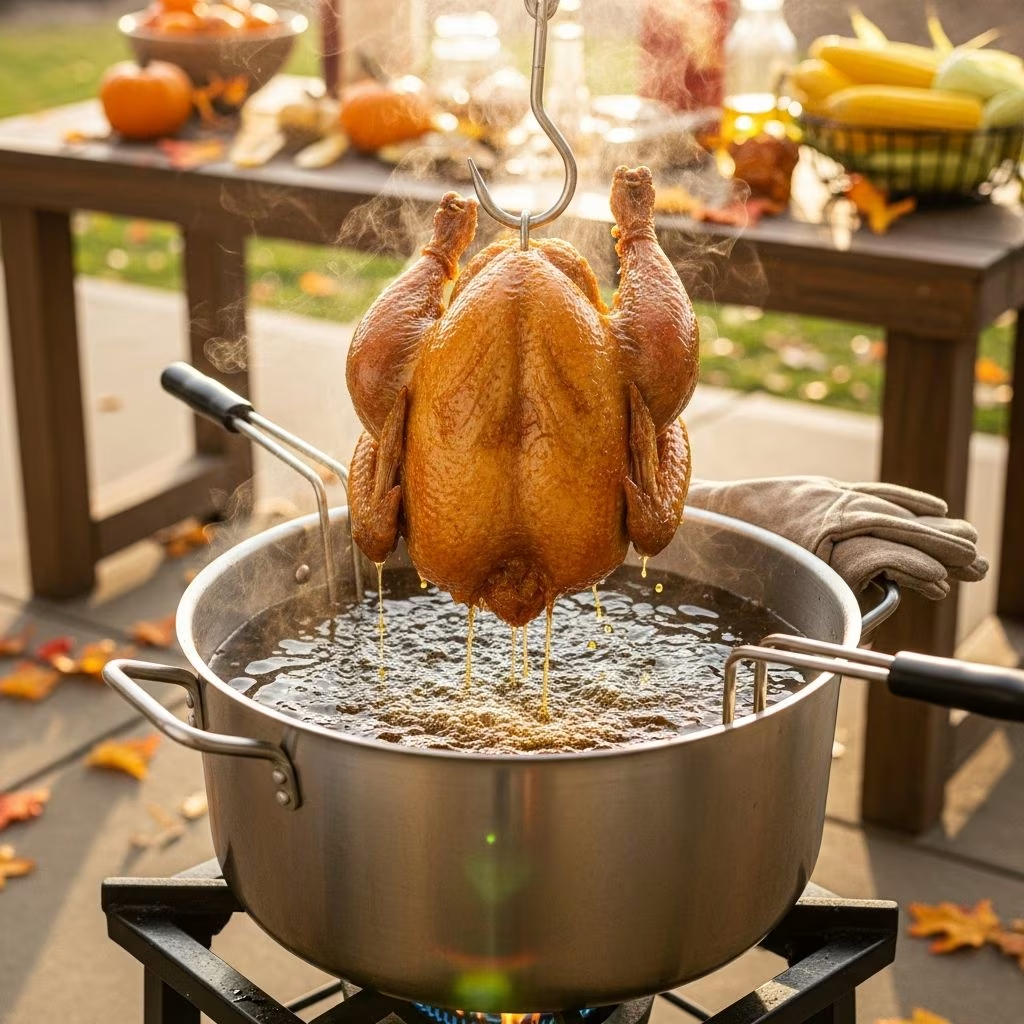
Deep frying turkey has become an increasingly popular alternative to traditional oven roasting, offering home cooks a way to achieve remarkably crispy skin and exceptionally moist meat in a fraction of the time. This cooking method transforms the bird into a golden-brown masterpiece that rivals restaurant-quality poultry. Whether you’re preparing for a holiday gathering or simply seeking a new culinary adventure, understanding the fundamentals of deep frying ensures both safety and delicious outcomes.
Selecting the Right Bird and Equipment
Choosing an appropriate turkey is the foundation of successful deep frying. Smaller turkeys weighing between 8 and 10 pounds perform best in a home fryer, as they cook evenly and fit comfortably in standard equipment. Alternatively, you can fry individual turkey parts such as breasts, wings, or thighs if you prefer more control over cooking time. Larger birds, while possible to fry, require significantly more oil and present greater challenges in managing temperature consistency.
Your equipment choice dramatically impacts the success of your endeavor. A dedicated turkey fryer typically consists of a propane burner, a large metal pot, a thermometer, and a frying basket or hook system. These specialized setups are designed specifically for the high heat and volume of oil required. Ensure your fryer can hold between 3 to 5 gallons of oil, depending on your turkey’s size. Before investing in equipment, verify that your cooking location is outdoors on a level surface such as a driveway or patio, away from structures and overhanging branches.
Preparation: The Foundation of Flavor
Proper preparation separates mediocre results from exceptional ones. Begin by completely thawing your turkey if it was frozen, or use a fresh bird for optimal results. Remove all packaging materials and ensure the turkey is completely dry both inside and out. Moisture and hot oil interact violently, so this step cannot be overstated—use paper towels to thoroughly pat down every surface, including the interior cavity.
Your turkey can be seasoned in multiple ways to build complex flavors. Consider these preparation methods:
- Marinade injection: Prepare a flavorful marinade and inject approximately 1 cup into an 8 to 10-pound turkey, distributing roughly two-thirds into the breast and one-third throughout the remaining meat. Space injection holes about 2 inches apart and withdraw the needle slowly to minimize seepage.
- Dry rubs: Apply seasoning blends generously over the entire bird, working the mixture under the skin for maximum flavor penetration. Allow the rub to set for about 20 minutes while you prepare your fryer.
- Breading coatings: For a more textured exterior, coat your turkey with seasoned breading before frying.
Important safety note: Never stuff a turkey intended for deep frying. The stuffing will not reach safe temperatures before the outer meat overcooks, creating a food safety hazard.
Calculating Oil Requirements and Measuring Accurately
Determining the correct amount of oil is a critical step that prevents overflow disasters. Use this proven method: place your cleaned, dried turkey in the fryer basket and position it in the empty pot. Fill the pot with water until it covers the turkey by 1 to 2 inches. Use a ruler to measure the distance from the top of the pot to the water’s surface. Remove the turkey and water, then dry the pot thoroughly. This measurement indicates exactly how much oil you’ll need. Typical requirements range from 3 to 5 gallons for standard home fryers.
Before adding oil, perform this calculation check while your turkey is still at room temperature. Never measure oil requirements after applying marinades or breading, as these additions increase volume and can lead to inaccurate measurements.
Heating Oil and Monitoring Temperature
Temperature control represents one of the most crucial aspects of successful turkey frying. Heat your oil to 350 degrees Fahrenheit (177 degrees Celsius), a process that typically requires 45 minutes to 1 hour depending on your fryer’s capacity and burner power. Use a reliable oil thermometer to monitor temperature closely throughout this preheating phase.
While waiting for oil to reach temperature, prepare your workspace by ensuring your turkey is completely dry and secured properly in the frying basket or hook system. Position your turkey so that any cavities face away from you—these openings can create fountains of bubbling oil during submersion.
Maintain steady temperature during the entire cooking process. If oil begins smoking, reduce heat immediately. The ideal cooking temperature remains between 325 and 350 degrees Fahrenheit. Temperature fluctuations can result in uneven cooking or excessively oily meat.
The Critical Submersion Process
Lowering your turkey into hot oil requires patience and caution. This step represents the highest-risk moment of the entire process. Follow these safety guidelines:
- Turn off the burner before beginning submersion to prevent oil overflow from igniting
- Lower the turkey slowly into the oil, allowing moisture to fry off gradually as the bird descends
- Expect significant bubbling—this is normal but indicates why rushing this step is dangerous
- Enlist a helper to manage the basket or hook system; two people provide better control and safety
- Once the turkey reaches full submersion, immediately reignite the burner and restore heat to 350 degrees Fahrenheit
The oil temperature will drop noticeably when cold poultry enters the hot liquid. Adjust your burner to bring the temperature back up to the target range. Never leave your fryer unattended once cooking begins. Constant monitoring ensures temperature stability and allows you to respond quickly to any issues.
Cooking Duration and Doneness Testing
Deep frying dramatically reduces cooking time compared to conventional roasting. Plan for approximately 3 to 4 minutes per pound of turkey. A 12-pound bird typically requires 36 to 60 minutes, while a 15-pound turkey needs around 45 minutes. These timeframes assume consistent oil temperature maintenance.
Determining doneness requires multiple verification methods. Insert a meat thermometer into three distinct locations: the thickest part of the breast, the innermost portion of the wing, and the innermost portion of the thigh. All three areas must reach safe minimum internal temperatures—165 degrees Fahrenheit for white meat and 175 to 180 degrees Fahrenheit for dark meat. This multi-point verification ensures every portion of the bird has cooked thoroughly.
Never rely solely on cooking time, as variables such as turkey size variations, oil temperature fluctuations, and equipment differences can affect actual cooking duration. The thermometer serves as your definitive guide to safety and quality.
Removal and Resting
Carefully extract your finished turkey from the fryer using the basket or hook system. Allow excess oil to drain back into the pot by positioning the turkey over the fryer briefly. Transfer your bird to a wire rack or cutting board lined with paper towels, which will absorb any remaining oil.
Resist the temptation to carve immediately. Allow your turkey to rest for approximately 30 minutes. This resting period permits residual heat to continue gently cooking internal areas while allowing juices to redistribute throughout the meat. Carving too soon results in meat that’s dry and less flavorful. After resting, your turkey is ready for carving and serving.
Oil Storage and Reuse
Once your oil cools completely, it can be strained and stored for future use. Many experienced fryers enjoy cooking additional items like potatoes or vegetables after the turkey, which actually improves the oil’s flavor for subsequent frying applications. Pour cooled oil into clean containers and store in a cool, dark location. Properly maintained oil can be reused multiple times, making the process economical.
Frequently Asked Questions
Can I deep fry a large turkey?
While technically possible, turkeys larger than 12 pounds become increasingly difficult to manage safely. Larger birds require substantially more oil, and temperature control becomes more challenging. Stick with 8 to 10-pound turkeys for optimal results.
What if my turkey isn’t completely thawed?
Never attempt to fry a partially frozen turkey. Ice crystals or frozen sections will cause violent oil reactions when the bird enters the fryer. Always ensure complete thawing or use a fresh turkey.
Is deep frying dangerous?
Deep frying carries inherent risks, but following proper safety procedures virtually eliminates problems. Never leave your fryer unattended, use outdoor locations exclusively, lower the turkey slowly, and maintain consistent temperature monitoring.
What’s the difference between 350 and 325 degrees Fahrenheit?
While 350 degrees is the standard target, temperatures between 325 and 350 degrees are acceptable. Lower temperatures produce crispier skin but extend cooking time. Higher temperatures risk uneven cooking with burnt exteriors and undercooked interiors.
Can I use butter or other oils instead of peanut oil?
Peanut oil is preferred because of its high smoke point (around 450 degrees Fahrenheit), which prevents breakdown at frying temperatures. Vegetable and canola oils work acceptably, though peanut oil delivers superior results and flavor.
Essential Safety Reminders
Safety transcends all other considerations when deep frying turkey. Keep fire extinguishers rated for oil fires nearby. Never use water to extinguish oil fires—this intensifies the blaze. Establish a clear perimeter around your fryer, keeping children and pets away. Wear long sleeves and avoid loose clothing that might catch oil splatter. Have a helper present during the cooking process, and never operate a fryer under the influence of alcohol or medication that impairs judgment.
Position your fryer on a completely level surface to prevent accidental tipping. Ensure your propane tank is secure and the hose connections are tight. Check that your fryer’s thermometer functions accurately before beginning—a malfunctioning thermometer can lead to dangerous temperature fluctuations.
References
- How To Deep Fry Turkey — National Turkey Federation/EatTurkey.org. Accessed April 2026. https://www.eatturkey.org/a-deep-fried-delicacy-the-how-to-on-deep-frying-turkey/
- How To Deep Fry a Turkey: The Ultimate Thanksgiving Guide — Kosmo’s Q. Accessed April 2026. https://kosmosq.com/blogs/recipes/how-to-deep-fry-a-turkey
- How to Deep Fry a Turkey — Heinen’s Grocery Store. Accessed April 2026. https://www.heinens.com/stories/how-to-deep-fry-a-turkey/
- How to Fry a Turkey: 6 Steps — Instructables. Accessed April 2026. https://www.instructables.com/How-to-Fry-a-Turkey/
- How to Deep Fry a Turkey — Butterball. Accessed April 2026. https://www.butterball.com/how-to/cook-a-turkey/deep-fry