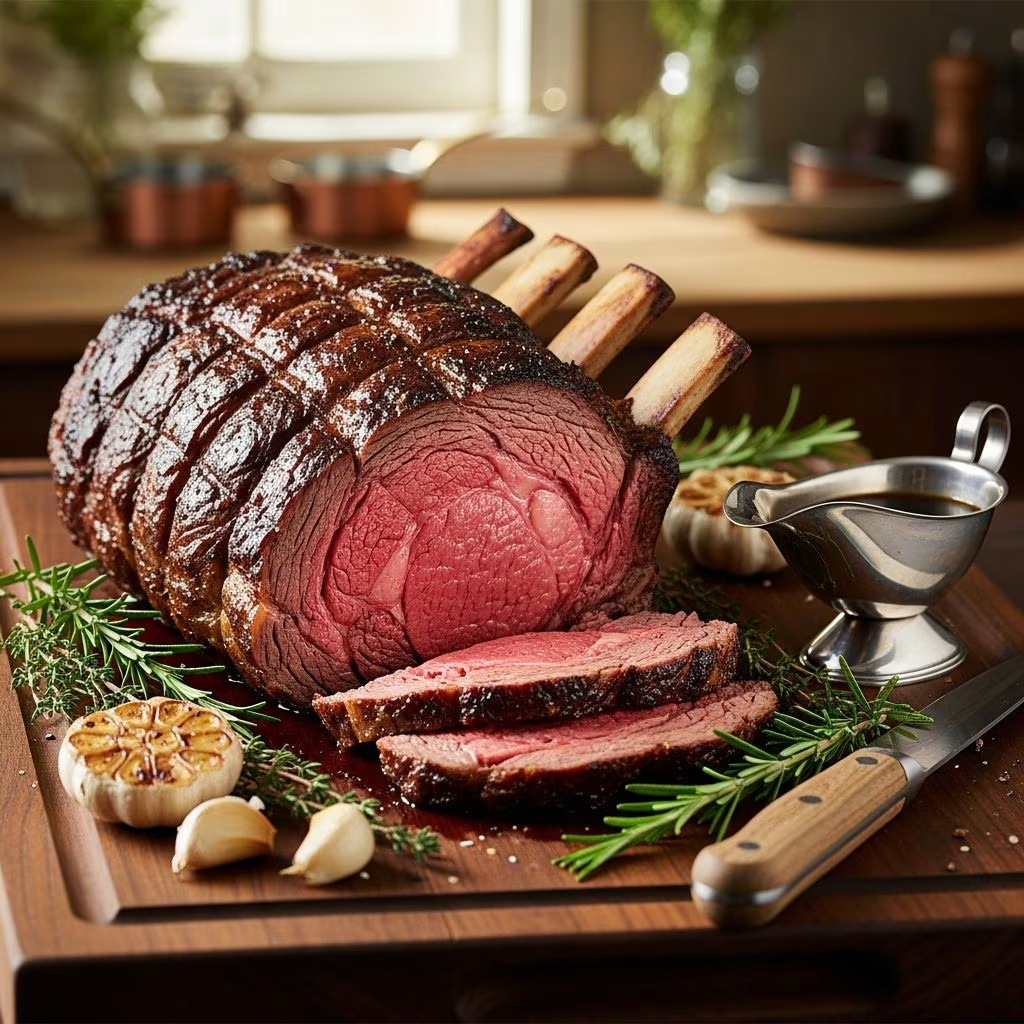
Prime rib stands as a pinnacle of beef roasts, celebrated for its rich marbling, tenderness, and robust flavor that makes it ideal for grand occasions. Achieving perfection requires understanding the cut, precise preparation, and controlled cooking. This guide draws from proven methods to deliver a roast that’s juicy inside with a flavorful crust outside.
Understanding the Prime Rib Cut
The prime rib, also known as standing rib roast, comes from the rib primal section of the cow, typically ribs 6 through 12. This area yields meat with excellent marbling, ensuring succulence when cooked properly. Bone-in roasts are preferred for flavor infusion and moisture retention, as bones conduct heat evenly and release natural juices.
Select a roast with even marbling—white fat veins throughout the red meat—and a cap of fat on top for basting during cooking. Aim for USDA Prime or Choice grades for best quality. A general rule: plan 1 rib bone per 2-3 servings. For a 5-6 pound roast (about 3 ribs), expect to serve 6-8 people generously.
- Bone-in vs. Boneless: Bone-in enhances flavor and presentation; boneless is easier to carve but may dry out faster.
- Freshness Check: Look for bright red color, firm texture, and minimal packaging odor.
- Storage: Refrigerate uncovered overnight to dry the surface for better searing.
Essential Ingredients for Flavor
Simple, high-quality ingredients amplify the beef’s natural taste. Focus on fresh herbs, quality salt, and fats for a herb-crusted masterpiece.
| Ingredient | Quantity (5-6 lb Roast) | Purpose |
|---|---|---|
| Kosher or sea salt | 1-2 tsp per pound | Draws out moisture for dry brine, seasons deeply |
| Fresh garlic, minced or sliced | 6-8 cloves | Infuses savory depth; insert slices into slits |
| Fresh rosemary & thyme | 2 tsp each, chopped | Aromatic herbs for classic crust |
| Olive oil or softened butter | 1/4 cup | Binds seasonings, promotes browning |
| Black pepper, onion powder | 1-2 tsp each | Enhances umami and spice |
Optional additions like Worcestershire sauce add umami tang. Avoid over-seasoning; let the beef shine.
Preparation: The Foundation of Success
Start 24-48 hours ahead for optimal results. Remove the roast from refrigeration 3-4 hours before cooking to reach room temperature—this ensures even cooking.
- Dry Brine: Pat dry with paper towels. Generously salt all surfaces (1 tsp per pound). Refrigerate uncovered overnight. This process tenderizes, seasons internally, and dries the exterior for crisp crust.
- Slit and Stuff: Create 1/2-inch slits across the top and insert garlic slices. This infuses flavor without overpowering.
- Herb Rub: Mix herbs, pepper, powders, and oil/butter into a paste. Apply evenly, massaging into every crevice. Let sit 1 hour at room temp.
Tie the roast if boneless, or ensure bones are frenched for presentation. Place fat-side up in a roasting pan with a rack; bones down for bone-in.
Roasting Techniques for Perfection
Two primary methods dominate: high-heat sear followed by low-and-slow, or reverse sear for precision. Use an instant-read thermometer—essential for doneness.
High-Heat Start Method
Preheat oven to 450-500°F. Roast 15-20 minutes to sear, then drop to 325-350°F. Cook until target internal temp, accounting for 5-10°F carryover during rest.
- Rare (115-120°F): Pull at 110°F; buttery soft center.
- Medium-Rare (125-130°F): Most popular; pink, juicy.
- Medium (135-140°F): Slight pink, firmer.
For a 5 lb roast: ~1.5-2 hours total at medium-rare.
Low-and-Slow Reverse Sear
Ideal for large roasts. Oven at 200-250°F until 10°F below target (e.g., 115°F for medium-rare), rest covered, then sear at 500°F for 10 minutes or torch/grill.
Pro Tip: Position rack in lower third; rotate halfway for even browning.
Au Jus and Sides: Completing the Meal
Pan juices form the base for au jus. After roasting, strain drippings, degrease, and simmer with beef broth, wine, onions, and herbs. Reduce to intensify.
- Horseradish cream: Mix prepared horseradish, sour cream, chives.
- Sides: Yorkshire pudding, roasted veggies, mashed potatoes.
Rest 20-30 minutes tented in foil—juices redistribute for maximum tenderness.
Common Pitfalls and Fixes
Overcooking: Thermometer is non-negotiable; ovens vary.
Dry Meat: Fat cap up, dry brine, rest properly.
Uneven Cooking: Room temp start, rotate pan.
No Crust: Pat dry, high initial heat.
Scaling for Different Sizes
| Roast Weight | High-Heat Time (500°F then 325°F) | Low-Slow Time (250°F) | Servings |
|---|---|---|---|
| 4-5 lbs | 20 min + 1.5 hrs | 3-4 hrs | 4-6 |
| 6-8 lbs | 25 min + 2-2.5 hrs | 4-5 hrs | 6-10 |
| 10+ lbs | 30 min + 3+ hrs | 6+ hrs | 12+ |
Storage and Reheating
Refrigerate leftovers up to 4 days, wrapped tightly. Reheat slices in 250°F oven with au jus to prevent drying. Freeze up to 3 months.
FAQs
What internal temperature for medium-rare prime rib?
Pull at 125°F; it rises to 130°F during rest for perfect pink center.
Can I cook prime rib from frozen?
No—thaw fully in fridge for even cooking and food safety.
Bone-in or boneless—which is better?
Bone-in for superior flavor and moisture; both work with proper technique.
How long to rest prime rib?
20-30 minutes loosely tented to redistribute juices.
What’s the best pan for roasting?
Heavy roasting pan with rack; cast iron excels for heat retention.
Master these steps for prime rib that rivals professional steakhouses. Practice yields confidence for holiday triumphs.
References
- Melt-in-Your-Mouth Garlic Herb Prime Rib Recipe — Foodie and Wine. 2023. https://foodieandwine.com/melt-in-your-mouth-prime-rib-recipe/
- Perfect Prime Rib Roast — The Woks of Life. 2022. https://thewoksoflife.com/perfect-prime-rib-roast/
- Perfect Prime Rib Recipe — Tastes Better from Scratch. 2024. https://tastesbetterfromscratch.com/prime-rib/
- Perfect Prime Rib Roast — Self Proclaimed Foodie. 2023. https://selfproclaimedfoodie.com/perfect-prime-rib-roast/
- Best No-Fail Prime Rib — Downshiftology. 2024. https://downshiftology.com/recipes/best-prime-rib/