Cooking pasta seems straightforward, but achieving that ideal al dente texture with sauce that clings perfectly requires precise steps. This guide draws from culinary best practices to help you elevate everyday pasta dishes to professional levels. Key elements include water volume, salting, timing, and sauce integration, ensuring consistent success.
Essential Equipment for Pasta Success
Start with the right tools to set yourself up for victory. A deep, wide pot—ideally 5-6 quarts—allows pasta to move freely without clumping. This size accommodates expansion, as pasta can triple in volume during cooking. Use long tongs or a spider strainer for easy transfer, avoiding excess water that dilutes sauce. A timer and tasting spoon are non-negotiable for precision.
- Large pot: 4-5 quarts water per pound of pasta prevents sticking and ensures even cooking.
- Strainer or colander: Metal for durability; position near stove for quick draining.
- Tongs/spider: Transfer pasta directly to sauce, retaining starch-rich water.
- Wooden spoon: For initial stirring to separate strands.
Water Fundamentals: Volume and Preparation
Water is the foundation of great pasta. Use abundant boiling water to mimic professional kitchens. For every pound (about 450g) of dried pasta, measure 4-5 quarts (roughly 4 liters). This ratio maintains temperature, promotes circulation, and washes away excess starch. Less water leads to gummy results; more ensures uniformity.
Bring water to a vigorous rolling boil over high heat before adding pasta. This rapid boil cooks evenly from the start, avoiding uneven textures. Patience here pays off—cold water addition prolongs cooking and risks clumping.
| Pasta Amount | Water Volume | Pot Size Recommendation |
|---|---|---|
| 1/2 lb (225g) | 2-3 quarts | 4-quart pot |
| 1 lb (450g) | 4-5 quarts | 5-6 quart pot |
| 1.5 lb (675g) | 6-7 quarts | 8-quart pot |
Salting the Water: Flavor from the Start
Salt the boiling water generously to infuse pasta with savory depth. Aim for seawater-like salinity: about 1.5-2 tablespoons per pound (or per 400g). Add salt after boiling begins, not before, as it doesn’t accelerate boiling but seasons effectively. This step prevents bland pasta, allowing it to absorb subtle flavors during cooking.
Skip oil entirely—contrary to myth, it coats pasta, repelling sauce later. Rely on stirring and water volume for anti-stick protection.
Adding and Cooking Pasta: Precision Timing
Drop pasta into the boil all at once. For long shapes like spaghetti, add gradually without snapping—let it soften naturally. Stir vigorously immediately and every 2 minutes thereafter. This bursts surface starches early, preventing adhesion as the pasta hydrates uniformly.
Cook dried pasta 1-2 minutes shy of package al dente instructions. Taste frequently; seek firm chewiness that yields slightly. This undercooking allows gentle finishing in sauce, yielding springy texture under heavy sauces. Fresh pasta cooks faster—halve times and test often.
Reserving Pasta Water: The Secret Weapon
Before draining, ladle 1-2 cups of starchy cooking water. This cloudy liquid thickens sauces, helps emulsify, and promotes adhesion—essential for silky results. Discard the rest to avoid dilution.
Sauce Integration: Elevate Beyond Boiling
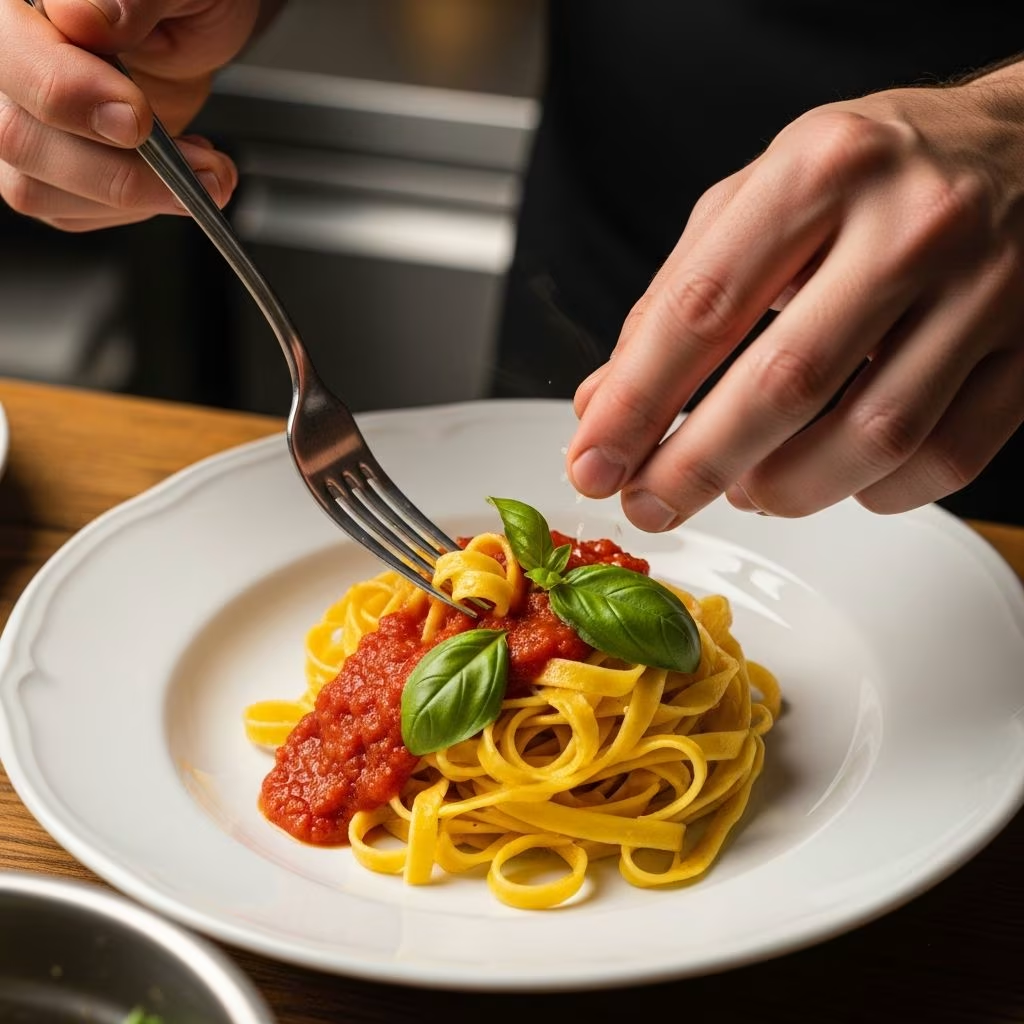
Never pour sauce over drained pasta; integrate instead. Transfer undercooked pasta directly to simmering sauce using tongs, adding reserved water as needed. Simmer 1-3 minutes, tossing until coated and just tender. Starch from pasta and water creates glossy emulsion.
If sauce lags, toss drained pasta lightly with butter or oil to halt cooking without sticking. Warm serving bowls in a low oven (120°F) beforehand for heat retention.
Pasta Variations: Tailoring Techniques
Long Pasta (Spaghetti, Linguine)
Use tallest pot; ease in ends first. Stir to submerge fully. Finish in light tomato or oil-based sauces for twirlable strands.
Short Pasta (Penne, Fusilli)
Spider strainer excels for transfer. Pairs with chunkier sauces; corkscrews trap bits perfectly.
Delicate Pasta (Angel Hair, Orzo)
Undercook aggressively (1-2 min less); shock in ice if not saucing immediately. Gordon Ramsay emphasizes even cooking in ample seasoned water.
Fresh vs. Dried
Dried: Sturdy, needs undercooking. Fresh: Tender, cooks in 2-4 minutes; sauce immediately.
Common Mistakes and Fixes
- Overcrowding pot: Cooks unevenly—scale water up.
- Rinsing pasta: Strips starch/salt—omit unless cold salad.
- Oil in water: Blocks sauce—stir instead.
- Overcooking: Test early; finish in pan.
- Ignoring water reserve: Sauce separates—always save.
Advanced Tips for Pro-Level Pasta
For next-level dishes, toast pasta lightly in oil before boiling (cacio e pepe style). Experiment with infused waters (garlic peels for subtle aroma). Serve promptly—pasta stiffens fast. Pair shapes thoughtfully: tubes for meaty ragus, ribbons for cream.
In low-water hacks, like thermos methods, monitor closely to avoid mush. Stick to standards for reliability.
FAQs
Why undercook pasta before sauce?
It absorbs flavors and achieves perfect tenderness without mushiness.
How much salt is too much?
Taste water—if sea-like, it’s right. Pasta won’t absorb excess.
Can I reuse pasta water?
Once for sauce; discard after—stale starch harms next batches.
Best pot material?
Stainless steel or enamel; aluminum reacts with acidity.
How to prevent sticking without oil?
Ample water, immediate stirring, quick saucing.
Quick Reference Chart
| Shape Type | Water Ratio (per lb) | Cook Time Adjustment | Ideal Sauce Pair |
|---|---|---|---|
| Long | 5 quarts | -1 min | Oil/Pesto |
| Short | 4 quarts | -1 min | Tomato/Meat |
| Delicate | 5 quarts | -2 min | Light Broth |
| Fresh | 4 quarts | Test at 2 min | Any |
References
- The Ultimate Guide To Cooking Pasta Perfectly — The Burnt Butter Table. 2023. https://www.theburntbuttertable.com/the-ultimate-guide-for-how-to-cook-pasta-perfectly/
- How To Cook The Perfect Pasta | Gordon Ramsay — YouTube (Gordon Ramsay). 2019-10-15. https://www.youtube.com/watch?v=UYhKDweME3A
- 10 Tips to Do Pasta Night Right — Whole Foods Market. 2023. https://www.wholefoodsmarket.com/recipe-collections/pasta-cooking-tips
- Tips for Cooking Pasta — Andrew Zimmern. 2022. https://andrewzimmern.com/tips-for-cooking-pasta/
- The Best Tips for Cooking Pasta — WebstaurantStore. 2025-04-07. https://www.webstaurantstore.com/blog/5340/pasta-cooking-tips.html