Beef tenderloin filets represent one of the most elegant and sought-after cuts available to home cooks. Known for their exceptional tenderness and mild beef flavor, these filets have earned their place as the centerpiece of countless special occasion dinners. What many home cooks don’t realize is that achieving restaurant-quality results requires understanding a few fundamental techniques that transform a good steak into an extraordinary culinary experience.
The beauty of cooking beef tenderloin filets lies in their forgiving nature when you apply proper methodology. Unlike leaner cuts that demand precision, the inherent fat content of beef tenderloin works in your favor, creating a naturally juicy and flavorful result. This guide explores everything you need to know about selecting, preparing, and cooking beef tenderloin filets to perfection.
Understanding Your Cut of Meat
Beef tenderloin comes from the loin section of the cow and is prized for its lack of connective tissue and minimal marbling. The filet portion specifically refers to individual steaks cut from the tenderloin, typically ranging from four to eight ounces each. This particular cut offers several advantages for home cooking: it requires minimal preparation, cooks relatively quickly, and delivers consistent results across different cooking methods.
When selecting beef tenderloin filets, aim for steaks with at least a quarter-inch of even thickness. Thinner cuts risk overcooking before the exterior develops proper browning, while excessively thick steaks become challenging to cook through without burning the surface. Color should be deep red with some visible white marbling throughout, indicating quality and adequate fat content for flavor development.
Preparation Essentials Before Cooking
Proper preparation separates successful home cooks from those struggling with inconsistent results. Begin by removing your filets from refrigeration approximately 30 minutes before cooking. This critical step allows the meat to reach closer to room temperature, ensuring even cooking throughout the thickness of the steak. A cold steak pulled directly from the refrigerator will cook unevenly, with the exterior overdone before the interior reaches the desired temperature.
Pat the steaks completely dry using paper towels. Moisture on the surface creates steam during cooking, which interferes with the development of a proper crust. Take time to blot both sides and edges thoroughly. This seemingly minor detail significantly impacts the final texture and appearance of your finished filets.
Season your steaks just before cooking with kosher salt and freshly ground black pepper. Kosher salt has larger crystals that distribute more evenly than table salt, providing better seasoning distribution. The timing of seasoning matters: adding salt too far in advance draws moisture to the surface, while applying it immediately before cooking allows the salt to dissolve and penetrate the meat fibers more effectively.
The Pan-Searing Technique
Pan-searing creates the distinctive browned crust that adds tremendous flavor and visual appeal to your filets. This technique requires a heavy-bottomed skillet, ideally cast iron, which distributes heat evenly and maintains high temperatures necessary for proper browning. A 9 to 10-inch cast iron skillet provides adequate surface area without overcrowding.
Heat your skillet over high heat for five to seven minutes before adding the steaks. The skillet must be substantially hotter than you might initially assume—you’re aiming for a surface temperature that creates an audible sizzle when the filet makes contact. This high temperature initiates the Maillard reaction, the chemical process that creates the brown crust responsible for complex, savory flavors.
Add a high-heat oil to the pan just before placing the steaks. Canola oil or avocado oil work well, offering smoke points high enough for this application. Avoid olive oil, which breaks down at these temperatures and imparts unwanted flavors. Use approximately one tablespoon of oil for a typical four-steak preparation.
Place the filets in the pan and resist the urge to move them. Constant manipulation interferes with crust development. Sear for approximately two minutes per side, creating contact on the top, bottom, and sides of each steak. During this process, you’ll notice the meat releases easily from the pan once a proper crust forms—attempting to move it before this point suggests insufficient browning time.
Temperature Monitoring and Finishing
After achieving proper browning on all sides, transfer the skillet to a preheated oven set to 400 degrees Fahrenheit. The oven environment provides gentle, even heat that brings the interior to target temperature without additional surface browning. At this stage, the timing depends on your desired doneness and the thickness of your filets.
Use a meat thermometer for accurate results rather than relying on visual cues or the hand-touch method. Insert the thermometer into the thickest part of the filet without touching bone or the skillet surface. Target temperatures are 125-130°F for rare, 130-135°F for medium-rare, 135-145°F for medium, and 145-160°F for medium-well. Most restaurants serve beef tenderloin at medium-rare, offering an ideal balance between tenderness and flavor development.
Cooking time in the oven typically ranges from 8 to 15 minutes depending on filet thickness and your target temperature. Thinner steaks (around one inch) may finish in just eight minutes, while thicker cuts (1.5 inches or more) require 12-15 minutes. Check temperature starting around the eight-minute mark to avoid overshooting your target.
The Resting Period
Resting the cooked filets is non-negotiable for achieving the best texture and juiciness. Remove the steaks from the oven when they reach your target temperature, then transfer them to a cutting board or warm plate. Allow them to rest for 10 minutes undisturbed. During this time, the muscle fibers relax and reabsorb the meat juices, resulting in more tender, juicier steaks when cut. Skipping this step causes those flavorful juices to run onto the plate rather than remaining in the meat.
Creating Compound Butter Enhancements
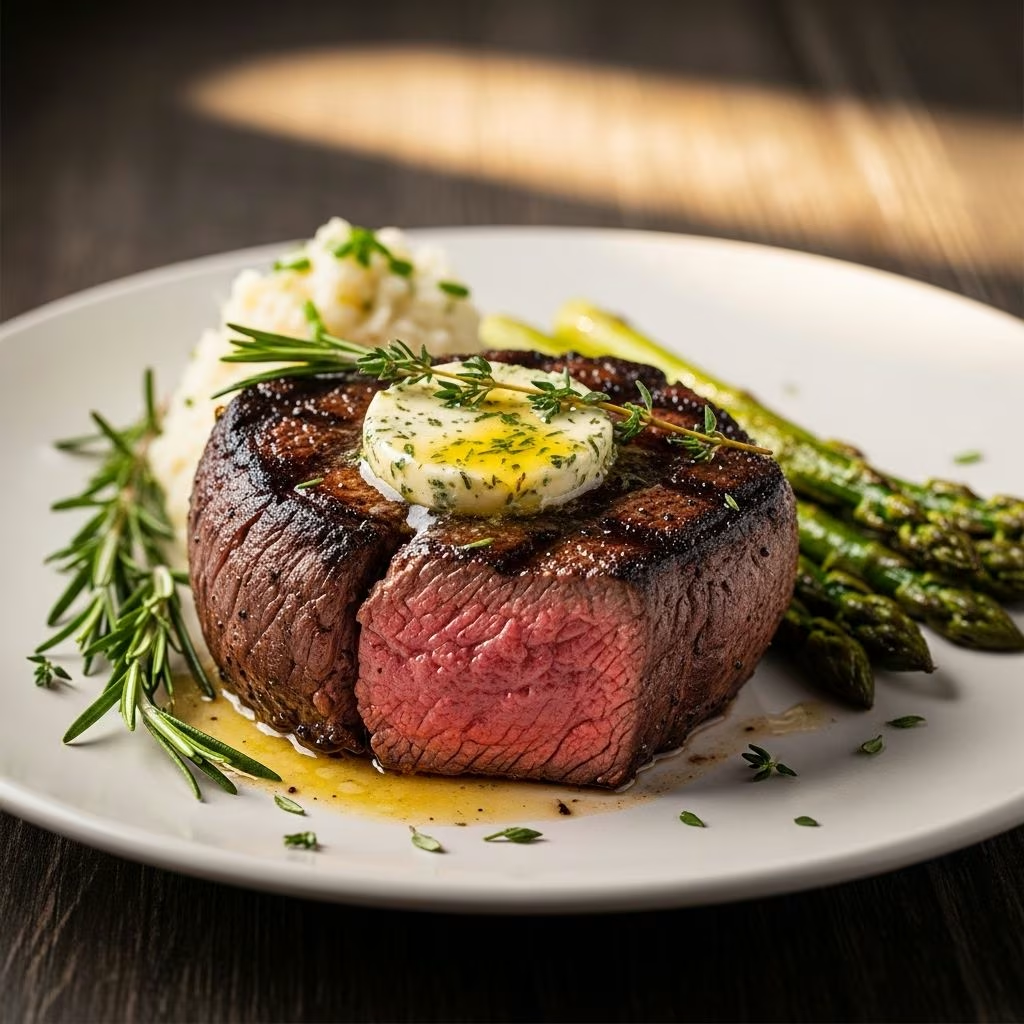
While pan-seared beef tenderloin filets shine with minimal embellishment, a compound butter takes the experience to the next level. Prepare this enhancement before cooking by combining softened butter with fresh herbs like thyme and rosemary, along with minced garlic. Form this mixture into a log shape and refrigerate.
Place a pad of herb butter atop each finished filet immediately after removing from the oven. The residual heat melts the butter, distributing those herb flavors throughout the meat. This simple addition adds complexity and richness without overwhelming the delicate beef flavor.
Essential Cooking Time Overview
| Step | Duration | Purpose |
|---|---|---|
| Bring to room temperature | 30 minutes | Ensure even cooking throughout |
| Preheat skillet | 5-7 minutes | Achieve proper searing temperature |
| Pan sear all sides | 8 minutes total | Develop brown crust |
| Oven finishing | 8-15 minutes | Bring interior to target temperature |
| Rest before serving | 10 minutes | Allow juices to redistribute |
Complementary Side Dishes
The elegance of beef tenderloin filets calls for equally refined accompaniments. Creamed potatoes, whether whipped or mashed, provide a luxurious contrast to the filet’s savory profile. Roasted green beans offer textural variety and a lighter vegetable option that won’t overshadow the main course.
More substantial sides like risotto pair beautifully with beef tenderloin, particularly variations incorporating mushrooms or Parmesan cheese. The creaminess and umami-rich flavors complement the tender meat without competing for attention.
Sauce Considerations
While perfectly cooked beef tenderloin filets need little enhancement, thoughtfully chosen sauces can elevate the entire plate. Red wine reductions create a sophisticated accompaniment that deepens the beef’s natural flavors. Lighter sauces featuring fresh herbs and pan drippings work equally well for those preferring subtlety.
Horseradish-based sauces provide a peppery contrast that awakens the palate, particularly appealing to those who enjoy bolder flavor profiles. Whatever sauce you select should complement rather than mask the delicate, tender quality of the filet itself.
Frequently Asked Questions
Can I use butter for the initial searing instead of oil?
While butter adds wonderful flavor, it has a lower smoke point than oil and will burn at the high temperatures required for proper searing. Use oil for the initial searing, then add butter during the oven phase or finish with compound butter afterward.
What’s the minimum thickness for beef tenderloin filets?
Filets thinner than three-quarters of an inch become difficult to cook properly, often developing an overcooked exterior before the interior reaches the desired temperature. Aim for at least one inch of thickness for best results.
How do I know when my filet reaches medium-rare without a thermometer?
A meat thermometer provides the most reliable method. Without one, experienced cooks use the hand-touch method: compare the firmness of the cooked meat to the fleshy area between your thumb and forefinger at different hand positions, though this requires practice and remains less accurate than thermometer verification.
Can I prepare beef tenderloin filets ahead of time?
Season and bring filets to room temperature just before cooking for optimal results. While you can season them earlier, they’ll lose some moisture. Fully cooked filets can be reheated gently in a low oven, though this may slightly affect tenderness and juiciness.
What type of skillet works best for this recipe?
Cast iron skillets offer superior heat retention and distribution compared to other options, making them ideal for achieving consistent results. Stainless steel works as a secondary choice, though it requires more careful heat management to prevent sticking.
References
- Filet Mignon Recipe (Perfect Every Time) — Wholesome Yum. Accessed April 2026. https://www.wholesomeyum.com/recipes/filet-mignon-recipe-beef-tenderloin-recipe/
- 10 Irresistible Beef Tenderloin Recipes to Impress Your Dinner Guests — Capital Farms. Accessed April 2026. https://capitalfarms.com/blogs/best-beef-near-you-real-local-beef/10-irresistible-beef-tenderloin-recipes-to-impress-your-dinner-guests
- Ina Garten’s Filet Mignon with Mustard and Mushrooms — Food Network. Accessed April 2026. https://www.youtube.com/watch?v=Hck6R_0tiNo
- Tenderloin Steak – How to Cook it Perfect Every Time — Pitch Fork Foodie. Accessed April 2026. https://pitchforkfoodie.com/herbed-butter-tenderloin-steak/