Water bottle lids accumulate grime, bacteria, and residues from daily use, making thorough cleaning essential for health and longevity. This guide provides detailed, original methods to restore freshness using common household items, ensuring your hydration stays safe and pleasant.
Why Prioritize Lid Cleaning
Lids feature intricate parts like gaskets, spouts, and threads that trap moisture and microbes. Neglecting them leads to odors and potential illness. Regular maintenance extends bottle life and maintains taste purity.
- Prevents bacterial growth in hidden crevices.
- Eliminates lingering flavors from beverages.
- Preserves lid functionality and seal integrity.
Daily Maintenance Routines
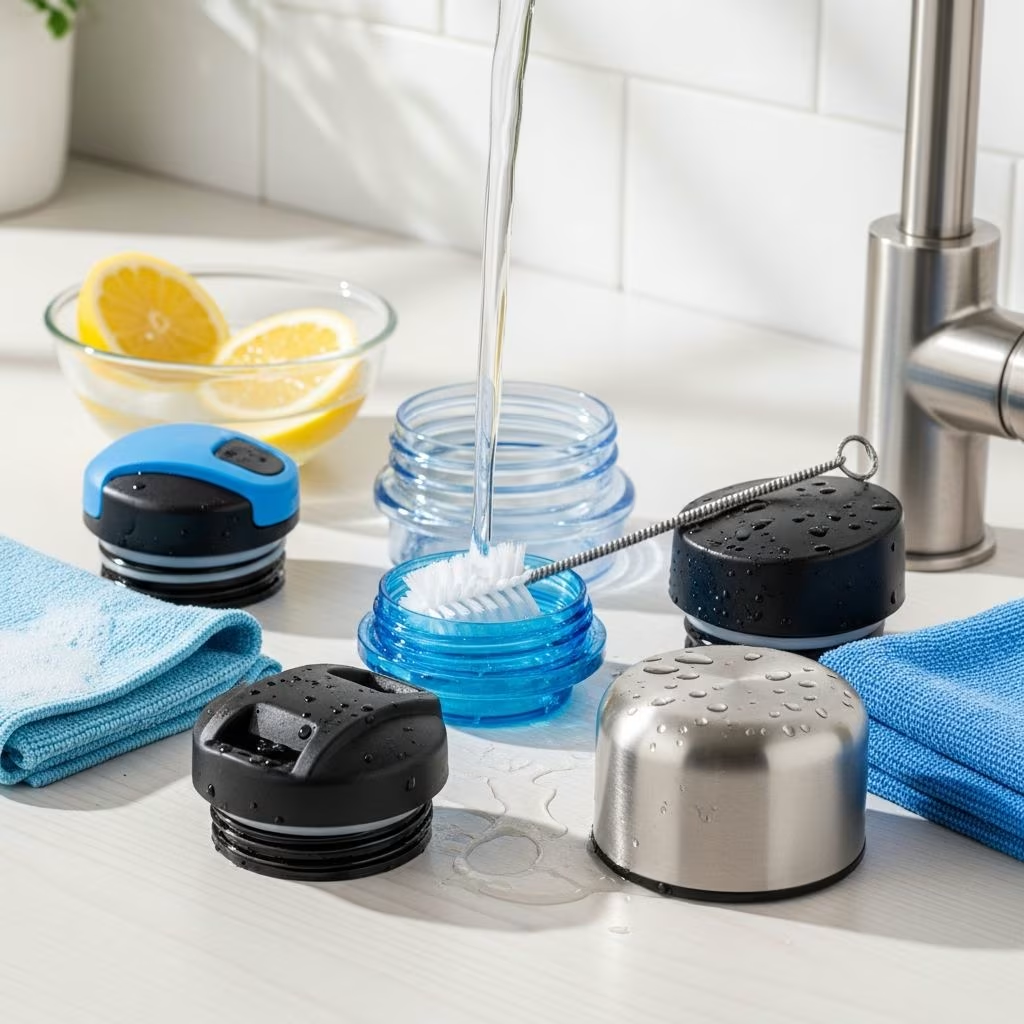
Incorporate quick cleans into your routine to avoid buildup. After each use, disassemble the lid fully, rinse under hot water, and scrub with mild soap using a soft brush. Air dry completely with parts separated to inhibit mold.
| Frequency | Action | Tools Needed |
|---|---|---|
| After every use | Rinse and soap scrub | Soft brush, dish soap |
| Weekly | Deep soak | Vinegar or baking soda |
| Monthly | Sanitize | Bleach solution (diluted) |
Natural Deep Cleaning Solutions
Vinegar Soak Method
Vinegar’s acidity dissolves mineral deposits and kills germs naturally. Fill a container with equal parts white vinegar and warm water. Submerge disassembled lid components for 30 minutes to overnight. Scrub gently, rinse thoroughly, and dry.
- Disassemble lid completely.
- Soak in vinegar solution.
- Scrub crevices with a toothpick or brush.
- Rinse multiple times to remove vinegar scent.
- Air dry upside down.
Baking Soda Paste Technique
Baking soda neutralizes odors and scrubs without abrasion. Mix 2 teaspoons with water to form a paste. Apply to lid surfaces, let sit 15-20 minutes, then scrub and rinse. Ideal for silicone seals and plastic parts.
- Gentle on materials.
- Removes tough stains effectively.
- Leaves no residue when rinsed well.
Rice or Salt Scrubbing Hack
For textured interiors, add uncooked rice or coarse sea salt with warm soapy water. Shake vigorously for 1-2 minutes; the grains act as abrasives. Rinse and inspect for cleanliness. Repeat if needed for stubborn spots.
Advanced Sanitizing Approaches
Diluted Bleach Solution
For heavy contamination, use 1 teaspoon unscented bleach per gallon of water. Soak lid parts for 2 minutes, avoiding prolonged exposure to prevent material damage. Rinse extensively and air dry. Use sparingly, no more than monthly.
Use bleach only on sturdy lids; skip for delicate silicone or wood accents.
Hydrogen Peroxide Clean
Pour 3% hydrogen peroxide into lid crevices, let bubble for 10 minutes to oxidize bacteria. Rinse well. Effective alternative to chemicals, safe for most materials.
Material-Specific Cleaning Guide
Different lid materials require tailored care to avoid damage.
| Material | Recommended Cleaners | Avoid | Notes |
|---|---|---|---|
| Stainless Steel | Vinegar, baking soda, dishwasher top rack | Bleach frequently | Highly durable; dishwasher safe often. |
| Silicone Gaskets | Soap, vinegar soak | Harsh abrasives | Remove and clean separately. |
| Plastic | Baking soda paste, mild soap | Boiling water | Check for heat tolerance. |
| Bamboo/Wood | Hand wash only, oil lightly after | Soaks, dishwasher | Preserve natural oils. |
Dishwasher Compatibility
Many modern lids are top-rack dishwasher safe. Place small parts in silverware basket to secure gaskets. Run a hot cycle with detergent. Hand inspect post-wash for residue, wiping with a microfiber cloth if water spots appear.
Tools for Effortless Cleaning
Invest in specialized items for efficiency:
- Bottle brushes: Long-handled with soft bristles for spouts.
- Cleaning beads: Stainless steel balls that tumble to scrub interiors.
- Precision picks: Toothpicks or interdental brushes for grooves.
- Microfiber cloths: Lint-free drying.
Preventing Future Buildup
Proactive habits minimize cleaning frequency. Store lids open to allow airflow. Avoid sugary drinks that promote residue. Replace gaskets annually or when cracked. Use filtered water to reduce mineral deposits.
Frequently Asked Questions
Can I boil water bottle lids?
Boiling suits stainless steel but risks warping plastic or loosening silicone. Soak in hot (not boiling) water instead for safety.
How often should I deep clean lids?
Weekly for daily users; more if used for milk or sports drinks. Daily rinses suffice otherwise.
What if my lid still smells after cleaning?
Combine vinegar and baking soda for a fizzing reaction, or try peroxide. Ensure full drying.
Are cleaning tablets necessary?
Not essential; household staples work well. Tablets offer convenience for travel.
Does dishwasher kill all bacteria on lids?
Hot cycles sanitize effectively, but hand washing reaches hidden areas better.
Troubleshooting Common Issues
Persistent Odors: Overnight vinegar fill, followed by baking soda scrub.
Mold in Threads: Soak disassembled in bleach solution briefly, then vinegar rinse.
Cloudy Residue: Rice shake or cleaning beads; avoid hard water sources.
Consistent care ensures your water bottle lids remain hygienic, supporting sustainable habits. Implement these methods for crisp, clean sips daily.
References
- Ocean Bottle Cleaning Guide — Ocean Bottle. 2023-05-15. https://oceanbottle.co/blogs/news/how-to-clean-your-metal-water-bottle
- Reduce Everyday Bottle Care — Reduce Everyday. 2024-02-20. https://reduceeveryday.com/blogs/news/bottle-care-101-how-to-clean-a-reusable-water-bottle
- Elemental Bottles Cleaning Methods — Elemental Bottles. 2023-11-10. https://elementalbottles.com/blogs/news/the-most-effective-way-to-keep-your-water-bottle-clean-and-your-sport-cap
- Waterdrop Bottle Maintenance — Waterdrop. 2024-01-05. https://www.waterdrop.com/blogs/magazine/take-good-care-how-to-clean-your-water-bottle