Mussels offer a briny, oceanic flavor that elevates countless dishes, but their preparation demands attention to detail. Proper cleaning and debearding remove grit, barnacles, and fibrous threads, ensuring a pleasant eating experience. This comprehensive guide walks you through every stage, from market selection to cooking readiness, drawing on proven techniques for both wild and farmed varieties.
Selecting the Freshest Mussels at the Market
Start with quality ingredients. Look for mussels with tightly closed shells or those that snap shut when tapped, indicating they are alive and safe to eat. Discard any with cracked, chipped, or gaping shells that do not respond to a gentle tap, as these may be dead and pose health risks.
Farmed mussels, often from regions like Prince Edward Island, typically arrive cleaner with minimal beards already removed, while wild ones may carry more sand and attachments. Aim for a shimmering, sea-spray scent rather than fishy odors. Purchase in small quantities to cook soon, as freshness is key.
- Closed shells: Sign of vitality.
- No cracks: Avoid damaged ones.
- Fresh smell: Briny, not ammonia-like.
Understanding Mussel Anatomy and the Beard
Mussels are bivalves with two hinged shells protecting the soft body. The **beard**, or byssus, consists of tough, brownish threads extending from the hinge end, used by the mussel to anchor to rocks or ropes. Though edible, it traps sand and is fibrous, making removal essential for texture.
Wild mussels often have barnacles or algae on shells, requiring extra scrubbing, unlike smoother farmed ones. Recognizing the hinge—the narrower end—is crucial for effective beard removal.
Step-by-Step Cleaning Process
Preparation takes time but yields superior results. Work in a clean sink with cold running water to preserve mussel quality.
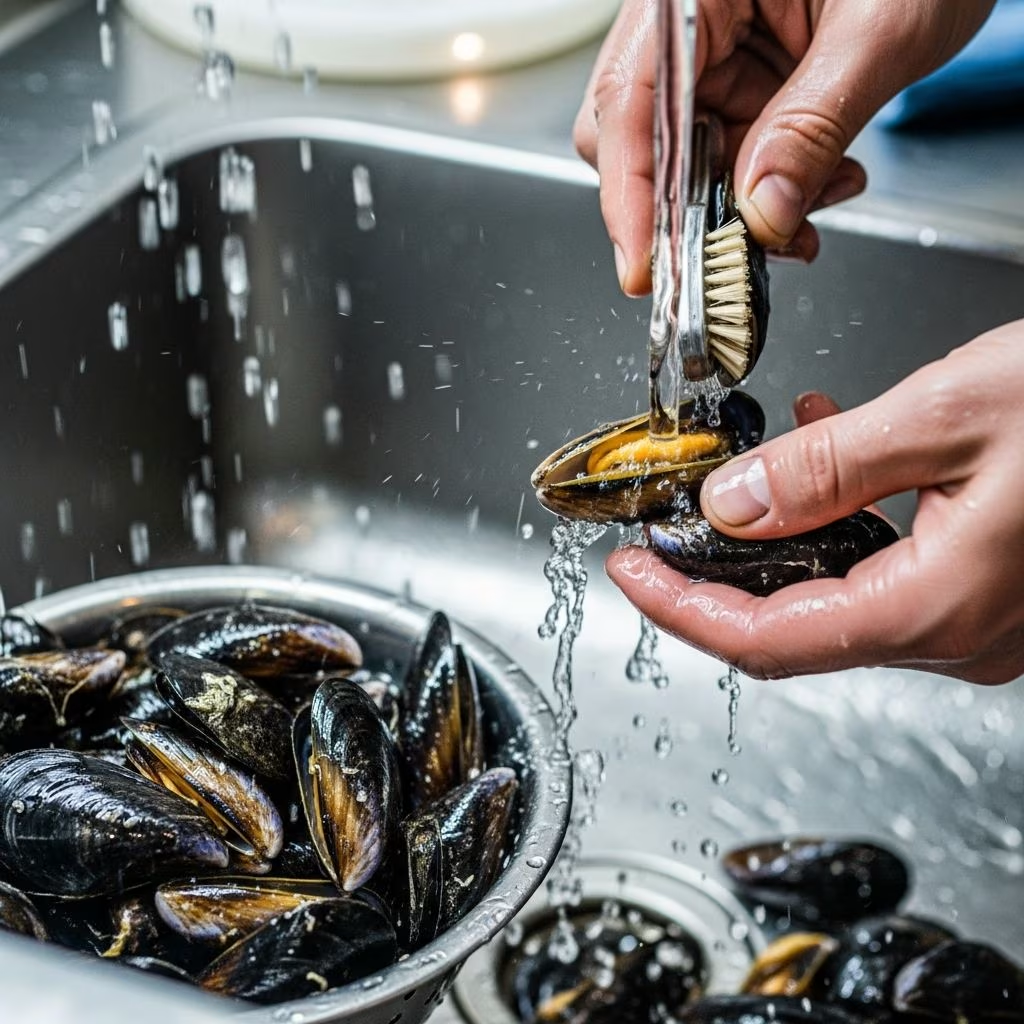
- Rinse thoroughly: Hold each mussel under cold water, scrubbing shells with a stiff brush to dislodge dirt, barnacles, or debris. Focus on crevices.
- Debeard firmly: Grasp the beard near the shell with fingers, a paper towel, or cloth for grip. Pull sharply toward the hinge, yanking side-to-side if needed until it detaches completely. A white tip confirms full removal.
- Inspect again: Rinse off any remnants and recheck for openness. Tap non-responders and discard.
For stubborn beards, use kitchen scissors to snip close to the shell before pulling. This method works for both wild and farmed mussels, though farmed ones may need less effort.
Purging Sand and Grit Effectively
Mussels filter-feed, expelling sand when soaked properly. Unlike clams, avoid saltwater soaks to prevent stress.
Soaking method: Submerge cleaned mussels in a large bowl of cold freshwater for 20-30 minutes. Add 1-2 tablespoons of flour or cornmeal to encourage grit expulsion without agitating the water. Gently transfer to a colander, rinse again, and inspect.
Wild mussels benefit most from this, as their liquor often requires straining post-cooking via cheesecloth to capture fine sand. Farmed varieties like PEI mussels purge quickly and produce cleaner broths.
| Mussel Type | Cleaning Needs | Soak Time | Liquor Handling |
|---|---|---|---|
| Wild | Heavy scrub, debeard, barnacles | 30 min | Strain thoroughly |
| Farmed | Light rinse, minimal beard | 20 min | Often no strain |
Safe Storage Before Cooking
Do not store mussels in water, as freshwater kills them by depriving oxygen. Keep alive mussels dry in the fridge.
- Layer singly in a bowl or perforated tray.
- Cover with a damp kitchen towel to maintain humidity.
- Place over ice (never in it) if needed, using a barrier like a bag.
- Use within 1-2 days; check daily for openness.
Avoid plastic bags, which trap moisture and hasten spoilage. Cold fridge sections (32-35°F) are ideal.
Common Mistakes and How to Avoid Them
Steer clear of pitfalls for optimal results:
- Over-soaking: Limits to 30 minutes prevents death.
- Agitating soak water: Redistributes sand; transfer gently.
- Cooking dead mussels: Primary food safety risk—always tap test.
- Ignoring beards: Leads to tough, sandy bites.
Post-cook, discard unopened mussels, as they were likely dead beforehand.
Health and Safety Essentials
Live mussels are safe when properly handled. Dead ones harbor bacteria like Vibrio, causing illness. Cooking kills pathogens, but only viable mussels produce safe liquor. Pregnant individuals or immunocompromised should consult guidelines from health authorities.
Delicious Recipes to Showcase Your Prep
Once cleaned, mussels shine in simple dishes:
- White Wine Steam: Sauté garlic, add mussels, wine, and herbs; simmer until open.
- Curry Coconut: Simmer in coconut milk, curry paste, and lime for Thai flair.
- Tomato Basil: Braise in San Marzano tomatoes, garlic, and chili.
Reserve strained liquor to boost sauces—its briny intensity amplifies flavors.
Frequently Asked Questions (FAQs)
Do farmed mussels need debearding?
Most arrive pre-debearded, but check and remove any remaining for best texture.
Can I eat the beard?
Technically yes, but it’s tough and sandy—always remove.
How long do mussels last in the fridge?
1-2 days max, stored dry with a damp towel.
What if a mussel doesn’t open when cooked?
Discard immediately; it was dead.
Is soaking with flour necessary?
Helpful for grit expulsion, especially wild mussels, but not mandatory.
Advanced Tips for Pro-Level Results
For restaurant-quality mussels:
- Strain cooking liquor through cheesecloth twice for crystal-clear broth.
- Harvest wild mussels at low tide from clean waters, purging extensively.
- Pair with acidic elements like lemon to cut richness.
Experiment with infusions: fennel-saffron broth or ginger-lemongrass steam highlight mussel sweetness.
References
- Wild Mussels! How to Clean & Debeard — Amy Glaze. Accessed 2026. https://www.amyglaze.com/mussels-how-catch-clean-debeard/
- Step-by-Step Instructions: How to Clean Mussels — Fulton Fish Market. Accessed 2026. https://fultonfishmarket.com/blogs/articles/how-to-clean-mussels
- How to Clean and Debeard Mussels — YouTube (Online Culinary School). Accessed 2026. https://www.youtube.com/watch?v=Op9Tn7lXaq8
- How to debeard, clean and store mussels — YouTube (Becky Selengut). Accessed 2026. https://www.youtube.com/watch?v=o2Od7_XYye0
- How to Clean and Debeard Mussels — YouTube (Coastal Living). Accessed 2026. https://www.youtube.com/watch?v=rDsBCI2xCX8