Wooden cutting boards offer superior knife-friendly surfaces and natural antimicrobial properties, but they demand specific care to stay safe and functional. Proper maintenance prevents bacterial growth, warping, and deterioration while preserving the wood’s integrity for years of use.
Why Wooden Cutting Boards Need Special Attention
Unlike plastic or glass alternatives, wood is porous, absorbing moisture and flavors if not handled correctly. This porosity can harbor bacteria like Salmonella or E. coli from raw proteins, making thorough cleaning essential. Regular upkeep also avoids cracks that compromise hygiene and aesthetics.
Key benefits of diligent care include extended lifespan—up to decades with proper treatment—and maintained cutting performance. Neglect leads to stains, odors, and structural damage, potentially risking foodborne illness.
Daily Cleaning Routine: Quick and Effective
After every use, follow this straightforward process to remove residues and inhibit bacterial proliferation without harming the wood.
- Remove Debris: Scrape off food scraps with a bench scraper or spatula to prevent clumping and bacterial hotspots.
- Hot Soapy Wash: Scrub both sides with hot water and mild dish soap using a soft sponge. Hot water loosens grime and kills surface microbes.
- Thorough Rinse: Rinse under running warm water, ensuring no soap residue lingers, as it can impart off-tastes.
- Immediate Dry: Pat dry with a clean towel, then air-dry upright for even evaporation and warp prevention.
Avoid dishwashers, submerging, or abrasive pads, which strip natural oils and cause swelling or scratches.
Natural Sanitizing Methods for Everyday Use
For chemical-free options, leverage kitchen staples to neutralize odors and pathogens safely.
Vinegar Solution for Mild Disinfection
White vinegar’s acidity disrupts bacterial cell walls effectively against most contaminants, excluding heavy raw meat exposure.
- Mix 1 part vinegar to 4 parts water.
- Wipe or briefly soak (2-3 minutes max) the surface.
- Rinse well and dry immediately.
This method refreshes boards weekly or after vegetable prep.
Lemon and Salt Scrub for Odor Elimination
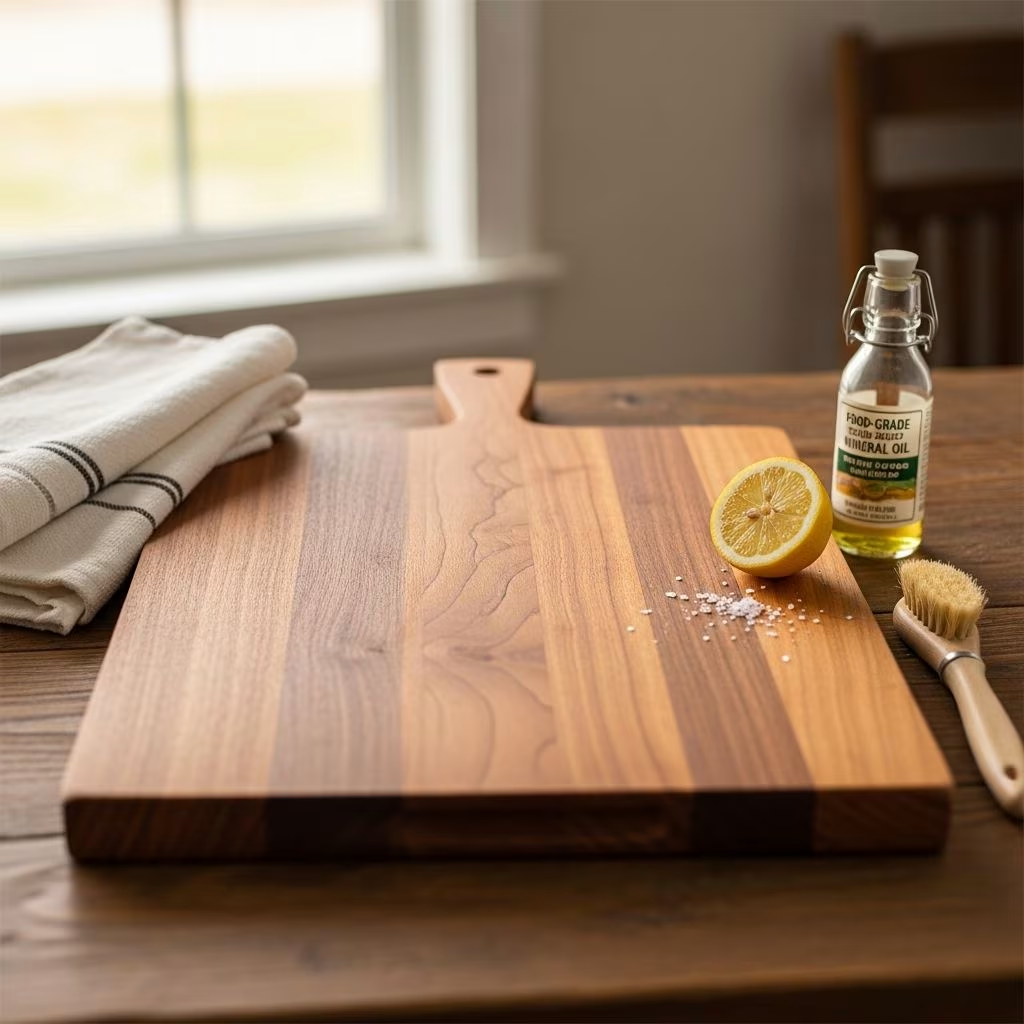
Coarse salt acts as a gentle abrasive, while lemon’s citric acid and oils deodorize and brighten.
| Step | Action | Duration |
|---|---|---|
| 1 | Sprinkle 1/3 cup coarse salt over board | Immediate |
| 2 | Rub in with half a lemon, squeezing juice | 2 minutes |
| 3 | Let sit | 10 minutes |
| 4 | Rinse with hot water and dry | Immediate |
Ideal for garlic, onion, or fish smells; repeat monthly.
Baking Soda Paste for Stubborn Stains
Mix baking soda with water into a paste, scrub gently, then rinse. This tackles discoloration without harsh chemicals.
Deep Cleaning for High-Risk Use
Boards contacting raw poultry, meat, or fish require stronger measures periodically.
Bleach Dilution: USDA-Approved Power
For sanitizing, use 1 tablespoon unscented bleach per gallon of water. This kills 99.9% of bacteria but demands caution to avoid wood damage.
- Pre-wash with soap.
- Apply solution, let sit 2 minutes.
- Rinse thoroughly with hot water.
- Air-dry upright.
Limit to monthly or post-raw protein; follow with oiling to restore moisture.
Caution: Bleach dries wood, so recondition promptly.
Refinishing Worn Boards: Restore Like New
Over time, grooves and dullness appear. Sanding revives the surface safely.
- Prep: Clean thoroughly.
- Sand Progressively: Start with 80-120 grit for deep marks, progress to 220 grit for smoothness.
- Finish: Wipe dust, oil generously.
Use an electric sander for efficiency on large boards. Repeat annually or as needed.
Essential Maintenance: Oiling and Storage
Oiling seals pores, repels water, and prevents cracking.
Choosing and Applying Board Oil
Opt for food-grade mineral oil or blends with beeswax. Avoid cooking oils that rancidify.
- Warm the board slightly.
- Apply liberally with a cloth.
- Let soak 4-6 hours or overnight.
- Wipe excess; repeat 2-3 times initially, then monthly.
Store upright in a well-ventilated area, separated by material type to avoid cross-contamination.
Common Mistakes to Avoid
- Prolonged Soaking: Causes warping.
- Harsh Abrasives: Scratches promote bacteria.
- Skipping Both Sides: Leads to uneven drying.
- Dishwasher Use: High heat degrades wood.
- Neglecting Oil: Results in dry, cracked boards.
Troubleshooting Guide
| Issue | Solution | Prevention |
|---|---|---|
| Persistent Odors | Lemon-salt scrub | Daily deep rinses |
| Deep Grooves | Sand and oil | Rotate boards |
| Warping | Even drying upright | Avoid soaking |
| Stains | Baking soda paste | Immediate cleaning |
| Dry/Cracked | Re-oil frequently | Monthly maintenance |
FAQs
Can I use olive oil on my cutting board?
No, it turns rancid. Stick to mineral oil.
How often should I oil my board?
Monthly, or when water beads poorly.
Is vinegar safe after raw chicken?
Not fully; use bleach for raw proteins.
What if my board has mold?
Sand deeply, disinfect with bleach, oil heavily.
Are end-grain boards harder to maintain?
They self-heal but need more frequent oiling.
Advanced Tips for Pro-Level Care
Invest in separate boards for proteins and produce. Rotate usage to allow full drying. For bamboo variants, follow similar steps but oil less often due to natural oils. Test wood health by sprinkling water: absorption means re-oil immediately.
Integrate care into routines—clean post-use, sanitize weekly, oil monthly—for boards that outperform new ones.
References
- How to Clean a Wooden Cutting Board — Williams Sonoma. 2023. https://www.williams-sonoma.com/pages/tips-and-ideas/how-to-clean-a-wooden-cutting-board/
- How to Clean and Care for Your Wood Cutting Board in 2024 — Ruvati. 2024. https://www.ruvati.com/how-to-clean-and-care-for-your-wood-cutting-board/
- How to Clean a Cutting Board – Wood, Plastic & More — WebstaurantStore. 2023. https://www.webstaurantstore.com/article/93/how-to-clean-a-cutting-board.html
- Cutting Board Cleaning Hacks — The Cleaning Authority. 2023. https://www.thecleaningauthority.com/blog/how-to-clean/cutting-board-cleaning-hacks/