Pickles represent a timeless preservation method that transforms simple vegetables into bold, tangy accompaniments for meals worldwide. Whether you’re a casual snacker or a culinary enthusiast, knowing how to choose quality pickles ensures every bite delivers crunch, flavor, and satisfaction. This handbook breaks down essential factors like production techniques, ingredient scrutiny, and storage tips to empower your shopping decisions.
Understanding Pickle Production Basics
At their core, pickles form through immersion of vegetables, typically cucumbers, in brines or acidic solutions that prevent spoilage. The two primary methods—lacto-fermentation and vinegar preservation—yield distinct textures and tastes.
- Lacto-fermented pickles: These develop natural acidity via beneficial bacteria in a saltwater brine, fostering probiotics for gut health. Found in refrigerated sections, they offer superior crispness but shorter shelf lives without cooling.
- Vinegar pickles: Quick-processed with distilled white vinegar, these are shelf-stable, often pasteurized for longevity. Unpasteurized versions, like certain refrigerated brands, retain more snap.
Familiarity with these processes helps identify fresher, tastier options amid supermarket varieties.
Essential Pickle Varieties Explained
Diversity in pickles caters to varied palates, from mild to fiery. Here’s a breakdown of popular types:
| Type | Key Features | Best Uses |
|---|---|---|
| Dill Pickles | Infused with dill herb in brine or vinegar; available whole, sliced, or chipped. | Sandwiches, burgers, or standalone snacks. |
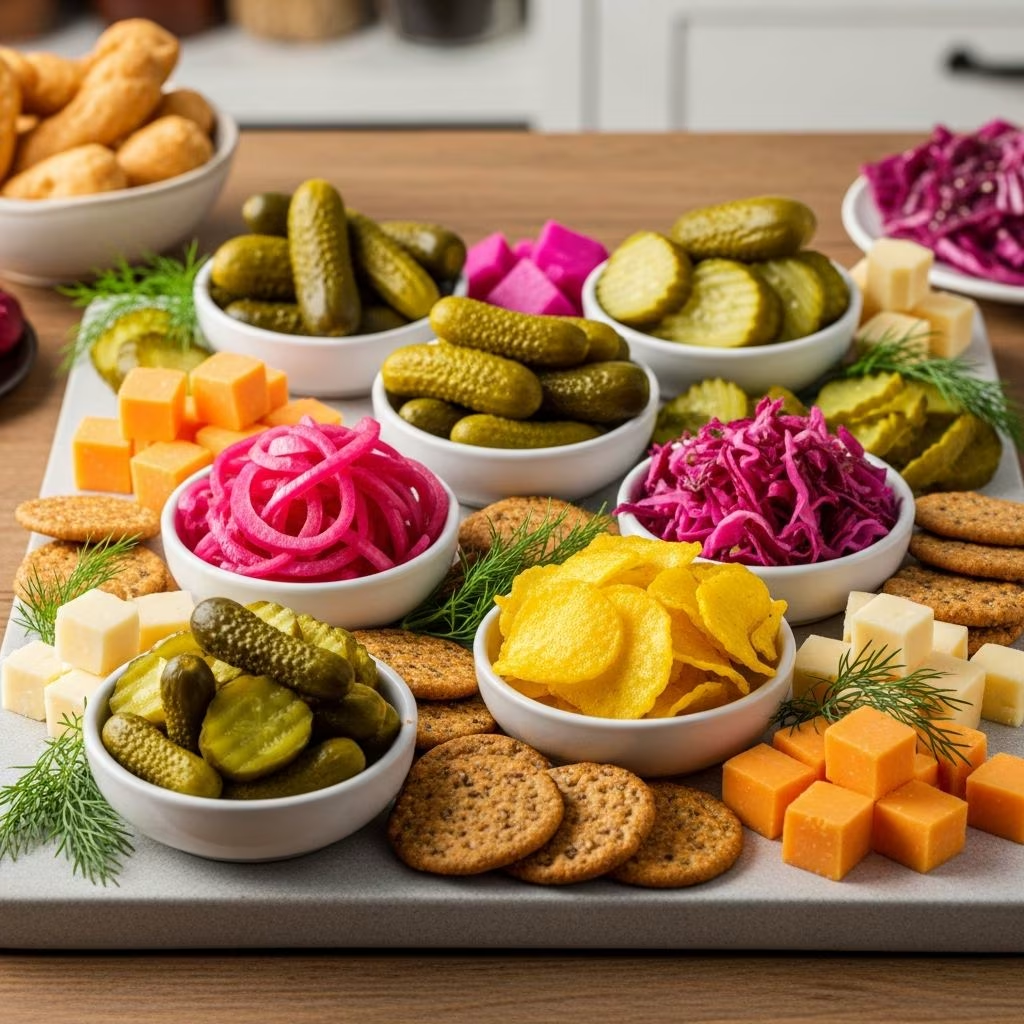
| Gherkins/Cornichons | Small, bumpy baby cucumbers; often sweet without heavy spices. | Cheese boards, appetizers, or whole eating. |
| Bread-and-Butter | Sweet-tangy with onions and spices; sliced for easy use. | Relish on hot dogs or salads. |
| Sour/Full-Sour | Heavily fermented for intense tang; refrigerated. | Pairing with heavy meats or fish. |
Regional specialties, such as spicy mango or mustard-based versions, add global flair—seek authentic ones for true depth.
Decoding Labels: What to Seek and Shun
Ingredient lists reveal a pickle’s quality. Prioritize simplicity mirroring homemade recipes over lab-like formulations.
Must-Have Ingredients
- Cold-pressed oils or natural acids like vinegar and lemon for preservation.
- Traditional spices without artificial enhancers.
- Fermentation indicators, such as live cultures for probiotic benefits.
Warning Signs to Avoid
- Excessive salt, sugar, or mystery vegetable oils that dilute flavor.
- Artificial colors or preservatives extending shelf life unnaturally.
- Refined oils lacking the richness of unprocessed alternatives.
Organic, preservative-free options align with health goals, minimizing additives while maximizing taste.
Prioritizing Crunch and Freshness
Crunch defines premium pickles. Fermented, unpasteurized varieties excel here, as pasteurization softens texture through heat. Check for:
- Firm packaging that prevents breakage.
- Refrigerated storage to halt over-fermentation.
- Recent production dates, avoiding jars with floating spices or mushiness.
Samples or small packs let you test texture before committing.
Packaging and Storage Smart Choices
Quality packaging preserves integrity during transit and storage.
- Glass jars: Ideal for flavor retention and reusability.
- Vacuum-sealed pouches: Convenient for portability without leaks.
- Avoid: Flimsy plastics prone to oil seepage or contamination.
Post-purchase, refrigerate all types—especially fermented—to maintain crispness and safety.
Health Angles of Pickle Selection
Beyond taste, pickles offer wellness perks when chosen wisely. Fermented kinds boost probiotics, aiding digestion per USDA guidelines on fermented foods. Opt for low-oil, organic variants to sidestep excess sodium or fats.
- Probiotic-rich for microbiome support.
- Oil-free for lighter calories.
- Low-sugar to prevent blood sugar spikes.
Consult nutrition labels; aim under 200mg sodium per serving for balanced intake.
Navigating Online and In-Store Purchases
Digital marketplaces expand options but demand vigilance.
- Scan reviews for authenticity—”grandma’s recipe” praise signals quality.
- Verify seller ratings and return policies.
- Start with sampler packs for variety testing.
In stores, head to refrigerated aisles for freshest picks; inspect jars for clarity and uniformity.
Budgeting for Superior Picks
Premium doesn’t mean exorbitant. Artisanal or regional jars cost more but deliver value through flavor density.
- Invest in small-batch for uniqueness.
- Combos offer trial at reasonable prices.
- Skip bargain bins with suspicious longevity.
Balance cost with quality— a vibrant, crunchy pickle justifies the spend.
Pairing Pickles with Meals
Elevate dishes by matching pickle profiles.
- Dill with grilled meats for freshness.
- Sweet varieties on pulled pork sandwiches.
- Spicy types alongside creamy cheeses.
Experiment to discover personal favorites.
Frequently Asked Questions
What makes a pickle crunchy?
Low-temperature processing and fresh brine; avoid pasteurized for max snap.
Are all pickles fermented?
No—vinegar types dominate shelves, lacking live cultures.
How long do opened pickles last?
Refrigerated: 1-3 months; watch for off odors or softening.
Can pickles be healthy?
Yes, fermented ones provide probiotics; choose low-sodium.
Best for beginners?
Dill pickles—versatile and widely available.
Building Your Pickle Collection
Curate jars reflecting tastes: mix fermented classics with exotic imports. Track favorites via notes on flavor, crunch, and pairings. Seasonal buys yield peak freshness. With these strategies, transform routine shopping into a quest for culinary gems, ensuring every jar enhances your table.
References
- How to Choose the Best Pickle to Buy Online – A Flavor-Packed Guide — FarmDidi. 2023. https://www.farmdidi.com/blogs/blogs-and-recipes/how-to-choose-the-best-pickle-to-buy-online-a-flavor-packed-guide-to-the-perfect-crunch
- Pickles – Gourmet Guide — iGourmet. 2023. https://igourmet.com/blogs/gourmet-food-guide/pickles-gourmet-guide
- Know Your Pickles — Art of Manliness. 2023. https://www.artofmanliness.com/living/food-drink/know-your-pickles/
- How to Pick the Perfect Pickle For Every Occasion — S Clyde Weaver. 2023. https://sclydeweaver.com/blog/pick-the-perfect-pickle/
- Pickle Buying Checklist: 7 Things to Consider — Harold’s Pickles. 2023. https://www.haroldspickles.com/blogs/harolds-blog-posts/pickle-buying-checklist-7-things-to-consider