Selecting the right mortar and pestle transforms basic kitchen tasks into efficient, flavorful processes. This timeless tool excels at grinding spices, making pastes, and emulsifying ingredients far better than electric grinders, preserving essential oils and textures. With various materials, sizes, and designs available, understanding key factors ensures you pick a set that matches your cooking style and lasts for years.
Why Every Kitchen Needs a Mortar and Pestle
A mortar and pestle offers unmatched control over texture and flavor release. Unlike blenders that can overheat delicate spices, manual grinding crushes seeds and herbs at your pace, releasing aromas gradually for superior taste in curries, dips, and rubs. Home cooks appreciate its simplicity—no batteries or cords required—and its ability to handle both tiny pinches and larger batches. Professionals in Thai and Mexican cuisines swear by it for authentic results, proving its versatility across global recipes.
Evaluating Materials for Durability and Performance
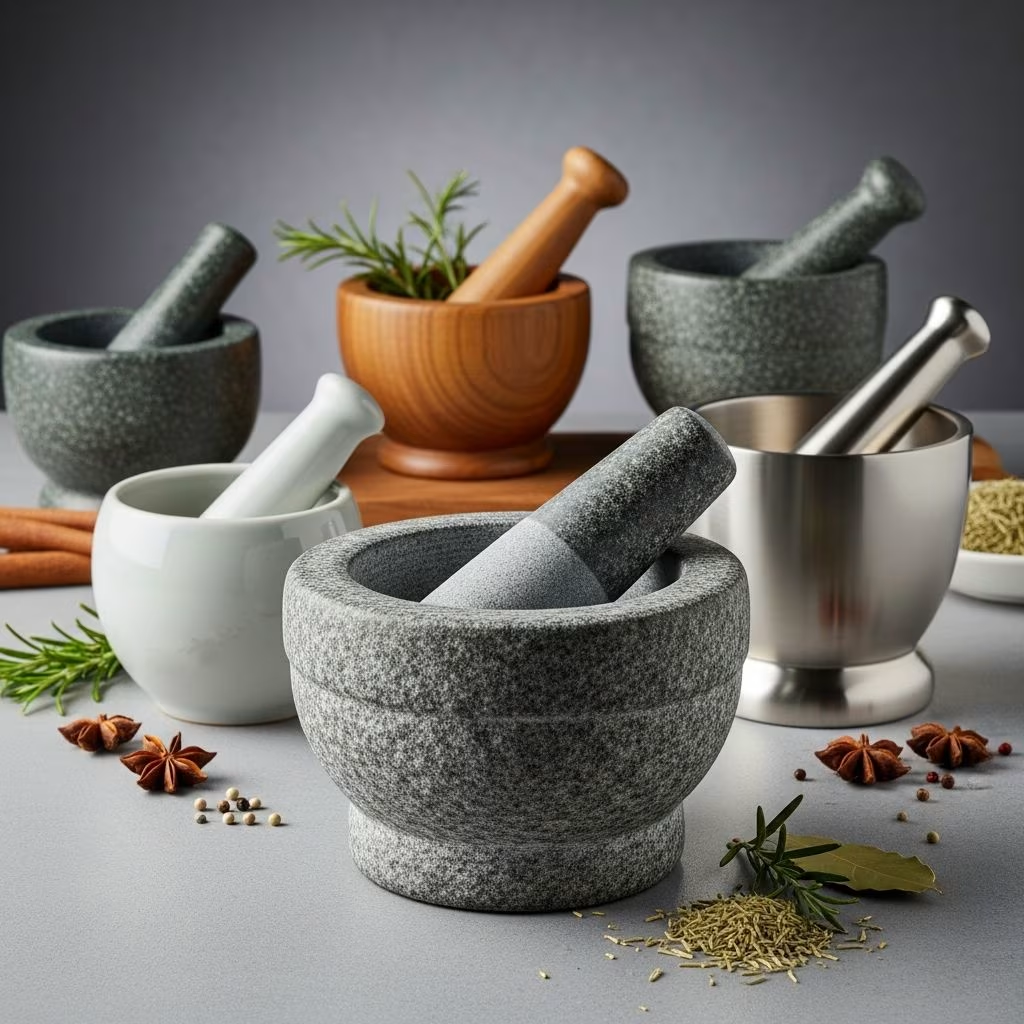
The material determines grinding efficiency, longevity, and ease of cleaning. Here’s a breakdown of top options:
- Granite: The gold standard for robustness, granite’s rough texture grips ingredients firmly, crushing hard peppercorns and cumin seeds effortlessly. Its nonporous nature prevents flavor absorption, making it ideal for frequent use with diverse ingredients.
- Porcelain: Lighter and finer-grinding, porcelain creates smoother pastes and sauces. Though less heavy, it still provides good traction if the bowl has subtle texture, and cleans more easily than stone.
- Marble and Agate: Elegant alternatives with similar durability to granite. Marble offers a cool grinding surface for heat-sensitive items, while agate resists scratches for lab-like precision.
- Wood: Avoid for serious grinding; its porosity traps oils and moisture, leading to mold and lingering tastes.
Granite stands out for most users due to its balance of power and neutrality.
Finding the Perfect Size for Your Cooking Needs
Size impacts versatility—too small limits batches, too large feels unwieldy. Consider your typical tasks:
- Small (2-4 inches diameter): Best for solo spice grinding or herb pastes. Compact for small kitchens, but requires multiple rounds for family meals.
- Medium (4-6 inches): The sweet spot for daily home cooking, handling 1-4 servings comfortably without overwhelming storage space.
- Large (6+ inches): Suited for entertaining or bulk prep, offering stability for tough ingredients like nuts. Heavier but more efficient for pros.
Test stability: a wider base prevents tipping during vigorous use.
Size Comparison Table
| Size | Diameter | Best For | Pros | Cons |
|---|---|---|---|---|
| Small | 2-4 inches | Spices, herbs | Portable, precise | Limited capacity |
| Medium | 4-6 inches | Daily meals | Balanced, versatile | May need scaling for crowds |
| Large | 6+ inches | Bulk prep | Stable, powerful | Heavy, bulky |
Key Design Features for Optimal Grinding
Beyond basics, smart design elevates performance. Prioritize these elements:
- Bowl Texture: A rough, unpolished interior is crucial—smooth bowls slip, reducing efficiency. Granite naturally excels here.
- Pestle Shape: Look for a bulbous end for grip and a tapered grinding surface that matches the bowl’s curve. Length should be about two-thirds the mortar depth to avoid knuckle bumps.
- Weight Balance: Heavier sets (3-10 lbs) use gravity for easier crushing, but ensure the pestle isn’t too light. Test by feeling if it “does the work” without arm strain.
- Stability: A flat, wide bottom anchors it on counters; rounded ones wobble.
In videos from culinary experts, well-designed sets grind Thai pastes in minutes with minimal effort.
Maintenance and Longevity Tips
Proper care keeps your tool performing like new. Season new granite sets by grinding rice and garlic to build a natural patina that aids grinding. Clean promptly with hot water and a stiff brush—avoid soap to preserve texture. Dry thoroughly to prevent cracks. For stains, rub with coarse salt and lemon. Porcelain rinses easily but inspect for chips. Store in a dry spot; wooden ones need occasional oiling but are less recommended.
Comparing Popular Sets: Pros and Cons
Here’s a quick overview of standout options based on expert tests:
| Set Type | Material | Weight | Grinding Speed | Cleaning Ease |
|---|---|---|---|---|
| Heavy-Duty Granite | Granite | High | Fast | Moderate |
| Fine Porcelain | Porcelain | Low | Slower, finer | Easy |
| Compact Marble | Marble | Medium | Balanced | Easy |
Granite wins for speed, porcelain for creaminess.
Advanced Techniques and Recipe Ideas
Master your mortar with these tips: Start with softer items like garlic or shallots, then add hard spices. Use a circular motion for powders, rocking for pastes. Recipes shine—try fresh pesto (basil, pine nuts, olive oil), guacamole (avocado, cilantro, lime), or ras el hanout spice blend. Bigger mortars handle doughs or compound butters too.
Common Pitfalls to Avoid When Buying
- Skipping texture check: Polished bowls fail at gripping.
- Ignoring weight: Too light slides; too heavy fatigues.
- Overlooking fit: Mismatched pestle wastes effort.
- Cheap knockoffs: Thin walls crack under pressure.
Frequently Asked Questions (FAQs)
What is the best material for a mortar and pestle?
Granite offers the best durability and grinding power for most users.
How do I season a new mortar and pestle?
Grind uncooked rice until powdery, discard, then repeat with garlic for patina.
Can I use a mortar and pestle for wet ingredients?
Yes, especially granite or porcelain; it emulsifies pestos and dips beautifully.
How heavy should a good mortar and pestle be?
3-8 lbs provides stability without being cumbersome.
Wooden vs. stone: Which is better?
Stone outperforms wood, which absorbs flavors.
Final Thoughts on Elevating Your Kitchen Game
Investing in a quality mortar and pestle unlocks fresher flavors and therapeutic cooking rituals. Match material to your needs—granite for power, porcelain for finesse—and prioritize texture and size. With care, it’ll become your most-used tool, outlasting gadgets.
References
- A Guide to Choosing a Mortar and Pestle — Zakłady Bolesławiec. 2023. https://zakladyboleslawiec.com/en/blog/post/a-guide-to-choosing-a-mortar-and-pestle
- Choosing the Perfect Mortar and Pestle: Ultimate FAQ Guide — Vocal Media. 2023. https://vocal.media/lifehack/choosing-the-perfect-mortar-and-pestle-ultimate-faq-guide
- Why You Need a Pestle & Mortar — Borough Kitchen. 2023. https://www.boroughkitchen.com/blogs/news/mortar-and-pestle-best-material-and-size-guide
- Choosing a Mortar and Pestle — ACHS.edu. 2023. https://achs.edu/blog/mortar-and-pestle/
- Thai Chef’s Guide to the Mortar and Pestle — Pailin’s Kitchen (YouTube). 2023. https://www.youtube.com/watch?v=LgzpNBqI13w