Buying groceries in larger quantities can transform your shopping habits, cutting costs significantly while minimizing frequent store visits. This approach works best when you select shelf-stable essentials, plan storage ahead, and compare prices per unit to ensure true value.
Why Embrace Bulk Purchasing for Groceries
Bulk buying reduces packaging waste since items often come in recyclable cardboard or paper rather than individual plastics, promoting sustainability. It also saves time by consolidating trips, with many options available online for convenient delivery. Families report saving hundreds monthly by stocking versatile staples used across meals, controlling allergies, and capitalizing on sales.
Assessing Your Readiness for Bulk Buys
Before diving in, evaluate your space: measure pantry shelves, freezer capacity, and fridge areas to match purchases to storage. Create a list of frequently used items like grains or oils to avoid excess. Always shop your existing stock first to prevent duplication.
- Inventory Check: Catalog current supplies and note low-stock regulars.
- Space Audit: Use bins or shelves to organize; consider root cellars for rural setups.
- Budget Review: Set a bulk fund, aiming for per-unit savings of at least 20-30%.
Ideal Categories for Bulk Purchases
Focus on non-perishables with long shelf lives that form meal bases. Dry goods like rice, beans, and pasta offer the best returns, often far cheaper than small packs or cans for fresher taste.
| Category | Examples | Why Buy Bulk | Shelf Life |
|---|---|---|---|
| Grains & Legumes | Rice, lentils, oats, quinoa | Versatile, nutrient-dense, huge per-pound savings | 1-2 years |
| Nuts & Seeds | Almonds, chia, sunflower seeds | Healthy snacks; try small bags first | 6-12 months |
| Pasta & Flours | Spaghetti, whole wheat flour | Baking staples; no preservatives needed | 1 year+ |
| Dried Fruits & Spices | Raisins, cumin, bay leaves (small qts) | Flavor boosters; portion to avoid waste | 6-18 months |
| Oils & Vinegars | Olive oil, apple cider vinegar | Long-lasting pantry heroes | 1-2 years |
Avoid perishables like fresh produce or dairy unless you have freezing capacity, as spoilage erases savings.
Navigating Bulk Stores and Online Platforms
Membership warehouses like Costco or Sam’s Club excel for organics and household goods, ideal for quarterly stock-ups. Online retailers offer flexibility: sites with no-fee subscriptions let you scale from 1 lb to 25 lbs, with sales and free shipping thresholds.
- Warehouse Clubs: Great for rotation items; compare membership perks like cash back.
- Specialty Online: Nuts.com for dry goods trials; Boxed.com for auto-reorders with discounts.
- Amazon: Endless options but verify seller prices against clubs to dodge markups.
Mastering the Bulk Bin Experience
Zero-waste bulk bins in markets provide grains, nuts, and flours. Bring reusables for eco-friendly fills.
- Prepare Containers: Glass jars, tins, or cloth bags in varied sizes.
- Tare Weighing: Get empty weights noted at service desk; snap bin photos for SKUs/prices.
- Filling Process: Scoop desired amounts; write codes if required.
- Checkout Flow: Line items by photo order, relay tare and SKU to cashier for accurate deduction.
Pro Tip: Lightweight reusables prevent plastic use in supermarkets without tare service.
Storage Strategies to Prevent Waste
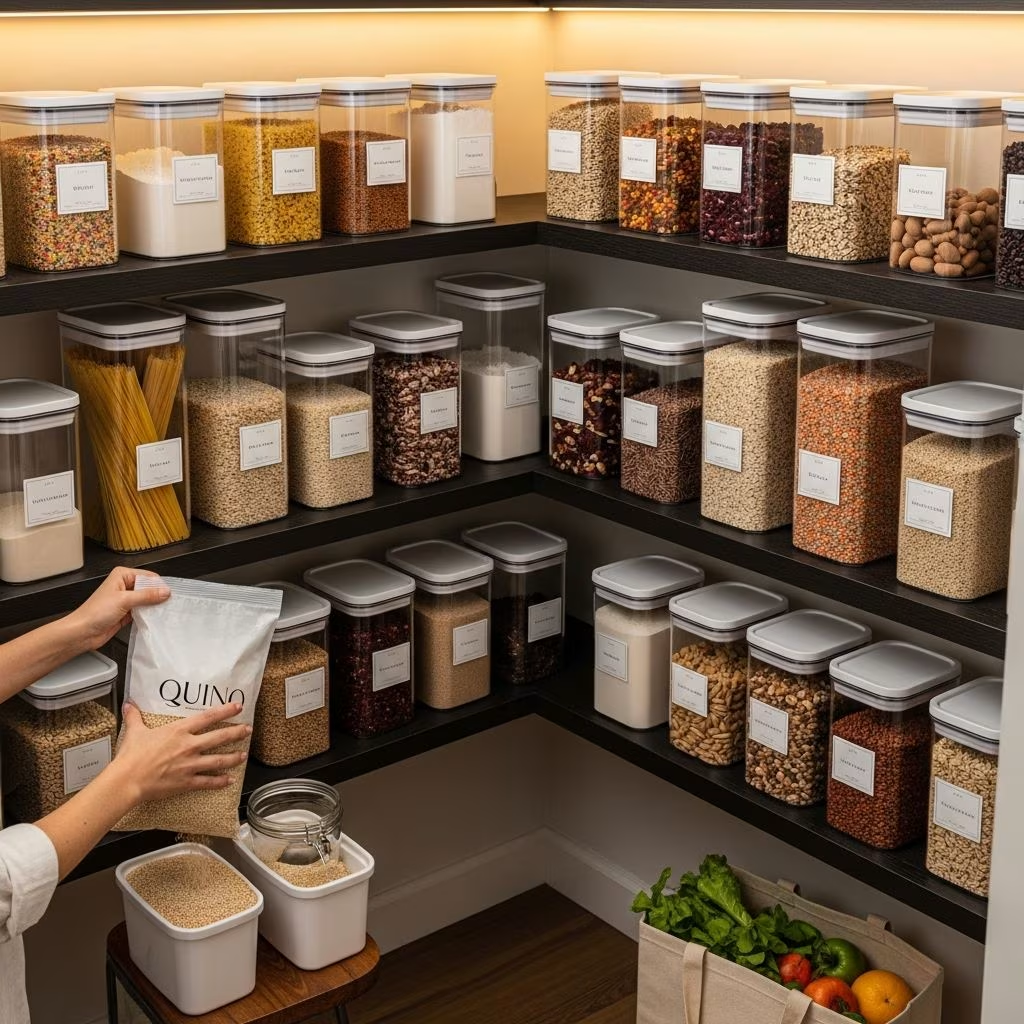
Proper containment extends usability: airtight glass for grains repels pests; freezer bags for nuts. Label with dates and portion into meals.
- Dry Goods: Mason jars or vacuum sealers.
- Frozen Items: Vacuum-seal meats or veggies bought ahead.
- Organization: Clear bins by category; rotate stock FIFO (first in, first out).
Calculating Value: Price Per Unit Essentials
Never assume bulk equals savings—divide total cost by units (oz/lb) and compare. A University of Minnesota study shows hungry shoppers overspend 64%, so eat first and stick to lists.
Example Comparison:
| Item | Small Pack | Bulk Pack | Per Oz Savings |
|---|---|---|---|
| Rice (5lb vs 25lb) | $0.40/oz | $0.22/oz | 45% |
| Almonds (1lb vs 10lb) | $0.85/oz | $0.55/oz | 35% |
Advanced Tips for Maximizing Savings
Split hauls with neighbors to test items; use subscriptions for recurring discounts. Preserve extras via canning or dehydrating. Track spending pre/post-bulk to quantify wins—many cut bills 20-40%.
- Share Purchases: Halve costs and storage needs.
- Meal Planning: Build weekly menus around bulk stock.
- Sales Timing: Stack with promotions for deepest cuts.
Common Pitfalls and How to Dodge Them
Overbuying rare items or ignoring space leads to spoilage. Impulse buys inflate costs—counter with pre-shop snacks and strict lists. Start small: one category monthly to build habits.
FAQs
What if I lack storage space?
Prioritize high-turnover items; invest in stackable bins or under-shelf drawers. Rural folks can use cellars.
Is bulk always cheaper?
No—always compute unit price. Warehouses often win over Amazon resellers.
Best for beginners?
Start with rice, pasta, and oils; scale up as storage improves.
How to handle allergies in bulk?
Choose simple ingredients; label clearly for safe, versatile use.
Zero-waste tips?
Reusable containers + tare weights = plastic-free shopping.
References
- The Ultimate Guide to Bulk Buying Groceries in the Country — Raydiant Rural. 2023-05-15. https://rethinkrural.raydientrural.com/blog/the-ultimate-guide-to-bulk-buying-groceries-in-the-country
- My Guide to Shopping & Buying In Bulk + Tare Weight Explained — Abby’s Food Court. 2022-11-10. https://www.abbysfoodcourt.com/blog/498
- Smart Bulk Buys vs Costly Mistakes: What to Stock Up on — Kiplinger. 2024-03-20. https://www.kiplinger.com/personal-finance/shopping/what-to-buy-in-bulk-and-what-to-skip
- A Beginner’s Guide To Bulk Shopping — The Good Life with Amy French. 2023-08-05. https://www.thegoodlifewithamyfrench.com/post/beginners-guide-to-bulk-shopping
- How to Buy in Bulk Without Wasting Food or Money — Running to the Kitchen. 2023-02-14. https://www.runningtothekitchen.com/bulk-buying-food/