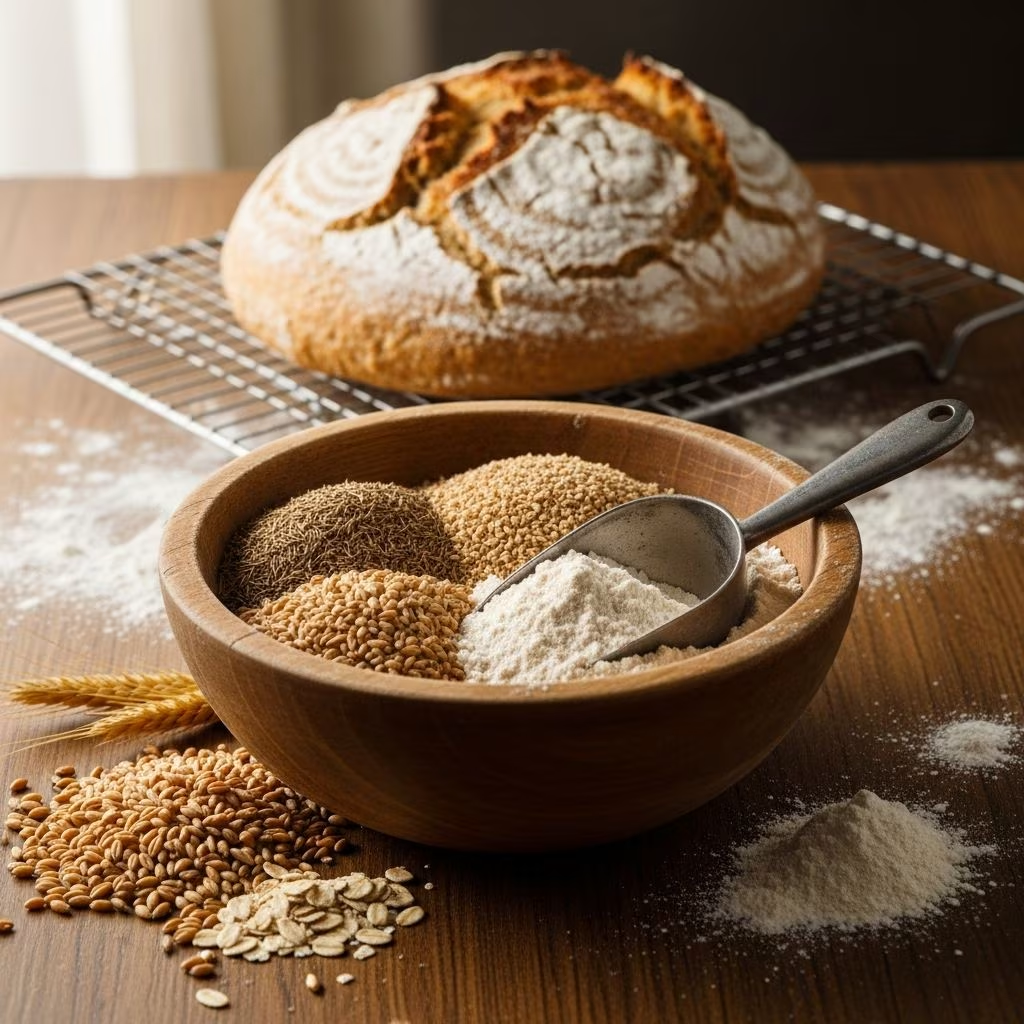
Whole grain flours offer a nutrient-packed alternative to refined white flour, retaining the bran, germ, and endosperm for superior flavor, texture, and health benefits. Transitioning to these flours enhances your baked goods with earthy notes and added fiber while maintaining delicious results through smart techniques.
Understanding the Basics of Whole Grain Flours
Unlike refined flours, whole grain varieties preserve every part of the grain, delivering higher levels of vitamins, minerals, and antioxidants. This completeness leads to denser textures and bolder tastes, but with proper handling, they integrate seamlessly into recipes.
Key types include whole wheat from hard or soft varieties, each suited to specific bakes. Hard wheat flours excel in structures needing strength, like loaves, while soft ones shine in tender items such as pastries.
- Hard whole wheat flour: High protein for chewiness in breads and pizza.
- Soft whole wheat pastry flour: Lower protein for flaky biscuits and cakes.
- Freshly milled flour: Maximizes nutrition and freshness; use promptly for optimal results.
Start by experimenting with small batches to appreciate flavor differences, gradually increasing whole grain ratios for palatability.
Simple Substitutions for Everyday Baking
For quick wins, replace all-purpose flour one-to-one in non-yeasted items like cookies, muffins, scones, and pancakes. These recipes forgive the swap without adjustments, yielding nuttier profiles.
| Bake Type | Substitution Ratio | Adjustments Needed |
|---|---|---|
| Cookies & Scones | 100% whole grain | None |
| Muffins & Pancakes | 100% whole grain | None |
| Quick Breads (e.g., Banana) | 50-100% whole grain | May add moisture if 100% |
In yeast breads, limit to 50% substitution initially for reliable rise and structure. This preserves gluten development while introducing whole grain benefits.
Advanced Techniques for 100% Whole Grain Bakes
Achieving full whole grain conversion requires tweaks to counter higher absorption and density. Whole grains thirstily soak up liquids, so boost hydration strategically.
For yeast breads: Add 2 teaspoons extra liquid per cup of whole wheat flour and rest dough 20-25 minutes pre-kneading. This autolyse step hydrates bran, improving extensibility.
- Hydrate sifted bran separately for even distribution.
- Use white whole wheat for milder taste.
- Ferment sourdough faster with 100% whole grains; monitor closely.
In cakes and pastries, reduce total flour slightly—about 2 tablespoons less per 3 cups—for balanced batter volume. Expect minor baking time extensions.
Optimizing Flour Freshness and Storage
Fresh milling unlocks peak nutrition, as commercial processing often removes nutrient-rich parts. Mill and bake immediately, or freeze extras airtight to retain vitality.
Sift freshly milled flour to remove coarse bran for lighter crumb, reincorporating it hydrated later for nutrition. Weight measurements trump volume for consistency, given fluffier fresh flour.
Flavor Enhancements and Troubleshooting
Counter whole grain’s earthiness with swaps: Replace 2-3 tablespoons liquid with orange juice for subtle sweetness. Vital wheat gluten boosts structure in low-protein mixes.
Common issues:
- Dense loaves: Insufficient hydration or rest.
- Bitter notes: Stale flour; opt for fresh or white whole wheat.
- Flat rise: Over-substitution without gluten support.
Recipe Ideas to Get Started
Nutty Whole Grain Pancake Mix
Blend 87% whole grains (oats, wheat) for hearty, moist pancakes. Fully convertible with golden wheat for undetectable wholesomeness.
- Mix flours, oats, leaveners.
- Add eggs, milk for nubbly batter.
- Cook to golden perfection.
Versatile 100% Whole Grain Cookies
Wheat-oat base mimics white flour cookies in taste, customizable with fruits or ginger.
- Combine whole wheat, oats, sugar, fats.
- Fold in add-ins.
- Bake crisp.
Hearty Whole Wheat Sourdough
Hard wheat suits this; sift for softness, ferment briskly.
Health and Nutritional Advantages
Whole grains lower glycemic impact, aid digestion via fiber, and provide sustained energy. Gradual integration ensures enjoyable, sustainable shifts.
FAQs
Can I use whole grain flour in all recipes?
Yes, up to 50% universally; 100% in most quick breads and cookies with minor tweaks.
How do I store whole grain flour?
Freeze airtight; use fresh-milled within days for best nutrition.
Why does whole grain dough ferment faster?
Enzymes accelerate breakdown; shorten bulk fermentation times.
What’s white whole wheat?
Milder hard white wheat variety, ideal for subtle whole grain flavor.
Do I need special equipment?
A mill enhances freshness, but store-bought works well with tips.
References
- Expert Shares Tips for Baking with Whole Grains — Whole Grains Council. 2015-04-01. https://wholegrainscouncil.org/blog/2015/04/expert-shares-tips-baking-whole-grains
- Guide to Baking with Whole Wheat Flour — Amy Bakes Bread. N/A. https://amybakesbread.com/guide-to-baking-with-whole-wheat-flour/
- Tricks for Transforming Your Baking with Whole-Grain Flours — Ellen’s Food & Soul. 2020-07-10. http://www.ellensfoodandsoul.com/journal/2020/7/10/tricks-for-transforming-your-baking-with-whole-grain-flours
- Whole wheat flour Recipes — 101 Cookbooks. N/A. https://www.101cookbooks.com/ingredient/whole-wheat-flour
- 8 sweet treats you’ll never guess are whole grain — King Arthur Baking. 2015-01-19. https://www.kingarthurbaking.com/blog/2015/01/19/fit-family