Spaghetti squash has become a staple ingredient in modern kitchens, celebrated for its unique texture, nutritional benefits, and remarkable versatility. Unlike traditional pasta, this winter squash variety naturally separates into delicate, strand-like fibers when cooked, creating a satisfying base for countless dishes. The baking method stands out as one of the most reliable and straightforward approaches to preparing this ingredient, yielding consistently tender results with minimal effort. Whether you’re seeking a low-carbohydrate pasta alternative, a nutrient-dense side dish, or the foundation for more elaborate preparations, mastering the baking process opens numerous culinary possibilities.
Understanding Spaghetti Squash: Selection and Preparation
Before beginning the cooking process, selecting an appropriate spaghetti squash sets the foundation for success. Small to medium specimens, typically weighing between two and four pounds, offer optimal cooking characteristics and tender flesh. Larger squashes may require extended cooking times and sometimes produce less desirable texture consistency. When examining squashes at the market, look for specimens with firm, unblemished skin and a deep yellow or golden hue, indicating maturity and peak flavor development.
Proper preparation begins with thorough washing under running water to remove any surface debris or soil. Using a sturdy vegetable brush ensures complete cleanliness without damaging the skin. Pat the squash dry with a clean cloth, as moisture can interfere with even cooking and browning. Before cutting, piercing the skin several times with a sharp fork or knife releases steam gradually during cooking, preventing potential cracks or ruptures that could compromise the finished dish.
Core Baking Methods and Temperature Guidelines
Three primary baking approaches produce consistently excellent results, each offering distinct advantages depending on your preferences and available equipment.
The Traditional Direct Oven Method
This straightforward technique requires minimal preparation and produces beautifully caramelized exteriors. Begin by preheating your oven to 425 degrees Fahrenheit, allowing adequate time for temperature stabilization. Using a sharp chef’s knife, carefully slice the squash in half lengthwise, working from stem to base. Position your cutting board firmly and employ steady, controlled motions to ensure safety throughout this step. After halving, use a sturdy metal spoon or ice cream scoop to remove all seeds and stringy pulp from the interior cavities.
Arrange the prepared squash halves cut-side down on a baking sheet lined with parchment paper or lightly greased with cooking spray. Lightly pierce the skin surface with fork tines to promote even heat penetration. Bake for approximately 40 minutes, though timing varies based on squash size and individual oven characteristics. The squash reaches optimal doneness when the flesh easily separates into strands when tested with a fork and the exterior displays light browning. This method produces superior texture, yielding strands that are tender yet maintain gentle firmness rather than becoming mushy.
The Water Bath Approach
This gentler cooking method ensures uniform tenderness throughout and proves particularly reliable for achieving consistent results. Preheat your oven to 375 degrees Fahrenheit. After halving and cleaning the squash, place the cut sides facing downward in a 9-by-13-inch baking dish. Add approximately one-half inch of water to the pan bottom, creating a humid cooking environment that prevents exterior drying while the interior tenderizes. Cover the entire dish securely with aluminum foil to trap steam effectively. Bake for approximately 45 minutes until the flesh yields easily to fork pressure and separates readily into strands. This method prevents the skin from browning significantly but rewards you with exceptionally tender, uniformly cooked flesh throughout.
The Whole Squash Baking Method
For those preferring minimal preparation, baking the squash whole offers convenience, though requiring slightly longer cooking times. Preheat your oven to 375 degrees Fahrenheit. After piercing the entire surface thoroughly with a fork or knife point, place the intact squash directly on a wire rack or baking sheet positioned in the oven’s center. If concerned about potential liquid dripping, position a sheet of foil beneath the squash to catch any juices. Bake for approximately 60 minutes, rotating halfway through cooking to ensure even heat exposure on all sides. The squash is finished when the skin displays browning and yields slightly to gentle pressure. Allow adequate cooling time before carefully halving and processing further.
Step-by-Step Cooking and Handling Procedures
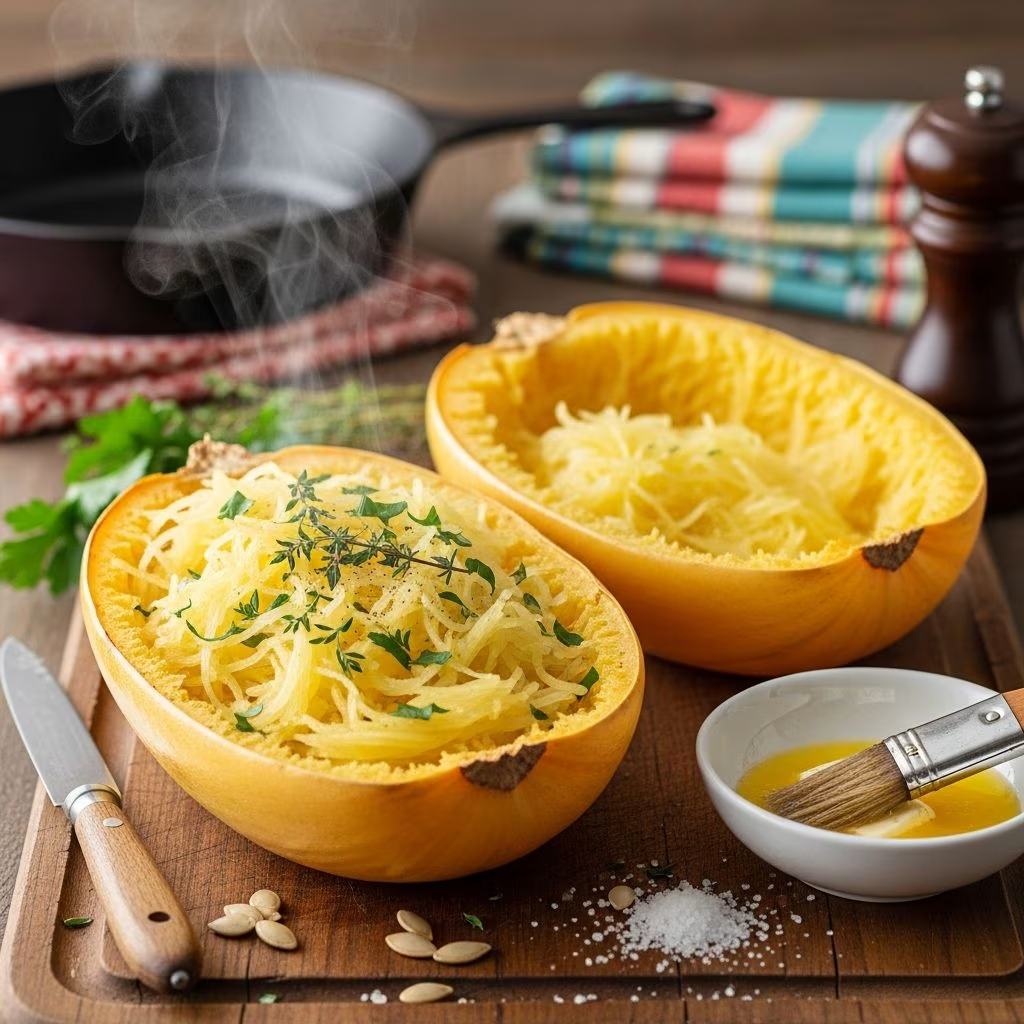
Regardless of your chosen baking method, certain steps remain consistent for optimal results. After removing the cooked squash from the oven, allow it to cool for 10 to 15 minutes until manageable but still warm. This resting period allows internal temperatures to equalize, making handling safer and less likely to cause burns. Place the cooled squash on a cutting board and, using a sturdy fork, rake across the interior flesh in multiple directions. The vegetable’s structure naturally separates into individual strands reminiscent of pasta. If the squash proves difficult to shred, return it to the oven for an additional 5 to 10 minutes at your chosen temperature, which softens the fibers further.
Proper technique when using the fork makes an appreciable difference in final texture. Work methodically across the entire interior surface, ensuring you address all areas. The fork’s tines should penetrate deeply into the flesh, lifting and separating individual strands rather than simply scraping. With practice, this process becomes intuitive and efficient, typically requiring only two to three minutes to fully process a single squash half.
Simple Flavor Enhancement and Basic Seasoning
In their most basic preparation, spaghetti squash strands benefit from straightforward flavor additions. Melt butter in a large sauté pan over medium-low heat, adding two to three cloves of minced garlic. Allow the garlic to become fragrant, releasing its aromatic compounds into the butter, typically requiring 30 to 60 seconds of heating. Add the prepared squash strands to the pan, gently tossing to coat evenly with the garlic-infused butter. Incorporate one-quarter teaspoon of salt, adjusting to taste preferences. Some preparations benefit from additional seasonings such as freshly ground black pepper, dried thyme, or garlic powder.
For enhanced richness and umami depth, sprinkle grated Parmesan cheese over the warm strands, mixing gently to distribute evenly. Fresh herbs provide brightness and complexity—finely minced parsley, basil, or chives complement the delicate squash flavor beautifully. If you prefer softer strands with additional flavor melding, cover the pan and cook for an additional two minutes before serving.
Nutritional Advantages and Dietary Applications
Spaghetti squash offers remarkable nutritional benefits that contribute to its growing popularity among health-conscious cooks. Per serving, this vegetable contains approximately 40 to 60 calories, making it an exceptionally light option for those managing caloric intake. The carbohydrate content averages 9 to 10 grams per cup of cooked strands, significantly lower than traditional wheat pasta, which contains approximately 40 grams per serving. This characteristic makes spaghetti squash particularly attractive for individuals following low-carbohydrate or ketogenic dietary patterns.
Beyond macronutrient profiles, spaghetti squash provides substantial micronutrient density. The flesh contains vitamins A and C, supporting immune function and cellular health. Potassium presence aids in cardiovascular health maintenance, while fiber content promotes digestive wellness. These nutritional characteristics position spaghetti squash as a genuinely nutritious choice rather than simply a pasta substitute for dietary restriction purposes.
Creative Serving Suggestions and Culinary Applications
The versatility of baked spaghetti squash extends far beyond simple butter and cheese preparations. Consider mixing the warm strands with marinara sauce and ground meat for a filling that closely mimics traditional pasta dishes while substantially reducing carbohydrate content. Combine the strands with pesto sauce, toasted pine nuts, and fresh vegetables for Mediterranean-inspired presentations. Incorporate the cooked squash into casserole preparations alongside cream-based sauces, cheese, and protein components for comforting baked dishes.
For lighter applications, toss the cooled strands with olive oil-based vinaigrettes, fresh vegetables, and crumbled feta cheese to create refreshing salads suitable for warm weather dining. Layer the strands into lasagna preparations as an alternative to traditional noodles, maintaining structural integrity while reducing overall carbohydrate content. These varied applications demonstrate the ingredient’s remarkable adaptability across numerous culinary contexts and flavor profiles.
Advanced Variations: The Twice-Baked Preparation
For special occasions or entertaining purposes, twice-baked spaghetti squash elevates the ingredient into an impressive presentation-worthy main course. Begin by baking spaghetti squash halves using your preferred method until tender. Rather than processing the strands, leave them intact within the squash shells. Prepare a robust filling using Italian sausage browned with onions and mushrooms, combined with marinara sauce and aromatic seasonings. Spoon this prepared filling directly into the squash cavities, mounding generously. Top with shredded mozzarella or other melting cheese varieties.
Return the filled squash to the oven at 400 degrees Fahrenheit for 10 to 15 minutes until the cheese melts completely and begins developing light browning. This technique creates an elegant presentation with the squash halves serving as natural edible vessels while remaining structurally sound. Individual servings can be scooped directly from the squash shells using a large spoon, with the strands separating naturally during serving.
Storage Guidelines and Make-Ahead Strategies
Raw spaghetti squashes maintain quality for two to three weeks when stored in a cool, dark location with good air circulation. Once cooked, the strands should be refrigerated in airtight containers for up to five days. For extended storage, freezing cooked strands preserves them for up to three months. Lay strands flat on a baking sheet to freeze individually before transferring to freezer-safe containers, preventing clumping. When preparing to use frozen strands, thaw overnight in the refrigerator rather than at room temperature.
For meal planning convenience, you can prepare multiple squashes simultaneously and portion the cooked strands into individual containers for consistent grab-and-go meals throughout the week. This preparation strategy supports dietary consistency and simplifies weekday cooking requirements.
Frequently Asked Questions
How can I determine if my spaghetti squash is properly cooked?
Properly cooked spaghetti squash meets several indicators simultaneously. The exterior skin should yield slightly to gentle pressure from your thumb without being mushy or collapsing. When pierced with a fork, the interior flesh should separate readily into individual strands. The flesh should feel tender rather than firm yet maintain structure without becoming paste-like.
What causes spaghetti squash to become mushy during cooking?
Excessive cooking time represents the primary cause of undesirable mushy texture. Different squashes cook at varying rates depending on size, shape, and internal moisture content. Begin checking for doneness a few minutes earlier than recipes suggest, using fork pressure and strand separation as your primary indicators rather than adhering strictly to time recommendations.
Can I prepare spaghetti squash using microwave cooking methods?
While microwaving can soften the skin and reduce cutting difficulty, microwave cooking typically produces less satisfactory final texture compared to oven baking. The microwave method works best as a preliminary softening step before traditional baking rather than as a complete cooking method.
Are there any safety considerations when cutting raw spaghetti squash?
The hard exterior skin requires careful handling and sharp cutting instruments. Stabilize the squash firmly on your cutting board, use deliberate and controlled knife motions, and keep your non-knife hand positioned safely away from the blade path. Pre-piercing with a fork and brief microwave heating (one to two minutes) can soften the skin slightly, easing cutting difficulty while maintaining safety.
References
- Farmers Market Institute Baked Spaghetti Squash Recipe — Santa Fe Farmers’ Market Institute. Date accessed: April 2026. https://farmersmarketinstitute.org/baked-spaghetti-squash/
- Baked Spaghetti Squash: Easy Oven Method — Healthy Recipes Blog. Date accessed: April 2026. https://healthyrecipesblogs.com/baked-spaghetti-squash/
- How to Cook Spaghetti Squash — Love and Lemons. Date accessed: April 2026. https://www.loveandlemons.com/how-to-cook-spaghetti-squash/
- Twice Baked Spaghetti Squash Recipe — Lily Nichols RDN. Date accessed: April 2026. https://lilynicholsrdn.com/twice-baked-spaghetti-squash/
- The Best Way to Cook and Cut Spaghetti Squash — Monson Made This. Date accessed: April 2026. https://monsonmadethis.com/how-to-cook-and-cut-spaghetti-squash/