German cuisine has long been celebrated for its hearty, satisfying comfort foods, and among the most beloved classics is warm potato salad. Unlike the mayonnaise-based cold salads common in American kitchens, the German version features a tangy vinegar dressing that brings brightness and depth to tender potatoes. When transformed into a casserole format, this traditional dish becomes an impressive centerpiece for family gatherings and special occasions. The combination of crispy bacon, sweet and sour flavors, and the ease of preparation makes this casserole a standout addition to any meal.
Understanding the German Potato Salad Tradition
German potato salad, known locally as “Kartoffelsalat,” represents a cornerstone of traditional German cooking. Unlike its American counterparts that rely heavily on mayonnaise, the authentic German version embraces a warm preparation method featuring a distinctive vinegar-based dressing. This approach creates a dish that is lighter, more refreshing, and deeply flavorful. The warm vinegar dressing allows potatoes to absorb the tangy, slightly sweet flavors more effectively than cold preparations, resulting in a more cohesive and satisfying dish.
The casserole adaptation maintains the essence of this traditional recipe while offering practical advantages. By baking the assembled ingredients together, the flavors meld more thoroughly, and the dish can be prepared ahead of time and reheated for convenient serving. This modern twist respects the classical flavors while accommodating contemporary cooking needs and lifestyles.
Essential Ingredients for Success
Building an exceptional German potato salad casserole requires careful ingredient selection. Each component plays a vital role in achieving the perfect balance of flavors and textures.
Potato Selection Matters
The foundation of any potato dish is the potato itself. For this casserole, waxy potatoes such as Yukon Gold, red potatoes, or New Potatoes are ideal choices. These varieties maintain their shape during cooking and absorb the dressing without becoming mushy or disintegrating. Avoid starchy russet potatoes, which tend to break apart easily and result in a less visually appealing final dish. Plan to use approximately 2 to 2.5 pounds of potatoes for a standard casserole serving four to six people.
The Role of Bacon
Bacon serves multiple functions in this dish. Beyond providing its characteristic smoky flavor, the rendered bacon fat creates the base for the dressing, infusing the vinegar mixture with savory depth. Using quality thick-cut bacon rather than thin strips ensures you have enough rendered fat and substantial pieces to distribute throughout the casserole. Plan for approximately 6 to 12 slices depending on your preference for smoky intensity and the size of your bacon strips.
The Tangy Dressing Components
The dressing transforms simple potatoes into something extraordinary. White vinegar or apple cider vinegar provides the acidic backbone, typically requiring about one-half cup. Sugar balances the vinegar’s sharpness, with most recipes calling for one-third to one-half cup depending on desired sweetness. Beef or vegetable broth, water, celery seeds, and mustard round out the flavor profile, creating a complex dressing that coats each potato piece.
Step-by-Step Preparation Guide
Preparing the Potatoes
Begin by scrubbing your potatoes under cold running water to remove any dirt. Cut larger potatoes in half so all pieces are approximately the same size, ensuring even cooking. Place the potatoes in a large pot and cover them with cold water, adding approximately one tablespoon of salt. Bring the water to a boil over medium-high heat, then reduce to a simmer. Cook for 10 to 15 minutes until the potatoes are tender enough to pierce easily with a fork but still firm enough to hold their shape. This balance is critical—overcooked potatoes will disintegrate into the dressing, while undercooked ones will remain hard and unpalatable.
Once cooked, drain the potatoes thoroughly and allow them to cool slightly until they can be handled comfortably. While still warm, slice or chop them into bite-sized pieces, leaving the nutrient-rich skins intact for added texture and flavor.
Cooking the Bacon
In a large skillet, cook your bacon slices over medium-high heat until they reach your desired crispness. Remove the cooked bacon with a slotted spoon and place on paper towels to drain. Reserve at least 2 to 3 tablespoons of the rendered bacon fat in the skillet, discarding any excess if there is more than one-quarter cup.
Creating the Dressing Base
Using the remaining bacon fat as your foundation, add chopped onions and cook over medium heat until they become soft and begin to develop light brown edges, approximately 5 to 8 minutes. This caramelization develops the onions’ natural sweetness and adds complexity to the dressing. Some recipes incorporate minced garlic at this stage for additional flavor depth.
Building the Flavor
To the softened onions, add the vinegar, water or broth, sugar, celery seeds, mustard, salt, and pepper. Bring this mixture to a boil, stirring occasionally to ensure the sugar dissolves completely. Let it boil for 2 to 3 minutes to allow the flavors to meld and develop.
Assembling the Casserole
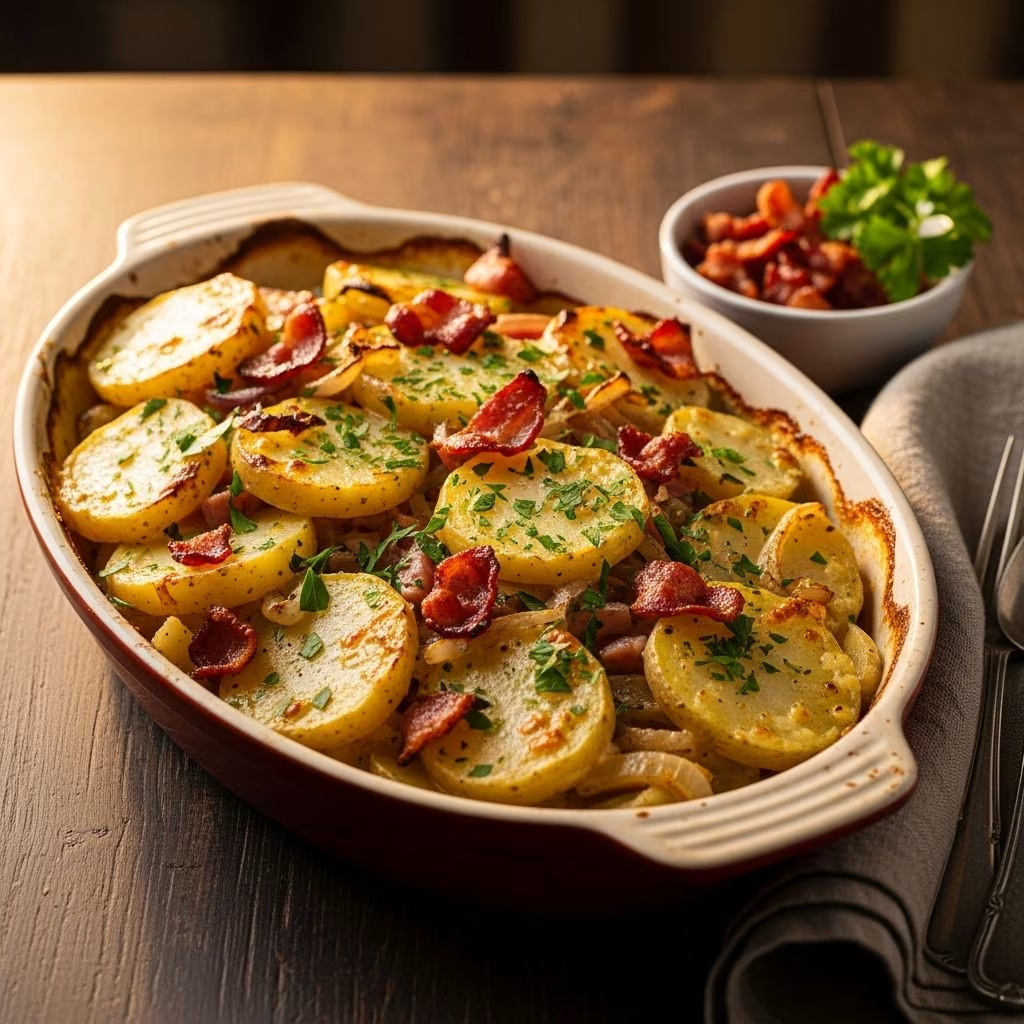
Pour the hot dressing over the prepared potatoes and gently toss to coat thoroughly. Most recipes suggest combining half the crumbled bacon into the mixture while reserving the remainder for garnish. Transfer the mixture to a prepared 2.5-quart casserole dish and spread evenly.
Baking Instructions and Timing
Preheat your oven to 300 degrees Fahrenheit. Bake the casserole uncovered for 30 minutes, or until the mixture is heated through and beginning to bubble around the edges. The low temperature ensures even warming without drying out the potatoes. Some recipes suggest increasing the temperature to 350 degrees for a slightly shorter baking time of 20 to 25 minutes, depending on the depth of your casserole dish.
During the final minutes of baking, sprinkle the reserved bacon crumbles over the top and garnish generously with fresh parsley for color and bright herbal notes. This finishing touch adds visual appeal and a fresh contrast to the warm, savory casserole.
Storage and Reheating Strategies
German potato salad casserole stores well in the refrigerator for up to four days when properly covered. Transfer leftovers to an airtight container or cover the casserole dish with plastic wrap or foil to prevent absorption of refrigerator odors and moisture loss.
To reheat, cover the dish with foil and warm in a 300-degree oven until heated through, approximately 15 to 20 minutes depending on the quantity. Allow the casserole to sit on the counter for 15 minutes before reheating to bring it closer to room temperature and ensure even warming throughout.
For quicker reheating of individual portions, microwave at 50% power for one minute, stir gently, then continue at full power, checking every 30 seconds until heated through. If the potatoes appear dry after refrigeration, as they absorb moisture, drizzle lightly with olive oil or add a splash of broth to restore the proper consistency.
Flavor Variations and Customizations
While the traditional recipe offers exceptional flavor, creative cooks can introduce variations that honor the original concept while adding personal touches.
- Cheese Topping: Add a layer of shredded cheddar or Swiss cheese for richness and depth
- Green Onion Garnish: Substitute or supplement parsley with chopped green onions for a milder onion flavor
- Herb Variations: Include fresh dill, chives, or tarragon for herbaceous complexity
- Mustard Intensity: Increase or decrease mustard based on personal preference—Dijon adds sophistication while whole grain mustard provides texture
- Broth Selection: Use chicken, beef, or vegetable broth depending on dietary preferences and desired flavor profile
- Heat Element: Add a dash of cayenne pepper or hot sauce for those preferring subtle spice
Serving Suggestions and Pairings
German potato salad casserole serves as a versatile side dish suitable for numerous occasions. Serve it alongside grilled bratwurst or other German sausages for an authentic combination. It pairs beautifully with roasted chicken, pork chops, or beef dishes, providing a tangy counterpoint to rich meats.
This casserole shines at Oktoberfest celebrations, potlucks, family reunions, and everyday family dinners. The warm serving temperature makes it particularly suitable for cooler months, though it can be served at room temperature during warmer seasons. For a complete German meal, pair with fresh sauerkraut, crusty bread, and a light beer.
Frequently Asked Questions
Can I prepare this casserole ahead of time?
Yes, you can assemble the casserole several hours in advance, cover it with foil, and bake just before serving. Alternatively, you can bake it completely, refrigerate it, and reheat as needed. This make-ahead flexibility makes it ideal for entertaining.
What type of vinegar works best?
Both white vinegar and apple cider vinegar produce excellent results. White vinegar offers a sharper, cleaner tang, while apple cider vinegar provides a slightly sweeter, more complex flavor. Choose based on your personal preference or dietary restrictions.
How do I prevent the potatoes from becoming mushy?
Avoid overcooking potatoes during the boiling stage and handle them gently when tossing with the dressing. Use waxy potatoes rather than starchy varieties, which naturally break down more easily.
Is this recipe suitable for vegetarians?
The traditional recipe relies on bacon for flavor and fat. Vegetarians can substitute vegetable oil and add smoked paprika or liquid smoke for smoky depth, though the dish will have a different character.
How long can leftovers remain at room temperature?
Potato salad should not sit at room temperature for more than two hours before refrigeration to prevent foodborne illness.
Equipment and Tools You’ll Need
Successfully preparing this casserole requires minimal equipment. A large pot for boiling potatoes, a large skillet for cooking bacon and onions, and a 2.5-quart casserole dish comprise the essential items. Additional helpful tools include a slotted spoon, a large mixing bowl or spoon for gentle tossing, and measuring cups and spoons for accurate ingredient proportions.
Nutritional Considerations
This casserole provides a good source of carbohydrates from potatoes, protein from bacon, and minerals including potassium and manganese. The vinegar-based dressing is significantly lighter than mayonnaise-based alternatives, making this a more health-conscious option for those watching fat intake. Portion control remains important, as bacon contributes saturated fat to the overall dish.
Why This Casserole Endures
The German potato salad casserole persists as a cherished classic because it delivers genuine comfort and satisfaction. The combination of tender potatoes, smoky bacon, and tangy dressing satisfies on multiple sensory levels while remaining uncomplicated to prepare. Its versatility allows it to grace both casual family tables and more formal entertaining occasions. Whether you’re connecting with German heritage or simply seeking a reliable, delicious side dish, this warm casserole deserves a permanent place in your recipe collection.
References
- How To Make A Hot German Potato Salad Casserole — TidyMom. Accessed April 2026. https://tidymom.net/german-potato-salad/
- Hot German Potato Salad Recipe (No Mayo or Eggs) — House of Nash Eats. Accessed April 2026. https://houseofnasheats.com/german-potato-salad/
- Hot German Potato Salad Recipe — Betty Crocker. General Mills. Accessed April 2026. https://www.bettycrocker.com/recipes/hot-german-potato-salad/39665c22-834a-4d6b-9d9e-218b1e423365
- The BEST Hot German Potato Salad (EASY, too!) — Five Heart Home. Accessed April 2026. https://www.fivehearthome.com/german-potato-salad/
- Hot German Potato Salad (Kartoffelsalat) — Host The Toast. Accessed April 2026. https://hostthetoast.com/german-potato-salad-kartoffelsalat/