Understanding the Roots and Cultural Significance
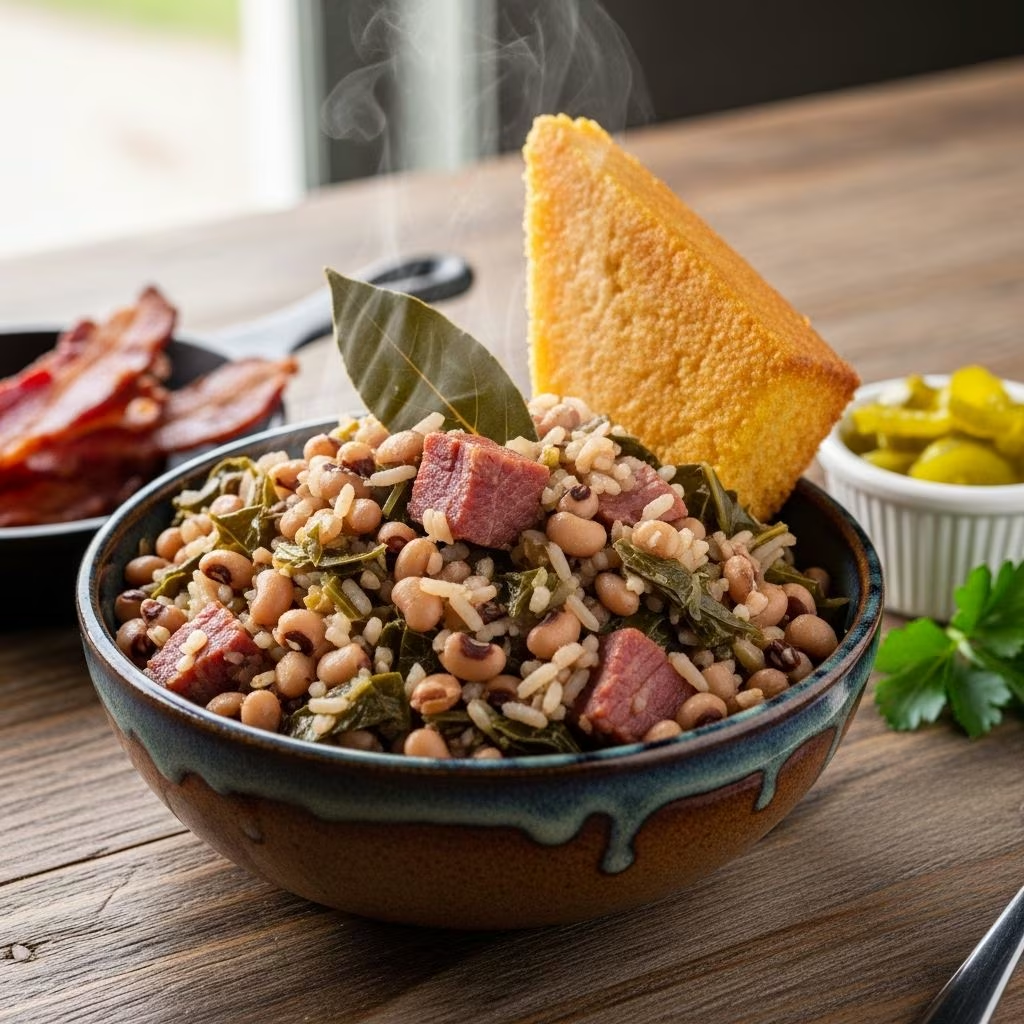
Hoppin’ John stands as one of the most cherished dishes in Southern American cuisine, particularly celebrated on New Year’s Day. This humble yet flavorful combination of black-eyed peas, rice, and smoky pork represents far more than a simple meal—it embodies centuries of Southern tradition, cultural heritage, and superstitions about prosperity and good fortune. The dish has become so intertwined with New Year’s celebrations throughout the South that many families consider it essential to the holiday, believing that skipping this meal might invite financial hardship into the coming year.
The origins of Hoppin’ John trace back to South Carolina, where agricultural conditions made certain crops particularly suitable for cultivation. Rice and black-eyed peas thrived in the hot, humid climate of the Lowcountry, becoming staple ingredients for both enslaved and free communities. What began as practical necessity—using ingredients that could survive the demanding Southern summers—evolved into a treasured culinary tradition that persists across generations and geographic boundaries.
The Intriguing Etymology Behind the Name
The origin of the name “Hoppin’ John” remains somewhat mysterious, with multiple theories competing for credibility. The most widely accepted explanation suggests the name derives from the French phrase *pois à pigeon*, meaning “pigeon peas,” which French Creoles used to describe black-eyed peas. Over time, the French terminology allegedly became corrupted into the English phrase “Hoppin’ John,” though this theory, like many aspects of food history, remains subject to scholarly debate.
Alternative narratives propose that the name originated from a street vendor in Charleston known as Hoppin’ John, who sold rice and bean dishes to locals and passersby. This colorful origin story, while charming, lacks the same level of historical documentation as the linguistic theory. Regardless of which explanation holds truth, the name has become so firmly established in American culinary vocabulary that most practitioners rarely question its etymology, simply accepting it as the traditional designation for this beloved dish.
Symbolic Meanings and Superstitious Traditions
Hoppin’ John carries profound symbolic meaning in Southern culture, with each component representing a specific hope for the new year. The black-eyed peas symbolize coins and monetary prosperity, making them the foundational ingredient for ensuring financial gain. Some families take this symbolism literally by adding an actual coin to the cooking pot, later removing it before serving—a practice believed to bring extra good fortune to whoever receives it in their bowl.
The dish is traditionally served alongside collard greens, whose verdant color represents the color of paper money and thus wealth and abundance. This pairing creates a complete symbolic meal—the coins (peas) paired with currency (greens)—that collectively promises financial security throughout the year. The inclusion of rice adds substance and heartiness to the meal while also representing gratification and fullness.
This convergence of symbolism, rather than occurring by accident, reflects the intentional design of a dish meant to spiritually invite prosperity. Whether practitioners believe literally in these superstitions or view them as charming cultural traditions, the symbolic framework adds emotional resonance and cultural continuity to the act of preparing and consuming Hoppin’ John.
Historical Development and Evolution
The documented history of Hoppin’ John begins in the nineteenth century, with the first recorded recipe appearing in *The Carolina Housewife* in 1857. This early version called for straightforward proportions: one pint of rice, one pint of peas, and one pound of bacon—ratios that remain recognizable in modern interpretations despite significant regional and family variations that have emerged over nearly two centuries.
From the 1840s onward, Hoppin’ John recipes began proliferating in cookbooks and family collections throughout the South. What distinguished this period was not the invention of the dish itself, but rather its codification into standardized recipes suitable for printing and sharing beyond oral tradition. As Southern cuisine became increasingly documented and celebrated, Hoppin’ John evolved from primarily rural and community-based preparation methods into a dish worthy of inclusion in published cookbooks.
The evolution of Hoppin’ John reflects broader patterns in Southern food history. While the fundamental components—peas, rice, and pork—have remained constant, individual cooks have continuously added their own touches, whether through the inclusion of vegetables like bell peppers and celery, the introduction of spices beyond basic salt and pepper, or experimentation with alternative cooking methods. This flexibility has paradoxically allowed Hoppin’ John to maintain its essential identity while accommodating infinite variation.
Essential Ingredients and Their Roles
Understanding the purpose each ingredient serves helps cooks appreciate why substitutions, while possible, fundamentally alter the dish’s character. The following components form the backbone of traditional Hoppin’ John:
Primary Components
- Black-eyed peas: These legumes provide the dish’s protein foundation and carry the symbolic significance of good fortune. Whether using dried peas requiring overnight soaking or convenient canned varieties, they deliver earthy flavor and tender texture when properly cooked.
- Rice: This grain serves as both textural contrast and the defining element separating Hoppin’ John from simple black-eyed pea dishes. The rice absorbs flavorful cooking liquid while providing substance and visual appeal.
- Smoky pork: Traditional recipes call for ham hocks, bacon, or smoked ham, each contributing distinctive smoky depth that distinguishes Hoppin’ John from vegetarian preparations. The pork fat infuses the entire dish, creating savory richness.
Aromatic Vegetables
Most authentic versions include the trinity of onion, celery, and bell pepper—vegetables that form the aromatic base for countless Southern dishes. These vegetables add complexity, sweetness, and textural variety while their natural sugars caramelize during cooking, deepening overall flavor development. Garlic, often included alongside these aromatics, provides additional pungent depth.
Seasoning and Flavor Enhancement
Beyond salt and pepper, traditional preparations may include cayenne pepper for gentle heat, and some modern versions incorporate smoked paprika for intensified smoky character when the cook chooses to use vegetarian substitutes instead of traditional pork products. White vinegar, sometimes added near the conclusion of cooking, brightens the overall flavor profile and adds subtle acidity that prevents the dish from becoming one-dimensional.
Preparation Methods and Cooking Techniques
While the ingredient list remains relatively consistent across variations, preparation methods showcase considerable diversity, from traditional stovetop simmering to modern appliance adaptations.
Traditional Stovetop Method
The conventional approach begins with soaking dried black-eyed peas in cool water for six to forty-eight hours, depending on desired texture and personal preference. Some cooks prefer the shorter overnight soak, while others advocate for extended soaking periods to ensure complete tenderness and easier digestibility. After soaking and rinsing, the peas undergo cooking in fresh water, typically combined with the ham hock, aromatics, and seasonings.
The cooking process proceeds by first sautéing aromatic vegetables in bacon drippings or butter to develop flavor foundations, then adding soaked peas and broth, bringing the mixture to a boil before reducing heat for gentle simmering. This low-and-slow approach, typically requiring thirty to sixty minutes depending on pea quality and desired tenderness, allows flavors to meld while the peas soften without disintegrating. Many cooks time the completion of pea cooking to coincide with rice preparation, allowing both components to finish simultaneously so the warm peas can be combined with fresh rice.
Contemporary Cooking Methods
Modern cooks increasingly employ pressure cookers and slow cookers to streamline preparation without sacrificing authenticity. Pressure cooking dramatically reduces cook time from over an hour to approximately fifteen to twenty minutes, making weeknight preparation feasible despite traditional recipes’ time requirements. Slow cooker methods offer the opposite advantage—hands-off cooking that can proceed throughout the day, with the final dish ready by dinner time with minimal active preparation needed.
Regional and Personal Variations
While Hoppin’ John maintains certain defining characteristics, remarkable regional diversity exists within this framework.
| Variation Type | Key Differences | Regional Prevalence |
|---|---|---|
| Traditional Low Country | Minimal additions, focuses on peas, rice, and ham hock | South Carolina coastal regions |
| Vegetable-Enhanced | Includes bell peppers, tomatoes, additional greens | Modern adaptations throughout South |
| Spice-Forward | Higher cayenne levels, smoked paprika, hot sauce | Louisiana-influenced versions |
| One-Pot Versions | Rice cooked with peas rather than separately | Contemporary convenience-focused recipes |
| Vegetarian Alternatives | Omits pork entirely, uses vegetable broth | Modern health-conscious preparations |
Some cooks incorporate fire-roasted tomatoes, adding acidity and umami depth. Others experiment with kale or other hearty greens beyond traditional collards. Certain families have developed distinctive versions using Sea Island red peas—considered particularly traditional in Lowcountry preparations—rather than the more commonly available black-eyed peas.
Nutritional Considerations and Health Benefits
Beyond cultural significance, Hoppin’ John offers legitimate nutritional benefits. Black-eyed peas provide plant-based protein, dietary fiber, and complex carbohydrates that support sustained energy and digestive health. The combination of peas and rice creates a complete protein containing all essential amino acids, making the dish particularly valuable for vegetarian preparations. The aromatic vegetables contribute vitamins, minerals, and phytonutrients while adding minimal calories.
The pork component, while traditional, contributes saturated fat and sodium that health-conscious cooks may wish to moderate through portion control or by selecting leaner pork products. Modern adaptations using vegetarian broth and omitting pork entirely retain the essential character of the dish while reducing fat and cholesterol content, making this approach increasingly popular among contemporary home cooks.
Serving Suggestions and Pairings
Hoppin’ John traditionally appears as part of a complete New Year’s Day meal rather than standing alone. Collard greens, as mentioned previously, form the essential accompaniment, providing symbolic wealth while offering textural and flavor contrast through their slightly bitter, mineral-forward character.
Cornbread frequently rounds out the meal, its slightly sweet flavor and crumbly texture complementing the savory peas while adding another layer of Southern tradition. Some families include simple salads featuring tender greens, pickled vegetables, or vinegar-based preparations that cleanse the palate between bites of the heartier main components.
The dish works equally well as a casual weeknight dinner or more formal entertaining option, scaling effortlessly from small family gatherings to large celebrations. Its humble presentation belies the comfort and satisfaction it delivers, making it appropriate for any context where Southern comfort food feels appropriate.
Frequently Asked Questions
Do I need to soak dried peas before cooking?
While soaking isn’t technically mandatory, it significantly reduces cooking time and promotes more even cooking. At minimum, a six-hour soak suffices, though overnight or extended soaking improves results, particularly for older dried peas that cook more slowly.
Can I use canned black-eyed peas instead of dried?
Yes, canned peas offer convenience and require no pre-soaking. Two cans of standard size provide approximately the equivalent of one pound dried peas. Simply drain and rinse before use, and reduce total cooking time accordingly since the peas are already softened.
What if I don’t eat pork?
Vegetarian preparations using vegetable broth and omitting pork entirely remain authentic Hoppin’ John, though the flavor profile differs considerably. Some cooks substitute smoked paprika or liquid smoke to approximate the traditional smoky character.
When should Hoppin’ John be eaten for maximum luck?
Traditional belief holds that consuming Hoppin’ John on New Year’s Day brings the prosperity benefits for the entire year. However, many families enjoy it throughout the winter season or whenever the mood strikes, with the symbolic element remaining present regardless of specific date.
How long does Hoppin’ John keep refrigerated?
Properly stored in airtight containers, Hoppin’ John remains fresh for four to five days in the refrigerator and freezes successfully for up to three months, making it ideal for advance preparation.
Conclusion: Tradition Meets Contemporary Cooking
Hoppin’ John represents far more than a simple recipe combining three basic ingredients. It embodies centuries of Southern history, cultural resilience, family traditions, and the deep human need to ritually invite good fortune into our lives through intentional food preparation. Whether prepared following exacting traditional methods or adapted with contemporary modifications, this dish maintains its essential character while accommodating individual preferences and dietary requirements.
The flexibility of Hoppin’ John—its ability to remain recognizable while absorbing infinite variation—ensures its continued relevance for future generations. Whether consumed on New Year’s Day in pursuit of symbolic prosperity or enjoyed year-round simply for its delicious, comforting nature, Hoppin’ John continues to nourish bodies and connect people to shared cultural heritage.
References
- Hoppin’ John Recipe – WellPlated.com — Well Plated. Accessed April 2026. https://www.wellplated.com/hoppin-john-recipe/
- Hoppin’ John Recipe – The Pioneer Woman — The Pioneer Woman. Accessed April 2026. https://www.thepioneerwoman.com/food-cooking/recipes/a10902/hoppin-john/
- Hoppin’ John Recipe: Southern-Style Black-Eyed Peas — Stacy Lyn Harris. Accessed April 2026. https://stacylynharris.com/hoppin-john-recipe/
- New Year’s Hoppin’ John – Southern Black Eyed Peas – Oat&Sesame — Oat & Sesame. Accessed April 2026. https://www.oatandsesame.com/new-years-hoppin-john/
- Southern Hoppin’ John — Southern Bite. Accessed April 2026. https://southernbite.com/southern-hoppin-john/
- Hoppin’ John: A Southern Beans and Rice Dish That’s Full of Flavor — America’s Test Kitchen. Accessed April 2026. https://www.youtube.com/watch?v=5dwDWGYLP7I