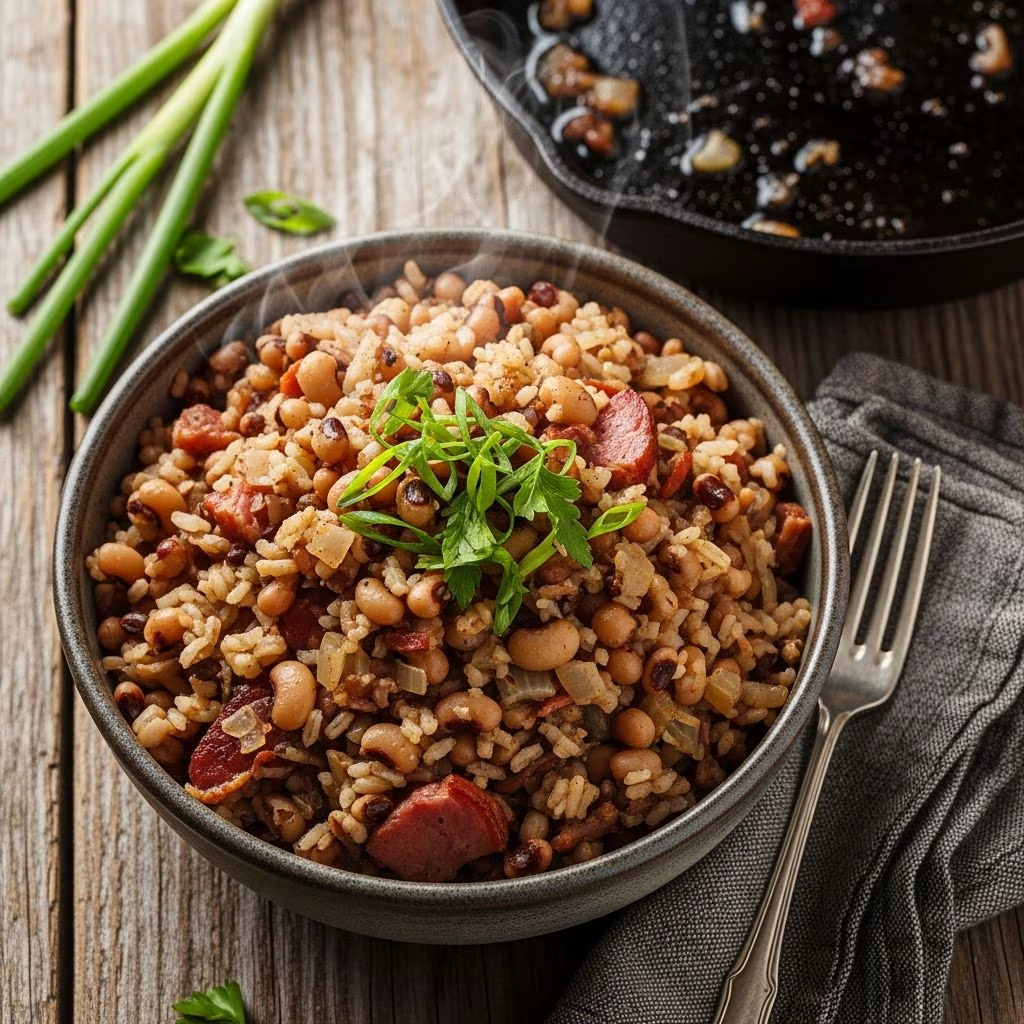
Hoppin’ John stands as a cornerstone of Southern culinary tradition, blending humble ingredients into a flavorful stew symbolizing good fortune. This dish, primarily made with black-eyed peas, rice, and smoky pork elements, has nourished generations, especially on New Year’s Day when it’s believed to bring prosperity.
Origins and Cultural Significance
The roots of Hoppin’ John trace back to the American South, particularly South Carolina, where it emerged in the 19th century. The earliest printed recipe appeared in 1847, highlighting its longstanding presence in regional cookbooks. Farmers favored black-eyed peas and rice because these crops thrived in the hot, humid climate, making them staples for resilient agriculture.
Its name sparks endless debate among food historians. One popular theory links it to a Charleston street vendor who sold the dish from a cart, earning the moniker ‘Hoppin’ John.’ Another suggests a linguistic twist from the French ‘pois à pigeon,’ referring to pigeon peas, though black-eyed peas are the modern standard. Regardless, the dish embodies Southern hospitality and resourcefulness.
New Year’s traditions amplify its fame. Eaten on January 1st, black-eyed peas represent coins for wealth, rice signifies abundance, and accompanying collard greens symbolize greenbacks. Some families hide a dime in the pot; finding it promises extra luck.
Essential Ingredients Breakdown
Core components create Hoppin’ John’s distinctive taste and texture. Black-eyed peas provide earthy creaminess, while rice absorbs the savory broth. Smoky pork like ham hocks or bacon infuses depth, and the ‘holy trinity’ of onions, celery, and bell peppers builds a flavorful base.
- Black-eyed peas: Fresh, dried, or canned—dried offer superior texture after soaking.
- Rice: Long-grain white or brown for serving; some mix it in at the end.
- Pork elements: Ham hock, bacon, or smoked sausage for that irreplaceable smokiness.
- Aromatics: Onion, garlic, celery, and green bell pepper.
- Seasonings: Cayenne, salt, pepper, and sometimes smoked paprika or thyme.
- Liquids: Chicken broth or water, plus vinegar for brightness.
Vegetarian twists swap pork for smoked paprika or liquid smoke, maintaining the essence.
Classic Stovetop Preparation Guide
Mastering Hoppin’ John starts with preparation. Soak dried peas overnight to reduce cooking time and improve digestibility.
- Prep the base: In a large pot, sauté diced onion, celery, garlic, and bell pepper in butter or oil until softened, about 5 minutes.
- Add peas and pork: Stir in soaked peas, ham hock, broth, and seasonings. Bring to a boil, then simmer covered for 45-60 minutes until peas tenderize.
- Incorporate rice: Add uncooked rice toward the end, simmering another 20-30 minutes until fluffy. Or serve peas over cooked rice separately.
- Finish with flair: Stir in vinegar, cayenne to taste, and greens like kale in the last 5 minutes. Remove ham hock, shred meat, and return to pot.
Total time: About 1.5-2 hours. Serves 6-8 generously.
Step-by-Step Visual Cooking Table
| Step | Action | Time | Key Tip |
|---|---|---|---|
| 1 | Sauté aromatics | 5 min | Don’t rush—build flavor foundation. |
| 2 | Simmer peas with pork | 45-60 min | Low heat prevents mushiness. |
| 3 | Add rice | 20-30 min | Use broth ratio of 2:1 for rice. |
| 4 | Season and greens | 5 min | Vinegar cuts richness perfectly. |
Modern Twists and Adaptations
While traditionalists stick to basics, contemporary cooks experiment freely. Try these variations:
- Vegetarian/Vegan: Omit pork, use smoked paprika, coconut aminos, and vegetable broth. Add mushrooms for umami.
- Quick version: Canned peas cut time to 30 minutes; dice ham instead of hock.
- Spicy kick: Include jalapeños, fire-roasted tomatoes, or extra cayenne.
- Grain swaps: Quinoa or farro for gluten-free or nutty texture.
- Slow cooker: Layer ingredients, cook low 6-8 hours.
Instant Pot users sauté first, then pressure cook peas 20 minutes, natural release.
Nutritional Profile and Health Benefits
Hoppin’ John packs nutrition without excess calories. A serving (about 1.5 cups) offers roughly 350 calories, 15g protein, 50g carbs, and 10g fiber from peas and rice. Black-eyed peas deliver folate, iron, and potassium, supporting heart health and digestion.
Pork adds B vitamins and zinc, but lean toward turkey bacon for lighter options. Paired with greens, it becomes a balanced meal rich in vitamins A, C, and K. Low glycemic index makes it diabetes-friendly when using brown rice.
| Nutrient | Per Serving | Benefit |
|---|---|---|
| Protein | 15g | Muscle repair |
| Fiber | 10g | Digestion aid |
| Iron | 20% DV | Energy boost |
| Folate | 25% DV | Cell health |
Perfect Pairings and Serving Ideas
Serve Hoppin’ John hot in bowls, topped with green onions, hot sauce, or pickled okra. Classic sides include cornbread for sopping up broth, collards for tradition, or a vinegary slaw for contrast.
- Cornbread muffins
- Stewed greens
- Fresh tomato salad
- Hot sauce (Tabasco or crystal)
For parties, make a big batch and set out toppings bar-style.
Storage, Freezing, and Reheating Tips
Leftovers improve overnight as flavors meld. Refrigerate up to 4 days in airtight containers. Freeze portions up to 3 months; thaw overnight before reheating.
Reheat on stovetop with added broth to loosen. Microwave works but stir midway for even heating. Avoid boiling to preserve texture.
Frequently Asked Questions (FAQs)
Can I use canned black-eyed peas?
Yes, drain and rinse; reduce cooking time to 20-30 minutes. Adjust broth accordingly.
Is soaking dried peas necessary?
Recommended for even cooking and tenderness, but quick-soak by boiling 2 minutes then resting 1 hour.
What’s the best rice for Hoppin’ John?
Long-grain white absorbs flavors well; brown rice adds nutrition but needs more liquid and time.
How spicy should it be?
Adjust cayenne to taste—start mild, add more at end.
Can I make it ahead for New Year’s?
Absolutely; flavors deepen. Prepare 1-2 days early, reheat gently.
Why Hoppin’ John Endures
Beyond superstition, Hoppin’ John’s appeal lies in its simplicity, affordability, and heartiness. It’s a dish that warms the soul, unites families, and adapts to modern palates while honoring heritage. Whether for luck or lunch, it delivers every time.
References
- Hoppin’ John Recipe – WellPlated.com — Well Plated. Accessed 2026. https://www.wellplated.com/hoppin-john-recipe/
- Hoppin’ John Recipe – The Pioneer Woman — The Pioneer Woman. Accessed 2026. https://www.thepioneerwoman.com/food-cooking/recipes/a10902/hoppin-john/
- Hoppin’ John Recipe: Southern-Style Black-Eyed Peas — Stacy Lyn Harris. Accessed 2026. https://stacylynharris.com/hoppin-john-recipe/
- New Year’s Hoppin’ John – Southern Black Eyed Peas — Oat & Sesame. Accessed 2026. https://www.oatandsesame.com/new-years-hoppin-john/
- Southern Hoppin’ John — Southern Bite. Accessed 2026. https://southernbite.com/southern-hoppin-john/