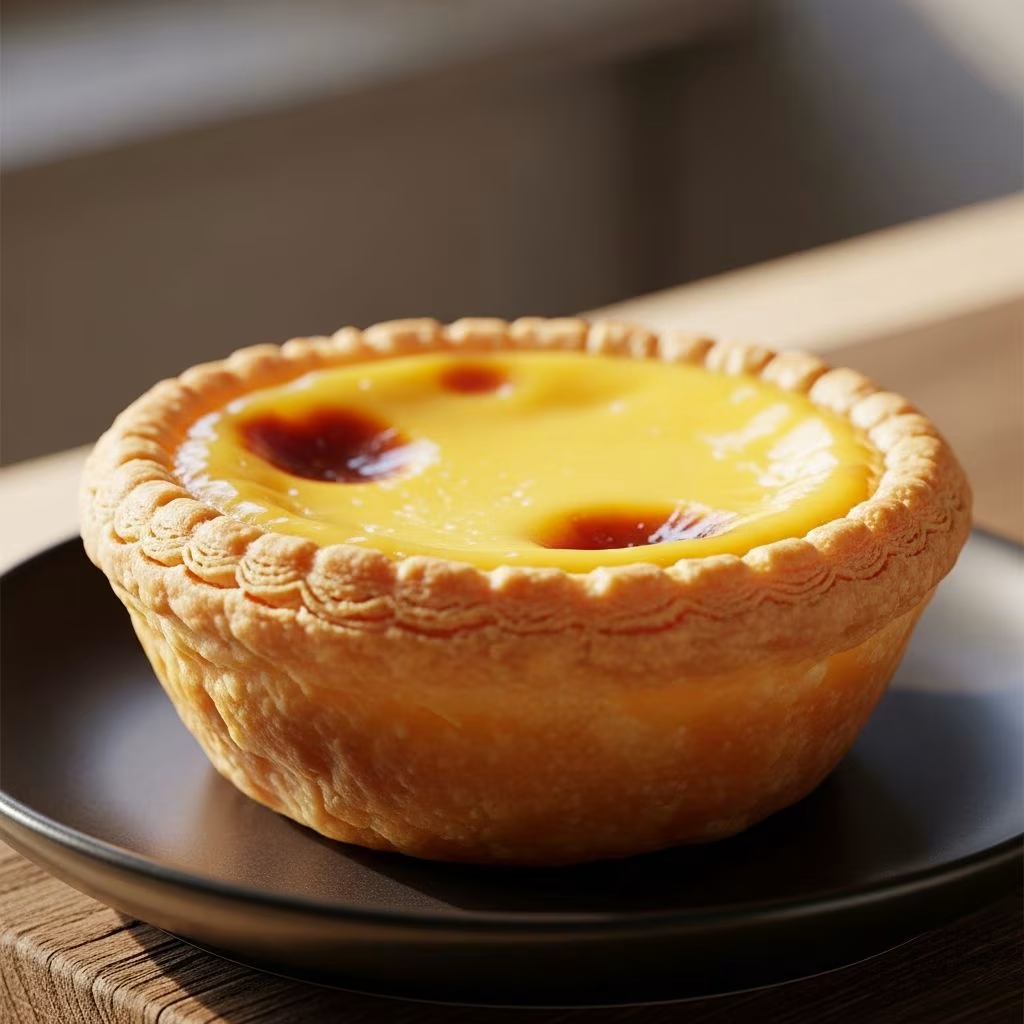
These delightful pastries, known as dan tat in Cantonese, feature a buttery, crumbly shell encasing a creamy, golden custard. Originating from Hong Kong’s vibrant bakery scene, they offer a perfect balance of textures and flavors that captivate dim sum enthusiasts worldwide.
The Allure of Hong Kong Egg Tarts
Hong Kong egg tarts stand out in the world of pastries due to their unique combination of a shortbread-like crust and a velvety egg custard filling. Unlike their Portuguese counterparts, which boast a caramelized top and puffier pastry, Hong Kong versions prioritize a smooth, jiggle-free custard and a tender, melt-in-your-mouth shell. This treat rose to fame in the mid-20th century amid Hong Kong’s fusion of Eastern and Western baking traditions, becoming a staple in cha chaan tengs and bakeries.
What makes them irresistible? The crust’s richness from butter and minimal sugar allows the custard’s subtle sweetness to shine. Baked just until the tops turn golden, they achieve a signature wobble that signals perfection. Home bakers love them for their relatively simple ingredients, yet they demand precision in technique to avoid common pitfalls like soggy bottoms or overcooked fillings.
Essential Ingredients Breakdown
Success starts with quality components. Here’s a detailed look at what you’ll need for both classic and adapted versions.
Pastry Components
- Flour: Cake flour or all-purpose works best for tenderness; it creates a flaky texture without toughness.
- Butter: Unsalted, softened to room temperature for easy mixing, provides richness and structure.
- Sugar: Icing or powdered sugar for sweetness and to keep the dough soft.
- Eggs: Yolks and a bit of white bind the dough without making it tough.
- Salt: A pinch enhances flavors.
Custard Essentials
- Eggs: Whole eggs (sometimes with extra yolk) for creaminess; whisk gently to avoid bubbles.
- Sugar: Granulated or caster, dissolved in hot water for even sweetness.
- Milk: Evaporated milk adds richness and a silky mouthfeel; whole milk as substitute.
- Vanilla: Optional extract for depth.
- Water: Hot to melt sugar smoothly.
| Ingredient | Classic Amount (for 12 tarts) | Function |
|---|---|---|
| Butter | 50-75g | Tenderness & flavor |
| Flour | 90-140g | Structure |
| Eggs (custard) | 2 whole | Creaminess |
| Evaporated Milk | 30-125ml | Richness |
| Sugar | 35-75g | Sweetness |
Step-by-Step Recipe Guide
This recipe yields 12 standard-sized tarts. Prep time: 45 minutes (plus chilling). Bake time: 15-20 minutes.
Prepare the Pastry Dough
- Combine softened butter and icing sugar in a bowl. Beat until pale and fluffy, about 2 minutes.
- Mix in egg yolk (and half white if using) until incorporated.
- Sift in flour and salt. Gently knead into a smooth ball—avoid overworking to prevent toughness.
- Wrap and chill for 30 minutes to overnight for easier handling.
Shape the Tart Shells
- Divide dough into 12 portions (about 25-38g each).
- Roll into balls, then flatten into discs with a rolling pin to about 1/8-inch thick.
- Press into greased muffin tins or tart molds, ensuring even thickness and flared edges for shrinkage allowance.
- Chill shells for 20-30 minutes to firm up.
Make the Custard Filling
- Dissolve sugar and salt in hot water; cool to room temperature.
- Whisk eggs lightly, then stir in cooled sugar water, evaporated milk, and vanilla. Do not overbeat.
- Strain through a fine sieve twice to remove bubbles and ensure silkiness.
Bake to Perfection
- Preheat oven to 375-400°F (190-200°C), rack in lower third.
- Fill shells 80-90% full with custard.
- Bake 15-20 minutes until tops are golden and custard sets with a slight jiggle. Toothpick test: it should stand upright briefly.
- Cool in tins 5 minutes, then transfer to wire rack. Best enjoyed warm.
Pro Tips for Flawless Results
- Chill Everything: Cold dough prevents spreading; rest custard to settle bubbles.
- Oven Accuracy: Use an oven thermometer—too hot causes puffing and collapse.
- Filling Temperature: Room-temp custard bakes evenly; hot filling leads to cracks.
- Mold Prep: Brush with melted butter for easy release and extra flakiness.
- Scaling: For mini tarts, reduce bake time by 3-5 minutes.
Troubleshooting common issues:
| Problem | Cause | Solution |
|---|---|---|
| Soggy bottom | Thin dough or wet filling | Chill shells longer; bake lower rack |
| Cracked top | Overbeaten eggs or high heat | Strain well; lower temp last 5 min |
| Tough crust | Overkneaded dough | Handle minimally; use cake flour |
| Shrunk shells | No chill or thin edges | Flare edges; chill 30+ min |
History and Cultural Significance
Hong Kong egg tarts trace roots to Portuguese pastéis de nata introduced in the 19th century via Macau trade routes. Local bakers adapted them post-WWII, swapping puff pastry for shortcrust and refining the custard for milder sweetness. By the 1960s, they symbolized affordable luxury in tea houses, evolving into a dim sum icon. Today, chains like Tai Cheong Bakery export this legacy globally.
In Cantonese culture, dan tat pairs with milk tea or congee, embodying yum cha (dim sum) rituals. They’re a nostalgic treat for diaspora communities, evoking Hong Kong’s bustling streets.
Creative Variations to Try
- Milk Tea Custard: Infuse filling with black tea bags for a Hong Kong-style twist.
- Chocolate Swirl: Add melted dark chocolate to half the custard before filling.
- Gluten-Free: Swap flour with a 1:1 gluten-free blend; add xanthan gum for structure.
- Giant Tart: Double recipe for a 9-inch pan; bake at 350°F for 25-30 minutes.
- Savory Spin: Reduce sugar, add cheese or bacon bits for brunch tarts.
Storage: Keep in airtight container up to 2 days at room temp, or freeze baked tarts for 1 month. Reheat at 300°F for 5 minutes to revive crispness.
Nutrition and Pairing Ideas
One tart (approx. 100 calories): 5g fat, 12g carbs, 2g protein. Moderate indulgence, rich in calcium from milk and eggs.
- Pair With: Hong Kong milk tea, fresh mango, or green tea ice cream.
- Diet Adaptations: Use low-fat evaporated milk; egg substitute for vegan trials (though texture changes).
Frequently Asked Questions (FAQs)
Can I use a muffin tin instead of tart molds?
Yes, standard muffin tins work well for dim sum-sized tarts. Grease thoroughly and flare edges higher.
Why does my custard bubble over?
Overfilled shells or high oven temp. Fill to 80% and reduce heat in last minutes.
Is evaporated milk necessary?
It provides authentic richness, but whole milk or cream substitutes adequately.
How do I know when they’re done?
Tops golden, center jiggles slightly, toothpick stands for 3 seconds before falling.
Can I make dough ahead?
Yes, refrigerate up to 2 days or freeze 1 month. Thaw overnight before using.
Advanced Techniques for Bakery Pros
For ultra-flaky pastry, employ a rough puff method: layer butter into flour, fold like croissant dough, and chill between turns. This yields King Arthur-style crispness. Experiment with water roux (tangzhong) in custard for extra smoothness, a trick from bread baking adapted here.
Scaling up? Invest in a silicone mold set for uniformity. Professional bakers preheat molds and brush with lard for superior release.
References
- Hong Kong Style Egg Tart Recipe — i am a food blog. 2023-05-15. https://iamafoodblog.com/hong-kong-style-egg-tart-recipe/
- Egg Tart Recipe—Hong Kong Style — China Sichuan Food. 2024-02-10. https://www.chinasichuanfood.com/egg-tart-recipe-hong-kong-style/comment-page-1/
- Hong Kong Egg Tarts (Chinese Dim Sum/Pastry) — The Woks of Life. 2023-11-20. https://thewoksoflife.com/hong-kong-egg-tarts/
- Hong Kong Egg Tarts Recipe — King Arthur Baking. 2024-08-05. https://www.kingarthurbaking.com/recipes/hong-kong-egg-tarts-recipe