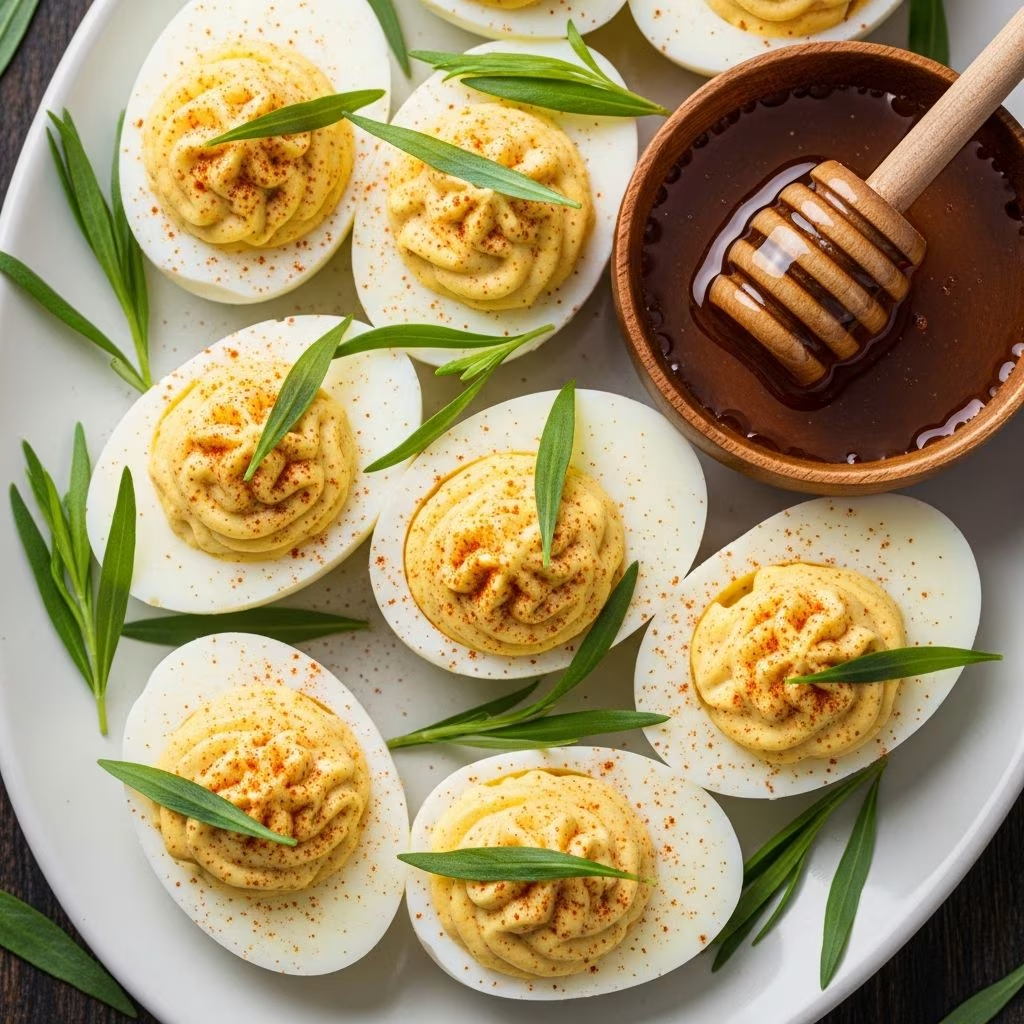
Transform ordinary hard-boiled eggs into extraordinary appetizers by infusing them with the delicate licorice notes of fresh tarragon, the sharp bite of mustard, and a touch of honey’s golden sweetness. This recipe reimagines the timeless deviled egg, making it a standout at brunches, potlucks, picnics, or holiday spreads. With simple ingredients and straightforward techniques, you’ll create silky fillings that burst with layered flavors.
Why Tarragon and Honey Elevate Deviled Eggs
Tarragon, an aromatic herb with a subtle anise-like flavor, pairs beautifully with the richness of egg yolks and the acidity of mustard. Honey adds a balancing sweetness that tempers the tang, creating a harmonious profile ideal for sophisticated palates. Unlike basic versions relying solely on mayonnaise, this combination introduces complexity without overpowering the core appeal of deviled eggs.
Deviled eggs have roots in ancient Roman cuisine, where spiced yolks were stuffed back into whites. Modern twists like this one draw from French influences, where tarragon shines in sauces like béarnaise. The honey mustard element nods to contemporary American fusion, making these eggs versatile for any occasion.
Essential Ingredients for Success
Gather these pantry staples and fresh picks for about 24 halves, serving 12 as an appetizer:
- 12 large eggs, preferably fresh for easy peeling
- 1/4 cup mayonnaise (full-fat for creaminess)
- 2 tablespoons Dijon mustard (for robust flavor)
- 1 tablespoon honey (pure, for natural sweetness)
- 2 teaspoons finely chopped fresh tarragon leaves (plus extra for garnish)
- 1 teaspoon fresh lemon juice (to brighten)
- Salt and black pepper to taste
- Optional: Paprika or capers for topping
Choose high-quality eggs from pasture-raised hens for richer yolks. Fresh tarragon is key—dried lacks the vibrancy. Dijon mustard provides a sophisticated edge over yellow varieties.
Step-by-Step Preparation Guide
Master these steps for flawless results every time.
Perfect Hard-Boiled Eggs
- Place eggs in a single layer in a saucepan. Cover with cold water by 1 inch.
- Bring to a rolling boil over medium-high heat. Cover, remove from heat, and let stand 10-12 minutes.
- Transfer to an ice bath for 5 minutes. This prevents green rings and ensures easy peeling.
Pro tip: Older eggs peel more easily than ultra-fresh ones due to air pocket development.
Assembling the Filling
- Halve cooled eggs lengthwise. Gently pop out yolks into a medium bowl; arrange whites on a platter.
- Mash yolks with a fork until crumbly. Add mayonnaise, Dijon mustard, honey, lemon juice, chopped tarragon, salt, and pepper.
- Stir vigorously until smooth and fluffy. Taste and adjust seasoning—honey should subtly sweeten without dominating.
Filling and Garnishing
For an elegant presentation, transfer the mixture to a piping bag fitted with a star tip (or a resealable plastic bag with corner snipped). Pipe generously into whites. If spooning, mound high for appeal.
Garnish with tarragon sprigs, a dusting of paprika, or black pepper. Chill 30 minutes to set flavors.
Flavor Variations to Customize
Adapt this base for diverse tastes:
| Variation | Add-Ins | Best For |
|---|---|---|
| Spicy Kick | 1/2 tsp sriracha or cayenne | Game days |
| Briny Twist | 1 tbsp chopped capers or pickles | Seafood pairings |
| Creamy Upgrade | 1 tbsp crème fraîche instead of some mayo | Brunches |
| Smoky Depth | 1 tsp smoked paprika + bacon bits | Barbecues |
| Herb Medley | Chives or dill alongside tarragon | Spring gatherings |
These tweaks maintain the honey-tarragon core while expanding options.
Expert Tips for Professional Results
- Piping Perfection: Chill the filling 10 minutes before piping for firmer texture.
- Make-Ahead Magic: Assemble up to 24 hours ahead; cover tightly to avoid drying.
- Peeling Hack: Roll gently on counter post-ice bath to crack shells evenly.
- Flavor Balance: Tarragon’s potency grows—start with less and taste.
- Transport Tip: Use egg cartons or deviled egg trays to prevent sliding.
Nutritional Profile and Pairings
Each half offers approximately 70 calories, 5g fat, 4g protein, and minimal carbs, making them keto-friendly and gluten-free. Tarragon provides antioxidants; eggs deliver complete protein.
Pair with crisp whites like Sauvignon Blanc or rosé. For non-alcoholic, try sparkling water with lemon. Serve alongside charcuterie, fresh veggies, or salads for balanced bites.
Storage and Safety Guidelines
Refrigerate in a single layer, covered, up to 2 days. Discard if left out over 2 hours (1 hour if above 90°F). Freezing alters texture—avoid it.
Food safety note: Use pasteurized eggs if serving to vulnerable groups.
Frequently Asked Questions
Can I use dried tarragon?
Fresh is best for vibrancy, but use 1 tsp dried as a substitute. Soak in lemon juice first to rehydrate.
How do I avoid watery filling?
Drain excess moisture from yolks and chill mixture before filling.
What’s the best mustard type?
Dijon for sharpness; whole-grain for texture.
Can these be baked?
Yes, at 350°F for 10 minutes for a warm twist, but traditional is cold.
How many eggs for a crowd?
Plan 2-3 halves per person; scale recipe linearly.
Conclusion: Your New Go-To Appetizer
Honey tarragon deviled eggs blend tradition with innovation, delivering crowd-pleasing flavor in every bite. Experiment confidently with these guidelines for memorable gatherings.
References
- Perfect Hard-Boiled Eggs Technique — USDA Food Safety Guidelines. 2023-05-15. https://www.fsis.usda.gov/food-safety/safe-food-handling-and-preparation/eggs-and-egg-products
- Tarragon Culinary Uses — USDA Nutrient Database. 2024-02-10. https://fdc.nal.usda.gov/fdc-app.html#/food-details/169997/nutrients
- Deviled Eggs Food Safety — FDA Egg Safety Guidelines. 2025-01-20. https://www.fda.gov/food/buy-store-serve-safe-food/what-you-need-know-about-egg-safety
- Honey Nutritional Benefits — National Honey Board. 2024-11-05. https://honey.com/honey-at-work/nutrition-fitness
- Mustard Varieties Guide — Agricultural Research Service. 2023-08-12. https://www.ars.usda.gov/research/publications/publication/?seqNo115=413456