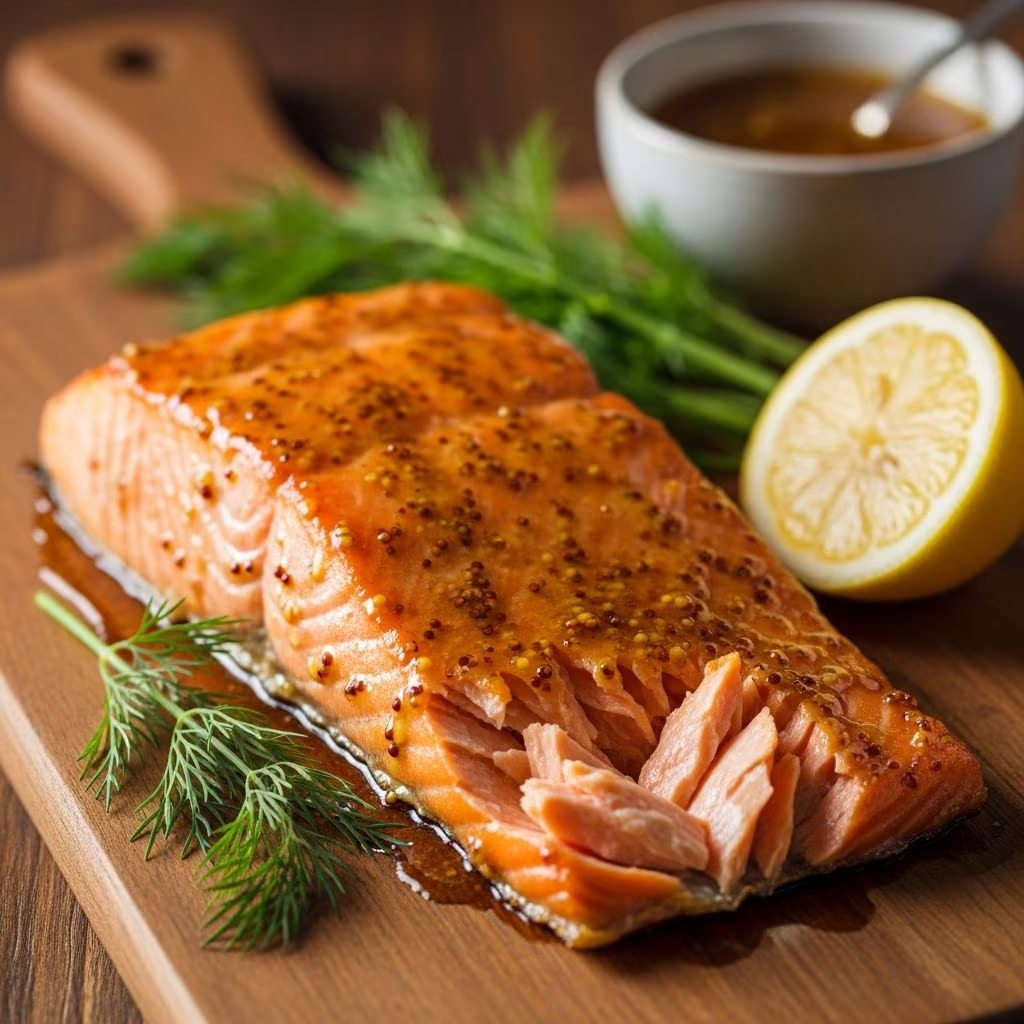
Transform ordinary salmon fillets into a restaurant-worthy dish with this straightforward honey mustard baked salmon recipe. Combining the sharp tang of Dijon mustard with the subtle sweetness of honey, this preparation yields moist, flaky fish infused with garlic and fresh herbs. Ideal for busy evenings, it requires minimal prep and bakes in just 15-20 minutes, making it a staple for health-conscious cooks seeking omega-3-rich meals without sacrificing taste.
Why This Salmon Recipe Stands Out
Salmon’s natural richness pairs exceptionally well with a honey mustard glaze, creating a balance of sweet, savory, and acidic notes that enhance its buttery texture. Unlike grilled or pan-seared methods, baking locks in juices while forming a caramelized crust on top. This approach minimizes oil use, keeping the dish light yet indulgent. Nutrition-wise, a single serving delivers high-quality protein, heart-healthy fats, and essential vitamins, supporting everything from muscle repair to immune function.
Versatility is key here: serve it alongside steamed vegetables, quinoa, or a crisp salad for a complete meal. It’s naturally gluten-free and can be adapted for low-carb diets by skipping any breadcrumb toppings. Families appreciate its crowd-pleasing flavor, while beginners love the foolproof technique that guarantees tender results every time.
Essential Ingredients for Perfect Results
Gathering the right components ensures success. Focus on fresh, high-quality salmon for the best flavor and texture.
- Salmon fillets: 1.5 pounds of skin-on King, Sockeye, or Atlantic salmon, portioned into 4-6 servings. Wild-caught offers bolder taste and fewer contaminants.
- Dijon mustard: ¼ cup provides the tangy base that cuts through the fish’s fattiness.
- Honey: 2-3 tablespoons adds natural sweetness and helps form a glossy glaze during baking.
- Garlic: 3-4 cloves, minced, for aromatic depth.
- Fresh parsley: ¼ cup chopped, for brightness and garnish.
- Lemon juice: 1-2 tablespoons fresh-squeezed to brighten flavors and tenderize.
- Olive oil or butter: 1-2 tablespoons melted, for richness and to bind the glaze.
- Salt and pepper: To taste, enhancing all elements.
- Optional add-ins: Panko breadcrumbs for crunch, dill for herbaceous notes, or a pinch of paprika for color.
Pro tip: Pat salmon dry before seasoning to promote even cooking and crispier skin if desired. Source quality matters—opt for sustainably farmed or wild varieties from trusted suppliers.
Step-by-Step Guide to Baking
Master this recipe with these precise instructions, designed for consistency across ovens.
- Preheat and prep: Set oven to 375-400°F (190-205°C). Line a baking sheet with parchment paper or foil for effortless cleanup and even heat distribution.
- Season the base: Place salmon skin-side down on the sheet. Sprinkle generously with salt and black pepper.
- Mix the glaze: In a bowl, whisk Dijon mustard, honey, minced garlic, lemon juice, olive oil, and chopped parsley until smooth. Taste and adjust sweetness or tang as needed.
- Apply generously: Brush or spoon the mixture thickly over the top of each fillet, ensuring full coverage for maximum flavor infusion.
- Bake to perfection: Position in the center rack. Bake 12-20 minutes, depending on thickness—internal temperature should reach 145°F for safety and flakiness. Look for opaque flesh that separates easily with a fork.
- Rest and serve: Let sit 2-3 minutes post-baking. Garnish with lemon slices, extra parsley, or dill.
For a crunchy twist, sprinkle panko mixed with melted butter over the glaze before baking, then broil 1-2 minutes at the end for golden topping.
Pro Tips for Flawless Execution
- Thickness matters: Thinner fillets cook faster (10-12 minutes); thicker ones need 18-20. Use a thermometer to avoid overcooking.
- Glaze variations: Swap honey for maple syrup or add soy sauce for umami. For spice, incorporate sriracha or smoked paprika.
- Make ahead: Prepare glaze up to 24 hours in advance; store covered in fridge. Assemble just before baking.
- Avoid common pitfalls: Don’t overcrowd the pan, as this steams rather than bakes the fish. Room-temperature salmon cooks more evenly.
- Storage savvy: Refrigerate leftovers up to 3 days in an airtight container. Reheat gently in a 300°F oven to preserve moisture.
Nutrition Breakdown and Health Benefits
This dish shines nutritionally. A 6-ounce serving offers approximately 350-400 calories, 40g protein, 20g healthy fats (including EPA/DHA omegas for heart and brain health), and minimal carbs.
| Nutrient | Per Serving | % Daily Value* |
|---|---|---|
| Calories | 380 | 19% |
| Protein | 40g | 80% |
| Total Fat | 22g | 28% |
| Omega-3s | 2g | ** |
| Vitamin D | 15mcg | 75% |
| Selenium | 60mcg | 109% |
| *Based on 2,000-calorie diet. **No established %DV. | ||
Beyond macros, salmon supports anti-inflammatory effects, bone health via vitamin D, and thyroid function through selenium. The mustard glaze adds antioxidants without excess sodium.
Creative Serving Suggestions
Pair this salmon for balanced plates:
- Grain bowls: Over farro or brown rice with roasted broccoli and tahini drizzle.
- Salads: Flake over arugula, quinoa, feta, and cherry tomatoes with balsamic vinaigrette.
- Vegetable sides: Asparagus, green beans, or zucchini grilled with garlic.
- Potato pairings: Smashed baby potatoes or sweet potato fries for comfort.
- Global twists: Serve with couscous and harissa yogurt for Mediterranean flair, or in lettuce wraps for low-carb.
For entertaining, scale up and slice into bite-sized pieces for appetizers atop cucumber rounds.
Frequently Asked Questions
Can I use frozen salmon?
Yes—thaw completely in the fridge overnight, pat dry thoroughly to remove excess moisture, and proceed as directed for best texture.
Is this recipe keto-friendly?
Absolutely; omit honey or use a keto sweetener like monk fruit. The base is low-carb at under 5g net carbs per serving.
How do I know when it’s done?
Check for 145°F internal temp at thickest part, or gentle flaking with a fork. Slight translucency at center is fine for medium doneness.
Can I grill instead of bake?
Sure—use foil packets at medium heat for 10-15 minutes, glazing midway to prevent sticking.
What if I don’t have Dijon?
Substitute whole-grain or yellow mustard, though Dijon’s emulsion properties yield the smoothest glaze.
Freezer instructions?
Assemble glazed salmon on a tray, freeze solid, then transfer to bags. Bake from frozen at 400°F for 25-30 minutes.
Customizing for Dietary Needs
Adapt effortlessly: Veganize with firm tofu or portobello mushrooms. For nut-free, skip any optional toppings. Reduce sodium by using low-sodium mustard and fresh herbs over salt. This flexibility makes it suitable for paleo, Whole30 (honey-free), or pescatarian diets.
Experiment with honey Dijon variations incorporating brown sugar for deeper caramelization or white wine vinegar for extra zing. In summer, add fresh dill or chives for garden-fresh appeal.
Why Baking Beats Other Methods
Baking excels for hands-off cooking, uniform doneness, and flavor concentration. It requires no flipping, reducing breakage risk, and allows glaze to set into a sticky coating. Compared to poaching (milder) or frying (heavier), it preserves salmon’s delicate qualities while amplifying taste through conduction heat.
References
- USDA FoodData Central: Salmon, atlantic, farmed, cooked, dry heat — United States Department of Agriculture. 2023-05-15. https://fdc.nal.usda.gov/fdc-app.html#/food-details/175167/nutrients
- Harvard T.H. Chan School of Public Health: Omega-3 Fatty Acids — Harvard University. 2024-02-28. https://www.hsph.harvard.edu/nutritionsource/what-should-you-eat/fats-and-cholesterol/types-of-fat/omega-3-fats/
- FoodSafety.gov: Safe Minimum Internal Temperature Chart — U.S. Department of Agriculture / Food and Drug Administration. 2025-01-10. https://www.foodsafety.gov/food-safety-charts/safe-minimum-internal-temperatures
- NIH Office of Dietary Supplements: Vitamin D Fact Sheet — National Institutes of Health. 2024-11-20. https://ods.od.nih.gov/factsheets/VitaminD-HealthProfessional/