Frozen yogurt has become a beloved dessert option for those seeking a lighter alternative to traditional ice cream while maintaining that satisfying creamy texture. Making it from scratch at home offers complete control over ingredients, sweetness levels, and quality. This comprehensive guide explores everything you need to know about crafting delicious vanilla frozen yogurt in your own kitchen.
Understanding the Foundation: What Makes Quality Frozen Yogurt
The foundation of exceptional homemade frozen yogurt begins with selecting the right yogurt base. Greek yogurt has emerged as the preferred choice among home cooks and culinary professionals alike, offering a naturally thick, creamy consistency and tangy flavor profile that complements vanilla beautifully. Full-fat varieties produce noticeably superior results compared to low-fat or fat-free alternatives, which can result in an undesirably thin final product.
The protein content in Greek yogurt, typically ranging from 15-20 grams per serving, contributes to both the luxurious mouthfeel and the nutritional value of the finished dessert. When combined with other quality ingredients, Greek yogurt creates a frozen treat that feels indulgent while providing genuine health benefits that regular ice cream cannot match.
Essential Ingredients and Their Roles
Creating homemade frozen yogurt requires careful attention to ingredient selection and proportion. The core components work together to achieve the desired texture, flavor intensity, and freezing properties.
Sweetening Options and Their Impact
Multiple sweetening approaches can transform your frozen yogurt base. Each option brings distinct flavor characteristics and nutritional profiles:
- Maple syrup – Delivers warm, complex sweetness with subtle earthy undertones. When sourced from pure maple, rather than imitation varieties, the flavor enhancement becomes noticeable and worth the additional investment
- Honey – Offers mild floral notes and smooth sweetness. Honey’s natural properties contribute to creamier texture and softer freezing consistency
- Organic cane sugar – Provides straightforward sweetness without competing flavor notes. Granulated cane sugar dissolves readily and allows the vanilla flavoring to shine as the dominant taste element
The quantity of sweetener directly influences the final texture. Using too little results in an overly hard, crystalline product, while excessive sweetener can prevent proper freezing. Most recipes balance approximately half a cup to one cup of sweetener per two cups of yogurt base.
Vanilla Flavoring: Extraction vs. Bean vs. Paste
The vanilla component defines the character of your frozen yogurt. Three primary options exist for incorporating vanilla flavor:
- Pure vanilla extract – The most accessible option, offering consistent flavor and convenient measurement. Pure extract contains actual vanilla bean solids and provides genuine vanilla taste without artificial undertones
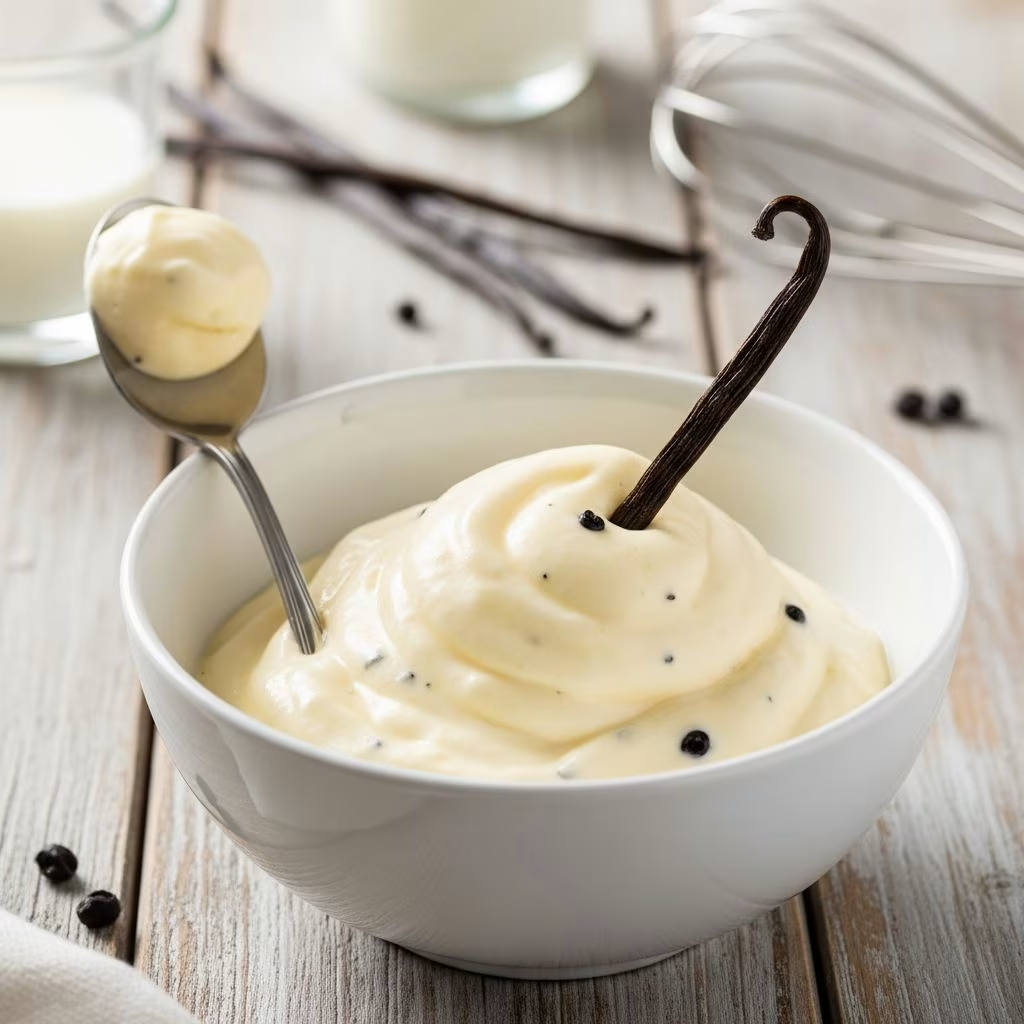
- Vanilla bean paste – Contains visible vanilla specks and delivers more intense vanilla flavor than extract alone. The specks add visual appeal and enhance the perception of authenticity
- Fresh vanilla bean – Offers the most sophisticated approach, requiring pods to be split and scraped, then steeped in heated cream to fully infuse the mixture with vanilla essence
Fresh vanilla bean preparation involves heating heavy cream with the split pod and scrapings until steamy, then allowing the mixture to steep for 20 to 60 minutes to maximize vanilla infusion. This technique requires more effort but produces unparalleled vanilla depth.
Cream and Dairy Components
Heavy cream serves as the fat component that creates smoothness and prevents ice crystal formation during freezing. The fat content in heavy cream—typically 36-40%—contributes essential mouthfeel and richness. Some recipes incorporate milk or half-and-half as secondary dairy components to adjust richness levels and freezing characteristics.
For softer, scoopable frozen yogurt immediately after churning, some recipes include a small amount of alcohol such as vodka or whiskey. The alcohol lowers the freezing point, preventing the mixture from becoming rock-hard.
Preparation Methods: Finding Your Approach
Several legitimate techniques exist for converting your mixed ingredients into finished frozen yogurt. The method you select depends on available equipment and desired texture.
The Ice Cream Maker Method
Using a dedicated ice cream maker produces the most consistently creamy result. The process involves:
- Combining all prepared ingredients in a blender until completely smooth and uniform
- Pouring the mixture into a pre-chilled ice cream maker
- Following the manufacturer’s churning instructions, typically requiring 25-30 minutes for optimal consistency
- Serving immediately for soft-serve texture or transferring to an airtight container for freezing to achieve firmer consistency
The mechanical churning action during freezing incorporates air while breaking up ice crystals as they form, resulting in a smooth, creamy texture that rivals commercial products.
The Food Processor Method
For those without an ice cream maker, a food processor offers an accessible alternative. This approach involves:
- Combining yogurt, sweetener, and vanilla flavoring in the food processor bowl
- Processing until the mixture becomes light and fluffy, typically requiring 2-3 minutes of continuous processing with one mid-cycle scraping of the bowl sides
- Transferring to a freezer-safe container and freezing until firm
The processor method creates airier frozen yogurt with a slightly different texture than ice cream maker versions. Results are entirely satisfactory and demonstrate that advanced equipment is not essential.
Simple Blending and Freezing
The most basic approach requires minimal equipment. Simply whisk ingredients together by hand, pour into a container, and freeze. While this produces acceptable results, the lack of churning action may result in more pronounced ice crystals and slightly less creamy texture compared to other methods.
Step-by-Step Recipe for Success
A reliable foundational recipe provides the template for customization and experimentation.
Simple Three-Ingredient Version
For those preferring minimal ingredients and maximum simplicity:
- Combine 2 cups full-fat plain Greek yogurt, ½ cup maple syrup or honey, and 2 teaspoons pure vanilla extract in a mixing bowl
- Stir ingredients until thoroughly combined and uniform
- Transfer to an ice cream maker and churn for 25-30 minutes until reaching desired thickness
- Serve immediately or freeze in an airtight container for firmer consistency
This approach yields approximately 4 servings with minimal preparation time.
Elevated Vanilla Bean Version
For those seeking more sophisticated vanilla depth:
- Heat 1 cup heavy cream with ½ vanilla bean (split lengthwise and scraped), ½ cup organic cane sugar, and a pinch of fine sea salt over medium heat until steamy
- Dissolve the sugar completely while stirring occasionally
- Cover the saucepan and allow the mixture to steep for 20-60 minutes to fully infuse vanilla flavor
- Whisk 2 cups plain whole milk Greek yogurt until smooth in a separate bowl
- Combine the cooled vanilla-infused cream with the whisked yogurt
- Add 2 tablespoons whiskey or vodka if desired for softer consistency
- Process through an ice cream maker according to manufacturer’s instructions
This method requires more time investment but produces noticeably more complex vanilla character.
Customization and Flavor Variations
Once you master the basic formula, numerous variations and enhancements become possible. Consider adding complementary extracts such as almond extract in small amounts to add dimensional complexity. Fresh fruit purees can be folded in after processing for fruity variants. Chocolate sauce, caramel, brownie pieces, or cookie crumbles can be added as toppings after scooping.
Spice variations such as cinnamon, nutmeg, or cardamom can be whisked into the yogurt base before processing. The possibilities expand infinitely once you understand the fundamental technique.
Achieving Perfect Texture and Consistency
Several factors influence whether your frozen yogurt achieves the desired texture. Temperature control matters significantly—ensuring that all components are properly chilled before processing helps achieve better results. The ratio of yogurt to cream affects creaminess; higher yogurt proportions produce tangier results with less richness, while increased cream creates smoother, more indulgent texture.
Processing time also impacts the final product. Over-processing can incorporate too much air, creating an excessively light texture. Under-processing may leave the mixture too dense. Following individual ice cream maker instructions ensures optimal churning times specific to each machine.
Storage and Serving Recommendations
Properly stored homemade frozen yogurt maintains quality for approximately two weeks when kept in an airtight container in the freezer. Covering the surface with plastic wrap before securing the lid prevents freezer burn and ice crystal formation.
For optimal flavor and texture when serving, allow frozen yogurt to soften at room temperature for 5-10 minutes before scooping. This brief tempering period makes serving easier and allows flavors to fully express themselves on the palate.
Frequently Asked Questions
- What type of yogurt works best for this dessert?
- Full-fat Greek yogurt produces the creamiest results. Avoid low-fat or fat-free varieties, which create thin, icy textures unsuitable for frozen yogurt.
- Can I make frozen yogurt without an ice cream maker?
- Yes, a food processor works well for creating acceptable frozen yogurt. Simple hand-mixing and freezing is also possible, though results will have more pronounced ice crystals.
- How long does homemade frozen yogurt keep?
- Properly stored in an airtight container, frozen yogurt remains fresh for approximately two weeks in the freezer.
- Can I substitute sweeteners?
- Honey, maple syrup, and granulated cane sugar are all effective options. Sugar alternatives like stevia, monk fruit, or Swerve may work but may require adjustment to quantities for optimal results.
- Why is my frozen yogurt too icy?
- Insufficient fat content, inadequate churning time, or using low-fat yogurt can create icy texture. Ensure you’re using full-fat yogurt and adequate heavy cream.
Nutritional Benefits of Homemade Frozen Yogurt
Creating frozen yogurt at home allows you to control ingredients completely, avoiding artificial additives, excessive stabilizers, and unnecessary preservatives commonly found in commercial versions. Greek yogurt’s high protein content, typically 15-20 grams per serving, supports satiety and makes frozen yogurt more nutritionally substantial than traditional ice cream.
The probiotics in yogurt promote digestive health, though heat processing may reduce live culture quantities in some recipes. By using quality ingredients and minimizing processing, you create a dessert that satisfies cravings while providing genuine nutritional value.
Conclusion
Homemade vanilla frozen yogurt represents an achievable dessert project for home cooks of any skill level. Whether you employ sophisticated techniques using fresh vanilla beans or embrace simplicity with three basic ingredients, the result offers superior quality to most commercial alternatives. The satisfaction of creating a delicious frozen treat from simple, recognizable ingredients makes this endeavor worthwhile for anyone seeking a healthier indulgence.
References
- Homemade Frozen Yogurt with Vanilla Bean — With The Grains. 2022-08-19. https://withthegrains.com/2022/08/19/homemade-frozen-yogurt/
- Vanilla Frozen Yogurt Recipe — Laura Fuentes. https://www.laurafuentes.com/vanilla-frozen-yogurt-recipe/
- Homemade Frozen Yogurt Recipe (Four Flavors) — Healthy Recipes Blogs. https://healthyrecipesblogs.com/frozen-yogurt-recipe/
- Vanilla Bean Frozen Yogurt — Table Magazine. https://www.tablemagazine.com/vanilla-bean-frozen-yogurt-table-magazine/
- Vanilla Frozen Yogurt (4 Ingredients!) — Chelsea’s Messy Apron. https://www.chelseasmessyapron.com/simple-vanilla-frozen-yogurt/
- Vanilla Frozen Yogurt (Ninja Creami) — Kroll’s Korner. https://krollskorner.com/recipes/desserts/frozen-desserts/vanilla-frozen-yogurt-ninja-creami/
- Vanilla Bean Frozen Yogurt — My Kitchen Addiction. https://mykitchenaddiction.com/2010/05/vanilla-bean-frozen-yogurt/