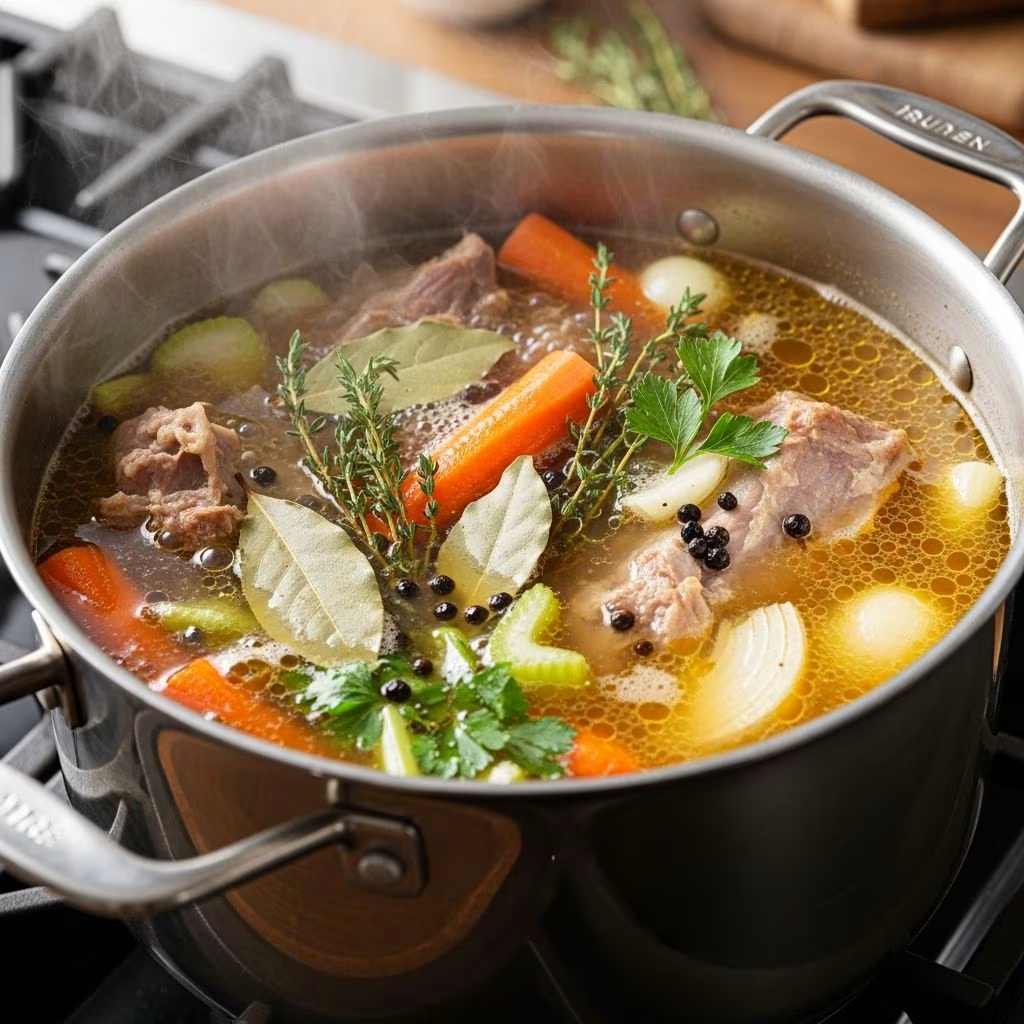
Turkey stock forms the foundation of countless dishes, delivering deep, savory flavors that store-bought versions can’t match. Whether you’re repurposing a holiday carcass or starting with fresh parts, this guide walks you through every step to produce a golden, nutrient-packed liquid ready for gravies, soups, risottos, and more.
Why Choose Homemade Turkey Stock?
Commercial stocks often contain excessive sodium, artificial additives, and lack the nuanced taste of a slow-simmered homemade version. By making your own, you control the quality, using fresh ingredients for a cleaner, richer result. It’s an efficient way to reduce food waste, especially after feasts like Thanksgiving, turning bones into a versatile ingredient that enhances meals for days.
Nutritionally, turkey stock provides collagen from bones, which breaks down into gelatin for body and mouthfeel, plus minerals like calcium and magnesium extracted during cooking. The aroma alone signals superior depth compared to watery broths.
Essential Ingredients for Success
Great stock starts with quality components. Focus on turkey bones for the base, aromatic vegetables for balance, and herbs for subtle complexity.
- Turkey Bones: A roasted carcass (10-15 pounds) yields about 8-12 quarts; supplement with necks or wings (3-5 pounds) for bolder flavor.
- Aromatics: Unpeeled onions (1-2 large, quartered), carrots (2-4, roughly chopped), celery (2-3 stalks, halved).
- Herbs: Fresh parsley (handful), thyme (3-4 sprigs), bay leaves (2-3), optional sage or rosemary.
- Seasonings: Kosher salt, black peppercorns (1 tablespoon), garlic (1 head, halved).
- Liquid: Cold water to cover ingredients by 2 inches.
Avoid overcrowding the pot; use just enough water to submerge everything without dilution.
Two Proven Methods: Carcass vs. Fresh Wings
Select your approach based on availability. Both deliver excellence, but each has unique benefits.
| Method | Key Steps | Time | Best For |
|---|---|---|---|
| Carcass Simmer | Break carcass, add veggies, simmer covered 6-24 hours | 6+ hours | Post-holiday waste reduction |
| Wing Roast | Roast wings 40-50 min at 450°F, simmer 2-4 hours | 3-5 hours total | Year-round intense flavor |
Using a Leftover Carcass
Strip remaining meat for sandwiches, then break the carcass into your largest pot. Scatter vegetables and herbs around it. Cover with cold water, bring to a boil, then simmer gently. Skim foam periodically for clarity. After 6-24 hours, strain through a fine mesh lined with cheesecloth.
Roasting Fresh Wings or Necks
For deeper color and taste, preheat oven to 450°F. Toss 4-5 pounds turkey wings with oil, salt, and pepper on a sheet pan. Roast 40-50 minutes, flipping halfway, until deeply browned. Deglaze the pan with 1 cup water, scraping fond into your pot with roasted parts, veggies, and herbs. Simmer 2-4 hours.
Step-by-Step Roasting Technique
- Prep Parts: Pat dry wings or necks; season generously.
- Roast High and Hot: 450°F for golden Maillard reaction, enhancing umami.
- Deglaze Pan: Add water post-roast to capture caramelized bits.
- Combine and Simmer: Transfer to pot, cover with water, season lightly.
Pro tip: Browning first builds complexity; skip for lighter stock.
Simmering Secrets for Maximum Flavor
After boiling, reduce to the lowest simmer—barely bubbling—for collagen extraction. Uncovered partially allows evaporation and concentration. Time varies: 6 hours minimum for carcass, 2-4 for roasted parts. Taste after 2 hours; extend for intensity.
- Skim impurities every 30 minutes for clear stock.
- Don’t stir vigorously; gentle heat preserves clarity.
- Add acid like lemon juice late for brightness.
Straining, Cooling, and Storage
Once done, let cool slightly. Remove large solids with tongs, then pour through a fine strainer into bowls. For ultra-clear stock, double-strain with cheesecloth. Cool rapidly in an ice bath to prevent bacterial growth.
Storage options:
- Fridge: 4-5 days in airtight containers; skim fat layer for defatting.
- Freezer: Up to 6 months in portions; freeze flat in bags or ice cube trays.
- Reduce for Demi-Glace: Simmer further to syrupy consistency.
Flavor Variations to Experiment With
Customize your stock:
- Asian-Inspired: Ginger, star anise, scallions, soy sauce.
- Smoky: Roasted garlic, chipotle, smoked paprika.
- Herb-Heavy: Rosemary, oregano, extra sage.
- Vegetable Boost: Leeks, parsnips, mushrooms for earthiness.
Always taste and adjust post-straining.
Common Mistakes and Fixes
| Mistake | Why It Happens | Fix |
|---|---|---|
| Cloudy Stock | Boiling too hard | Gentle simmer, frequent skimming |
| Weak Flavor | Too much water | Just cover ingredients; reduce longer |
| Greasy | Not skimming fat | Chill overnight, lift solidified fat |
| Bitter Taste | Burnt scraps | Monitor roasting, avoid overcrowding |
Recipe: Golden Roasted Turkey Stock
Yield: 10-12 quarts | Prep: 20 min | Cook: 4 hours
Ingredients
- 4 lbs turkey wings/necks
- 2 tbsp olive oil
- 2 onions, quartered
- 3 carrots, chopped
- 3 celery stalks, halved
- 1 head garlic, halved
- Handful parsley, thyme sprigs
- 2 bay leaves
- 1 tbsp peppercorns
- Kosher salt
- Water
Instructions
- Roast wings at 450°F for 45 min.
- Sauté veggies 10 min in pot.
- Add roasted parts, deglazing liquid, herbs; cover with water.
- Simmer 3-4 hours, strain, cool.
Creative Uses in Your Kitchen
Gravy Base: Reduce with roux, turkey drippings.
Soups: Turkey noodle, wild rice.
Risotto: Gradually add for creamy texture.
Braises: Deglaze pans.
Cooking Grains: Replace water in rice, quinoa.
Frequently Asked Questions
Can I make stock in a slow cooker?
Yes, low for 12-24 hours works well for carcasses; roast parts first for best flavor.
Chicken instead of turkey?
Absolutely—substitute wings or carcass; slightly milder but versatile.
How do I know when it’s done?
When flavorful and bones start softening; taste test after minimum time.
Freezer lifespan?
6 months; label with date. Thaw in fridge overnight.
Vegetarian alternative?
Mushroom stock mimics richness: roast scraps, simmer with soy.
Advanced Tips from Seasoned Cooks
Incorporate feet or backs for extra gelatin. Pressure cook for 2 hours on high for quick results, though stovetop yields clearer stock. Always start with cold water to draw out proteins gradually.
References
- How I Make The Best Turkey Stock to Use On Thanksgiving! — How Sweet Eats. 2020-11. https://www.howsweeteats.com/2020/11/turkey-stock-recipe/
- Homemade Turkey Stock Recipe — Coley Cooks. N/A. https://coleycooks.com/homemade-turkey-stock/
- How to Make Turkey Stock — The Modern Proper. N/A. https://themodernproper.com/how-to-make-turkey-stock
- Golden Turkey Stock — Alison Roman. N/A. https://www.alisoneroman.com/recipes/golden-turkey-stock/
- Homemade Turkey Stock – Maximize Flavor from Your Bird — All Things BBQ (YouTube). N/A. https://www.youtube.com/watch?v=Q9CStO0gLbE