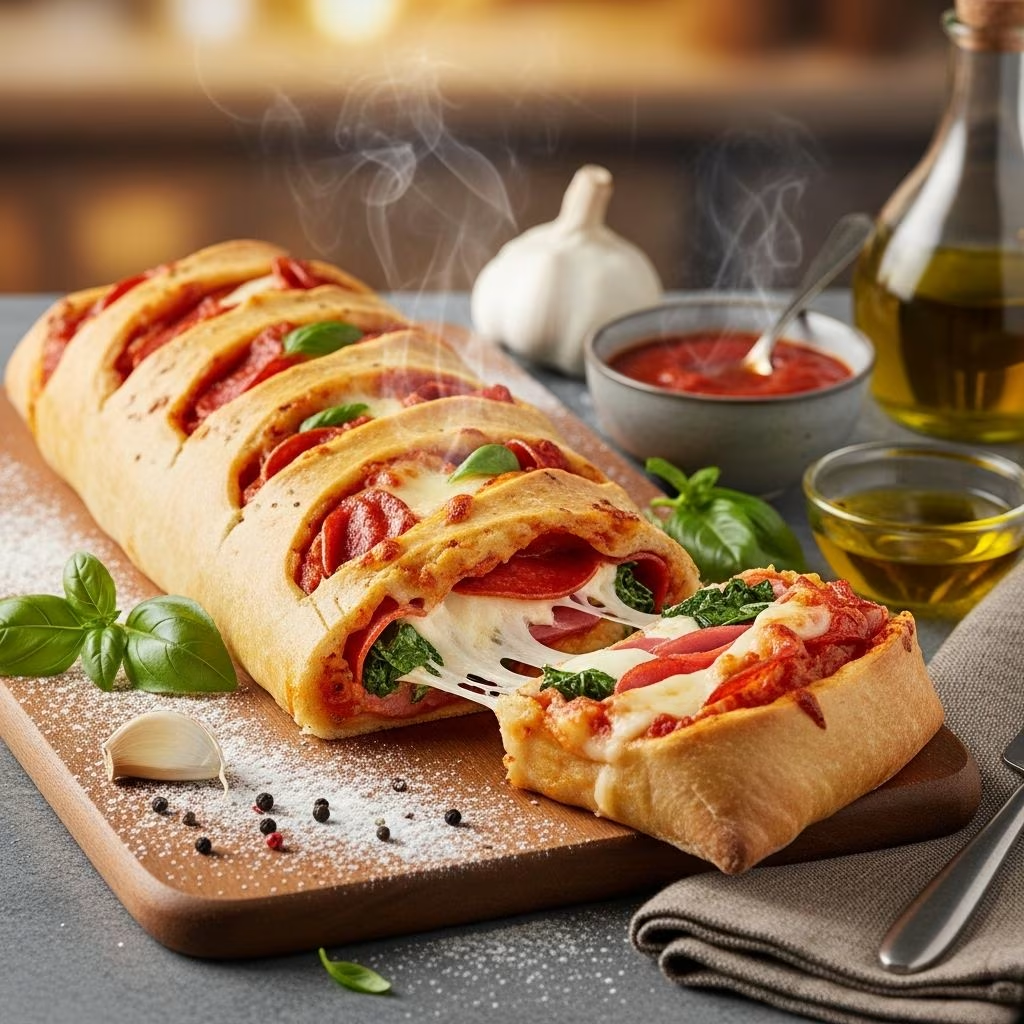
Stromboli stands as one of the most versatile and beloved Italian-American dishes, offering endless possibilities for customization while remaining surprisingly straightforward to prepare. This rolled pizza creation combines soft, tender dough with savory fillings, topped with a golden, crispy exterior that transforms simple ingredients into a restaurant-worthy masterpiece. Whether you’re planning a weeknight dinner, preparing appetizers for guests, or looking for a crowd-pleasing game day snack, stromboli delivers consistent results that satisfy even the most discerning palates.
Understanding Stromboli’s Origins and Cultural Significance
The stromboli emerged during the 1950s in Philadelphia’s Italian neighborhoods, born from the creative vision of a local restaurant proprietor who sought to elevate the traditional pizza experience. By rolling pizza dough and encasing it with sauce, cheese, and various meats, this innovative preparation method created a portable, shareable dish that quickly gained popularity. The evolution from simple pizza to rolled and baked dough reflects the adaptability of Italian-American cuisine, which transforms traditional recipes into distinctive creations that honor their heritage while embracing local influences and available ingredients.
Essential Components: Building Blocks of an Outstanding Stromboli
The Foundation: Pizza Dough Selection
The dough serves as the critical foundation for any successful stromboli preparation. You have two primary options: crafting dough from scratch using fundamental ingredients or leveraging store-bought alternatives for convenience. Homemade dough provides superior control over texture and flavor, allowing you to achieve that ideal balance between a crispy exterior and soft, chewy interior. A basic pizza dough typically requires just six ingredients: flour, water, yeast, salt, olive oil, and sugar. This simplicity belies the remarkable transformation these components undergo during mixing, rising, and baking processes.
When preparing homemade dough, the mixing and initial rise phase deserves careful attention. The dough should rise adequately to develop flavor complexity while remaining workable for filling and rolling. A single rise cycle typically provides sufficient time for dough development while allowing you to simultaneously prepare your chosen fillings. This efficiency makes stromboli an excellent option for busy home cooks seeking to minimize preparation time without sacrificing quality.
Protein Selections and Meat Combinations
The protein components define your stromboli’s character and flavor profile. Traditional preparations feature a combination of complementary meats that work harmoniously when baked together. Common selections include:
- Genoa salami—offering robust, distinctive flavor and interesting texture
- Deli pepperoni—delivering familiar tastes and pleasant spice undertones
- Ham slices—providing mild, versatile protein that pairs well with numerous other ingredients
- Prosciutto—contributing delicate, nuanced flavors for sophisticated preparations
- Italian sausage—adding hearty, aromatic dimensions to your filling
The key to successful meat layering involves using thinly sliced varieties that distribute evenly throughout your dough and integrate seamlessly during baking. Thicker cuts may create uneven texture and prevent proper heating, while thin slices ensure every bite contains flavorful protein distributed consistently throughout the rolled structure.
Cheese Varieties and Layering Strategies
Cheese serves multiple functions within stromboli preparation: it acts as a binding agent, contributes essential umami flavors, and creates those desirable melted pockets throughout your finished product. Mozzarella cheese forms the backbone of most traditional recipes, providing excellent melting characteristics and mild flavor that complements various other ingredients. However, expanding your cheese selection creates exciting flavor dimensions:
- Provolone—delivering sharp, slightly smoky undertones
- Pepper jack—introducing subtle heat and creamy texture
- Parmesan—contributing salty, aged complexity
- Goat cheese—offering tangy, distinctive character for adventurous preparations
- Cheddar—adding rich, bold flavors that stand up to robust accompaniments
Strategic cheese layering ensures proper distribution and prevents excessive accumulation in any single area. Alternating cheese types creates flavor complexity while maintaining balanced moisture throughout the filling.
Flavor Enhancement Techniques and Seasoning Approaches
Surface Treatments and Finishing Brushes
The exterior treatment dramatically influences both appearance and flavor profile. A simple yet elegant approach involves brushing the dough surface with melted butter infused with minced garlic and fresh parsley. This combination creates an aromatic, golden crust that develops wonderful visual appeal during baking while introducing complementary flavors that elevate the entire experience.
For heightened seasoning, create a specialized oil mixture combining olive oil, grated Parmesan cheese, Italian seasoning, and garlic powder. Pour this mixture over the prepared stromboli surface and spread evenly, then use a sharp knife to create decorative slits that serve functional purposes—they allow steam to escape during baking while creating visual definition that guides slicing after cooking completes.
Internal Flavor Development Through Sauce Integration
Incorporating sauce within the stromboli adds moisture, flavor complexity, and structural integrity to your preparation. Marinara sauce offers the classic approach, providing tomato-based acidity that balances rich meats and cheeses. For more adventurous flavor profiles, basil pesto introduces herbaceous brightness, while Italian chili paste adds subtle heat and sophistication. The key involves using sauce judiciously—excessive moisture creates structural challenges and uneven baking, while insufficient sauce results in a dry, bland final product.
Step-by-Step Preparation and Assembly Process
Dough Preparation and Rolling Technique
Begin by pressing your risen dough flat against a work surface, creating an even thickness throughout. Roll the dough into a large rectangle measuring approximately 10 by 14 inches, though exact dimensions may vary based on desired stromboli size and thickness preferences. If the dough becomes stubborn during rolling, resist the urge to force it—instead, cover it with a clean kitchen towel and allow it to rest for five minutes. This brief relaxation period permits gluten development to settle, transforming difficult-to-work dough into a cooperative medium that extends smoothly without excessive resistance.
Systematic Filling Application and Layering
Proper filling application requires methodical layering to ensure even distribution and prevent overfilling. Begin by applying your chosen sauce across the dough surface, leaving roughly one inch of uncovered dough around all edges—this margin prevents filling from escaping during rolling and provides clean edges for sealing. Layer proteins next, arranging them in slightly overlapping patterns that distribute flavor consistently. Follow with cheese layers, alternating between varieties if you’ve selected multiple types. This systematic approach ensures balanced flavors and prevents any single component from overwhelming others.
Rolling and Sealing Methodology
Carefully roll the dough from one long side toward the opposite edge, creating a tight cylinder that contains all fillings securely within the dough. Use gentle, consistent pressure to maintain even rolling without trapping excessive air pockets. Once rolled completely, seal the seam by pinching the dough firmly, ensuring it remains sealed throughout the baking process. Place the completed stromboli seam-side down on a parchment-lined baking sheet—this positioning prevents seams from opening during baking while creating an attractive presentation.
Baking Fundamentals and Temperature Management
Apply an egg wash to the three exposed dough edges (both short sides and one long side) using a brush or pastry applicator. Beat one egg with a fork, adding one tablespoon of water to create a proper wash consistency. This protective coating encourages even browning and creates an attractive golden finish. Using a sharp knife, create shallow slits approximately one inch apart across the stromboli surface—these slits serve dual purposes, allowing steam escape during baking while creating natural guideposts for even slicing afterward.
Bake your prepared stromboli in a preheated 400-degree Fahrenheit oven for 20 to 25 minutes, until the exterior achieves a golden brown color indicating proper doneness. The exact timing depends on various factors including oven characteristics, dough thickness, and filling volume. Remove the stromboli from the oven and allow it to rest for five to ten minutes before slicing—this brief resting period permits the filling to set slightly, preventing excessive leaking while you portion the stromboli.
Versatile Filling Combinations and Creative Variations
Traditional Italian Meat Combinations
The classic approach combines complementary Italian cold cuts with provolone and mozzarella cheese, incorporating pizza sauce and fresh basil plus parsley for herbaceous brightness. This time-tested combination balances savory proteins, creamy cheese, and bright herb flavors into a harmonious whole that appeals to traditional palates.
Contemporary Flavor Experiments
Modern interpretations expand beyond traditional boundaries, incorporating:
- Roast beef with caramelized onions and goat cheese—creating sophisticated, restaurant-quality depth
- Ham with pineapple and mozzarella—introducing sweet-savory interplay that challenges conventional expectations
- Turkey with pesto and cheddar—offering lighter protein with bold herbal dimensions
- Sausage with apple and Brie—combining sweet, earthy, and creamy elements into unexpected harmony
- Shrimp with Asian-inspired seasonings—creating unique fusion preparations that honor global influences
These variations demonstrate stromboli’s remarkable adaptability, permitting endless customization while maintaining the essential rolled and baked structure that defines the format.
Serving Suggestions and Accompaniment Strategies
Stromboli performs admirably as a primary meal component, satisfying enough to serve as a complete dinner when accompanied by simple sides like garden salad or steamed vegetables. The rolled structure also makes it ideal for appetizer preparations—simply reduce filling quantities, create smaller rolls, and slice into individual portions that guests can enjoy during cocktail hours or casual gatherings. For game day entertaining, stromboli becomes the perfect vehicle for team-spirited snacking, offering substantial nutrition without requiring utensil-dependent consumption.
Marinara sauce emerges as the primary dipping accompaniment, though your original sauce selection influences optimal pairing choices. If you’ve prepared stromboli with pesto, allowing diners to enjoy it without additional sauce permits pesto’s delicate flavors to shine. For spicier preparations incorporating chili elements, consider offering cooling accompaniments like yogurt-based dipping sauces that provide temperature and flavor balance.
Troubleshooting Common Challenges and Solutions
| Challenge | Likely Cause | Solution |
|---|---|---|
| Dough ruptures during rolling | Insufficient gluten development or overfilling | Allow dough additional rest time; reduce filling quantity |
| Uneven browning on exterior | Inconsistent oven temperature or uneven egg wash application | Calibrate oven temperature; apply egg wash more uniformly |
| Filling leaks during baking | Inadequate sealing or excessive filling volume | Pinch seams more firmly; reduce filling quantity |
| Interior remains doughy despite golden exterior | Excessive filling volume or incorrect oven temperature | Reduce filling; verify oven temperature accuracy |
| Cheese doesn’t melt completely | Cheese placed too near exterior or insufficient baking time | Layer cheese closer to center; extend baking duration |
Frequently Asked Questions About Stromboli Preparation
Can I prepare stromboli in advance?
Yes, stromboli accommodates make-ahead preparation exceptionally well. Assemble your stromboli several hours before baking, covering it with plastic wrap and refrigerating until you’re ready to bake. Cold stromboli may require slightly extended baking time, typically an additional five minutes, to account for the reduced initial dough temperature. This flexibility makes stromboli an excellent choice for busy households or entertaining situations requiring advance planning.
What freezing options exist for stromboli?
Both prepared but unbaked stromboli and fully baked stromboli freeze successfully. Wrap prepared stromboli tightly in plastic wrap, then aluminum foil, storing in your freezer for up to three months. Bake frozen stromboli directly from the freezer, extending baking time by approximately ten minutes. Fully baked stromboli reheats effectively in a 350-degree oven, wrapped loosely in foil to prevent excessive browning.
How do I adapt stromboli recipes for dietary restrictions?
Stromboli’s fundamental structure remains unchanged when accommodating dietary needs. For vegetarian preparations, substitute meats with additional vegetables, nuts, or plant-based alternatives while maintaining similar volume. Vegan versions utilize dairy-free cheese alternatives and omit egg wash, instead brushing with olive oil or plant-based milk mixed with cornstarch for browning. Gluten-free preparations require specialized dough but follow identical assembly and baking procedures.
What size stromboli works best for various serving scenarios?
Standard stromboli prepared from one pound of dough serves four to six people as a main course with sides, or eight to ten as an appetizer when sliced into smaller portions. Smaller stromboli prepared from half-pound dough portions serve individual diners or pairs, offering portion control and faster baking times.
Storage and Reheating Guidance
Freshly baked stromboli tastes optimal within two hours of completing baking, though it remains edible for up to five days when properly stored in an airtight container in your refrigerator. Reheat slices in a 350-degree oven for eight to ten minutes until the exterior regains crispness and the interior reaches desired temperature. Alternatively, use your toaster oven for smaller portions, which provides better moisture control than microwave reheating that typically results in soggy texture.
Conclusion: Mastering the Art of Homemade Stromboli
Stromboli represents an accessible yet impressive dish that bridges the gap between casual weeknight cooking and entertaining-worthy presentations. The straightforward assembly process, combined with remarkable versatility in filling options and flavor combinations, ensures that both novice and experienced home cooks can achieve delicious results. By understanding fundamental techniques, respecting proper temperature management, and embracing creative experimentation with filling combinations, you’ll develop confidence in preparing stromboli that rivals restaurant-quality versions while reflecting your personal taste preferences and dietary requirements. Whether you stick to time-honored traditional combinations or venture into innovative new territory, homemade stromboli delivers satisfying results that justify its enduring popularity.
References
- How to Make Homemade Stromboli – Sally’s Baking Addiction — Sally McKenney. https://sallysbakingaddiction.com/homemade-stromboli/
- The Best Stromboli Recipe – The Food Charlatan — Toni Dasher. https://thefoodcharlatan.com/classic-stromboli-recipe-easy-dinner-or-quick-appetizer/
- Homemade Stromboli – Budget Bytes — Beth Moncel. https://www.budgetbytes.com/stromboli/
- How to Make Stromboli (With Tons of Filling Ideas!) | PWWB — Plays Well With Butter. https://playswellwithbutter.com/stromboli/
- Hot Italian Stromboli – Half Baked Harvest — Tessa Arias. https://www.halfbakedharvest.com/hot-italian-stromboli/