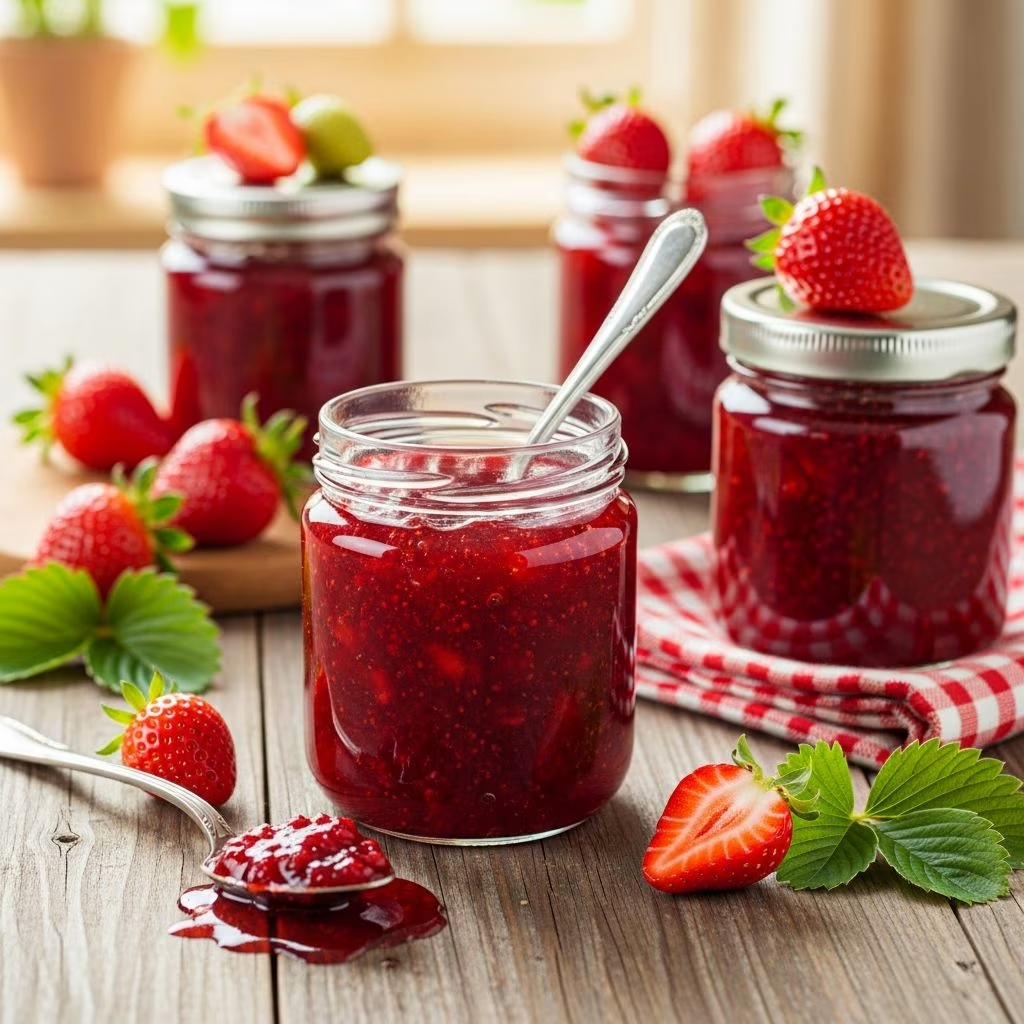
Creating your own strawberry jam at home captures the essence of summer in every spoonful. This versatile preserve combines the natural sweetness of fresh strawberries with just a few pantry staples, resulting in a product far superior to store-bought versions. Whether you’re spreading it on toast, swirling it into yogurt, or gifting jars to friends, homemade strawberry jam offers unmatched freshness and customizable flavor.
Why Choose Homemade Over Store-Bought?
Store-bought jams often contain high-fructose corn syrup, artificial flavors, and excessive preservatives that dilute the pure strawberry taste. In contrast, homemade versions let the fruit shine, allowing you to control sugar levels and add unique twists. The process is simpler than many think, requiring minimal equipment and yielding small batches perfect for beginners. Freshly made jam boasts vibrant color, intense aroma, and a texture that firms up naturally without chemical thickeners if desired.
Selecting the Perfect Strawberries
The foundation of exceptional strawberry jam lies in the berries themselves. Opt for ripe, brightly colored strawberries that are firm yet yielding to gentle pressure. Avoid those with bruises, mold, or dull hues, as they can impart off-flavors or weaken the set. Local farmers’ markets or pick-your-own farms provide the best quality during peak season, typically late spring to early summer.
- Look for deep red color extending to the tips.
- Choose berries with a sweet, fruity scent.
- Size doesn’t matter; flavor trumps appearance.
- Organic options reduce pesticide exposure.
Wash berries just before use under cool running water, then pat dry. Remove hulls and stems with a paring knife or huller for efficiency.
Essential Ingredients for Success
Classic strawberry jam relies on a short list of ingredients, but variations abound. Core components include fresh strawberries, granulated sugar for sweetness and gelling, and lemon juice for acidity and preservation.
| Ingredient | Role | Amount (for 4-6 jars) |
|---|---|---|
| Fresh Strawberries | Flavor base | 2-5 lbs, hulled |
| Granulated Sugar | Sweetener and thickener | 2-7 cups, depending on recipe |
| Lemon Juice | Acidity for setting | 1/4-1/2 cup, fresh or bottled |
| Pectin (optional) | Quick thickener | 1.75 oz box |
Sugar not only sweetens but draws out juices and aids in natural pectin activation from the fruit. Lemon juice balances sweetness and prevents discoloration. For pectin recipes, use powdered fruit pectin; regular types work best for reliable results.
Step-by-Step Guide to Pectin-Based Strawberry Jam
This method produces a firm set ideal for beginners, ready in under an hour.
- Prepare the berries: Hull 2 pints strawberries and pulse in a blender with 1/2 tsp lemon juice until chunky, not pureed.
- Mix with sugar: Transfer to a bowl, stir in 4 cups sugar until dissolved. Rest 15 minutes.
- Activate pectin: Boil 1.75 oz pectin with 3/4 cup water for 1 minute.
- Combine and cook: Stir pectin into berry mix. Ladle into jars, cool, and refrigerate.
This no-cook pectin approach minimizes heat exposure, preserving bright flavor. Yields about 4 half-pint jars, perfect for fridge storage up to 3 weeks or freezer up to a year.
Mastering No-Pectin Strawberry Jam
For a more traditional, French-style jam with softer texture, skip pectin and rely on the fruit’s natural properties. This method intensifies flavor through longer cooking.
- Chop berries: Hull and roughly chop 2 lbs strawberries.
- Combine: In a pot, mix with 1-2 cups sugar and 2 tbsp lemon juice. Let macerate 30 minutes.
- Cook down: Simmer over medium heat, stirring until sugar dissolves. Boil vigorously 20-30 minutes until thickened (test on a chilled plate).
- Jar and seal: Pour hot jam into sterilized jars, process in a water bath for 10 minutes if canning.
Aim for 60-65% sugar by fruit weight to ensure proper preservation without excess sweetness. Add a pat of butter to reduce foam.
Creative Flavor Enhancements
Elevate basic strawberry jam with thoughtful additions for gourmet appeal.
- Vanilla and Balsamic: Stir in 1 tbsp vanilla extract and 2 tsp balsamic vinegar for depth and complexity.
- Herbal Infusions: Add chopped basil, mint, or thyme near the end for aromatic notes.
- Citrus Zest: Incorporate lemon or orange zest for brighter tang.
- Multi-Berry Blends: Mix with raspberries or blueberries for hybrid flavors.
- Spiced Twists: A pinch of black pepper or cinnamon adds warmth.
Experiment in small batches to perfect combinations. Rose water introduces subtle floral elegance.
Safe Storage and Preservation Techniques
Proper handling ensures your jam stays safe and delicious.
- Refrigerator: Up to 3 weeks for fresh batches.
- Freezer: 6-12 months in plastic containers or freezer jars.
- Canning: Use water bath method for shelf-stable up to 1 year. Sterilize jars, fill with 1/4-inch headspace, process 10 minutes.
Check seals post-cooling; discard if bulging, leaking, or off-smelling. Always use clean utensils to avoid contamination.
Troubleshooting Common Jam Issues
Even seasoned makers encounter hiccups. Here’s how to fix them.
| Problem | Cause | Solution |
|---|---|---|
| Runny Jam | Insufficient cooking | Reboil with lemon juice; use pectin next time |
| Too Firm | Overcooking | Soak in hot water to loosen |
| Excess Foam | High sugar boil | Add butter during cooking |
| Separated Fruit | Poor mixing | Stir thoroughly; remash if needed |
Test set by chilling a spoonful; wrinkles indicate readiness.
Nutritional Profile and Serving Ideas
A typical serving (1 tbsp) offers about 50 calories, mostly from natural sugars, with vitamin C from strawberries. Pair with scones, cheese boards, or desserts like thumbprint cookies. Swirl into cheesecake or top ice cream for indulgence.
Frequently Asked Questions
Can I reduce the sugar in strawberry jam?
Yes, but use low-sugar pectin and accept a softer set. Sugar is crucial for preservation.
Is canning necessary for long-term storage?
No, freezing works well for small batches without special equipment.
How do I know if my jam has set properly?
Place a small amount on a cold plate; push with finger—if it wrinkles, it’s ready.
Can I use frozen strawberries?
Absolutely; thaw and drain excess liquid to avoid watery jam.
What’s the difference between powdered and liquid pectin?
Powdered needs activation by boiling; liquid mixes directly for quicker sets.
Scaling Up for Gifts or Markets
For larger yields, double ingredients but cook in batches to maintain control. Sterilize jars in boiling water 10 minutes. Label with date and ingredients for professional touch. Small-batch appeal lies in freshness—avoid massive pots that scorch.
Homemade strawberry jam transforms simple gatherings into memorable events. Its versatility spans breakfast to baking, proving once mastered, you’ll never revert to commercial jars.
References
- National Center for Home Food Preservation: Selecting, Preparing, and Canning Jam and Jellies — USDA. 2023-05-01. https://nchfp.uga.edu/how/can/jam/jellies.html
- Ball Complete Book of Home Preserving Recipes — Ball Mason Jars. 2022-08-15. https://www.ballmasonjars.com/recipes
- Strawberry Production Guide — University of California Agriculture and Natural Resources. 2024-01-10. https://anrcatalog.ucanr.edu/pdf/8509.pdf
- Guidelines for Fruit Preserves — FDA Food Code. 2022-07-20. https://www.fda.gov/food/fda-food-code/food-code-2022
- Home Canning Safety Basics — Centers for Disease Control and Prevention. 2023-11-05. https://www.cdc.gov/foodsafety/foodborne-germs/home-canning.html