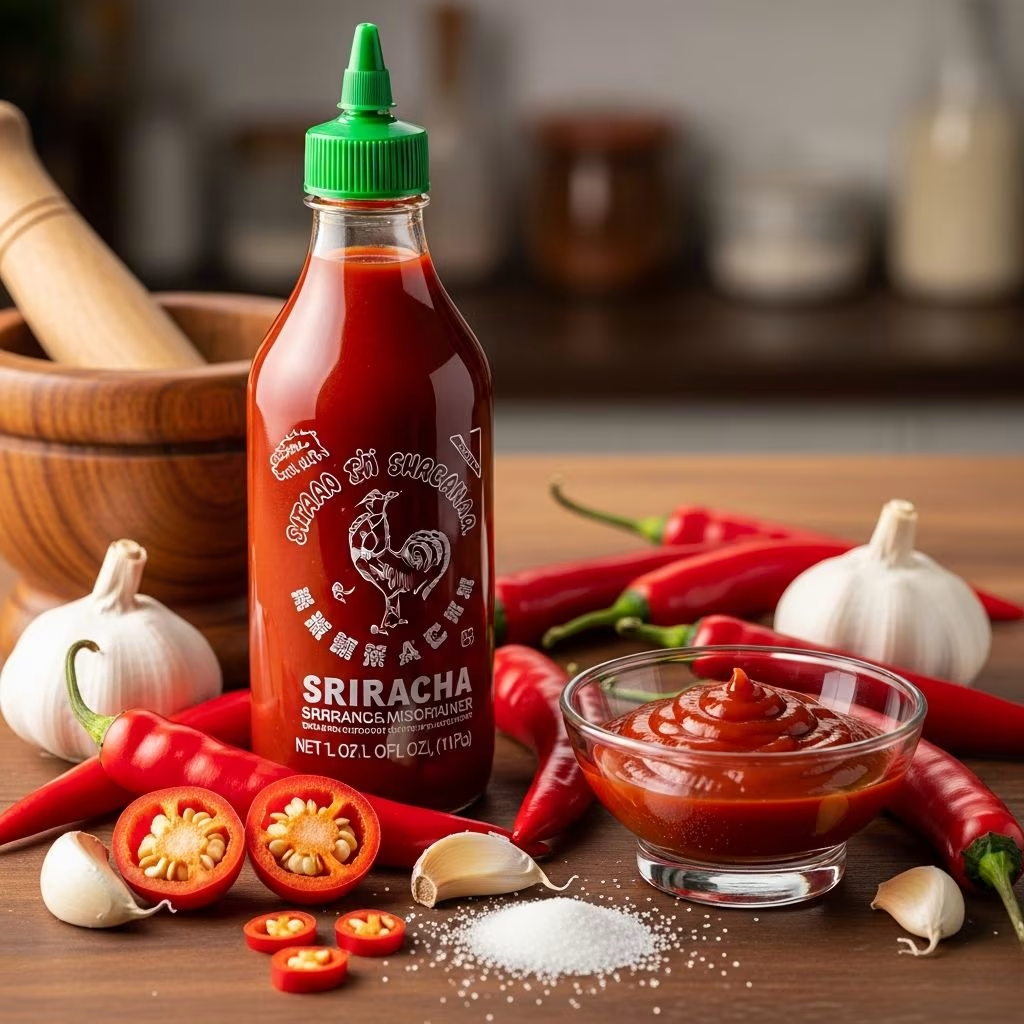
Creating homemade Sriracha sauce allows you to control every aspect of flavor, from the intensity of heat to the depth of garlic notes. This versatile chili sauce, originating from Thailand, has become a global staple, enhancing everything from noodles to eggs. Unlike commercial versions, your batch uses fresh ingredients for brighter taste and no preservatives.
Understanding Sriracha’s Roots and Appeal
Sriracha draws from Thai traditions, where fresh red chilies are blended into a pungent, garlicky condiment. Modern popularity surged with brands like Huy Fong, but crafting it yourself reveals nuances lost in mass production. Home versions shine with vibrant color and adjustable sweetness, making it ideal for personal tastes.
The sauce balances heat, acidity, sweetness, and umami. Chilies provide the fire, vinegar sharpness, sugar mellows edges, and garlic adds savory punch. Fermentation, a key traditional step, develops complex tang through natural lactobacillus bacteria.
Selecting the Best Chilies for Authentic Heat
Choice of peppers defines your Sriracha’s character. Red jalapeños offer mild-to-medium heat with fruity undertones, mimicking classic Huy Fong style. Fresno peppers bring brighter red hue and similar Scoville levels (2,500-8,000). For bolder kick, mix in Thai prik chi fah or bird’s eye chilies.
- Red jalapeños: Reliable base, accessible, balanced heat.
- Fresno: Sweeter profile, vivid color.
- Thai varieties: Authentic spice, hotter edge (up to 50,000 SHU).
- Mix blends: Combine for custom heat—start mild, add hot gradually.
Aim for 1-2 pounds of fresh, firm chilies. Wear gloves to avoid skin burn from capsaicin. Remove stems but keep seeds and membranes for maximum heat; discard for milder sauce.
Essential Ingredients and Substitutions
Core components are simple: chilies, garlic, salt, sugar, vinegar, and water. Proportions vary by method, but here’s a foundational list for 2 pounds chilies:
| Ingredient | Quantity | Purpose |
|---|---|---|
| Red chilies | 2 lbs | Heat and base flavor |
| Garlic cloves | 4-8 | Umami depth |
| Sea salt | 3 tbsp | Preserves, enhances taste |
| Sugar (brown or white) | 1-4 tbsp | Balances acidity |
| Vinegar (rice or distilled) | 1/4-1 cup | Acidity, shelf stability |
| Water | 1/2-4 cups | Consistency control |
Substitutes: Rice vinegar for milder tang; fish sauce for umami boost (1 tbsp); apple cider vinegar in ferments. Use unchlorinated water for fermentation to support beneficial bacteria.
Quick Sriracha: Ready in Under an Hour
For immediate gratification, skip fermentation. This method yields smooth sauce fast.
- Roughly chop chilies and garlic.
- Combine in pot with water (1/2 cup for thick, more for thin), salt, sugar, vinegar.
- Boil, then simmer 15 minutes until softened.
- Cool slightly, blend smooth.
- Strain through fine mesh (optional for silkiness), simmer again 5 minutes.
- Bottle and refrigerate.
Expect 2-3 cups sauce. Taste post-blend; adjust sugar for sweetness.
Fermented Sriracha: Depth Through Time
Fermentation elevates flavor with tangy complexity, closer to Thai originals. It takes 1-2 weeks but rewards patience.
- Process chilies (seeded or not) with garlic into coarse paste.
- Pack into jar; cover with 3% salt brine (3 tbsp salt per quart water).
- Loosely lid, ferment 5-14 days at room temp (65-75°F), burp daily, keep submerged.
- Bubbles and sour aroma signal readiness.
- Strain solids, simmer with vinegar, sugar, reserved brine (1 cup + water for thickness) 5-10 minutes.
- Blend, strain, bottle.
Ferment longer for funkier notes. Ideal yield: 2-4 cups.
Equipment You’ll Need
Basic kitchen tools suffice:
- Food processor or blender for pureeing.
- Large pot for simmering.
- Fine mesh strainer or cheesecloth.
- Glass jars for fermenting/bottling (sterilize by boiling).
- pH strips (optional, aim under 4.0 for safety).
No fancy gear required; mortar and pestle works for small batches.
Mastering Thickness and Flavor Balance
Water quantity dictates texture: minimal for spoonable paste, more for pourable sauce. Post-simmer tasting is crucial—add sugar incrementally to counter vinegar’s bite without overpowering. Strain twice for ultra-smooth results, or keep pulp for rustic style.
Heat levels: Test Scoville by diluting drops in water. Cool briefly? Add xanthan gum (1/4 tsp) for stability, like commercial.
Storage, Shelf Life, and Safety
Refrigerate in sterilized bottles up to 6 months (fermented lasts longer). Freezing in ice cube trays extends to a year. Check for mold; discard if off-smells. Acidity (pH <4.6) prevents botulism—test if canning.
Label with date and heat level for easy use.
Creative Ways to Use Homemade Sriracha
Beyond table staple:
- Mix into mayo for spicy aioli.
- Glaze wings or tofu.
- Stir into pho or ramen broth.
- Top avocado toast or burgers.
- Bake into cornbread or Bloody Marys.
Experiment with infusions: lime for citrus twist, smoked peppers for depth.
Recipe Variations for Every Paler
Mild Version: More jalapeños, fewer seeds, extra sugar.
Garlicky Boost: Double garlic, add roasted bulbs.
Vegan Thai Twist: Fish sauce swap with soy, add lemongrass.
Smoky Sriracha: Char chilies first.
| Variation | Key Change | Best For |
|---|---|---|
| Mild Family | Seedless jalapeños + honey | Kids’ meals |
| Extra Hot | Bird’s eye + less water | Spice challenges |
| Low-Sodium | Herbs instead of salt | Dietary needs |
Frequently Asked Questions
Can I use green chilies?
Yes, but expect grassier flavor and less traditional red hue. Ripen for sweetness.
How do I know fermentation is working?
Bubbles, cloudy brine, tangy smell after 3-7 days. If moldy, discard.
Is it spicier than store-bought?
Often yes—fresh peppers pack more punch. Dilute if needed.
Gluten-free?
Naturally, unless using certain vinegars. Check labels.
Can I scale the recipe?
Yes, maintain ratios. Halve for testing.
Troubleshooting Common Issues
- Too thin? Simmer longer or reduce water.
- Bitter? Over-fermented; shorten next time.
- Separates? Shake well or add thickener.
- No heat? Use hotter peppers/seeds.
Practice refines your signature batch.
References
- Homemade Sriracha Sauce Recipe — Chili Pepper Madness. 2023-05-15. https://www.chilipeppermadness.com/chili-pepper-recipes/hot-sauces/homemade-sriracha-hot-sauce-recipe/
- Homemade Sriracha Sauce — Cooking with Nart. 2022-08-10. https://www.cookingwithnart.com/homemade-sriracha-sauce/
- Sriracha Recipe – Homemade Chili Hot Sauce — White on Rice Couple. 2021-11-20. https://whiteonricecouple.com/sriracha-recipe/
- How To Make Sriracha – Traditional Thai Chilli Sauce Recipe — YouTube (Pepper Geek). 2023-09-05. https://www.youtube.com/watch?v=NpGN5c8Xzg0
- Homemade Sriracha Sauce Recipe (Raw + Fermented) — My Darling Lemon Thyme. 2014-01-15. https://www.mydarlinglemonthyme.com/2014/01/homemade-sriracha-sauce-recipe-raw