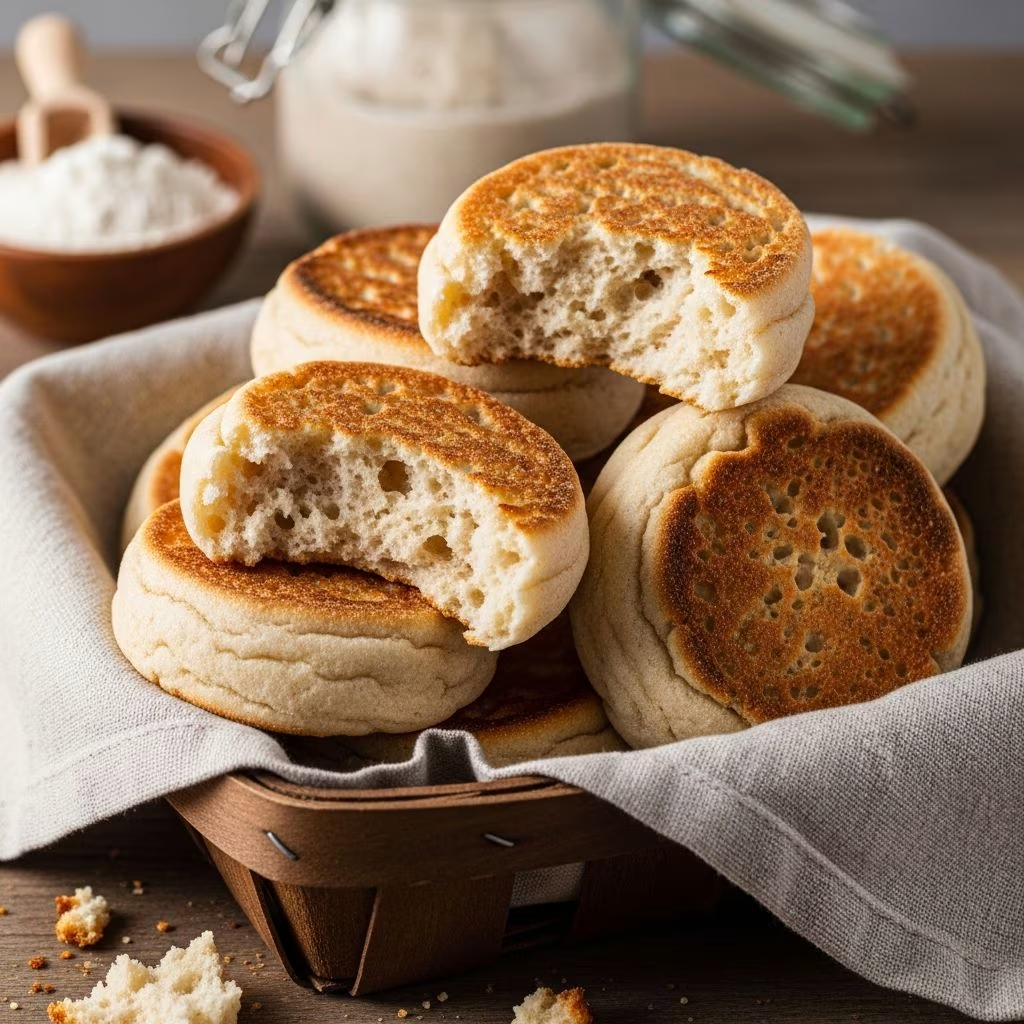
Homemade sourdough English muffins offer a superior alternative to store-bought versions, boasting tangy flavor, airy texture, and those coveted nooks and crannies that soak up butter and jam perfectly. Using a natural sourdough starter, these muffins develop through slow fermentation, resulting in better digestibility and depth of taste compared to commercial yeast-based ones[10].
Why Choose Sourdough for English Muffins
Sourdough fermentation breaks down phytic acid in flour, improving nutrient absorption and adding a subtle tang that elevates the classic English muffin. Unlike quick-rising yeast doughs, sourdough versions build structure gradually, yielding a chewy crust and soft interior. Home bakers appreciate the overnight process, which fits busy schedules and enhances flavor through lactic acid development.
These muffins cook on a griddle rather than in an oven, creating distinct browned exteriors while keeping centers tender. The result is a versatile base for eggs Benedict, avocado toast, or simple spreads.
Essential Ingredients Breakdown
Core components include active sourdough starter, flour, liquid, fat, and salt. Variations across recipes highlight flexibility, but consistency in ratios ensures success.
| Ingredient | Typical Amount (for 10-12 muffins) | Purpose |
|---|---|---|
| Active Sourdough Starter | 75-100g | Leavening and tang |
| All-Purpose or Bread Flour | 400-500g | Structure and chew |
| Milk or Water | 200-250g | Hydration and tenderness |
| Sugar or Honey | 15-20g | Flavor balance |
| Butter or Oil | 20-40g | Richness and softness |
| Salt | 8-10g | Flavor enhancement |
| Cornmeal or Semolina | As needed | Non-stick dusting |
Opt for bubbly, peak-active starter fed 4-12 hours prior for optimal lift. Whole milk adds richness, while water keeps them lighter. Bread flour boosts gluten for better rise. Cornmeal prevents sticking and adds crunch.
Preparing Your Sourdough Starter
A robust starter is key. Feed it at a 1:6:6 ratio (starter:flour:water by weight) the morning before mixing dough. For example, use 11g starter, 66g flour, and 66g water to yield enough for the recipe plus extras.
- Discard down to 10-20g mature starter.
- Mix in equal parts flour and water by weight (e.g., 100g each for vigorous activity).
- Let peak at room temperature (70-75°F) until doubled and domed, 4-8 hours.
- Test readiness: It should float in water and smell pleasantly fruity.
Cold starters work if brought to room temp first. Maintain weekly feeds in the fridge for ongoing use[10].
Step-by-Step Mixing and Fermentation
Most recipes favor an overnight ferment for flavor and convenience. Begin in the evening for morning cooking.
- Warm Liquids: Heat milk, water, and butter to 85-90°F until melted, then cool slightly to avoid killing starter.
- Combine Wet Ingredients: Whisk starter, sugar/honey, and warm liquids until smooth and milky.
- Add Dry: Incorporate flour and salt, mixing to a shaggy dough. No kneading needed initially.
- Rest (Autolyse): Cover and rest 30 minutes for hydration.
- Develop Dough: Perform 2-4 stretch-and-folds every 30 minutes: Pull one side up and fold over center, rotating bowl.
- Bulk Ferment: Let rise at room temp 4-8 hours or overnight until doubled and bubbly. Refrigerate if needed for slower rise.
Dough should feel smooth, elastic, and hold shape when poked.
Shaping the Muffins
After fermentation, gently deflate dough on a floured surface.
- Roll to ½-¾ inch thickness using a lightly floured pin.
- Cut 3-4 inch rounds with a biscuit cutter or glass, avoiding twisting to preserve rise.
- Re-roll scraps once for extras (8-12 total muffins).
- Place on parchment-lined sheet dusted with cornmeal or semolina, 2 inches apart.
Press tops lightly into cornmeal for even coating.
Final Proofing
Cover loosely with a damp towel or plastic. Proof 1-2 hours at room temp until puffy and jiggly, not doubled. Colder kitchens may need longer; warm spots speed it up. Muffins should spring back slowly when poked.
Cooking to Perfection
Use a cast-iron skillet, griddle, or non-stick pan. Low, steady heat prevents burning outsides before centers cook.
- Preheat over low-medium (300-350°F) 5 minutes. Add minimal butter if desired.
- Place 3-4 muffins, spaced apart. Cover with lid to trap steam.
- Cook 4-7 minutes per side until golden, internal temp 200°F.
- Flip once; sides should pull away cleanly.
- Cool on rack 10 minutes. Split with fork tines for crags, not knife[10].
Test heat with scraps: Too hot burns exterior (finish in 250°F oven); too cool leaves doughy centers.
Timeline for Success
| Time | Action |
|---|---|
| Day 1, 9 AM | Feed starter |
| Day 1, 7-9 PM | Mix dough, folds, bulk ferment overnight |
| Day 2, 6-7 AM | Shape and proof |
| Day 2, 8 AM | Cook and enjoy |
Adjust for your schedule; same-day possible with warm proofing.
Troubleshooting Common Issues
- Dense Muffins: Under-proofed or weak starter. Ensure peak activity.
- Gummy Centers: High heat. Cook low/slow or oven-finish.
- Sticking: Generous cornmeal; don’t overcrowd pan.
- No Nooks: Fork-split only; over-kneading deflates air pockets[10].
- Flat Shape: Roll evenly; proof fully before cooking.
Flavor Variations and Add-Ins
Experiment for diversity:
- Whole Wheat: Swap 20-50% flour for nutty taste.
- Cheddar: Mix in 100g shredded before shaping.
- Herbs: Add chives or garlic powder to dough.
- Sweet: Increase sugar, add cinnamon for French toast base.
- Vegan: Use plant milk and oil instead of butter.
Storage and Freezing Tips
Cool completely, then store airtight at room temp 2-3 days or fridge 1 week. Freeze split muffins up to 3 months; toast from frozen. Reheat in toaster for crisp revival.
Nutrition and Serving Ideas
Per muffin (approx.): 150-200 calories, high in fiber from fermentation. Pair with poached eggs, smoked salmon, or peanut butter. The tangy profile cuts richness in dishes like Eggs Benedict[10].
Frequently Asked Questions
Can I use discard starter?
Yes, but refresh first for better rise. Pure discard yields flatter results.
How do I know when they’re done cooking?
Internal 200°F, lightweight, sides spring back.
Cast-iron required?
No, any heavy skillet works; even heat distribution ideal.
Gluten-free possible?
Adapt with GF flours and binders, but texture differs.
Batch size adjustments?
Scale proportionally; starter at 20% flour weight.
References
- Sourdough English Muffins – Easy Overnight Recipe! — Little Spoon Farm. 2023. https://littlespoonfarm.com/sourdough-english-muffins-recipe/
- The Best Homemade Sourdough English Muffins Recipe — That Bread Lady. 2023. https://thatbreadlady.com/the-best-homemade-sourdough-english-muffins-recipe/
- Super Soft Sourdough English Muffins {Overnight} — The Clever Carrot. 2024-04. https://www.theclevercarrot.com/2024/04/super-soft-sourdough-english-muffins-overnight/
- Sourdough English Muffins — Acts of Sourdough. 2023. https://actsofsourdough.com/blogs/blog/sourdough-english-muffins-recipe
- Sourdough English Muffins — Lion’s Bread. 2023. https://www.lionsbread.com/sourdough-english-muffins/
- Soft & Puffy Sourdough English Muffins — Heartbeet Kitchen. 2023. https://heartbeetkitchen.com/amazing-sourdough-english-muffins/
- Sourdough English Muffins – Easy Same Day Recipe — Matthew James Duffy. 2023. https://matthewjamesduffy.com/sourdough-english-muffins/