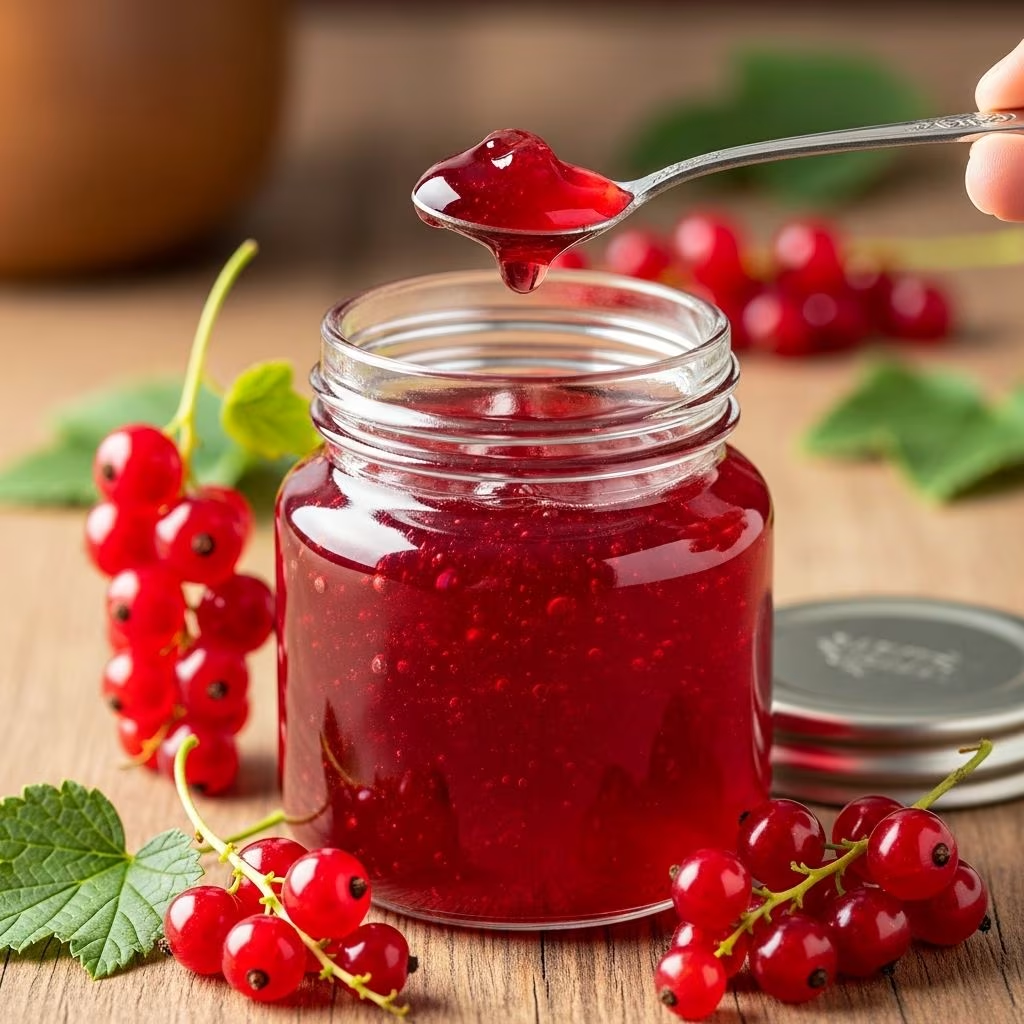
Red currant jelly stands out as one of the simplest yet most rewarding homemade preserves. Its brilliant ruby hue and sharp-tart flavor capture the essence of summer berries, transforming them into a versatile condiment that elevates both sweet and savory dishes. Naturally high in pectin, red currants set into a crystal-clear jelly without commercial thickeners, relying solely on fruit and sugar for structure.
Why Choose Red Currant Jelly?
This preserve offers unmatched clarity and flavor intensity compared to chunkier jams. The straining process removes skins and seeds, yielding a smooth texture perfect for glazing meats, drizzling over desserts, or spreading on scones. Its natural acidity balances sweetness, making it a favorite for cheese pairings or as a base in sauces.
- Versatility: Pairs with lamb, pork, or poultry; complements creamy cheeses like brie.
- Health perks: Retains antioxidants from currants, low in calories when used sparingly.
- Seasonal delight: Peak harvest in July provides fresh, affordable berries.
Understanding Red Currants
Red currants (Ribes rubrum) are small, translucent berries growing in clusters on compact bushes. Native to Europe, they’re now cultivated worldwide for their high pectin content—up to 10 times more than many fruits—which ensures reliable gelling. Fresh berries are tart and juicy, with a brief season that encourages prompt preserving.
Frozen currants work equally well, retaining pectin for year-round jelly making. Select plump, evenly colored berries without mold for best results.
Gathering and Preparing Ingredients
A basic recipe scales easily: equal weights of currants and sugar, plus minimal water. For 4-6 jars:
| Ingredient | Quantity | Purpose |
|---|---|---|
| Fresh red currants | 2.2 lbs (1 kg) | Flavor and natural pectin |
| Granulated sugar | 2.2 lbs (1 kg) | Sweetness and preservation |
| Water | 2 cups (500 ml) | Extracts juice without diluting |
Optional: A knob of butter to reduce foaming. Use wide-mouthed jars (8-12 oz) sterilized in boiling water or a dishwasher cycle.
Step-by-Step Jelly Making Process
Rinse and sort: Gently wash currants under cool water, removing stems, leaves, and unripe berries. No need to remove every stem if using a jelly bag.
Simmer berries: Place in a large pot with water. Bring to a boil, then simmer 10-30 minutes until soft and juicy. Stir occasionally to prevent sticking.
Strain juice: Pour hot pulp into a jelly bag, muslin, or fine sieve over a bowl. Let drip 1-4 hours without pressing for clarity. Yields about 4-5 cups juice.
Sugar stage: Return juice to pot, add sugar. Heat gently, stirring until dissolved. Boil vigorously 8-15 minutes.
Test set: Use wrinkle test: Chill a saucer, drop jelly, push—if wrinkles, it’s ready (104-105°C/219-221°F).
Jar and seal: Skim foam, ladle into hot jars, seal. Cool upside down for vacuum seal.
Process takes 1-2 hours active time, yielding 4-6 jars lasting 1 year unopened.
Mastering the Perfect Set
Success hinges on pectin-sugar-acid balance. Red currants provide pectin and acid; sugar concentrates for gelation. If set fails, reboil with lemon juice (1 tsp per cup) or pectin. Common issues:
- Too soft: Undercooked—boil longer.
- Too firm: Overcooked—use for syrup.
- Cloudy: Pressed pulp—patience in straining.
Flavor Variations and Twists
Experiment beyond classic:
- Mint-infused: Add fresh mint during simmering, strain out.
- Spiced: Cinnamon stick or ginger for warmth.
- Mixed berry: Blend with raspberries (reduce sugar).
- Low-sugar: Use 75g sugar/100ml juice with pectin.
For black currants or gooseberries, same method applies, adjusting sugar for tartness.
Storage and Shelf Life
Cool, dark pantry storage keeps jelly fresh 12-18 months. Refrigerate after opening up to 3 months. Check seals: Bulging lids or mold mean discard. Freezing jars extends life.
Serving Ideas for Every Meal
This jelly shines multifaceted:
- Breakfast: On toast, yogurt, or pancakes.
- Savory: Glaze for roasts; mix with mustard for ham.
- Cheese board: With sharp cheddar or goat cheese.
- Desserts: Thumbprint cookies, Victoria sponge filling.
- Cocktails: Rim glasses or muddle in gin fizz.
Troubleshooting Common Mistakes
| Problem | Cause | Solution |
|---|---|---|
| No set | Low pectin/sugar | Reboil with pectin |
| Crystals | Undissolved sugar | Stir fully before boiling |
| Foam persists | Impurities | Add butter, skim well |
Nutritional Profile
Per tablespoon: 50 calories, 13g sugar, vitamin C boost from currants. Naturally gluten-free, vegan.
Scaling Recipes for Crowds
Double batches risk uneven cooking—process in thirds. Small yields suit beginners.
Seasonal Sourcing Tips
Pick-your-own farms offer freshest; markets in summer. Grow bushes: Productive after year 2, 5-10 lbs/plant.
FAQs
Can I use frozen currants?
Yes, thaw and drain; pectin holds.
What’s a jelly bag substitute?
Muslin, cheesecloth, or coffee filter over sieve.
How do I sterilize jars?
Boil 10 minutes or oven at 250°F for 20.
Is pectin necessary?
No, currants provide ample naturally.
Why strain overnight?
Maximizes yield, ensures clarity.
Environmental and Economic Benefits
Home preserving reduces waste, cuts store costs (commercial jelly $5+/jar). Supports local farms, low carbon footprint.
References
- Red currant jelly (Jāņogu želeja) — Latvian Eats. 2023. https://latvianeats.com/red-currant-jelly-janogu-zeleja/
- Redcurrant Jelly Recipe — Lovely Greens. 2022-06-15. https://lovelygreens.com/making-redcurrant-jelly/
- Homemade Redcurrant Jelly — Recipes Made Easy. 2024-01-10. https://www.recipesmadeeasy.co.uk/homemade-redcurrant-jelly/
- SURE.JELL Currant Jelly Recipe — Kraft Heinz. 2023. https://www.kraftheinz.com/sure-jell/recipes/518526-sure-jell-currant-jelly-recipe
- Red Currant Jelly — The Daring Gourmet. 2021-07-20. https://www.daringgourmet.com/red-currant-jelly/