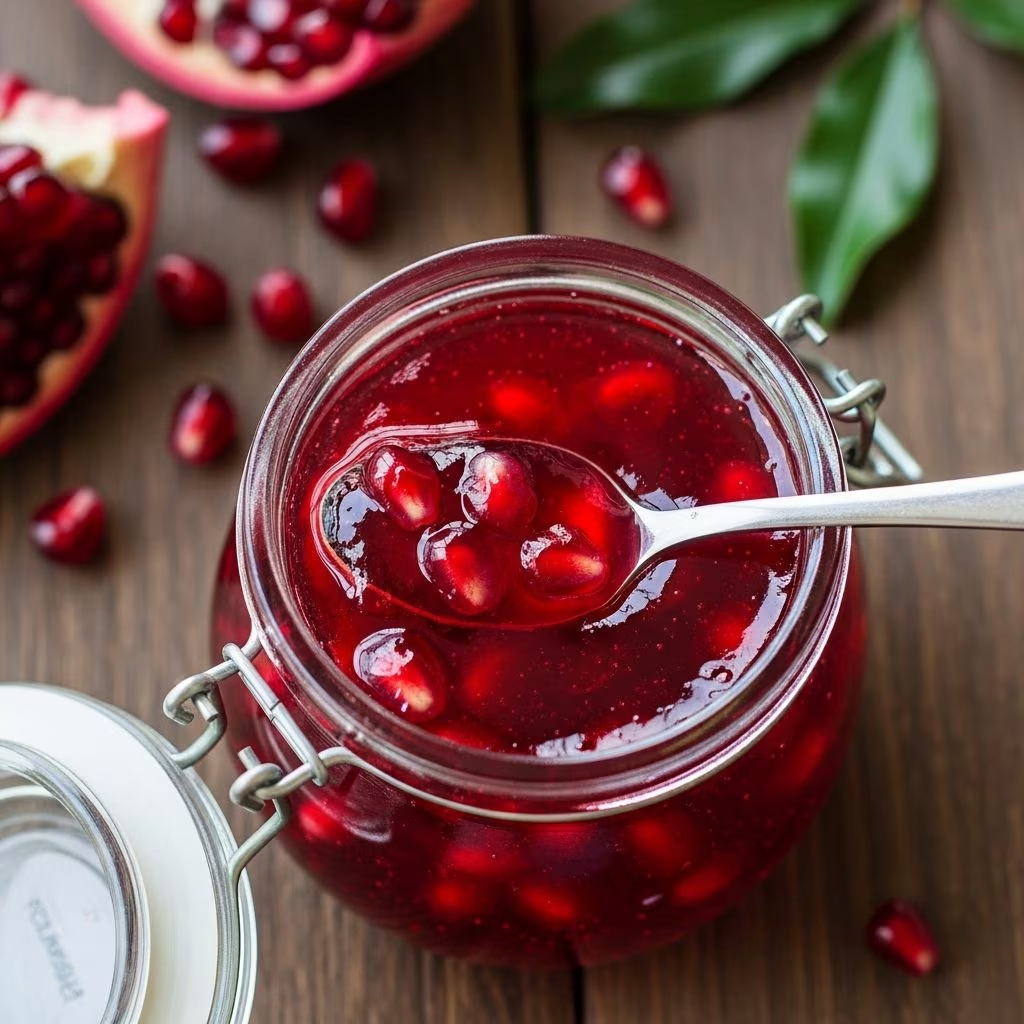
Transform the tart, jewel-like essence of pomegranates into a shimmering jelly that captures summer’s vibrancy in every spoonful. This versatile preserve spreads beautifully on toast, enhances cheese boards, or glazes meats with its unique sweet-tangy profile. Whether using fresh fruit or quality bottled juice, homemade pomegranate jelly offers a rewarding project for home cooks seeking to preserve seasonal flavors.
Why Make Pomegranate Jelly at Home
Crafting your own jelly allows control over sweetness, texture, and purity. Commercial versions often include additives, while homemade lets natural pomegranate antioxidants shine through. The process hones basic canning skills, yielding gifts or pantry staples that last up to a year. Its brilliant ruby hue adds visual appeal to any kitchen shelf, and the yield from a few fruits impresses with minimal effort.
Gathering the Perfect Ingredients
Success starts with quality components. Pomegranate juice forms the base—extract from 5-6 medium fruits for 3½ cups, or opt for 100% pure bottled juice without additives. Lemon juice provides acidity for safe canning and bright flavor. Pectin, a natural thickener from fruit, ensures the gel sets firmly; choose powdered for standard recipes. Granulated sugar balances tartness and aids gelling—adjust slightly for taste but follow ratios precisely.
- Pomegranate juice: 3½ cups (fresh or bottled)
- Lemon juice: 1-2 tablespoons (freshly squeezed)
- Pectin: 1 box (1.75 oz) powdered, like Sure-Jell
- Sugar: 4½-5½ cups, depending on pectin type
- Butter: ½ teaspoon (optional, to reduce foam)
For low-sugar versions, select specialized pectin and a sugar alternative, but traditional recipes yield the clearest, most stable results. Always measure precisely using dry cups for sugar and liquid measures for juice.
Step-by-Step Guide to Juicing Pomegranates
Fresh juice elevates flavor but requires care to avoid bitterness from white pith. Select heavy, deep-red fruits with taut skin. Score lightly around the crown, submerge in a bowl of water, and gently separate arils (seeds). Drain, then simmer arils with a splash of water, mashing to release juice. Strain through cheesecloth or a fine sieve, pressing gently—expect ½ cup juice per fruit.
- Halve pomegranates horizontally.
- Tap seed-side down over a bowl to dislodge arils.
- Simmer arils 5-10 minutes, mash, and strain.
- Yield: 3½ cups from 5-6 fruits.
Bottled juice skips this, saving time while delivering consistent results. Refrigerate fresh juice immediately if not using right away.
Mastering the Cooking Process
The key to glossy, spreadable jelly lies in precise heat and timing. Use a deep 6-8 quart pot to accommodate foaming.
| Step | Action | Time/Temp |
|---|---|---|
| 1. Prep | Combine juice, lemon juice, pectin in pot. Stir well. | Room temp |
| 2. Initial Boil | Bring to full rolling boil over high heat, stirring constantly. | 1 minute |
| 3. Add Sugar | Stir in sugar until dissolved; return to boil. | Instant |
| 4. Final Boil | Boil hard 1-2 minutes, testing set. | 220°F/104°C |
Add butter during pectin stage to minimize foam. A full rolling boil persists when stirred—essential for activation. Skim foam post-cook for clarity. Test doneness with the cold plate method: chill a plate, drop jelly, and push—if it wrinkles, it’s ready.
Sterilizing and Filling Jars
Half-pint jars suit jelly’s yield. Wash in hot soapy water, then sterilize by boiling 10 minutes or dishwasher cycle. Simmer lids in water. Ladle hot jelly into jars, leaving ¼-inch headspace. Wipe rims clean, apply lids, and screw bands fingertip-tight. This prevents siphoning during processing.
Water Bath Canning for Longevity
Pomegranate’s high acidity (pH under 4.6) makes water bath canning safe. Place jars on rack in canner, cover by 1-2 inches water. Boil 5-10 minutes (adjust for altitude: +1 min per 1,000 ft above sea level). Cool undisturbed 12-24 hours; check seals by pressing lids—no pop means success. Refrigerate unsealed jars.
Refrigeration extends life to 3 weeks; freezer up to a year. Processed jars store at room temp for 12-18 months.
Troubleshooting Common Issues
Problems arise from measurement errors or rushing. Here’s how to fix:
- Too Runny: Reboil with additional pectin; test set.
- Too Firm: Overcooked—gently heat with water to loosen.
- Cloudy: Excess pulp or stirring post-set; strain finer next time.
- Crystals: Undissolved sugar—stir thoroughly during boil.
- Foam: Skim diligently; butter helps.
Altitude affects boil temp—use a candy thermometer for accuracy.
Scaling Recipes for Small or Large Batches
Standard yields 6-8 half-pints. Halve for small batches: 1¾ cups juice, ½ box pectin, 2¼ cups sugar. Double cautiously, ensuring pot size accommodates foam. Small batches suit beginners, testing techniques without commitment.
Low-Sugar and Sugar-Free Variations
Use low-methoxyl pectin for reduced sugar (1-1½ cups alternative sweetener). Splenda recipes call for 1½ cups per 4 cups juice. Expect softer set and shorter shelf life. Taste-test during cooking for balance.
Creative Ways to Enjoy Pomegranate Jelly
- Classic: Toast with butter or cream cheese.
- Gourmet: Pair with brie and crackers.
- Savory: Glaze ham, pork, or chicken.
- Baking: Thumbprint cookies or linzer tarts.
- Beverages: Stir into tea, cocktails, or yogurt parfaits.
Its tartness cuts richness, making it a pantry MVP.
Nutritional Highlights and Health Benefits
One tablespoon offers ~50 calories, mostly from sugar. Pomegranates contribute antioxidants like punicalagins, linked to heart health. Low-sodium, vegan-friendly. Moderation advised due to sugar content.
Seasonal Tips and Sourcing
Peak season (fall) yields best fruit. Freeze arils or juice for year-round use. Farmers markets offer freshest options.
Frequently Asked Questions
Can I use store-bought juice?
Yes, 100% pure pomegranate juice works perfectly, simplifying prep.
How long does it take to set?
Jelly firms in 24-48 hours; unmold only when cool.
What if I don’t can it?
Refrigerate up to 3 weeks or freeze.
Is it safe for beginners?
Absolutely—high-acid recipe with straightforward steps.
Can I add flavors?
Infuse with vanilla, ginger, or jalapeño post-boil for twists.
References
- SURE.JELL Pomegranate Jelly Recipe — Kraft Heinz. 2023. https://www.kraftheinz.com/sure-jell/recipes/501319-sure-jell-pomegranate-jelly-recipe
- Pomegranate Jelly — Practical Self Reliance. 2022-10-15. https://practicalselfreliance.com/pomegranate-jelly/
- Small Batch Pomegranate Jelly — The Floral Apron. 2023. https://floralapron.com/small-batch-pomegranate-jelly/
- Pomegranate Jelly — Ball Mason Jars. 2024. https://www.ballmasonjars.com/blog
- Pomegranate Jelly Recipe — Splenda. 2023. https://www.splenda.com/recipe/pomegranate-jelly/