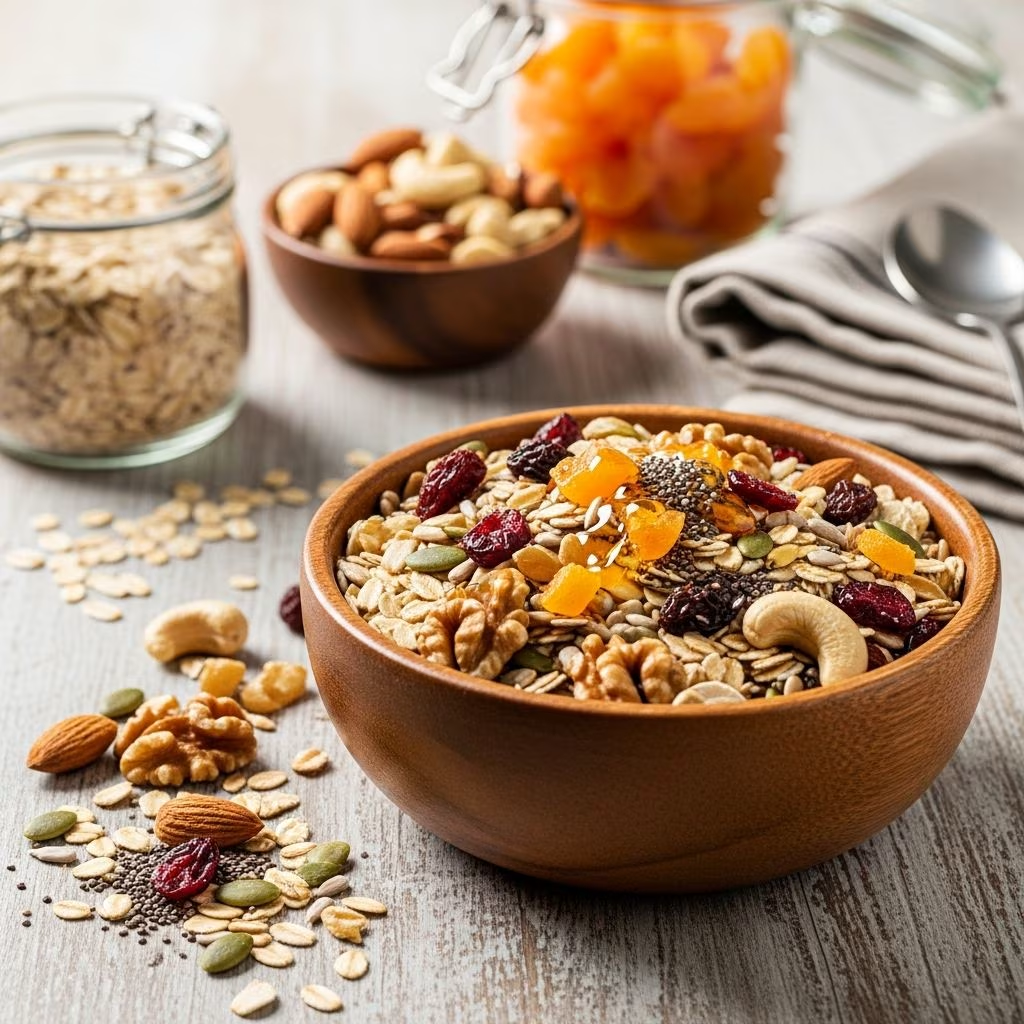
Homemade muesli stands as a timeless breakfast option, blending wholesome grains, crunchy nuts, nutrient-rich seeds, and sweet dried fruits into a versatile mix that’s both satisfying and energizing. Originating from Swiss physician Maximilian Bircher-Benner in the early 1900s, this raw cereal dish was designed to promote health through natural ingredients, evolving from a simple apple-oat blend into today’s customizable powerhouse. Unlike granola, which involves baking with sweeteners, traditional muesli remains untoasted for a lighter texture, though many modern versions lightly toast components for added flavor and crunch.
Why Choose Homemade Muesli Over Store-Bought?
Crafting your own muesli allows complete control over ingredients, ensuring freshness, quality, and alignment with dietary needs. Store versions often contain added sugars, preservatives, and lower-quality fillers, while homemade batches let you prioritize whole foods. It’s cost-effective— a large jar costs pennies per serving—and endlessly adaptable for gluten-free, vegan, or low-sugar preferences. Plus, the satisfaction of mixing your signature blend turns breakfast prep into a creative ritual.
Core Ingredients for a Balanced Muesli Base
The foundation of any great muesli lies in its base components: grains for sustained energy, nuts and seeds for healthy fats and protein, and fruits for natural sweetness and fiber. Start with these ratios for a 4-6 cup batch: about 60-70% grains, 15-20% nuts/seeds, and 10-15% dried fruits.
- Grains (4-5 cups): Rolled oats provide chewiness and beta-glucan for heart health; try rye flakes, barley, spelt, or gluten-free options like buckwheat, quinoa, or amaranth.
- Nuts & Seeds (1-2 cups): Almonds, pecans, walnuts, pepitas, sunflower seeds, hemp, chia, or flax deliver crunch, omega-3s, and satiety.
- Dried Fruits (1/2-1 cup): Chopped cherries, cranberries, apricots, mango, raisins, or goji berries add chew and antioxidants without refined sugar.
- Flavor Boosters: A pinch of cinnamon, vanilla, salt, or unsweetened coconut flakes enhance taste naturally.
| Category | Examples | Benefits |
|---|---|---|
| Gluten-Free Grains | Oats, buckwheat, millet, teff | Fiber-rich, blood sugar stable |
| Nuts | Almonds, walnuts, pistachios | Protein, vitamin E, healthy fats |
| Seeds | Chia, flax, hemp, pepitas | Omega-3s, minerals |
| Dried Fruits | Cranberries, apricots, dates | Natural sweetness, fiber |
Basic No-Bake Muesli Recipe
This straightforward recipe yields 10-12 servings and takes under 10 minutes. It’s raw, preserving maximum nutrients.
Ingredients:
- 4 cups rolled oats (or mixed grains)
- 1 cup mixed nuts (e.g., sliced almonds, chopped walnuts)
- 1/2 cup seeds (pepitas, sunflower, chia)
- 1 cup chopped dried fruits (raisins, cranberries)
- 1/2 cup unsweetened coconut flakes
- 1/2 tsp cinnamon
- Pinch of salt
Instructions:
- Combine all dry ingredients in a large bowl. Stir thoroughly to distribute evenly.
- Transfer to an airtight jar. Store at room temperature for up to 2 months or refrigerate for longer freshness.
- Serving size: 1/2 cup muesli + 1 cup milk/yogurt + fresh fruit.
Pro tip: Shake the jar weekly to prevent settling.
Flavorful Toasted Muesli Variation
For a granola-like crunch without excessive sweetness, lightly toast your mix. This version draws from heart-healthy inspirations.
Ingredients Additions:
- 1/4 cup maple syrup or honey
- 2 tbsp melted coconut oil
- 1 tsp vanilla extract
Steps:
- Preheat oven to 300°F (150°C). Mix dry base with wet ingredients.
- Spread thinly on a parchment-lined baking sheet.
- Bake 20-25 minutes, stirring halfway, until golden. Cool completely before adding fruits to avoid sogginess.
Yield: 5-6 cups. Enjoy as cereal, trail mix, or yogurt topper.
Customizing Muesli for Every Diet and Taste
Muesli’s beauty is its flexibility. Tailor it to preferences:
- Vegan: Use plant milks like almond or oat; skip honey.
- Gluten-Free: Certified oats + quinoa/millet.
- Heart-Healthy: Emphasize oats, bran flakes, walnuts, sunflower seeds; limit sweeteners.
- Low-Sugar: Rely on fresh fruits; use date pellets or unsweetened cranberries.
- Tropical Twist: Mango, coconut, macadamia nuts, pineapple chunks.
- Berry Blast: Dried blueberries, goji, fresh strawberries, hemp seeds.
Experiment with seasonal fresh fruits: grated apples for classic Bircher style, or berries for summer vibrancy.
Health Benefits Backed by Nutrition Science
Muesli fuels your day with complex carbs, fiber (5-10g per serving), protein (8-12g), and micronutrients. Oats’ beta-glucan lowers cholesterol; nuts/seeds provide anti-inflammatory fats; fruits offer vitamins A and C. Studies link regular whole-grain intake to reduced heart disease risk and better weight management. A typical serving (dry) clocks in at 300-400 calories, customizable for macros.
Creative Serving Suggestions
Beyond milk, elevate muesli:
- Overnight Oats: Soak 1/2 cup muesli in 1 cup milk overnight; top with yogurt and fruit.
- Yogurt Parfait: Layer with Greek yogurt, honey, and granola crunch.
- Smoothie Bowl: Blend soaked muesli with banana and spinach; sprinkle on top.
- Baked Goods: Stir into muffin batter or pancake mix.
- Snack Bar: Press into a pan with nut butter, chill, and slice.
For Bircher muesli, grate an apple, mix with oats and milk, refrigerate 4+ hours—emulating the original soaked style.
Storage, Shelf Life, and Pro Tips
Store in airtight containers away from light/heat: room temp (2 months), fridge (4 months), freezer (6+ months). Keep fruits separate if toasting to maintain chew. Scale up for batch cooking—prep once, eat for weeks. Taste-test small batches when customizing ratios.
Frequently Asked Questions (FAQs)
What is the difference between muesli and granola?
Muesli is typically raw or lightly soaked, while granola is baked with oil/sweeteners for clusters.
Can I make muesli ahead for the week?
Yes, dry mixes last months; pre-portioned soaked versions up to 3 days in fridge.
Is muesli suitable for weight loss?
Absolutely—high fiber promotes fullness; pair with protein-rich toppings.
How do I make it kid-friendly?
Add chocolate chips, sweeter fruits like bananas, or shape into energy balls.
What’s the best milk for muesli?
Any: dairy, almond, oat, or yogurt for creaminess. Experiment for taste.
Sample Weekly Muesli Meal Prep Plan
| Day | Muesli Variation | Toppings | Serving Style |
|---|---|---|---|
| Monday | Classic Oat-Nut | Apple, yogurt | Bircher soak |
| Tuesday | Tropical | Mango, coconut milk | Overnight oats |
| Wednesday | Berry | Fresh berries, honey | Yogurt parfait |
| Thursday | Heart-Healthy | Banana, almond milk | Cereal bowl |
| Friday | Chocolate Nut | Cacao nibs, peanut butter | Smoothie bowl |
Incorporate muesli into routines for variety and nutrition. Its simplicity belies profound health impacts, making it ideal for all ages and lifestyles.
References
- Muesli Recipe (With Lots of Variation Ideas) — Chelsea’s Messy Apron. 2023. https://www.chelseasmessyapron.com/muesli/
- Muesli Recipe: A Healthy and Delicious Breakfast Idea — Happy Kitchen Rocks. 2022. https://happykitchen.rocks/muesli-recipe-healthy-delicious-breakfast-idea/
- Honey-toasted Fruit Muesli Recipe — 101 Cookbooks. 2005 (updated). https://www.101cookbooks.com/archives/000173.html
- Homemade Muesli — Alexandra’s Kitchen. 2015. https://alexandracooks.com/2015/02/26/bircher-muesli-homemade-muesli-bulk-food-shopping/
- Muesli | American Heart Association Recipes — American Heart Association. 2023. https://recipes.heart.org/en/recipes/muesli