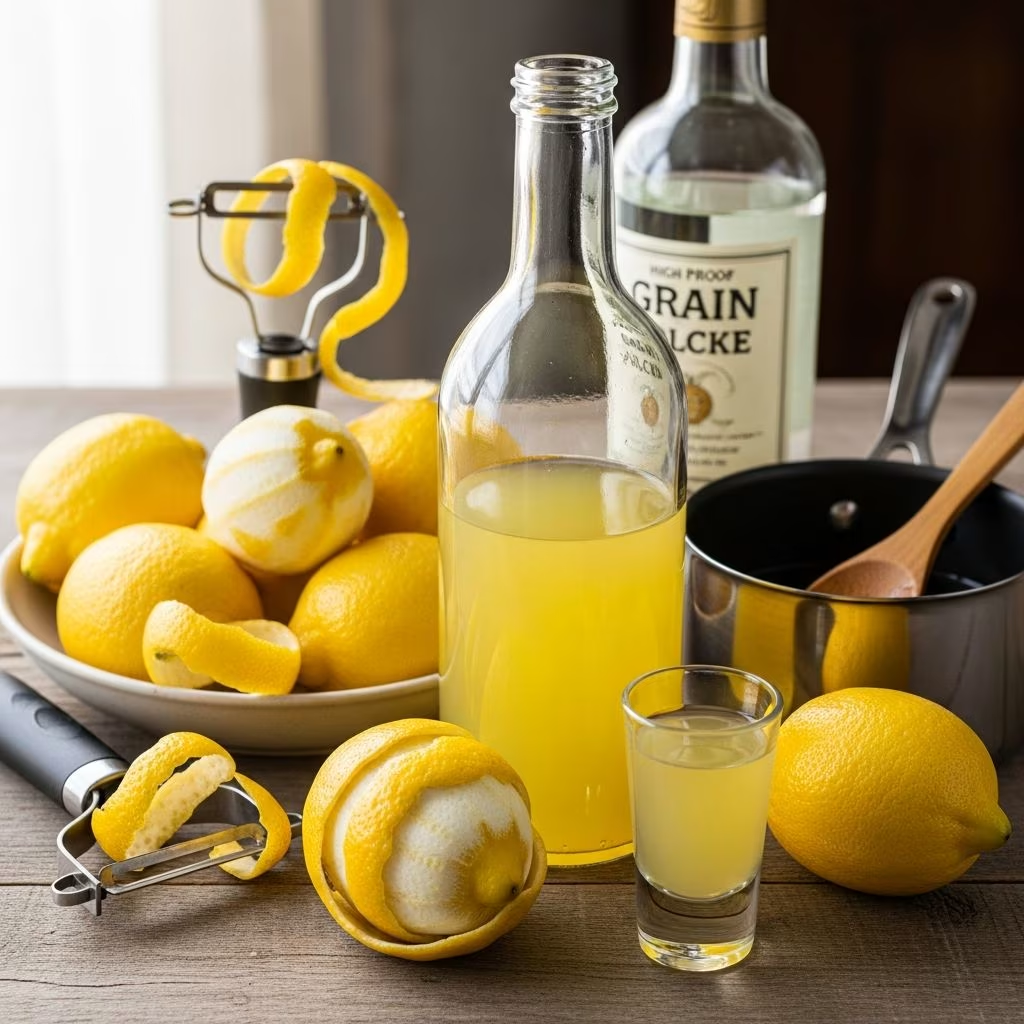
Crafting **limoncello** at home brings the sunny flavors of Italy’s Amalfi Coast directly to your kitchen. This vibrant liqueur, known for its intense lemon essence and silky sweetness, requires just a few basic components and patience during the infusion process. With high-proof alcohol extracting the oils from lemon peels, combined with a simple sugar syrup, you can produce a batch that’s far superior to many store-bought options.
Understanding Limoncello’s Appeal
Limoncello originated in southern Italy, particularly around Sorrento and Capri, where abundant lemon groves provide the perfect raw material. The drink’s hallmark is its bold citrus profile balanced by sweetness, making it ideal as a digestif after meals. Home versions allow customization of sweetness and strength, ensuring a personalized touch.
The process hinges on maceration: lemon zest infuses alcohol over weeks, releasing essential oils without bitterness from the pith. This method preserves the pure, aromatic qualities that define authentic limoncello.
Essential Ingredients for Success
Selecting quality ingredients is crucial for a standout limoncello. Here’s what you’ll need for approximately 3 liters:
- 10-11 organic lemons: Choose thick-skinned varieties like Meyer or Eureka for maximum oil content. Organic ensures no pesticides on the peels.
- 1 liter high-proof alcohol (95% ABV or 190-proof grain alcohol like Everclear): This extracts flavors efficiently; vodka (at least 100-proof) works as a milder substitute.
- 3-3.5 cups granulated white sugar: Provides balance; adjust for taste.
- 3-3.5 cups water: For diluting and creating simple syrup.
Variations exist: some recipes use slightly more sugar for sweetness, others less for a drier profile. Always prioritize unwaxed, organic citrus to avoid chemical residues.
Step-by-Step Preparation Method
Patience is key—most recipes require 2-4 weeks of steeping. Follow these steps meticulously:
- Prepare the lemons: Wash thoroughly. Using a vegetable peeler or sharp knife, zest the lemons, avoiding the bitter white pith. Aim for wide strips to maximize surface area.
- Infuse the alcohol: Place peels in a large, sealable glass jar. Pour in the alcohol, ensuring peels are submerged. Seal and store in a cool, dark place for 20-25 days. Shake daily to agitate.
- Make simple syrup: In a saucepan, combine water and sugar. Heat gently until dissolved (do not boil vigorously). Cool completely to room temperature.
- Combine and strain: Strain the infused alcohol through a fine mesh sieve or cheesecloth into a large bowl, discarding peels. Gradually mix in the cooled syrup, tasting as you go. For extra flavor, rinse the jar with a splash of water and add it.
- Bottle and mature: Funnel into sterilized glass bottles. Refrigerate one for immediate use; store others in a cool, dark spot for 1-2 weeks to mellow flavors.
The result should be a brilliant yellow liquid with a potent lemon aroma. Yield: about 2.5-3 liters, depending on evaporation.
Ingredient Variations and Adjustments
Recipes differ slightly across sources, allowing flexibility:
| Recipe Source | Lemons | Alcohol | Sugar | Water | Steep Time |
|---|---|---|---|---|---|
| Vincenzo’s Plate | 9 organic | 1L 95% grain | 700g | 1.5L | 20 days |
| Life at Bella Terra | 11 | 1L 160-proof | 3 cups | 3 cups boiling | Not specified |
| Casual Foodist | 10 organic | 750ml vodka/grain | 1.5 cups | 3 cups | 2-4 weeks |
| Cooking with Ayeh | Not specified | 95% alcohol | To taste | To taste | 25 days |
| Everclear | 10 | 750ml Everclear | 2.5 cups | 3.5 cups | To taste |
Start with a standard ratio and tweak: more sugar for sweeter limoncello, higher proof alcohol for intensity.
Common Pitfalls and Pro Tips
Avoid these mistakes for professional results:
- Including pith: It imparts bitterness; peel meticulously.
- Using low-proof alcohol: Below 80-proof yields weak extraction.
- Rushing infusion: Shorter times result in pale color and mild flavor; 20+ days is ideal.
- Overheating syrup: Gentle simmering prevents caramelization.
Pro tips: Use flip-top bottles for easy serving. For gifting, add custom labels. Shake bottles periodically during maturation. If too strong, dilute further with water. Organic lemons enhance vibrancy, as commercial ones may have treated skins.
Serving Suggestions and Pairings
Chill limoncello in the freezer for a luxurious texture—it doesn’t freeze solid due to alcohol content. Serve in small chilled glasses as a digestif.
- Straight: Sip slowly after dinner to aid digestion.
- Cocktails: Mix with prosecco for a limoncello spritz (2:1 ratio with soda).
- Desserts: Drizzle over gelato, panna cotta, or cheesecake.
- Pairings: Complements spicy Italian dishes, seafood, or rich cheeses.
Experiment with spritzers: limoncello, soda, and a lemon slice for refreshment on warm days.
Storage and Shelf Life
Properly made limoncello lasts indefinitely if stored correctly. Keep in the fridge or freezer; the high alcohol (around 25-30% ABV post-dilution) preserves it. Dark glass bottles prevent light degradation. Always check for off odors before consuming.
Advanced Twists on Classic Limoncello
Once mastered, innovate:
- Meyer lemon version: Sweeter, less acidic.
- Herbal infusion: Add basil or mint peels during steeping.
- Spicy kick: Infuse with chili for limoncello piccante.
- Lower alcohol: Use diluted vodka for lighter batches.
The “lazy way” involves quartering lemons and simmering post-infusion for quicker juice extraction.
Frequently Asked Questions (FAQs)
Can I use regular vodka instead of grain alcohol?
Yes, but opt for 100-proof vodka. It extracts less efficiently, so extend steeping to 4 weeks.
How long does homemade limoncello last?
Indefinitely in the freezer or fridge, thanks to high alcohol and sugar content.
Why is my limoncello cloudy?
Usually from pith or insufficient straining. Use cheesecloth for clarity.
Is limoncello safe to make at home?
Absolutely, with food-grade alcohol. Avoid methanol sources; stick to reputable brands like Everclear.
Can I speed up the process?
Slightly, by shaking more frequently, but 2 weeks minimum ensures full flavor.
Why Make It Yourself?
Homemade limoncello costs a fraction of commercial bottles while offering fresher taste. It’s a rewarding project yielding gifts or party staples. With practice, you’ll refine to perfection, capturing Italy’s essence in every pour.
References
- LIMONCELLO RECIPE | The Best Limoncello in the World — Vincenzo’s Plate. Accessed 2026. https://www.vincenzosplate.com/limoncello-recipe/
- Making Homemade Limoncello — Life at Bella Terra. Accessed 2026. https://lifeatbellaterra.com/making-limoncello/
- Homemade Limoncello Recipe — Casual Foodist. Accessed 2026. https://casualfoodist.com/homemade-limoncello-recipe/
- Limoncello Recipe (Authentic Italian with Easy Steps) — Cooking with Ayeh. Accessed 2026. https://cookingwithayeh.com/limoncello-recipe/
- Limoncello — Everclear (official recipe page). Accessed 2026. https://diywitheverclear.com/recipes/limoncello/