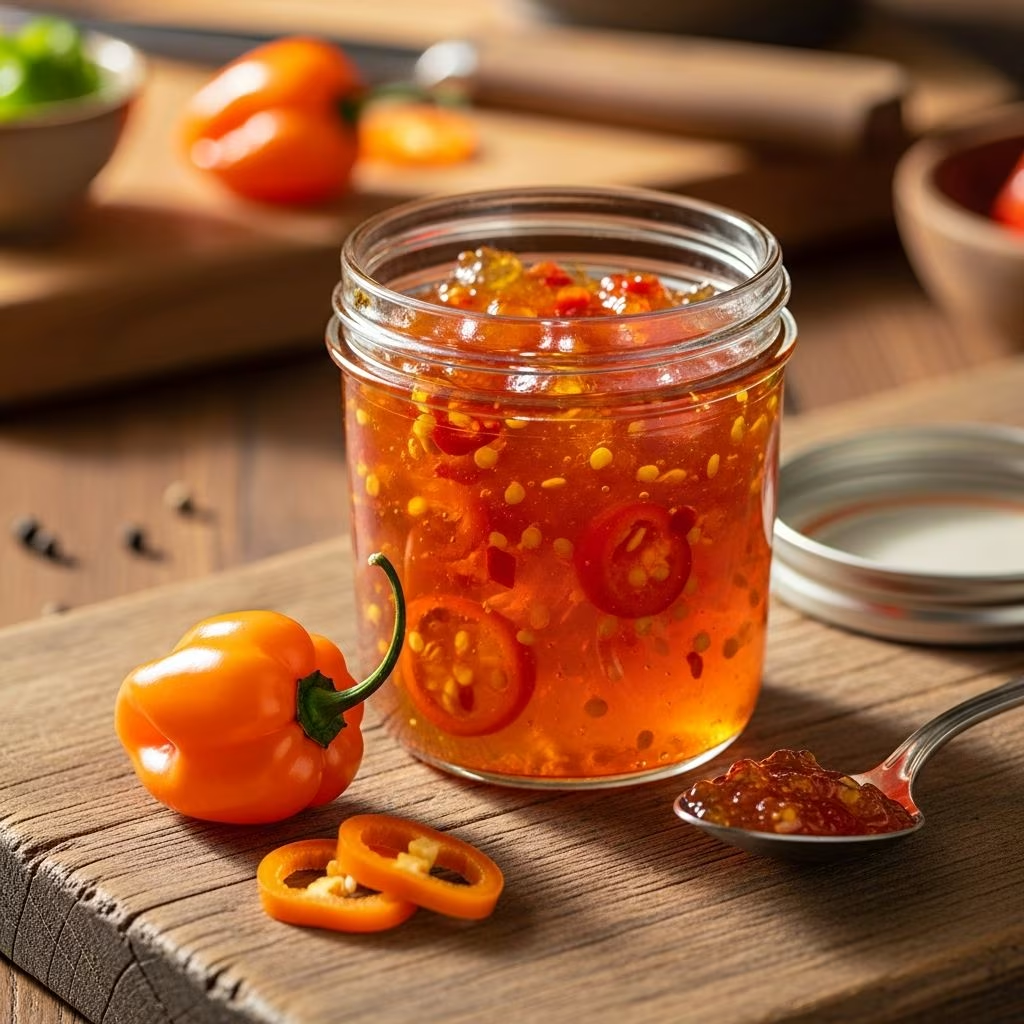
Homemade habanero pepper jelly captures the essence of bold heat and sugary sweetness in every spoonful. This versatile preserve transforms fiery habanero peppers into a glossy, spreadable delight that’s perfect for glazing meats, topping cheeses, or gifting to friends. With roots in Southern cooking traditions, it balances the intense Scoville punch of habaneros—ranging from 100,000 to 350,000 units—with the mellow notes of bell peppers, vinegar, and sugar. Whether you’re a canning novice or seasoned preserver, this guide equips you with everything needed to succeed.
Understanding the Magic of Pepper Jellies
Pepper jellies originated as a way to preserve summer’s bounty, combining chiles with pectin for a shelf-stable treat. Habaneros, known for their fruity undertones and wrinkled skin, elevate the classic recipe. The process involves chopping peppers, dissolving sugar in vinegar, and activating pectin to create a gel-like consistency. Safety is paramount: always use sterilized jars and follow boiling water bath methods to prevent spoilage.
Essential Ingredients for Success
Gathering the right components ensures a jelly that sets properly and delivers balanced flavor. Core elements include:
- Habanero peppers: 6-8 fresh ones for heat; wear gloves to avoid skin irritation.
- Bell peppers: 1 orange or red for color and mild sweetness.
- Sugar: 4-6 cups granulated to sweeten and aid gelling.
- Vinegar: 1-1.5 cups cider or white for acidity and preservation.
- Pectin: 1 packet liquid or powdered; crucial for texture.
- Salt: A pinch to enhance flavors.
Optional add-ins like lemon juice, fruit purees, or food coloring customize the profile. Fresh produce yields the best results—choose firm, vibrant peppers without blemishes.
Step-by-Step Recipe: Classic Habanero Pepper Jelly
This foundational recipe yields about 6 half-pint jars. Prep time: 20 minutes. Cook time: 15 minutes. Total: 35 minutes plus cooling.
Ingredients Table
| Ingredient | Quantity | Notes |
|---|---|---|
| Habanero peppers | 1/2 pound (about 15) | Seeded for milder heat |
| Bell pepper (red/orange) | 1 medium | Finely diced |
| Granulated sugar | 4 cups | White for clarity |
| Apple cider vinegar | 1 1/4 cups | 5% acidity |
| Lemon juice | 1/4 cup | Freshly squeezed |
| Salt | 1 tsp | Kosher or sea |
| Liquid pectin | 3 oz pouch | Or powdered equivalent |
Detailed Instructions
Prep peppers: Stem and seed habaneros (leave some seeds for extra fire). Chop roughly with bell pepper. Pulse in a food processor until finely minced, not pureed, to retain texture.
Combine base: In a large pot, mix peppers, sugar, vinegar, lemon juice, and salt. Stir over medium heat until sugar dissolves, about 5 minutes. Skim foam.
Simmer: Bring to a boil, then reduce to low simmer for 10 minutes, allowing flavors to meld.
Add pectin: Crank heat to high for a rolling boil. Stir in pectin; boil exactly 1 minute, stirring vigorously.
Jar and process: Remove from heat. Ladle into hot, sterilized jars, leaving 1/4-inch headspace. Wipe rims, apply lids, and process in a boiling water bath for 10 minutes. Cool undisturbed for 24 hours.
Check seals: Lids should not flex. Refrigerate any unsealed jars.
Flavor Variations to Spice Up Your Jelly
Experiment beyond the classic for unique twists:
- Mango Habanero: Blend in 3 cups chopped ripe mango for tropical sweetness. Reduce sugar slightly.
- Strawberry Infusion: Use 1.5 cups strawberry juice from boiled berries, adding diced apple for natural pectin.
- Carrot Boost: Shred 1 cup carrots for earthiness and subtle crunch.
- Low-Sugar Version: Swap half the sugar with a no-sugar pectin and fruit juice.
Test heat levels: Start with fewer habaneros and taste (carefully—it’s hot!).
Canning Essentials and Safety Protocols
Proper canning prevents botulism. Use half-pint Mason jars; sterilize by boiling 10 minutes. A water bath canner ensures submersion by 1-2 inches. Altitude adjustments: Add 5 minutes per 1,000 feet above sea level. Store in a cool, dark pantry for up to a year. Once opened, refrigerate up to 1 month.
| Issue | Solution |
|---|---|
| Jelly won’t set | Reboil with more pectin; test on saucer in freezer |
| Too spicy | Dilute next batch or pair with cream cheese |
| Cloudy color | Use white vinegar; strain pulp |
Creative Ways to Enjoy Habanero Pepper Jelly
This jelly shines in appetizers: Pour over cream cheese with crackers for an instant hit. Glaze grilled chicken, pork, or salmon—brush on during the last 5 minutes. Stir into vinaigrettes for salads, or drizzle on roasted vegetables. For breakfast, slather on biscuits or swirl into cornbread batter. Gift jars with recipe cards for holidays.
Storage, Shelf Life, and Troubleshooting
Sealed jars last 12-18 months unopened. Freezing extends life: Thaw in fridge. Signs of spoilage include bulging lids, off odors, or mold—discard immediately. If jelly separates, stir before use; it’s safe.
Frequently Asked Questions (FAQs)
Can I reduce the sugar?
Yes, with low-sugar pectin, but flavor and set may vary. Follow package ratios precisely.
Are habaneros too hot for beginners?
Seed them fully for mild heat; their fruitiness shines through.
Do I need a food processor?
No—finely mince by hand, but gloves are essential.
How do I know jars are sealed?
Press lid center; it shouldn’t pop. Ping sound during cooling confirms.
Can I double the recipe?
Best not to—pectin activation is batch-specific.
Nutritional Snapshot
Per tablespoon: ~50 calories, 13g sugar, negligible fat/protein. High in vitamin C from peppers.
References
- Habanero Pepper Jam Recipe — Chili Pepper Madness. 2023-05-15. https://www.chilipeppermadness.com/chili-pepper-recipes/jellies/habanero-pepper-jam/
- Habanero Jelly — Kevin Is Cooking. 2022-08-10. https://keviniscooking.com/habanero-jelly/
- Strawberry Habanero Pepper Jelly — The Café Sucre Farine. 2021-11-20. https://thecafesucrefarine.com/strawberry-habanero-pepper-jelly/
- Complete Guide to Home Canning — National Center for Home Food Preservation (USDA-affiliated). 2024-01-01. https://nchfp.uga.edu/publications/publications_usda.html
- Pectin in Fruit Jams and Jellies — University of Georgia Extension (USDA Cooperative Extension). 2023-06-12. https://extension.uga.edu/publications/detail.html?number=B1129&title=preparing-and-canning-jams-and-jellies