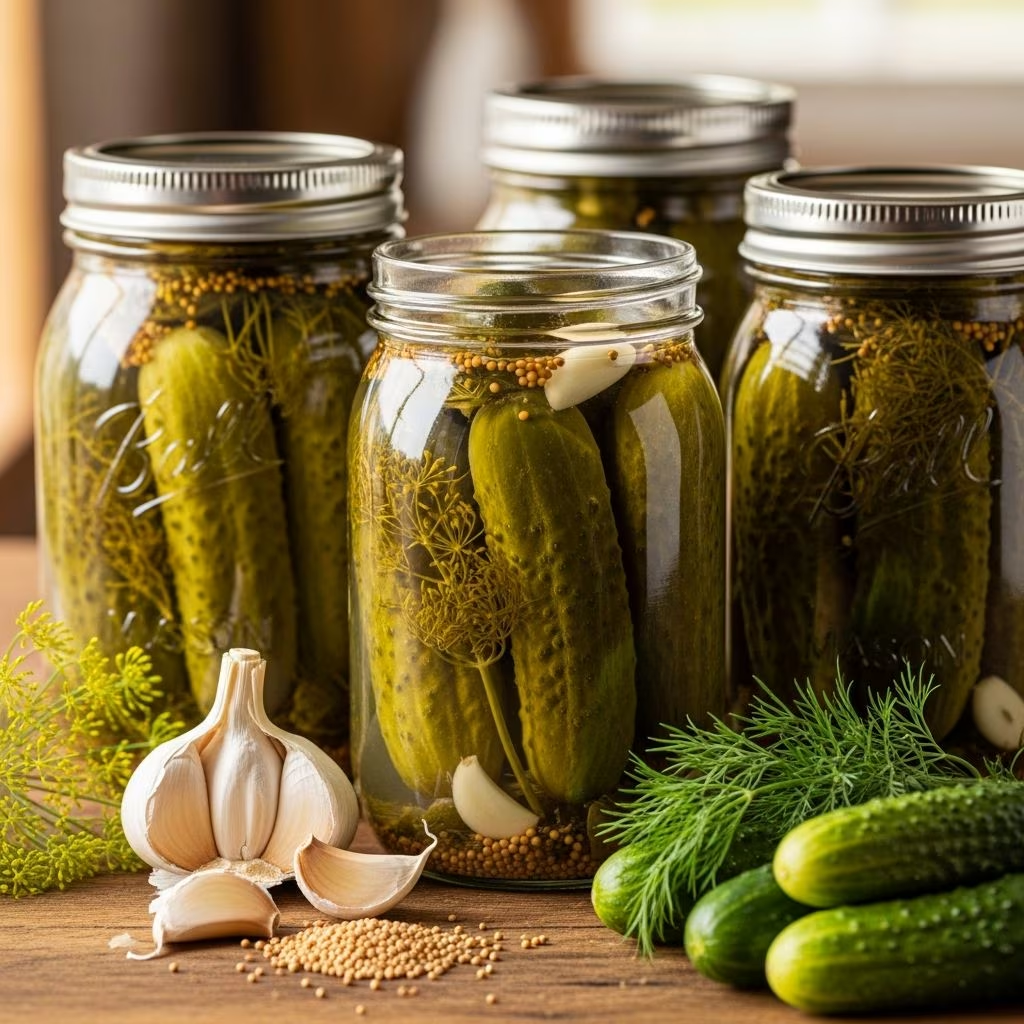
Homemade dill pickles offer a superior taste and texture compared to commercial varieties, allowing you to control freshness, spice levels, and ingredients. This comprehensive guide walks you through selecting produce, preparing brine, packing jars, and processing for shelf stability, ensuring crisp results every time.
Why Make Your Own Dill Pickles
Crafting dill pickles from scratch preserves the natural snap of cucumbers while infusing them with aromatic herbs and spices. Unlike mass-produced options, home versions avoid artificial preservatives, delivering vibrant flavor from fresh dill, garlic, and vinegar. The process builds skills in safe food preservation, yielding jars perfect for snacking, sandwiches, or gifts.
- Cost savings: A batch fills multiple quart jars at a fraction of grocery store prices.
- Customization: Adjust heat with peppers or sweetness with minimal sugar.
- Freshness guarantee: Peak-season cucumbers ensure the best crunch and taste.
Selecting the Best Cucumbers for Pickling
Choose pickling cucumbers, which are smaller and firmer than slicing types, measuring 3-5 inches long. Varieties like Kirby or Persian hold up best during brining, resisting sogginess. Inspect for firm skin without blemishes or yellowing, indicating overripeness.
| Cucumber Type | Best For | Size | Yield per Pound |
|---|---|---|---|
| Pickling (Kirby) | Canning/fermenting | 3-5 inches | 4-6 whole |
| Persian | Quick pickles | 4-6 inches | 3-5 whole |
| Slicing (avoid) | Eating fresh | 6+ inches | 2-3 whole |
Wash thoroughly and trim blossom ends, as enzymes there soften pickles. Soak in ice water overnight for extra crispness, a technique rooted in traditional methods.
Essential Ingredients for Flavorful Brine
The brine is the heart of dill pickles, balancing acidity, salt, and seasonings. Core components include water, white vinegar (5% acidity), and pickling salt, which dissolves cleanly without clouding.
- Water: Filtered or distilled to prevent mineral interference.
- Vinegar: Provides tang and preservation; apple cider works for milder notes.
- Pickling salt: Iodine-free to avoid darkening.
- Dill: Fresh heads or seeds for herbal punch.
- Garlic: Whole cloves for subtle allium depth.
- Peppercorns or pods: Add heat and complexity.
Optional additions like grape leaves or oak tannins naturally firm pickles by inhibiting pectin breakdown.
Step-by-Step Brine Preparation
Combine 1 quart water, 1 pint vinegar, and 1/2 cup pickling salt in a pot. Heat to a boil, stirring until salt dissolves fully, then cool slightly before use. This ratio yields about 4 quarts of brine, sufficient for 7-8 pounds of cucumbers.
- Measure ingredients precisely for consistent pH levels.
- Boil vigorously for 5 minutes to sterilize.
- Remove from heat and cover to maintain warmth.
For spicier profiles, incorporate dried red pepper pods or mustard seeds during boiling.
Packing Jars for Optimal Results
Sterilize pint or quart mason jars in boiling water for 10 minutes. Pack cold, drained cucumbers tightly, leaving 1/2-inch headspace. Distribute seasonings evenly: 1-2 garlic cloves, dill heads, peppercorns per jar.
- Tamp gently to fit more without crushing.
- Position dill upright for even flavor infusion.
- Add tannins like grape leaves at the top.
Ladle hot brine over, releasing air bubbles with a non-metallic tool. Wipe rims clean, apply lids, and finger-tighten bands.
Safe Canning Techniques
Use a water bath canner for low-acid pickles. Place jars on a rack in simmering water (180-185°F), ensuring 1-inch coverage. Process pints and quarts for 20 minutes, starting timer at simmer.
After processing, cool undisturbed for 24 hours. Check seals by pressing lids; store sealed jars in a cool, dark place for 4-6 weeks to develop flavors.
Troubleshooting Common Pickle Problems
| Issue | Cause | Solution |
|---|---|---|
| Soft pickles | Blossom end not trimmed | Soak in lime water or use calcium chloride. |
| Cloudy brine | Iodized salt used | Switch to pickling salt next batch. |
| Failed seals | Improper cooling | Refrigerate and use within weeks. |
| Hollow centers | Overmature cukes | Harvest young; slice larger ones. |
Flavor Variations to Try
Experiment beyond basics for unique twists:
- Spicy garlic: Double garlic and add hot peppers.
- Sweet dill: Include 1 tbsp sugar per quart.
- Bread-and-butter style: Layer onions and turmeric.
- Refrigerator quickles: Skip processing; ready in 24 hours.
Storage and Shelf Life
Properly canned pickles last 12-18 months unopened. Refrigerate after opening, consuming within 2 months. Inspect for bulging lids or off odors before use.
Nutritional Profile of Homemade Pickles
A serving (1/2 cup) provides negligible calories (about 12 kcal), trace vitamins from garlic and dill, and probiotics if fermented lightly. Low sodium versions use reduced salt brines.
Pairing Ideas and Serving Suggestions
Elevate meals with these versatile pickles:
- On burgers or sandwiches for crunch.
- Chopped in potato salad.
- Straight from the jar as a snack.
- Blended into relish for hot dogs.
Frequently Asked Questions
Can I use regular cucumbers?
No, they become mushy due to higher water content. Stick to pickling varieties.
How long do homemade pickles last?
Sealed jars: up to 18 months; opened: 2 months refrigerated.
What’s the difference between canning and refrigerating?
Canning allows pantry storage; refrigerator pickles are quicker but shorter-lived.
Why are my pickles not crunchy?
Common fixes include ice soaks, fresh produce, and tannin additives.
Is sugar necessary?
Optional for balance; omit for classic dill tang.
Scaling the Recipe
Double ingredients for larger batches, maintaining ratios. A 7-8 lb yield fills 4 quarts; adjust brine accordingly.
References
- Pop’s Spicy Garlic Dill Pickles Recipe — The Good Hearted Woman. 2023-05-15. https://thegoodheartedwoman.com/garlic-dill-pickles-recipe/
- Grandma’s Dill Pickle Recipe — Lovely Greens. 2022-08-10. https://lovelygreens.com/dill-pickle-recipe/
- Homemade Canned Dill Pickles — I Wash You Dry. 2023-02-20. https://iwashyoudry.com/homemade-canned-dill-pickles/
- Easy Refrigerator Dill Pickles — Self Proclaimed Foodie. 2021-11-05. https://selfproclaimedfoodie.com/easy-refrigerator-dill-pickles/
- Complete Guide to Home Canning — National Center for Home Food Preservation (USDA affiliate). 2024-01-12. https://nchfp.uga.edu/publications/publications_usda.html