The aromatic warmth of chai tea has captured hearts across cultures for generations, and creating your own blend at home offers a personalized, cost-effective alternative to store-bought versions. Unlike commercial preparations, homemade chai tea mix allows you to control the intensity of spices, adjust sweetness levels, and tailor the blend to your precise preferences. Whether you prefer a bold, peppery kick or a gentler, more nuanced flavor profile, making chai from scratch puts the power directly in your hands.
Understanding the Essential Components of Chai
A well-crafted chai blend balances multiple layers of flavor through carefully selected ingredients. The foundation typically consists of a base tea component, followed by warming spices that create the signature chai experience. The most successful blends combine ingredients that complement rather than overpower one another, creating a harmonious beverage that feels both comforting and sophisticated.
The beauty of crafting homemade chai lies in understanding how each component contributes to the final product. Some ingredients provide the main tea structure, others deliver warmth and spice, and additional elements enhance creaminess and sweetness. When you understand these roles, you can experiment confidently and develop a signature chai that reflects your taste preferences.
Core Ingredients for a Versatile Chai Mix
Several key ingredients form the backbone of most chai blends. The selection process begins with choosing your base tea, followed by selecting complementary spices that enhance rather than mask the tea’s natural characteristics.
Tea Base Options
The tea component serves as your blend’s foundation. Black tea varieties like Assam or Darjeeling work exceptionally well in chai preparations. Assam tea, in particular, provides a robust, malty character that stands up beautifully to heavy spicing. Some recipes incorporate instant iced tea mix as a convenient alternative, though loose-leaf black tea delivers superior flavor complexity.
Signature Spice Selections
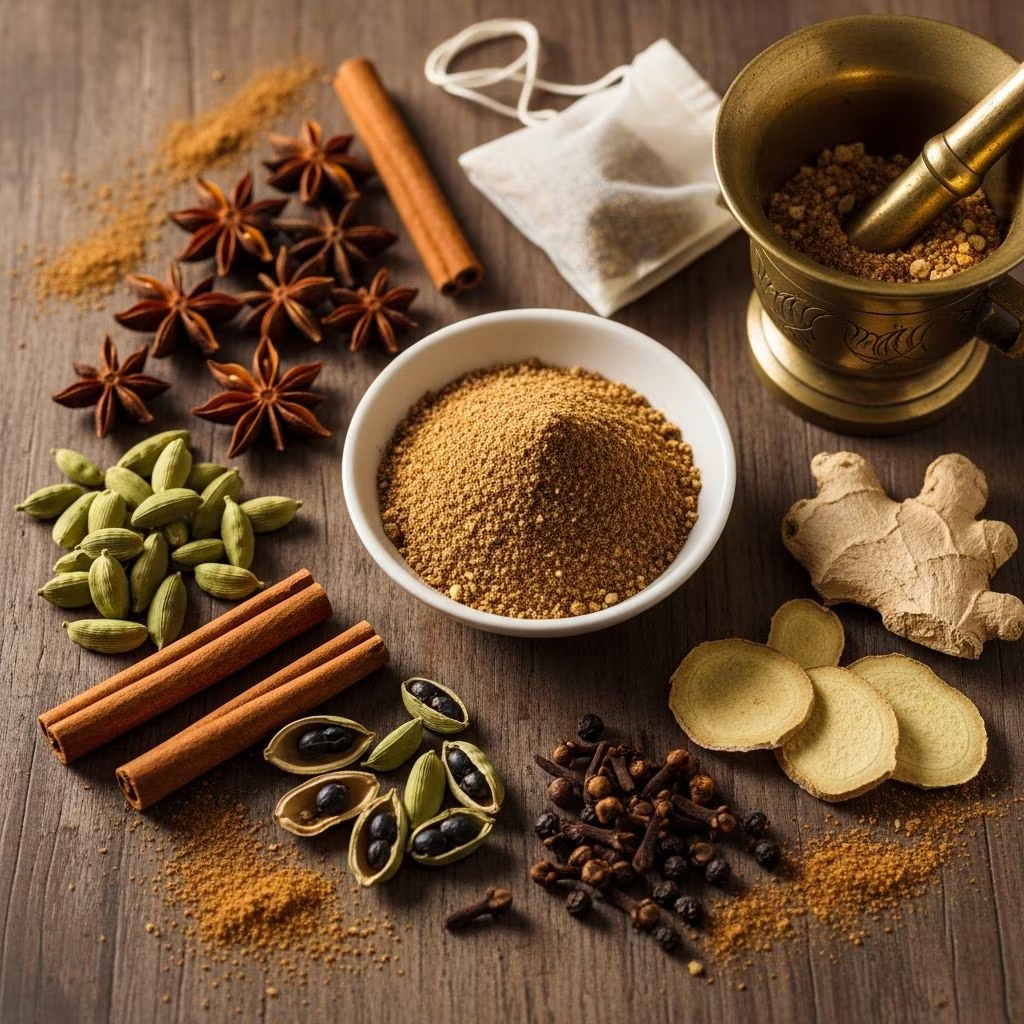
The warming spices transform chai from ordinary tea into a distinctive beverage. The most impactful spices include:
- Ground ginger — provides warmth and digestive benefits
- Ground cinnamon — contributes sweetness and earthiness
- Cardamom pods — delivers a complex, slightly floral note
- Ground cloves — adds depth and subtle warmth
- Allspice — rounds out the blend with warm undertones
- Black peppercorns — introduces gentle heat and complexity
- Ground nutmeg — provides additional warmth and subtle sweetness
These spices work synergistically, with each one playing a specific role in developing the overall flavor profile. Ginger and cardamom tend to be the dominant notes, while cloves and black pepper provide supporting complexity.
Creaminess and Sweetness Enhancers
Many chai blends include ingredients that add creaminess and sweetness. Instant nonfat dry milk powder and powdered nondairy creamer are popular additions that create a more decadent texture when mixed with liquid. Granulated sugar or powdered sugar can be incorporated directly into the dry blend, though many prefer adding sweetener when preparing individual servings to maintain better control over final sweetness levels.
Two Approaches to Chai Mix Preparation
The method you choose for preparing chai mix depends on your preference for shelf stability, storage duration, and intended use.
The Powdered Blend Method
This approach creates an instant chai mix that requires minimal preparation when you’re ready to enjoy a cup. To create a powdered blend, combine all dry ingredients—including tea, spices, milk powder, and sugar—in a blender or food processor. Process the mixture until it reaches a fine powder consistency, ensuring that all ingredients are uniformly distributed.
This method works best when you use ground spices rather than whole spices, as grinding everything together creates a homogeneous powder. The resulting mix stores well in airtight containers and creates an instant beverage when you combine approximately two tablespoons with hot milk or water.
The Whole Spice Blend Method
This alternative approach uses whole spices that are partially crushed before combining with loose-leaf tea. Begin by gathering your whole spices—such as cinnamon sticks, cardamom pods, whole cloves, and black peppercorns—along with your loose-leaf black tea.
Using a mortar and pestle, gently crush each whole spice individually to break them into smaller pieces and release their aromatic oils. This step is crucial, as it activates the essential oils that provide chai’s distinctive flavor. After crushing, combine the spices with ground ginger and black tea, mixing thoroughly to create an evenly distributed blend.
This method produces approximately one-quarter cup of mix and stores beautifully in a mason jar or similar airtight container, making it ideal for gift-giving or longer-term storage. The resulting blend maintains superior flavor complexity because the spices haven’t been fully ground into powder.
Ingredient Proportions and Customization Guidelines
| Method | Tea Base | Ginger | Cinnamon | Cardamom | Cloves |
|---|---|---|---|---|---|
| Powdered Mix | 1.5 cups instant tea | 2 tsp ground | 2.25 tsp ground | 1.125 tsp ground | 1.125 tsp ground |
| Whole Spice Blend | 2 tbsp loose-leaf | 0.25 tsp ground | 2 sticks (broken) | 1 tsp pods | 0.5 tsp whole |
The proportions listed above serve as guidelines rather than rigid rules. Personal preference should always guide your adjustments. If you prefer a more pronounced ginger flavor, increase the ginger by one-quarter to one-third. For those who find cardamom overwhelming, reduce it by half. The beauty of making chai at home lies in creating a blend perfectly suited to your palate.
Preparing and Brewing Your Homemade Chai
Once you’ve created your chai mix, proper brewing technique ensures you extract maximum flavor while avoiding bitterness or harsh notes.
Basic Brewing Process
To prepare a single serving using whole-spice chai mix, transfer your blend to a medium saucepan along with two cups of water. Bring the mixture to a boil, then reduce heat and simmer for approximately ten minutes, allowing the spices and tea to fully infuse. Next, add two cups of milk or cream—dairy or nondairy options work equally well—along with one tablespoon of your preferred sweetener, whether sugar, honey, or maple syrup.
Bring the mixture back to a simmer and maintain this gentle heat for an additional five minutes. This approach creates a properly balanced chai with concentrated spice flavors and creamy texture.
Instant Mix Preparation
If you’ve created a powdered instant chai mix, preparation becomes significantly simpler. Simply stir two heaping tablespoons of your chai mix into a mug of hot milk or boiling water. This method produces immediate results perfect for busy mornings or sudden chai cravings.
Creating Chai Concentrate for Later Use
For those who enjoy chai multiple times weekly, preparing a concentrate offers efficiency without sacrificing quality. Heat two cups of water in a saucepan and add two teaspoons of your chai spice mix along with one inch of grated fresh ginger. Bring to a boil, then add one and one-half tablespoons of loose-leaf tea and sugar if desired. Boil for one minute, then remove from heat and allow the mixture to steep for several minutes.
Strain the concentrate, cool it to room temperature, and store in an airtight jar in the refrigerator for up to seven days. You can also freeze the concentrate into ice cubes for even longer storage. When ready to enjoy, simply combine concentrate with heated milk and additional water as desired.
Storage Tips and Shelf Life Considerations
Proper storage ensures your homemade chai mix maintains optimal flavor and quality over time. Keep dry chai blends in airtight glass jars, preferably in a cool, dark location away from direct sunlight and heat sources. Powdered blends incorporating milk powder typically remain fresh for several months, while whole-spice blends maintain their potency even longer due to the lower surface area exposed to oxidation.
If you’ve created a chai blend specifically intended as a gift, consider that ground ginger works better than fresh ginger for shelf stability. Ground ginger won’t develop mold or spoilage issues during storage and travel.
Creative Applications Beyond the Traditional Cup
While enjoying chai as a warm beverage remains the classic preparation method, homemade chai mix opens possibilities for culinary creativity. Iced chai lattes provide refreshing alternatives during warmer months—simply prepare your chai using the standard method, chill it thoroughly, and serve over ice. Some enthusiasts incorporate chai flavoring into smoothies, oatmeal, or yogurt parfaits for unexpected flavor dimensions.
Chai-spiced baked goods represent another exciting avenue. Incorporating one to two teaspoons of your chai mix into cookie doughs, muffin batters, or cake frostings creates sophisticated flavor profiles that impress guests and elevate ordinary desserts.
Frequently Asked Questions About Homemade Chai Mix
Can I substitute ingredients if I don’t have everything on hand?
Absolutely. Chai is wonderfully forgiving. If you lack cardamom, increase cinnamon slightly. Without cloves, increase the proportion of allspice. Fresh ginger can replace ground ginger, though ground ginger stores longer if you’re planning to keep your blend for extended periods.
Should I use whole spices or pre-ground versions?
Whole spices generally offer superior flavor longevity and complexity, though they require crushing before use. Ground spices provide convenience and create a more uniform powder blend. Choose based on your priorities and available equipment.
How much chai mix should I use per serving?
For powdered instant blends, two heaping tablespoons per mug works well. For whole-spice blends prepared by simmering, use approximately one serving of mix (roughly one-quarter cup) for two to three cups of finished chai.
What’s the best way to gift homemade chai mix?
Whole-spice blends in decorative mason jars make beautiful, thoughtful gifts. Include preparation instructions and ingredient lists. Consider adding festive tags or labels that specify brewing methods and shelf life information.
Conclusion
Creating homemade chai tea mix transforms a simple beverage into a personalized wellness ritual. The process requires minimal equipment, readily available ingredients, and just a few minutes of preparation time. Whether you prefer the instant convenience of powdered blends or the superior flavor of whole-spice combinations, homemade chai offers superior quality and customization compared to commercial alternatives. Experiment with proportions, explore ingredient variations, and discover the chai blend that becomes your signature comfort beverage.
References
- The Best Homemade Chai Tea Mix — Land of 10,000 Recipes. Accessed 2026-04-09. https://landof10000recipes.com/homemade-chai-tea/
- Easy Homemade Chai Tea Mix — The House & Homestead. Accessed 2026-04-09. https://thehouseandhomestead.com/easy-homemade-chai-tea-mix/
- How to Make Chai Tea Latte Mix — YouTube. Accessed 2026-04-09. https://www.youtube.com/watch?v=sVpaBMfuCyI
- Homemade Chai Spice Blend for Tea — Dash of Jazz. Accessed 2026-04-09. https://www.dashofjazz.com/homemade-chai-spice-blend-for-tea/
- Indian Chai Spice Mix and Chai Concentrate — Vegan Richa. Accessed 2026-04-09. https://www.veganricha.com/chai-spice-mix-and-chai-concentrate/
- Chai Tea Mix (Homemade Food Gift with FREE Gift Tags!) — Five Heart Home. Accessed 2026-04-09. https://www.fivehearthome.com/chai-tea-mix-starbucks-copycat-homemade-food-gift/