Celebrating your cat’s birthday is a wonderful way to show affection and create memorable moments with your beloved pet. Rather than purchasing commercial treats that may contain unnecessary additives, many cat owners prefer preparing homemade birthday cakes specifically formulated for their feline friends. These personalized creations combine safe, nutritious ingredients that cats naturally enjoy while ensuring you maintain complete control over what your pet consumes.
Homemade cat birthday cakes offer several advantages over store-bought alternatives. You can customize recipes based on your cat’s preferences, dietary restrictions, and any food sensitivities they might have. Additionally, the process of creating a special treat demonstrates the bond you share with your pet, transforming a simple birthday celebration into a meaningful occasion.
Understanding Your Cat’s Nutritional Needs
Before attempting any cat birthday cake recipe, it’s essential to understand what makes a treat appropriate for feline consumption. Cats are obligate carnivores, meaning their bodies require nutrients primarily derived from animal proteins. Unlike dogs or humans, cats cannot efficiently synthesize certain essential nutrients from plant-based sources, which fundamentally shapes how we should approach pet treat preparation.
When creating birthday cakes for cats, prioritize protein-rich ingredients as your foundation. Common protein sources include wet cat food, canned tuna, cooked chicken, and meat-based baby food. These ingredients not only align with cats’ natural dietary requirements but also create appealing flavors that most felines find irresistible. The inclusion of these protein sources ensures your homemade cake remains nutritionally sound while satisfying your cat’s taste preferences.
Essential Ingredients for Cat-Safe Birthday Cakes
Creating a nutritious cat birthday cake requires careful ingredient selection. The following components form the foundation of most successful recipes:
- Protein Base: Canned wet cat food (pâté consistency works best), canned tuna in water with no added salt, or meat-based baby food provide the primary protein content
- Binding Agents: Eggs help hold the cake together; use the yolk for richness or whip the egg white separately for a fluffier texture
- Texture Modifiers: All-purpose flour, rice flour, or pumpkin puree add structure and digestibility
- Leavening Agents: Small quantities of baking soda can create a lighter crumb, though this remains optional
- Flavor Enhancers: Powdered cat treats blended into fine consistency add familiar flavors cats love
Avoid any ingredients containing garlic, onions, chocolate, xylitol, excessive sodium, or artificial sweeteners, as these substances are toxic to cats. Additionally, maintain strict limitations on added fats and oils; use cooking spray rather than pouring oil directly into the mixture.
Three Distinct Recipe Approaches
The No-Bake Seafood Combination
For cat owners preferring quick preparation without oven time, a no-bake approach works exceptionally well. This method combines drained canned tuna with finely diced cooked chicken and smooth sweet potato puree. The mixture requires no cooking; simply combine ingredients thoroughly until they reach a consistent, moldable texture. If the combination appears too moist, gradually incorporate rice flour one teaspoon at a time until achieving the desired consistency.
This preparation method allows for creative shaping. Using small round cookie cutters or ramekins creates professional-looking cakes. The mixture firms up after refrigeration for approximately 30-40 minutes, making it easier to handle and decorate. Top with catnip, small pieces of cooked shrimp, or sardines for an elegant finishing touch.
The Baked Meat-Based Cake
Traditional baked cakes provide more substantial treats for cats who enjoy distinct cake texture. Begin by preheating your oven to 350 degrees Fahrenheit. Combine two eggs with boiled and finely chopped meat (chicken, beef, or turkey), grated carrot, and all-purpose flour mixed with baking soda. The carrot adds subtle sweetness that appeals to many cats while providing beneficial fiber.
Transfer the mixture into a small baking mold or ramekin and bake for 30-45 minutes until a toothpick inserted in the center emerges clean. This method produces a cake with a more traditional structure compared to no-bake versions. The baking process also ensures any bacteria from raw ingredients are eliminated, enhancing food safety for your pet.
The Baby Food Base Variation
Particularly appealing for cats with sensitive stomachs or finicky eaters, this variation uses meat-based baby food as its foundation. Combine one 3-ounce jar of meat baby food with one can of wet cat food (pâté style), one tablespoon of pumpkin puree, three tablespoons of flour, one-eighth teaspoon of baking soda, and one egg. For added lightness, whip the egg white separately using a milk frother or whisk before folding into the mixture.
Bake this combination at 350 degrees for 20-23 minutes. The pumpkin puree contributes fiber and mild flavor without overwhelming your cat’s palate. This recipe produces particularly fluffy results, especially when the egg white receives proper aeration before incorporating into the batter.
Frosting and Decoration Considerations
Unlike human birthday cakes featuring sugary frostings, cat birthday cakes require entirely different decoration approaches. The primary decoration options include:
- Mashed Potato Frosting: Plain instant mashed potatoes (prepared without salt or seasonings) create a smooth, spreadable frosting that many cats find palatable. The mild flavor won’t overwhelm your cat’s taste preferences
- Sweet Potato Puree: An alternative frosting option offering slightly more nutrition and natural sweetness
- Pumpkin Puree: Another gentle frosting alternative that supports digestive health
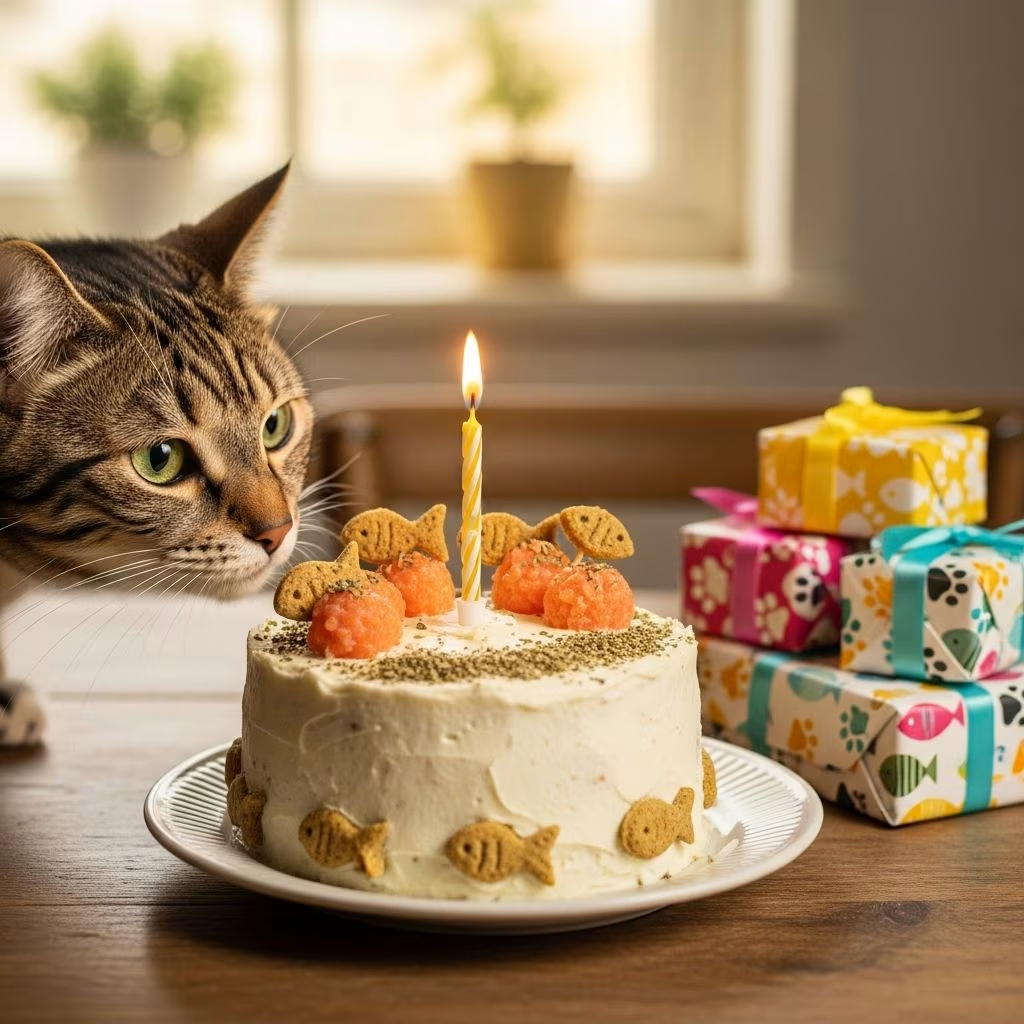
Decoration elements should remain entirely cat-friendly. Scatter dried catnip around the cake’s exterior as “sprinkles.” Add small garnishes such as cooked shrimp pieces, tiny sardines, or crunched cat treats. Avoid any decorative elements designed for human consumption, including candles (unless you supervise closely and remove them before your cat approaches the cake).
Step-by-Step Preparation Process
Successful homemade cat birthday cake creation follows a consistent methodology. Begin by gathering and preparing all ingredients before mixing. Combine your chosen protein base with other dry ingredients, ensuring even distribution throughout the mixture. If using eggs, decide whether you prefer a denser cake (using whole eggs) or a fluffier version (whipping egg whites separately and folding them in).
Pour the mixture into your chosen mold and bake according to your selected recipe’s specifications. Proper cooling is essential—allow the cake to cool completely at room temperature before refrigerating for at least 30-40 minutes. This cooling period helps the cake firm up and makes frosting application significantly easier.
Once cooled, carefully remove the cake from its mold. Prepare your frosting by mixing your chosen base (usually mashed potatoes) with a small amount of water to achieve spreadable consistency. Apply the frosting using either a piping bag with a large round tip for decorative presentations or simple dollops for more casual arrangements. Immediately add your chosen garnishes while the frosting remains slightly moist, as this helps decorations adhere.
Storage and Serving Guidelines
Homemade cat birthday cakes lack the preservatives found in commercial products, requiring careful storage practices. Store finished cakes in airtight containers within your refrigerator for up to three days. For longer storage, individual portions can be frozen for up to one month; thaw in the refrigerator before serving.
Portion control remains essential when serving your cat birthday cake. These treats, while nutritious, should supplement rather than replace your cat’s regular balanced diet. Offer small pieces—approximately the size of a tablespoon—as an occasional treat during celebrations. If your cat experiences digestive sensitivities to new foods, introduce tiny portions initially to ensure tolerance.
Frequently Asked Questions
Can I use regular human cake ingredients for my cat’s birthday cake?
No. Human-formulated cakes contain sugar, dairy, chocolate, and other ingredients potentially harmful to cats. Always prepare cakes specifically using cat-safe ingredients tailored to feline nutritional requirements.
What if my cat has food allergies or sensitivities?
Consult your veterinarian before preparing birthday cakes for cats with known food restrictions. Your veterinarian can recommend protein sources and ingredients compatible with your cat’s specific dietary needs.
How much birthday cake should my cat eat?
Treats should comprise no more than 10% of your cat’s daily caloric intake. Offer small portions—typically one to two tablespoons—as an occasional celebration treat rather than a regular food item.
Can I prepare the cake in advance?
Yes, but store it properly. Refrigerate finished cakes in airtight containers for up to three days, or freeze individual portions for up to one month. Always thaw frozen portions in the refrigerator before serving.
What decoration options are truly safe for cats?
Stick with cat-approved garnishes: dried catnip, cooked shrimp pieces, sardines, or small amounts of crunched commercial cat treats. Avoid candles near cats, and never use artificial decorations or human-food-based toppings.
Customization for Individual Preferences
Every cat possesses unique flavor preferences and dietary needs. Experiment with different protein combinations to discover your cat’s favorite flavors. Some cats prefer tuna-based formulations, while others favor chicken or beef. Similarly, some felines enjoy the texture addition of grated carrot, while others prefer smoother mixtures.
Keep detailed notes regarding which ingredient combinations your cat enjoyed most. This information proves valuable for future birthday celebrations and helps you refine recipes based on observed preferences. Pay attention to any digestive reactions following new foods, as individual cats tolerate different ingredients with varying success.
Remember that your cat’s birthday celebration’s true value lies in the time and attention you dedicate to making them feel special, not necessarily in elaborate cake designs or complex recipes. Simple, straightforward preparations using your cat’s favorite ingredients create meaningful moments while maintaining appropriate nutrition standards.
References
- Cat Friendly Birthday Cake Recipe — Battersea Dogs & Cats Home. 2024. https://www.battersea.org.uk/about-us/news/cat-birthday-cake-recipe
- Feline Nutrition and Dietary Requirements — American Animal Hospital Association (AAHA). 2023. https://www.aaha.org/
- Safe Foods and Toxic Substances for Cats — American Society for the Prevention of Cruelty to Animals (ASPCA). 2024. https://www.aspca.org/pet-care/cat-care/common-household-items-poisonous-cats
- Homemade Pet Food Safety Guidelines — U.S. Food and Drug Administration (FDA). 2023. https://www.fda.gov/