Creating barbecue sauce from scratch transforms your grilling experience, elevating everyday meats into restaurant-quality dishes with sophisticated depth and complexity. When bourbon becomes the foundation of your sauce, you unlock a dimension of flavor that cannot be replicated by store-bought alternatives. This guide explores the methodology behind constructing a bourbon-infused barbecue sauce that delivers both sweetness and smokiness while maintaining perfect consistency for various culinary applications.
Understanding the Flavor Architecture of Bourbon-Based Sauces
The construction of an exceptional barbecue sauce relies on balancing multiple flavor dimensions simultaneously. A bourbon-forward sauce typically comprises four fundamental taste categories that work in concert: sweetness from sugars and molasses, acidity from vinegar components, umami depth from tomato products and Worcestershire sauce, and the distinctive character contributed by bourbon itself.
The bourbon serves multiple functions beyond mere flavoring. The alcohol content helps dissolve fat-soluble compounds while creating a subtle smokiness that complements grilled meats. The vanilla and caramel notes naturally present in aged bourbon add complexity without requiring additional spices or flavorings. When combined with complementary ingredients, bourbon acts as a bridge ingredient that allows other flavors to shine while adding its own distinctive character.
Essential Ingredients and Their Contributions
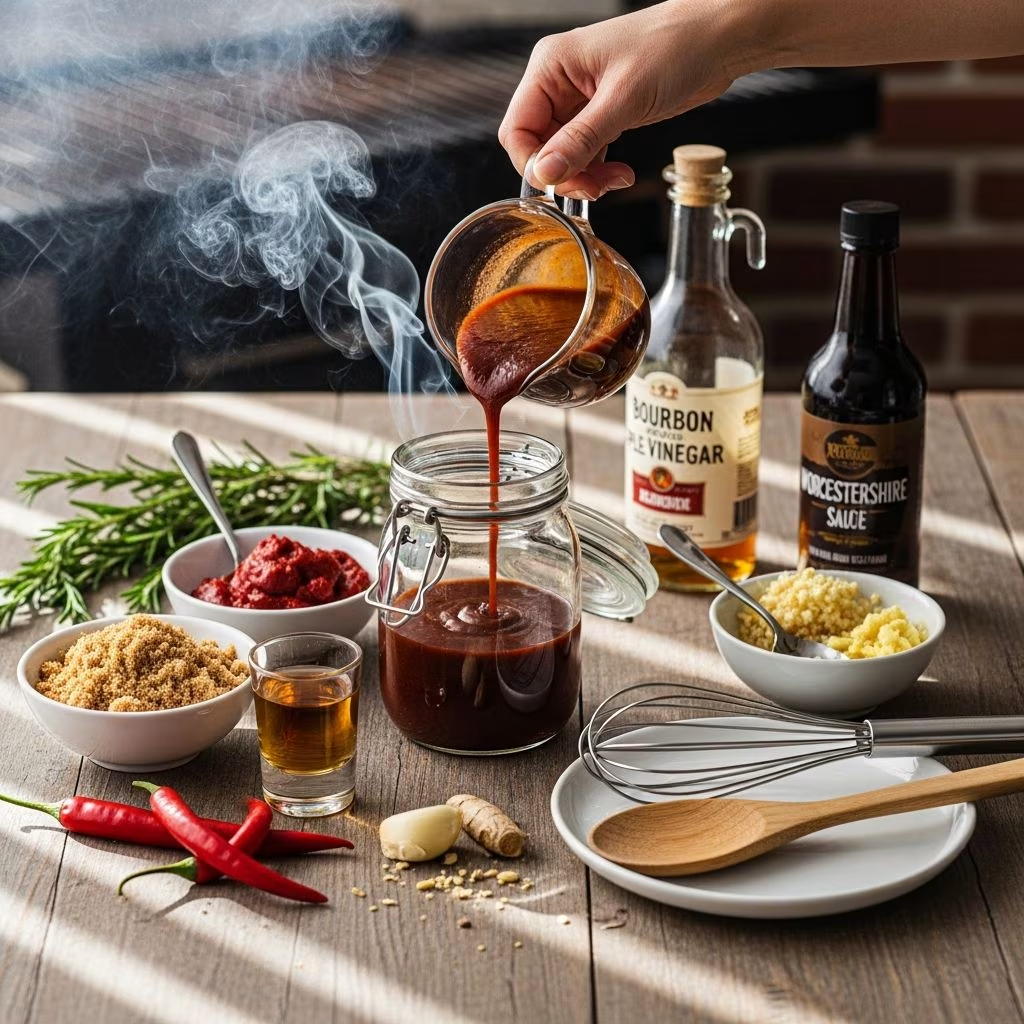
Understanding what each ingredient brings to your sauce allows for intelligent substitutions and customizations. Here are the core components found in most bourbon barbecue sauce formulations:
- Bourbon whiskey – The signature ingredient ranging from ¼ cup to 1 cup depending on recipe style and intensity preference. Quality bourbon adds vanilla, caramel, and subtle oak notes.
- Tomato base – Either ketchup or tomato paste serves as the foundation, providing both sweetness and acidity along with natural umami compounds.
- Sweetening agents – Combinations of brown sugar, molasses, and honey create layered sweetness with varying depths. Dark brown sugar contributes richer molasses character than light varieties.
- Acidifying components – Apple cider vinegar provides brightness and helps preserve the sauce while preventing excessive sweetness.
- Umami builders – Worcestershire sauce, soy sauce, and mustard powder add savory depth that anchors the overall flavor profile.
- Aromatic elements – Garlic powder, onion powder, and fresh onion create layered aromatic complexity without requiring fresh ingredient prep.
- Smoke and spice – Liquid smoke, hot sauce, cayenne pepper, and black pepper add warmth and smoky character that complements grilled proteins.
The Fundamental Technique: Building Your Sauce Step by Step
Most bourbon barbecue sauce recipes follow a consistent methodology that ensures proper flavor development and optimal consistency. Begin by combining all ingredients in a medium saucepan over medium heat. Some recipes suggest starting with bourbon and tomato paste, whisking these together over gentle heat to create a smooth base before introducing remaining ingredients. This approach prevents lumps and ensures the tomato paste fully incorporates.
Once all ingredients are combined, increase heat to bring the mixture to a gentle boil while stirring frequently. This initial heating phase allows flavors to begin melding and alcohol to partially cook off if desired. The vigorous movement from boiling also prevents sugar from caramelizing on the pan bottom, which would create burnt flavors and uneven cooking.
After reaching a boil, reduce heat to create a gentle simmer. This lower temperature maintains the sauce’s structural integrity while allowing extended cooking time to concentrate flavors and reduce excess liquid. The simmer should produce occasional lazy bubbles rather than aggressive, rolling boiling. Maintain this gentle simmer for 15 to 25 minutes, stirring occasionally, until the sauce reaches desired thickness.
The sauce is finished when it coats the back of a spoon without immediately sliding off and when the volume has reduced by roughly 20-30%. Some recipes yield thicker sauces suitable for glazing, while others remain pourable for use as dipping condiments. Your preference and intended application should guide the final cooking time.
Flavor Variations and Customization Strategies
The beauty of homemade sauce creation lies in the ability to adjust components based on personal preference. Consider these variation approaches:
- Heat level adjustments – Increase cayenne pepper, red pepper flakes, or hot sauce for spicier profiles. Reduce or eliminate these components for milder versions suitable for sensitive palates.
- Sweetness modulation – Add more molasses and brown sugar for dessert-like sweetness, or increase vinegar and mustard powder for tang-forward profiles.
- Smokiness enhancement – Incorporate liquid smoke in varying quantities, from ½ teaspoon for subtle background notes to 2 tablespoons for pronounced campfire character.
- Spice complexity – Experiment with cumin, oregano, thyme, and ground cloves for sophisticated layers beyond basic garlic and onion.
- Texture adjustments – Cook longer for thick glazing consistency, or add water by the tablespoon to create pourable dipping sauces.
Recipe Comparison Table
| Component | Light Version | Traditional Version | Intense Version |
|---|---|---|---|
| Bourbon | ¼ cup | ½-¾ cup | 1 cup |
| Tomato Base | ½ cup ketchup | 6 oz tomato paste or 1½ cups ketchup | 6 oz tomato paste + ½ cup ketchup |
| Sweetener | ¼ cup brown sugar | ½-¾ cup brown sugar | ½ cup brown sugar + ¼ cup molasses |
| Acid | 2 tbsp apple cider vinegar | ¼-⅓ cup apple cider vinegar | ½ cup apple cider vinegar + 1 tbsp balsamic |
| Heat Level | No added spice | ½-1 tsp hot sauce, pinch cayenne | 2 tsp hot sauce, ½ tsp cayenne |
| Simmer Time | 10-12 minutes | 15-20 minutes | 20-25 minutes |
Storage and Shelf Life Considerations
Properly made bourbon barbecue sauce stores well when cooled to room temperature before transferring to sterilized containers. The sauce will keep in the refrigerator for up to four weeks due to the acidic vinegar content and alcohol preservation properties. For extended storage, freeze portions in ice cube trays for convenient single-serving measurements, which can be thawed as needed for individual grilling sessions.
The acidic nature of homemade sauce provides natural preservation, but proper storage ensures quality maintenance. Keep refrigerated sauce in airtight containers, and always use clean utensils to prevent contamination. If any mold or off-odors develop, discard the entire batch immediately.
Practical Applications for Grilled and Smoked Meats
Bourbon barbecue sauce’s versatility extends across numerous proteins and cooking methods. Apply sauce during the final 5-10 minutes of grilling to prevent burning while allowing flavors to caramelize. For slow-smoked meats, use sauce as a finishing glaze in the final 30 minutes of cooking, allowing layers to build without excessive charring.
Beyond grilling applications, this sauce excels as a marinade component for pulled pork, brisket, and chicken. Mix equal parts sauce with additional bourbon or apple juice to thin the consistency for marinating purposes. The extended contact time allows bourbon’s vanilla and caramel notes to penetrate meat fibers while vinegar components enhance tenderness.
Frequently Asked Questions
Can I use cheap bourbon instead of premium varieties?
Yes, budget-friendly bourbon works effectively in sauce applications. While premium bourbon contains more complex flavor notes, the extended cooking and combination with other ingredients means price differences become less noticeable in the final product. The bourbon’s alcohol content and basic flavor characteristics matter more than premium designation.
What should I do if my sauce becomes too thick?
Thin thick sauce by whisking in water one tablespoon at a time until reaching desired consistency. Apple juice or additional bourbon can also thin the sauce while maintaining flavor integrity. Add liquids gradually to avoid over-thinning.
Is it necessary to use Worcestershire sauce?
Worcestershire sauce provides umami depth and saltiness, but you can substitute soy sauce, tamari, or fish sauce in equal quantities. Alternatively, increase mustard powder and salt if omitting Worcestershire entirely, though the final flavor will differ slightly.
How does homemade sauce compare to store-bought varieties?
Homemade sauce offers superior flavor complexity, cost efficiency for frequent grillers, and complete control over ingredients and sweetness levels. Store-bought sauces contain preservatives and often emphasize sugar content over balanced flavor, making homemade versions more suitable for sophisticated palates.
Can I make this sauce without alcohol?
While bourbon imparts distinctive character, you can substitute bourbon with apple juice, maple syrup, or additional vinegar for acidity and depth. The sauce will taste different but still deliver barbecue flavor. Add liquid smoke to compensate for bourbon’s smoky notes.
Ingredient Quality and Selection Guide
The quality of your finished sauce directly correlates with ingredient selection. Choose tomato paste without added sugars or seasonings to maintain flavor control. Select brown sugar by preference—dark brown sugar contributes richer molasses character while light brown sugar allows other flavors to dominate more clearly.
For bourbon selection, prioritize brands known for balanced flavor profiles rather than high proof or specialty releases. Tennessee whiskey and Kentucky bourbon both work excellently, with Tennessee whiskey offering slightly smoother character while bourbon provides more vanilla and oak.
Apple cider vinegar’s acidity level affects final brightness. Raw, unfiltered versions contain mother cultures that add subtle complexity, though filtered versions deliver cleaner acidity. Either option works successfully in barbecue sauce applications.
Troubleshooting Common Issues
If your sauce tastes primarily of alcohol after cooking, extend the simmer time to allow more alcohol to cook off. If sweetness overwhelms other flavors, increase vinegar or add mustard powder to create balance. Should the sauce separate or appear oily, whisk vigorously—the emulsification should resolve separation issues. If separation persists, reheat gently while whisking continuously.
Burnt sugar at the pan bottom indicates insufficient stirring during the initial heating phase. To prevent this, use a wide saucepan that allows even heat distribution and stir constantly during the first few minutes of cooking. Burnt flavors ruin the entire batch and cannot be salvaged.
Conclusion: Mastering the Craft
Creating bourbon barbecue sauce at home represents an accessible yet rewarding culinary endeavor that elevates every grilling experience. By understanding flavor architecture, mastering basic techniques, and confidently adjusting components to match personal preferences, you develop the foundation for consistently excellent results. The satisfaction of applying house-made sauce to perfectly grilled proteins justifies the minimal effort required, transforming ordinary backyard cooking into memorable dining experiences.
References
- Bourbon Barbecue Sauce — Fork in the Kitchen. Accessed April 2026. https://www.forkinthekitchen.com/bourbon-barbecue-sauce/
- Easy Homemade Bourbon BBQ Sauce — Cupcakes & Kale Chips. Accessed April 2026. https://cupcakesandkalechips.com/bourbon-bbq-sauce-recipe/
- Bourbon BBQ Sauce (easy recipe!) — The Endless Meal. Accessed April 2026. https://www.theendlessmeal.com/bourbon-bbq-sauce/
- Mary’s Sweet & Spicy Bourbon BBQ Sauce Recipe — Mary DiSomma. Accessed April 2026. https://marydisomma.com/blogs/recipes/marys-sweet-and-spicy-bourbon-barbecue-sauce
- The best bourbon BBQ sauce recipe — Pook’s Pantry. Accessed April 2026. https://www.pookspantry.com/the-best-bourbon-bbq-sauce-recipe/