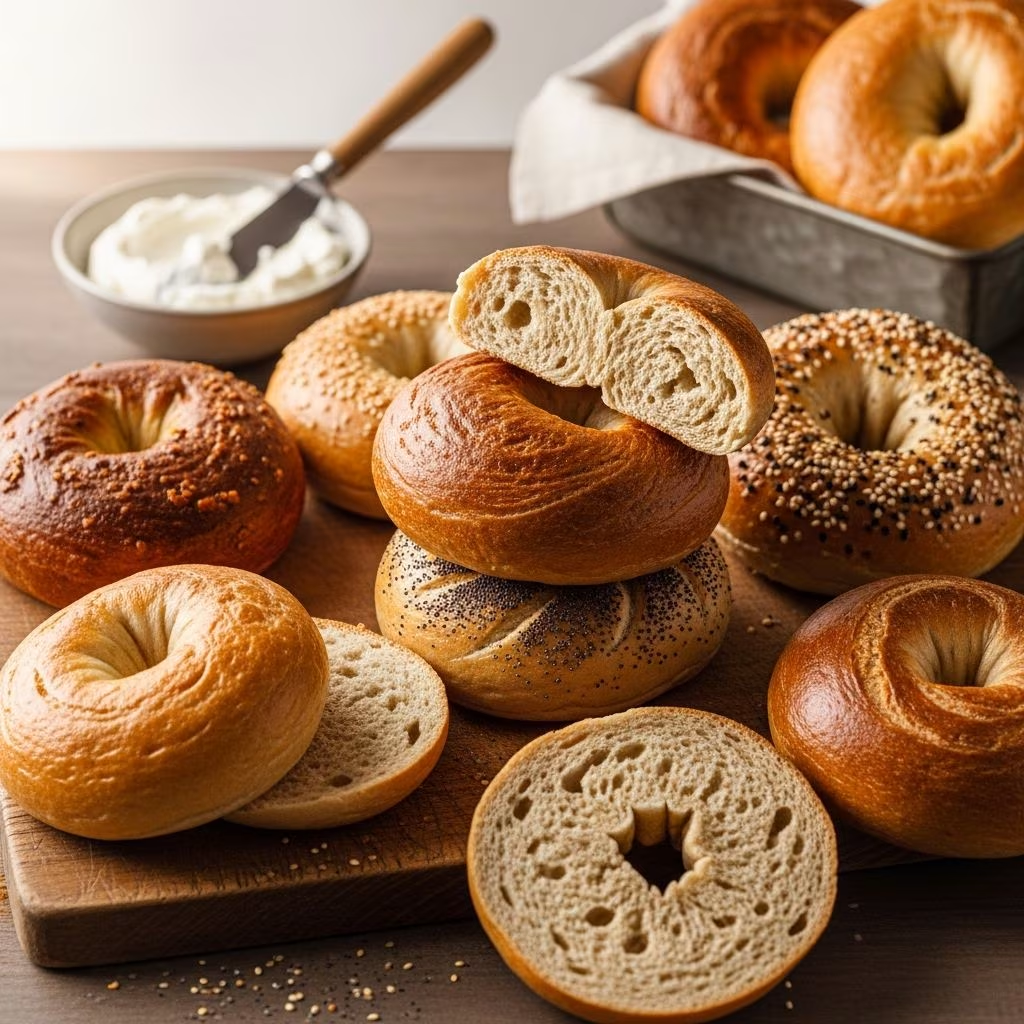
Creating bagels from scratch transforms basic pantry staples into bakery-worthy treats with a signature chew and shine. These dense, ring-shaped breads stand out due to their unique preparation process involving dough development, a boiling bath, and high-heat baking. Home bakers can achieve professional results by focusing on high-protein flour, proper hydration, and precise timing.
Why Make Bagels at Home
Store-bought versions often lack the authentic texture and flavor of true bagels, which rely on a brief boil to form a glossy crust and chewy crumb. Homemade versions allow customization with toppings and fillings, ensuring freshness without preservatives. The process, though hands-on, yields about 8 to 12 bagels and takes around 2 to 3 hours, making it a rewarding weekend activity.
Essential Ingredients for Success
The foundation of great bagels starts with quality components. Bread flour provides the high gluten content needed for elasticity and chewiness, outperforming all-purpose flour for structure. Yeast activates the rise, while a touch of sweetener feeds it and adds subtle flavor.
- Bread flour (500-540g): Delivers protein levels around 12-14% for tough dough that holds shape.
- Warm water (1.25-1.5 cups): Hydrates without shocking yeast; aim for 100-110°F.
- Active dry or instant yeast (2.25 tsp): Powers fermentation; instant skips proofing.
- Salt (2 tsp, sea or kosher): Enhances taste and controls gluten development.
- Sweetener (1 tbsp maple syrup, sugar, or malt): Boosts browning and yeast activity.
For the boiling bath, use water with baking soda, honey, or barley malt syrup (1-2 tbsp) to mimic lye’s effect, promoting shine and chew. Toppings like sesame, poppy, or everything seasoning elevate the finish.
Step-by-Step Dough Preparation
Begin by proofing yeast: dissolve it in warm water with sweetener and let it foam for 5-10 minutes, confirming viability. In a stand mixer with dough hook, combine flour and salt, then add the yeast mixture. Knead on medium-low for 8-10 minutes until smooth and elastic. The dough should be stiff and slightly tacky, pulling away from bowl sides.
If mixing by hand, incorporate ingredients in a large bowl, then knead on a floured surface for 10-12 minutes. Avoid over-hydrating; add water sparingly (1 tbsp at a time) if needed. Form into a ball, place in an oiled bowl, cover with plastic, and let rise in a warm spot for 1 hour or until doubled.
| Step | Action | Time |
|---|---|---|
| 1. Proof Yeast | Mix water, sweetener, yeast | 5-10 min |
| 2. Mix Dough | Combine flour, salt, yeast mix | 2 min |
| 3. Knead | Hook or hand knead | 8-10 min |
| 4. First Rise | Cover and rest | 60 min |
Mastering the Shaping Technique
Punch down risen dough and divide into 8-12 equal portions (80-100g each for standard size). Roll each into tight balls, cover, and rest 10-20 minutes to relax gluten. To form rings, poke a hole with a floured finger and gently stretch to 2-3 inches wide, ensuring even thickness. The center hole may shrink during rising, so make it larger initially.
Place shaped bagels on parchment-lined sheets, cover loosely, and proof 20-30 minutes until puffy. Test readiness by pressing gently; dough should spring back slowly.
The Crucial Boiling Step
Boiling sets bagels apart by gelatinizing starches on the surface, creating chew and gloss. Fill a wide pot with 4-6 inches water, add 1 tsp baking soda and 1 tbsp sweetener, and bring to a rolling boil.
Preheat oven to 425-450°F with racks in upper and lower positions. Line sheets with parchment sprinkled with cornmeal or toppings for bottom crunch. Boil 1-2 bagels at a time for 60 seconds per side, using a slotted spoon to flip and remove. Drain briefly on towels, then top immediately.
Boil in batches to maintain temperature; overcrowding lowers it, affecting texture. This 1-2 minute dip is non-negotiable for authenticity.
Baking to Golden Perfection
Arrange boiled bagels on prepared sheets, 2 inches apart. Bake 20-25 minutes, rotating halfway, until deeply golden and hollow-sounding when tapped. For extra shine, brush with egg wash pre-bake. Cool on racks 10 minutes before slicing; they firm up as they cool.
Flavor Variations and Toppings
Plain bagels shine with cream cheese, but experiment freely.
- Everything Bagel: Mix sesame, poppy, dried onion, garlic, salt.
- Cinnamon Raisin: Add raisins to dough, swirl cinnamon-sugar.
- Asiago or Cheddar: Press grated cheese post-boil.
- Blueberry or Chocolate Chip: Fold in during shaping for stuffed versions.
For savory twists, incorporate herbs, olives, or jalapeños into dough. Sweeteners like barley malt yield traditional New York maltiness.
Troubleshooting Common Issues
| Problem | Cause | Solution |
|---|---|---|
| Dense bagels | Under-kneaded dough | Knead longer or check gluten windowpane |
| Flat shape | Over-proofed | Shorten rise; boil sooner |
| Pale crust | Low boil temp or short bake | Increase soda; bake hotter |
| Hole closes | Insufficient stretching | Widen aggressively pre-boil |
Humidity affects hydration; drier climates may need extra water. Use a kitchen scale for precision.
Storage and Freezing Tips
Store cooled bagels in airtight bags at room temp for 2 days or fridge for 5. Refresh by slicing, toasting, or steaming 10 minutes. Freeze unsliced up to 3 months; thaw overnight and toast directly. Boiled, unbaked bagels freeze well for later baking.
Nutrition and Serving Ideas
One plain bagel (about 100g) offers roughly 250-300 calories, 50g carbs, 9g protein, driven by flour. Pair with smoked salmon, avocado, eggs, or nut butter for balanced meals.
Frequently Asked Questions
Can I use all-purpose flour?
Yes, but expect softer texture; bread flour is best for chew.
Do I need a stand mixer?
No, hand-kneading works but requires effort for stiff dough.
Why boil instead of just bake?
Boiling creates the chewy crust and prevents puffing like regular bread.
How do I make vegan bagels?
Use maple syrup and skip egg wash; all else is naturally vegan.
Can dough rise overnight?
Yes, retard in fridge after first rise for flavor depth.
Advanced Techniques for Pros
For Montreal-style, skip boiling and steam briefly. Cold fermentation (overnight fridge rise) enhances tang and chew. High-hydration doughs (60%+) yield open crumbs but demand skilled handling. Experiment with poolish preferment for complexity.
Scaling up? Double ingredients but boil in larger pot. Track variables like water temp and flour brand for consistency.
References
- Homemade Bagel Recipe — Love and Lemons. 2023. https://www.loveandlemons.com/bagel-recipe/
- New York Style Bagel Recipe — Urban Farm and Kitchen. 2023. https://urbanfarmandkitchen.com/new-york-style-bagel-recipe/
- Bagel Recipe | New York-Style Bagels Recipe — Sophisticated Gourmet. 2009-10-13. https://www.sophisticatedgourmet.com/2009/10/new-york-style-bagel-recipe/
- Homemade Bagels — The Table of Spice. 2023. https://thetableofspice.com/recipes/homemade-bagels/
- Homemade Bagels — Baran Bakery. 2023. https://baranbakery.com/homemade-bagels/