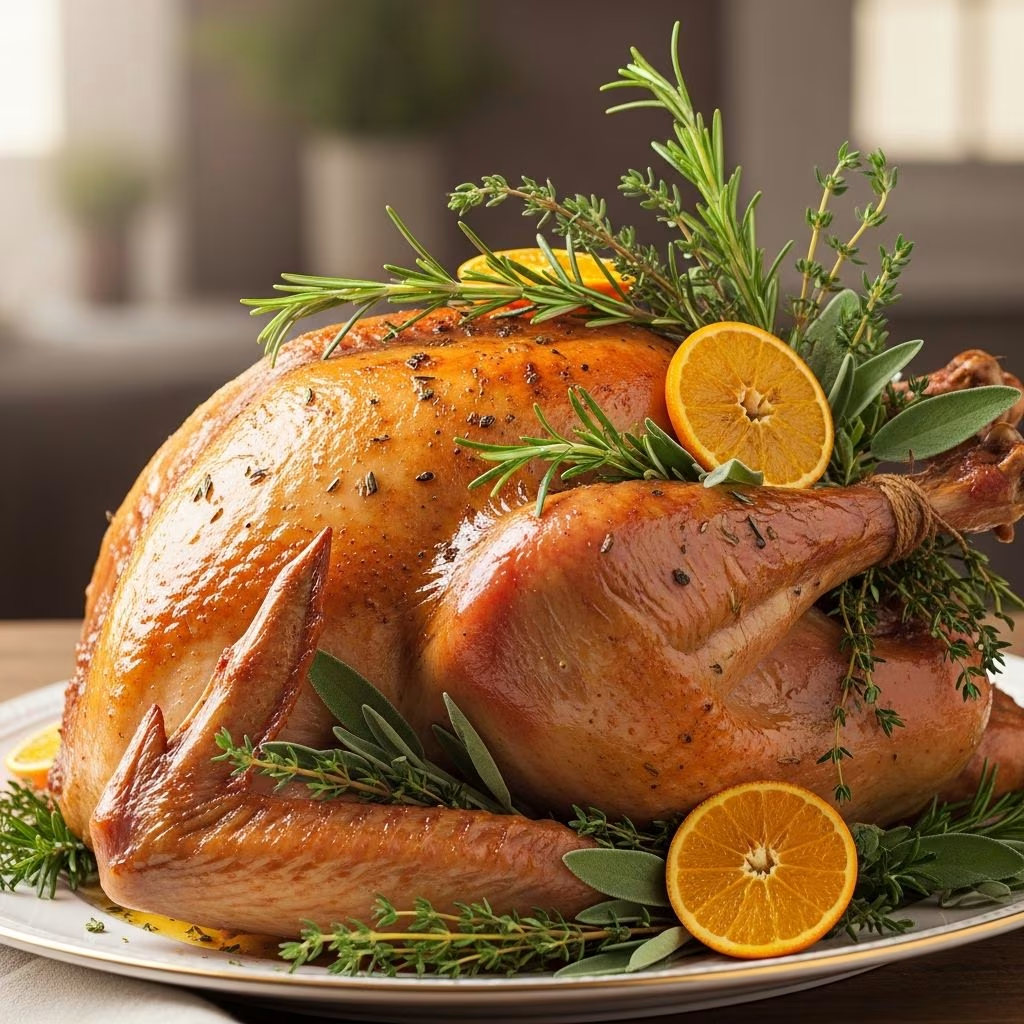
Roasting a turkey infused with aromatic herbs like rosemary transforms a standard holiday bird into a centerpiece of flavor and tenderness. This guide draws inspiration from time-tested techniques to deliver a bird with crispy skin, juicy meat, and layers of savory notes from fresh ingredients.
Why Choose Herb Roasting for Your Turkey
Herb roasting elevates the natural taste of turkey by embedding fresh rosemary, garlic, and complementary spices directly into the meat. Unlike basic roasting, this method uses compound butters or oil rubs that seep under the skin, ensuring even flavor distribution. The result is a turkey that stays moist during long cooking times, thanks to protective fat layers and strategic basting.
Health benefits include lean protein from the turkey, paired with antioxidants from herbs like rosemary, which contains compounds that may support digestion after heavy meals. For gatherings, this approach impresses with its golden presentation and robust aroma that fills the home.
Selecting the Perfect Turkey
Opt for a fresh or fully thawed turkey weighing 12 to 18 pounds to serve 8 to 12 people. Look for birds labeled ‘free-range’ or ‘organic’ for better texture and taste. Remove the neck, giblets, and any excess fat from the cavity upon purchase.
- Thaw in the refrigerator: Allow 24 hours per 4-5 pounds.
- Check the label for brining status—unbrined birds absorb seasonings better.
- Plan for 1 to 1.5 pounds per guest, accounting for bones.
Essential Ingredients for Flavorful Results
Gather high-quality staples to build depth. Focus on fresh herbs for potency over dried versions.
| Ingredient | Quantity | Purpose |
|---|---|---|
| Whole turkey | 12-18 lbs | Main protein base |
| Olive oil or unsalted butter | 3/4 cup | Binds seasonings, promotes crisp skin |
| Fresh rosemary, chopped | 2-3 tbsp | Signature earthy flavor |
| Garlic, minced | 3 tbsp | Savory depth |
| Lemon zest and quarters | 1-2 lemons | Bright acidity to balance richness |
| Onion, quartered | 1 large | Aromatic base for cavity |
| Fresh thyme or basil | 1-2 tbsp chopped | Complementary herbal notes |
| Salt and black pepper | To taste (2-3 tbsp salt) | Enhances all flavors |
Optional additions: Orange zest for citrus twist or Italian seasoning for Mediterranean flair.
Step-by-Step Preparation Guide
Prep time: 25-30 minutes. Start early to allow flavors to meld.
- Preheat and position: Set oven to 325°F (165°C) with rack in lowest position. Use a sturdy roasting pan with a rack.
- Clean the bird: Rinse inside and out under cold water, then pat completely dry with paper towels. Excess moisture prevents crisping.
- Make the rub: Combine olive oil or softened butter with minced garlic, chopped rosemary, thyme, salt, pepper, and lemon zest in a bowl. This creates a potent paste.
- Season inside: Stuff cavity loosely with onion quarters, lemon halves, and herb sprigs. Avoid overpacking to ensure air circulation.
- Loosen skin: Gently slide fingers under breast skin to create pockets. Spread half the rub underneath for direct meat infusion.
- Coat exterior: Rub remaining mixture over skin, massaging thoroughly. Tie legs with twine and tuck wings to prevent burning.
Mastering the Roasting Process
Cook time varies by size: about 13-15 minutes per pound. Total for 15 lb turkey: 3-4 hours.
- Place turkey breast-up on rack. Add 1/2 inch water or broth to pan bottom to prevent drippings from burning.
- Roast uncovered initially for skin browning. After 45 minutes at 450°F (optional high-heat start), reduce to 350°F.
- Baste every 30 minutes with pan juices using a bulb baster. This redistributes moisture.
- Monitor temperature: Insert thermometer into thickest thigh (not touching bone). Target 165°F for safety.
- Tent with foil if skin darkens too quickly, especially after 2 hours.
Rest the turkey under foil for 20-30 minutes post-roast. This allows juices to redistribute, yielding sliceable meat.
Variations to Suit Your Taste
Customize for dietary needs or preferences.
- Citrus boost: Incorporate orange quarters and zest into cavity for a sweet-tart profile.
- Compound butter: Blend butter with grated garlic, rosemary, and mustard; chill and insert under skin.
- Slow roast: At 300°F for bone-in breast, rub with olive oil, rosemary, lemon juice, and stock base for ultra-tender results.
- Spice it up: Add brown sugar and sea salt dry rub 24 hours ahead for caramelized crust.
Troubleshooting Common Issues
Even pros face challenges—here’s how to fix them.
| Problem | Solution |
|---|---|
| Dry meat | Baste frequently; don’t overcook past 165°F |
| Soggy skin | Pat dry pre-roast; use high initial heat |
| Uneven cooking | Rotate pan; tent legs if browning faster |
| Undercooked thighs | Foil breast early; check multiple spots |
Carving and Serving Suggestions
Carve at the table for drama or in kitchen for efficiency.
- Remove twine. Hold legs steady and slice through hip joint.
- Separate thighs and drumsticks; slice breast against grain into 1/4-inch pieces.
- Present on platter ringed with fresh herbs, roasted veggies, and citrus slices.
Pair with gravy from drippings: Skim fat, whisk in flour slurry, simmer with stock and herbs. Serve alongside mashed potatoes, green beans, and cranberry relish.
Nutrition and Storage Tips
A 3-oz serving offers ~25g protein, low fat if skin removed. Store leftovers in airtight containers up to 4 days; freeze for 3 months. Reheat gently in 300°F oven with broth to retain moisture.
Frequently Asked Questions
Can I roast without a rack?
Yes, but elevate with carrots and celery to lift bird and flavor drippings.
What’s the best thermometer type?
Instant-read digital for accuracy; probe for continuous monitoring.
Brine or no brine?
Optional—dry brine with salt and herbs overnight for similar juiciness.
How do I know if it’s done?
165°F in thigh, clear juices; legs wiggle easily.
Vegetarian alternative?
Use same rub on stuffed portobello mushrooms or tofu roast.
Advanced Techniques for Pros
For next-level results, spatchcock by removing backbone and flattening—cooks 30% faster with even browning. Or reverse sear: Low temp to 150°F, then broil for crisp skin.
Incorporate wine or stock in pan for deglazed gravy base. Experiment with smoked paprika for subtle smokiness.
References
- FoodSafety.gov Turkey Basics — U.S. Department of Agriculture. 2023-11-01. https://www.foodsafety.gov/food-safety-charts/cold-food-storage-charts
- USDA Roasting Your Turkey — U.S. Department of Agriculture. 2024-10-15. https://www.fsis.usda.gov/food-safety/safe-food-handling-and-preparation/poultry/roasting-turkey
- Rosemary Health Benefits — National Center for Complementary and Integrative Health. 2022-05-12. https://www.nccih.nih.gov/health/rosemary