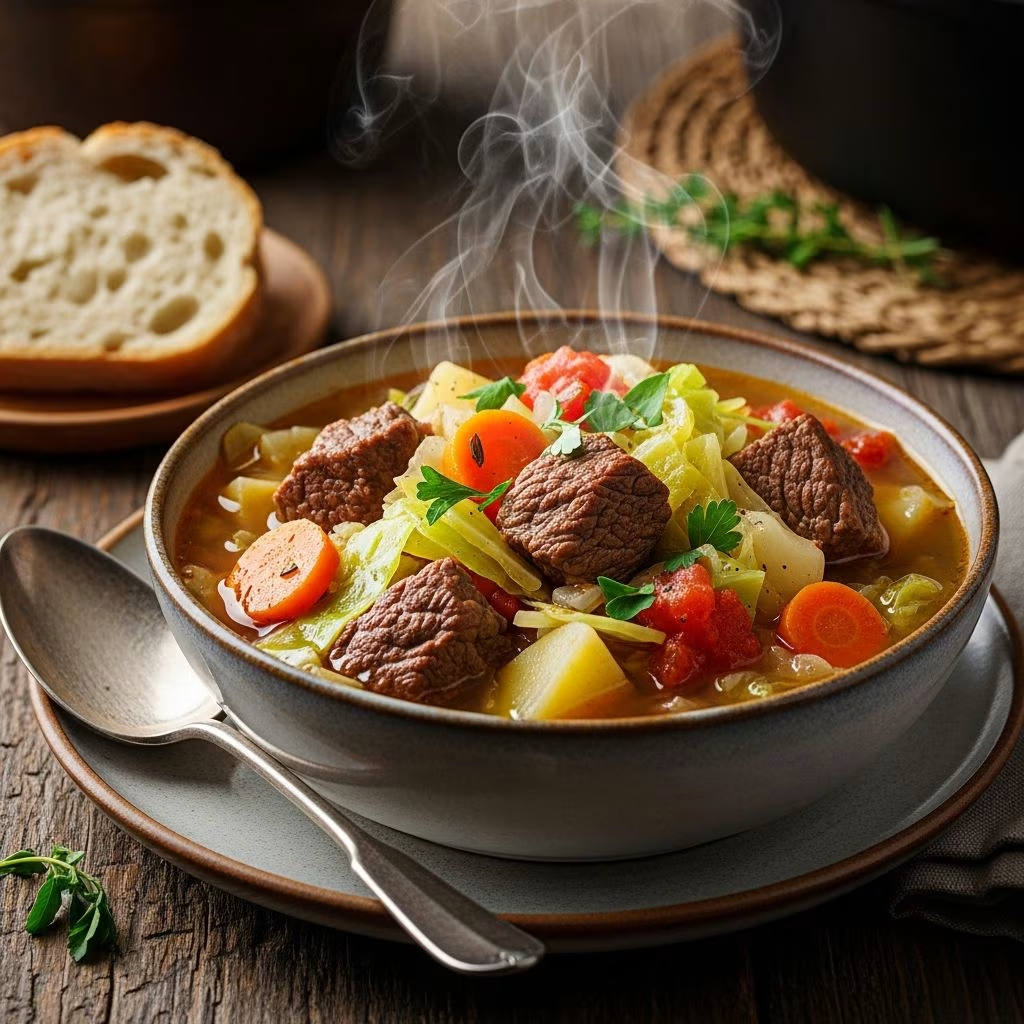
Beef and cabbage soup represents one of the most versatile and satisfying dishes in home cooking. This one-pot meal combines tender beef with nutrient-rich vegetables in a savory broth, creating a dish that works equally well for casual weeknight dinners or leisurely weekend gatherings. The beauty of this soup lies in its simplicity—minimal preparation, straightforward cooking techniques, and the flexibility to customize ingredients based on personal preference and seasonal availability.
Understanding the Foundation: Core Components of This Classic Soup
The fundamental appeal of beef and cabbage soup stems from its reliance on quality, wholesome ingredients that work harmoniously together. Each component plays a distinct role in building layers of flavor and creating the characteristic texture that makes this dish so comforting.
Selecting Premium Beef for Optimal Results
The choice of beef significantly influences the final outcome of your soup. Different cuts offer varying textures and cooking times, allowing you to tailor the recipe to your schedule and preferences. Chuck roast, brisket, and bottom round are excellent options that break down beautifully during extended simmering, becoming exceptionally tender and flavorful. For those seeking quicker preparation, rib eye steak can be cubed and softens within approximately thirty-five minutes of cooking time. Ground beef provides another convenient alternative, creating a more rustic texture while reducing overall cooking time to approximately thirty minutes.
When selecting beef, aim for pieces of similar size to ensure uniform cooking throughout the soup. Cut brisket and chuck roast into bite-sized cubes that will be easy to eat directly from the spoon, while ground beef varieties require only minimal preparation before browning.
The Cabbage Question: Choosing Your Primary Vegetable
Cabbage serves as the soup’s namesake and primary vegetable, contributing both nutritional value and distinctive texture. Green cabbage represents the ideal choice for traditional beef cabbage soup, offering a mild flavor and desirable firmness that softens gracefully during cooking without becoming mushy. When preparing cabbage, core the vegetable thoroughly and chop it into one-inch pieces to promote even cooking and allow faster softening without sacrificing structural integrity.
Alternative cabbage varieties exist for those seeking different flavor profiles. Napa cabbage provides a milder, more delicate taste, though traditional red or purple cabbage varieties should be avoided to maintain the soup’s classic appearance and familiar flavor characteristics.
Supporting Cast: Essential Aromatics and Vegetables
Onions, carrots, and celery form the aromatic backbone of this soup, building foundational flavor layers that develop during initial sautéing. Yellow onions work beautifully, though white or red varieties offer equally valid options depending on availability and personal taste preferences. Carrots contribute natural sweetness and nutritional density, while celery adds subtle earthiness and aromatic depth. These three vegetables should be diced uniformly, typically into quarter-inch pieces, to facilitate even cooking and consistent texture throughout the soup.
Liquid Components and Flavor Enhancers
Beef broth forms the liquid foundation, typically requiring four to six cups depending on your preferred soup consistency. The choice between canned, boxed, or homemade broth allows for flexibility and personal preference. Beyond broth, many recipes incorporate tomato products—including tomato paste, canned diced tomatoes, or tomato sauce—which add acidity, depth, and visual appeal.
Additional flavor enhancers often include Worcestershire sauce, balsamic or apple cider vinegar, and brown sugar, creating a sophisticated balance of savory, acidic, and subtle sweet notes. Bay leaves, Italian seasoning, garlic powder, and paprika contribute aromatic complexity that distinguishes an exceptional soup from an ordinary one.
Preparation Techniques: Building Flavor Through Methodical Steps
Initial Beef Preparation: The Browning Stage
The cooking process begins by heating olive oil in a large pot or Dutch oven over medium to medium-high heat. Once the oil shimmers, add beef pieces and sear them on all sides until a golden-brown crust develops. This caramelization process, known as the Maillard reaction, creates complex flavors that form the soup’s savory foundation. For most beef cuts, this stage requires approximately six minutes, though ground beef typically browns within six to eight minutes when broken apart with a spoon or wooden utensil.
Aromatic Vegetable Development
After removing browned beef temporarily from the pot, add diced onions to the same oil. Cook for approximately two to three minutes, stirring occasionally, until onions become translucent and begin releasing their aromatic oils. Add carrots and celery next, continuing to cook for an additional four to five minutes while stirring occasionally. This methodical addition ensures each vegetable receives adequate cooking time proportional to its density and natural sugar content.
Incorporating Tomato Paste and Spices
Tomato paste enters the pot after initial vegetable softening. Stir this concentrated ingredient thoroughly to coat all vegetables evenly, then cook for approximately one minute. This brief cooking period allows the paste to lose its raw flavor while avoiding scorching. Add dried herbs, garlic powder, paprika, and Italian seasoning at this stage, cooking for another minute to release their aromatic compounds and distribute them throughout the soup base.
Bringing It Together: Cabbage and Broth Integration
Add the prepared cabbage and beef broth simultaneously, stirring well to combine all ingredients. Return the previously browned beef to the pot, along with any accumulated juices. Add Worcestershire sauce, vinegar, brown sugar, and bay leaves if using these optional flavor enhancers. Bring the mixture to a boil over medium-high heat, then reduce the heat to low and cover the pot with a lid.
Cooking Duration and Heat Management
| Beef Type | Cooking Method | Estimated Time | Texture Result |
|---|---|---|---|
| Ground Beef | Stovetop Simmer | 20-30 minutes | Soft, fully integrated |
| Rib Eye Steak Cubes | Stovetop Simmer | 35 minutes | Tender, maintains shape |
| Chuck Roast Chunks | Stovetop Simmer | 45-60 minutes | Fall-apart tender |
| Brisket Chunks | Stovetop Simmer | 2-3 hours | Extremely tender, shreds easily |
| Ground Beef | Instant Pot High Pressure | 15 minutes | Soft, fully cooked |
Cooking time varies significantly based on beef selection. Ground beef requires minimal simmering—approximately twenty to thirty minutes—to achieve complete doneness, while chuck roast and brisket benefit from extended cooking periods of two to three hours, during which the meat becomes exceptionally tender and nearly shreds with minimal pressure.
Throughout the cooking process, monitor the soup’s consistency. If it becomes too thick, add additional broth or water in quarter-cup increments. Some recipes intentionally produce a thicker consistency, while others prefer a brothier result. Temperature should remain low and steady, producing gentle bubbles rather than vigorous rolling boils, which can cause vegetables to break apart and beef to toughen.
Seasoning and Flavor Adjustment
Taste the soup approximately five to ten minutes before completing the cooking process. At this point, make seasoning adjustments by adding kosher salt, freshly ground black pepper, or additional herbs as needed. Some preparations benefit from a splash of additional vinegar to enhance acidity, while others may require more brown sugar to balance the soup’s flavor profile. Remember that bay leaves should be removed before serving, as they become bitter if accidentally consumed.
Serving Suggestions and Complementary Accompaniments
Beef and cabbage soup reaches its full potential when served with thoughtful accompaniments. Ladle the hot soup into deep bowls, allowing generous portions of vegetables, beef, and broth to combine in each serving. A crusty bread roll provides textural contrast and practical utility for soaking up flavorful broth. Some diners enjoy fresh parsley garnish scattered over individual servings, adding color and subtle herbaceous notes.
Brown rice or other grains can be served on the side or stirred directly into the soup, transforming it into a more substantial, complete meal. For those preferring lighter preparations, serving the soup plain with only bread accompaniment offers a cleaner flavor profile that emphasizes the individual ingredients without competition.
Storage, Freezing, and Make-Ahead Preparation
This soup demonstrates excellent storage qualities, maintaining flavor and texture for three to four days when refrigerated in airtight containers. The recipe’s freezer-friendly nature makes it ideal for batch cooking and meal preparation. Freeze soup in quart-sized containers or individual portions for convenient defrosting and reheating. Most frozen preparations maintain quality for up to three months without significant degradation.
When reheating frozen soup, thaw it overnight in the refrigerator if possible, then gently warm over medium-low heat on the stovetop. Alternatively, reheat directly from frozen in a heavy-bottomed pot, stirring frequently to ensure even heat distribution and prevent scorching on the bottom.
Customization Options and Ingredient Variations
Protein Modifications
While beef forms the traditional base, this soup adapts beautifully to various protein alternatives. Ground turkey or chicken lightens the overall dish while maintaining the essential character of the recipe. Lamb cubes offer a distinctly different but equally delicious interpretation. Vegetarian versions replace beef with additional mushrooms, particularly portabello varieties, which provide umami depth and satisfying texture.
Vegetable Flexibility
Beyond the core vegetables, additions like potatoes, bell peppers, green beans, or kidney beans enhance nutritional value and create textural variety. Mushrooms contribute earthiness and meaty substance, particularly in vegetarian interpretations. Garlic, whether minced fresh or powdered, deepens the aromatic profile. The recipe’s fundamental structure accommodates creative vegetable combinations based on seasonal availability and personal preferences.
Broth and Liquid Variations
Chicken broth replaces beef broth in lighter interpretations, while vegetable broth accommodates vegetarian versions. Adding water reduces the soup’s intensity while stretching portions further. Some recipes incorporate a small amount of red wine or beer for additional depth, though these remain optional enhancements rather than essential components.
Frequently Asked Questions
How long can I store beef and cabbage soup?
Refrigerated soup maintains quality for three to four days in airtight containers. Frozen portions remain safe for consumption for up to three months, though optimal flavor peaks within the first month. Always ensure proper cooling before storing to prevent condensation and bacterial growth.
Can I make this soup in an Instant Pot or slow cooker?
Yes, both methods work effectively. For Instant Pot preparation, follow stovetop browning instructions, then cook under high pressure for fifteen minutes with quick pressure release. Slow cooker versions brown beef first, then combine all ingredients and cook on low for six to eight hours or high for three to four hours.
What causes my cabbage to become mushy?
Extended cooking times soften cabbage significantly. If you prefer firmer texture, add cabbage approximately fifteen minutes before the soup finishes cooking rather than at the beginning. Alternatively, increase heat slightly to reduce overall cooking time, though this may affect beef tenderness.
Is this soup suitable for freezing?
The recipe’s freezer-friendly nature makes it excellent for batch cooking. Cool completely before freezing in labeled, airtight containers. Freeze in portion sizes matching your typical serving needs for convenient defrosting and reheating.
Can I reduce sodium content?
Use low-sodium broth as your base, add minimal salt during cooking, and taste carefully before final seasoning adjustments. Worcestershire sauce contributes significant sodium, so reduce or omit this ingredient in sodium-restricted diets.
Nutritional Considerations and Health Benefits
This soup offers impressive nutritional density, combining lean protein from beef with abundant vegetables rich in fiber, vitamins, and minerals. Cabbage particularly contributes vitamin C and K, supporting immune function and bone health respectively. Carrots provide beta-carotene, a precursor to vitamin A essential for vision and cellular health. The broth-based preparation keeps fat content moderate while delivering satisfying, protein-rich portions that promote sustained satiety.
The recipe’s flexibility permits dietary accommodations, from reducing sodium for heart-healthy diets to incorporating additional vegetables for increased fiber content. Ground beef versions allow selection of lean varieties reducing overall fat content, while plant-based protein substitutions create vegetarian or vegan-friendly interpretations.
References
- Easy Beef Cabbage Soup — The Suburban Soapbox. 2024. https://thesuburbansoapbox.com/easy-beef-cabbage-soup/
- Cabbage and Beef Soup — Jersey Girl Cooks. 2024. https://www.jerseygirlcooks.com/hearty-cabbage-and-beef-soup/
- Beef Cabbage Soup — What’s in the Pan. 2024. https://whatsinthepan.com/cabbage-beef-soup/
- Ground Beef Cabbage Soup — Dinner, then Dessert. 2024. https://dinnerthendessert.com/ground-beef-cabbage-soup/
- Easy Beef Cabbage Soup (One Pot) — Hungry Happens. 2024. https://hungryhappens.net/easy-beef-cabbage-soup-one-pot/