Turkish cuisine offers countless treasures, and among the most beloved are the mezze dishes that grace tables across the country. One such gem is haydari, a thick and luxurious yogurt-based dip that has become synonymous with Turkish hospitality and Mediterranean dining. This creamy preparation combines the tanginess of strained yogurt with the saltiness of feta cheese, creating a complex flavor profile enhanced by aromatic herbs. The beauty of haydari lies not only in its sophisticated taste but also in its remarkable simplicity—this dish comes together in mere minutes, making it accessible to both novice cooks and experienced home chefs.
The origins of haydari are deeply rooted in Aegean and Mediterranean culinary traditions, where the abundance of fresh herbs and quality dairy products create an ideal foundation for such delicacies. Whether served alongside grilled meats, as part of a broader mezze selection, or paired with warm flatbread, haydari represents the essence of Turkish dining culture. Understanding how to prepare this dip properly opens doors to countless entertaining possibilities and brings authentic Mediterranean flavors to your table.
Understanding the Essential Components of Haydari
Creating an exceptional haydari begins with understanding each ingredient and its role in the final dish. The foundation of this dip depends entirely on the quality and type of yogurt selected, as this single ingredient comprises the bulk of the recipe.
The Role of Strained Yogurt
The defining characteristic of haydari is its thick, creamy texture, and this attribute comes directly from the yogurt used. Strained yogurt, also known as Greek yogurt or Turkish süzme yoğurt, forms the backbone of this preparation. The straining process removes whey, concentrating the yogurt and creating a dense product with a consistency approaching soft cream cheese. This thickness is essential because it prevents the dip from becoming watery or thin when mixed with other ingredients.
For authentic results, seek out full-fat varieties rather than reduced-fat options. Full-fat yogurt provides superior creaminess and a richer mouthfeel that defines traditional haydari. If you cannot locate pre-strained yogurt at your local market, you can easily strain regular yogurt at home by placing it in cheesecloth or a fine-mesh strainer lined with coffee filters for several hours or overnight.
Feta Cheese: Adding Complexity and Salinity
The inclusion of feta cheese transforms haydari from a simple yogurt dip into something with genuine depth and character. The sharp, salty profile of feta creates a sophisticated taste experience that contrasts beautifully with the creaminess of the yogurt base. When selecting feta, opt for full-fat varieties packaged in brine, as these offer better texture and more pronounced flavor than low-fat alternatives.
The feta should be crumbled or mashed into smaller pieces before incorporating into the yogurt. This ensures even distribution throughout the dip and prevents large chunks of cheese that could create an uneven eating experience. A fork works perfectly for breaking down the feta into the desired consistency.
Fresh and Dried Herbs: Flavor Builders
Herbs provide the aromatic character that makes haydari distinctly Turkish. The most common herbs used are mint and dill, though parsley occasionally appears in certain regional variations. These herbs contribute brightness and freshness to the rich dairy components, creating a well-balanced flavor profile.
Both fresh and dried herbs serve valuable purposes in haydari preparation. Fresh herbs offer vibrant, immediate flavor and are often used as garnish, while dried herbs provide concentrated taste and better distribute throughout the dip during mixing. Many traditional recipes employ both forms—dried herbs incorporated into the mixture and fresh herbs as finishing touches.
Garlic and Supporting Seasonings
Crushed fresh garlic adds pungency and depth to haydari, while salt and freshly ground black pepper balance and enhance all other flavors. Some recipes include fresh lemon juice, which brightens the overall taste and adds subtle acidity that complements the tangy yogurt base. The combination of these supporting elements creates complexity without overpowering the fundamental character of the dish.
Mastering the Preparation Technique
The preparation of haydari requires minimal technical skill but benefits from attention to detail and proper sequencing of steps.
Step-by-Step Assembly Process
The foundation of haydari preparation begins by placing feta cheese in a large bowl and using a fork to crush it thoroughly until it achieves a relatively smooth consistency. This initial step is crucial because it prevents large cheese chunks from appearing in the final dish. After the feta reaches the desired texture, add the strained yogurt along with your chosen fresh herbs, minced garlic, salt, and pepper.
Mix all components together gently but thoroughly, ensuring even distribution of the feta and herbs throughout the yogurt base. The entire process typically takes five to ten minutes from start to finish. After mixing, taste the preparation and adjust seasonings according to your preference, adding more salt, pepper, or lemon juice as needed.
Presentation and Final Touches
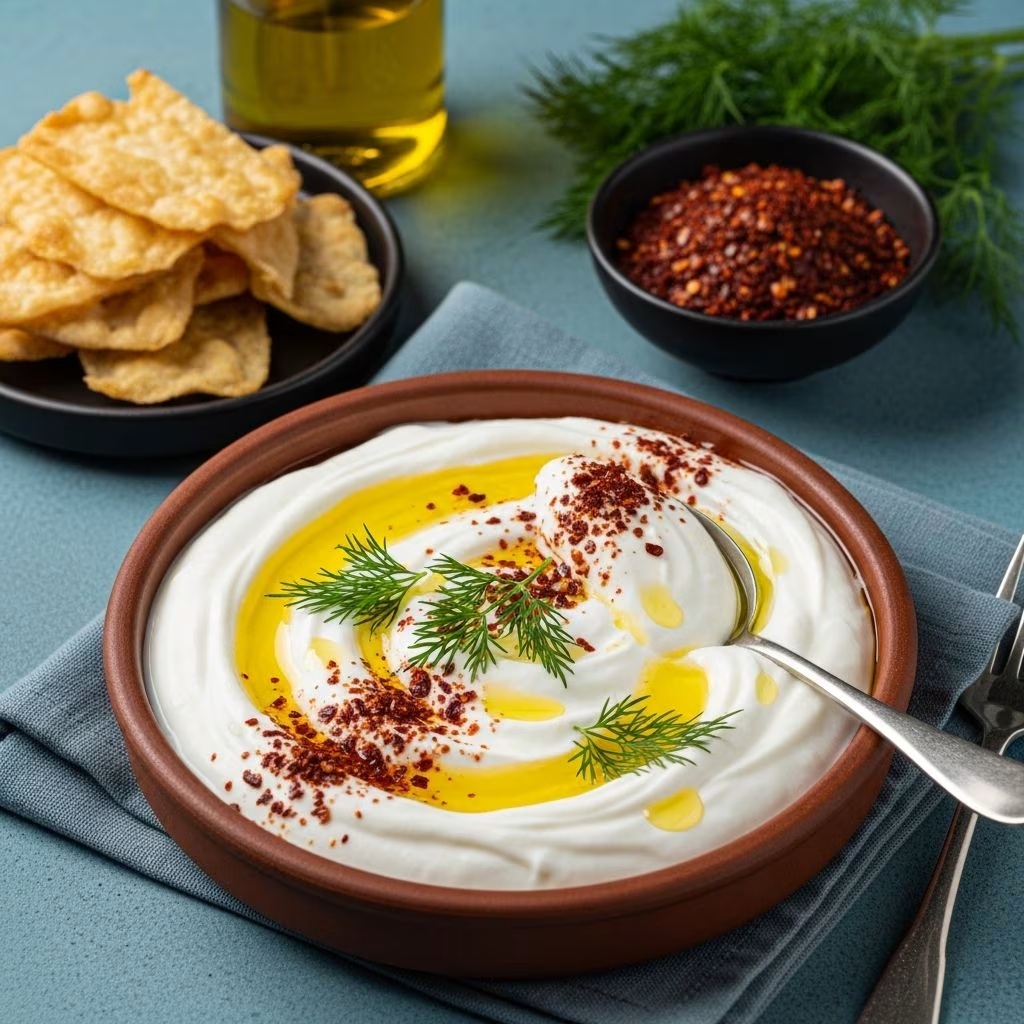
Transfer the finished haydari to a serving bowl, and create visual appeal by swirling the surface with the back of a spoon to create gentle ridges. Drizzle a generous amount of extra virgin olive oil over the top—this not only adds richness but creates an attractive appearance. Garnish with additional fresh herbs, traditionally fresh dill and mint leaves, providing color and emphasizing the fresh herbal notes.
Ingredient Comparison and Variations
| Ingredient | Traditional Choice | Alternative Options | Effect on Dish |
|---|---|---|---|
| Yogurt Base | Turkish süzme yoğurt or Greek yogurt | Labneh (Lebanese strained yogurt) | Labneh creates slightly thicker consistency and different cultural flavor profile |
| Cheese | Full-fat feta | Beyaz peynir (Turkish white cheese) | Beyaz peynir provides milder, creamier taste compared to feta’s tanginess |
| Primary Herbs | Mint and dill | Parsley, chives, or oregano | Different herbs create distinct regional variations and unique flavor profiles |
| Oil | Extra virgin olive oil | Regular olive oil | Extra virgin provides superior flavor; regular oil offers more neutral taste |
Storage and Make-Ahead Considerations
Haydari represents an ideal make-ahead appetizer for entertaining, as it can be prepared hours before service. The dip actually benefits from sitting time, allowing flavors to meld and intensify. Prepare haydari up to eight hours ahead of serving, cover it with plastic wrap, and refrigerate until needed.
The finished dip maintains peak quality in the refrigerator for up to one week when stored in an airtight container. To refresh the appearance before serving, drizzle with additional olive oil and sprinkle with fresh herbs immediately before bringing to the table. Allow the dip to sit at room temperature for approximately fifteen minutes before serving, as this enhances the perception of creaminess and makes the flavors more pronounced.
Serving Suggestions and Pairing Opportunities
The versatility of haydari makes it suitable for numerous dining occasions and culinary contexts. As a component of a traditional Turkish mezze table, serve haydari alongside other classics such as hummus, baba ganoush, and various cheeses, accompanied by olives, fresh vegetables, and warm pita bread.
Haydari serves beautifully as a condiment for grilled meats, including lamb kebabs, chicken, and fish preparations. The cooling, herbal properties of the dip provide wonderful contrast to the smokiness and richness of grilled proteins. For vegetarian occasions, offer haydari with an array of fresh vegetables—sliced cucumbers, bell peppers, radishes, and carrots all complement the dip’s flavors perfectly.
During warm months, serve haydari as an elegant appetizer at outdoor gatherings, or offer it as a sophisticated dip for entertaining guests. The dip pairs exceptionally well with warm flatbread, crispy pita chips, or even as a topping for grilled vegetables and salads.
Frequently Asked Questions About Haydari
What is the difference between haydari and other yogurt dips?
Haydari distinguishes itself through its thick, luxurious consistency achieved via strained yogurt, combined with the specific inclusion of feta cheese and Mediterranean herbs. Unlike tzatziki, which emphasizes cucumber and dill, haydari celebrates the interaction between tangy yogurt and sharp cheese. The Aegean herb profile—particularly the use of mint—also sets it apart from other regional yogurt preparations.
Can I make haydari with regular yogurt instead of strained yogurt?
While possible, regular yogurt produces a thinner consistency less true to the traditional dish. If you must use regular yogurt, strain it first using cheesecloth for several hours to remove excess whey. The resulting consistency will better approximate authentic haydari.
How much salt should I use in haydari?
Begin with approximately three-quarters teaspoon of salt per two cups of yogurt, then taste and adjust to your preference. Remember that feta cheese is already quite salty, so add other salt conservatively to avoid an overly salted final dish.
Is haydari suitable for vegetarian diets?
Yes, haydari is naturally vegetarian as it contains no meat or meat-derived ingredients. Ensure that your feta cheese is produced with vegetarian-appropriate rennet if this is a concern for your guests.
Can haydari be frozen for later use?
Freezing is not recommended, as the texture of yogurt-based dips becomes grainy and separates when thawed. Enjoy haydari fresh or within one week of preparation.
Nutritional Considerations and Health Benefits
Haydari offers nutritional advantages as part of a Mediterranean-inspired diet. The probiotics present in yogurt support digestive health, while feta cheese provides calcium and protein essential for bone health and muscle maintenance. The fresh herbs contribute minimal calories while delivering antioxidants and phytonutrients.
The use of extra virgin olive oil adds heart-healthy monounsaturated fats associated with Mediterranean dietary patterns. A typical serving of haydari contains modest caloric content while providing substantial nutritional density, making it a satisfying appetizer that doesn’t overwhelm the palate before main courses.
Regional Variations Across Turkey and the Mediterranean
While the basic formula remains consistent, haydari exhibits subtle variations across different regions. In some areas, recipes incorporate butter infused with garlic and herbs, adding richness and a different flavor dimension. Coastal regions might emphasize lemon juice more prominently, while inland areas sometimes feature additional varieties of fresh cheese.
Some Turkish families prepare haydari with finely minced fresh herbs rather than larger pieces, creating a more uniform texture and distribution of flavor. These variations reflect local preferences and available ingredients, demonstrating the adaptability of this classic preparation.
Creating the Perfect Haydari Experience
Mastering haydari opens pathways to authentic Mediterranean entertaining. The simplicity of preparation belies the sophistication of the final dish, making it an ideal choice for both weeknight entertaining and formal dinner occasions. By selecting quality ingredients, paying attention to preparation details, and understanding the role of each component, you can consistently create haydari that impresses guests and transports diners to Turkish and Mediterranean tables.
The true magic of haydari lies in its approachability—anyone with basic kitchen skills can prepare this elegant dip in minutes. Whether you’re exploring Turkish cuisine for the first time or adding authentic regional recipes to your regular entertaining repertoire, haydari deserves a place at your table.
References
- Haydari (Turkish Yoghurt Dip) — A Kitchen in Istanbul (Vidar Bergum). Accessed April 2026. https://vidarbergum.com/recipe/haydari-turkish-yoghurt-dip/
- Haydari (Turkish Yoghurt Meze) — Cook Eat World (Lee Jackson). January 28, 2022. https://www.cookeatworld.com/haydari-turkish-yoghurt-meze/
- Haydari (Turkish Yogurt Dip) — Unique Cooks. Accessed April 2026. https://uniquecooks.com/haydari-tarifi/
- Haydari Recipe — Chef Not Required (Lee-Ann Grace). Accessed April 2026. https://www.chefnotrequired.com/haydari/