Harist il Louz represents one of the most cherished dessert traditions across the Middle East, combining humble pantry staples into an elegant and deeply satisfying sweet treat. This cream of wheat cake, with its tender crumb and syrup-soaked interior, has been passed down through generations of home bakers who value both simplicity and sophistication in their culinary endeavors. The dessert’s appeal lies not only in its straightforward ingredient list but also in the careful attention required during preparation and assembly to achieve the perfect texture and flavor balance.
Understanding the Essential Ingredients
The foundation of a successful Harist il Louz begins with understanding each component’s role in creating the final product. Unlike more complex desserts that demand numerous specialty items, this cake relies on ingredients commonly found in pantries worldwide, though their quality significantly impacts the outcome.
The Grain Base
Cream of wheat and semolina serve as the structural foundation of this dessert. These finely milled grain products create a distinctive texture that distinguishes this cake from flour-based alternatives. The granular composition contributes to the cake’s characteristic tender crumb and allows for superior syrup absorption. When selecting your grain, opt for fine-quality semolina flour rather than coarser varieties, as this ensures a more delicate final texture.
Binding and Moisture Elements
Greek yogurt or regular yogurt provides essential moisture and acidity that tenderizes the crumb while contributing subtle tanginess. This dairy component works in concert with eggs or milk to create the proper batter consistency. Additionally, coconut shreds add textural complexity and a subtle nutty undertone that complements the grain’s natural flavors.
Flavoring Components
Fresh citrus zest, particularly from oranges or lemons, introduces brightness that prevents the dessert from becoming overly sweet. The volatile oils in zest provide aromatic complexity that enhances the overall sensory experience. For those seeking deeper flavor dimensions, ground spices like cinnamon or cardamom work beautifully with the grain-based foundation.
Garnish Selection
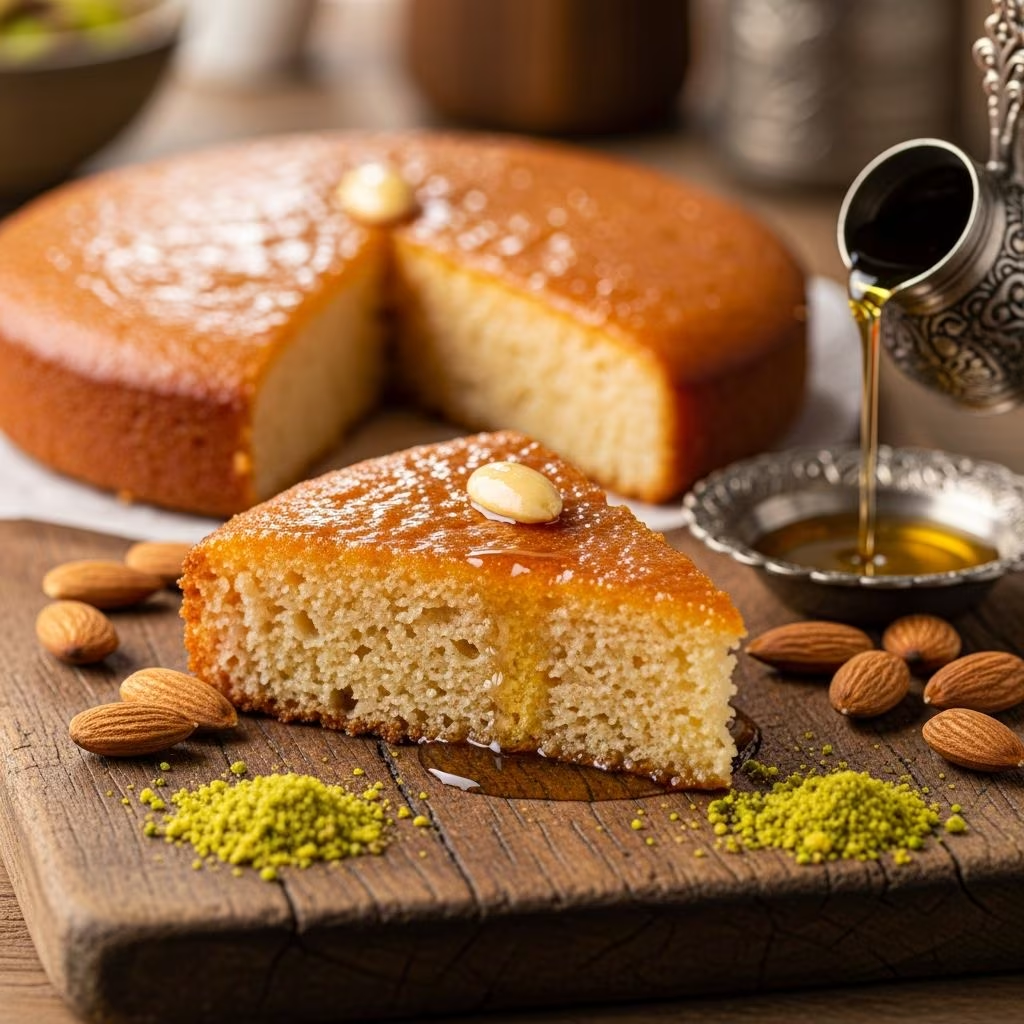
Blanched slivered almonds or walnut pieces serve dual purposes: they provide visual appeal and contribute textural contrast. Their placement atop each cake piece creates an elegant presentation while offering a satisfying crunch that plays against the cake’s soft interior.
The Syrup Foundation: Creating the Perfect Soaking Medium
The syrup represents arguably the most critical component for achieving authentic results. This concentrated sugar solution, perfumed with citrus and optional floral notes, transforms the cake from a simple semolina sponge into a memorable dessert experience.
Basic Syrup Formulation
The traditional ratio combines three parts sugar with two parts water, bringing these ingredients to a rolling boil before adding fresh lemon juice. This high sugar-to-water ratio creates a syrup with body and substance that penetrates the cake effectively. The lemon juice serves both to prevent crystallization and to add brightness that cuts through the dessert’s sweetness.
Advanced Syrup Variations
Some regional preparations incorporate rose water or orange blossom water for floral aromatics. These optional additions should be used sparingly—approximately one teaspoon—to avoid overwhelming the grain’s delicate flavor. Orange juice can replace a portion of the water for a citrus-forward version that particularly complements the cream of wheat base.
Temperature Dynamics and Absorption
Professional bakers emphasize a critical distinction: the syrup must maintain room temperature while the cake emerges directly from the oven. This temperature differential facilitates optimal syrup absorption into the warm cake structure. When both components cool to the same temperature, the syrup sits superficially rather than penetrating throughout, resulting in an overly sweet exterior and dry interior.
Preparation Methodology
Ingredient Combination Sequence
Begin by combining all dry ingredients—semolina, baking powder, sugar, and any spices—in a substantial mixing vessel. In a separate container, blend wet components including yogurt, melted butter, milk, and citrus zest until well incorporated. The wet mixture then combines with dry ingredients through gentle mixing, creating a batter that should reach the consistency of thick pudding rather than pourable cake batter.
Pan Preparation
Brush your baking vessel with tahini sauce rather than conventional baking spray. This traditional approach prevents sticking while imparting subtle sesame undertones. Use a rectangular 13 by 9-inch pan for standard-sized cakes, which allows for proper cutting and even baking.
Pre-Baking Cutting Technique
Before placing the cake in the oven, use a wet knife or specialized cutting tool to score the surface into diamond or square shapes. This preliminary cutting serves multiple purposes: it allows the syrup to penetrate each individual piece thoroughly, creates elegant presentation divisions, and facilitates serving. The wet knife prevents sticking and maintains clean cut lines.
Almond Placement
Position a blanched almond or walnut piece in the center of each pre-cut square. This decoration should occur before baking commences, allowing the nuts to settle into the cake surface during the baking process rather than appearing as afterthoughts.
Baking Process and Timing
Preheat your oven to 350 degrees Fahrenheit (176 degrees Celsius). Place the cake on the bottom oven rack, which ensures even heat distribution and prevents the top from browning excessively before the interior bakes through. Bake for approximately 30 minutes, monitoring for the edges to develop a golden-brown color while the center remains pale.
At the halfway point—around the 15-minute mark—remove the cake from the oven and brush the entire surface with melted butter. This mid-bake basting enriches the exterior and promotes additional browning. Return the cake to the oven to complete the baking process.
For enhanced browning and slightly crisped edges, transfer the fully baked cake to a broiler setting for 2-3 minutes, watching constantly to prevent burning. This technique creates textural contrast between the cake’s crisp perimeter and tender center.
Critical Cooling and Syrup Application
Allow the baked cake to cool for approximately 5 minutes before syrup application. The residual heat at this point remains sufficient for proper absorption without risk of syrup degradation. Using a measuring cup or ladle, pour the room-temperature syrup over the entire cake surface, distributing it evenly across all cut sections.
The syrup absorption process continues for several minutes as the warm cake gradually absorbs the liquid. Resist the temptation to apply additional syrup immediately; allow proper soaking time before deciding whether supplementary application is warranted. The cake requires room temperature before serving, allowing the crumb to firm slightly while the syrup fully integrates.
Ingredient Quality Considerations
| Ingredient | Quality Indicator | Impact on Final Product |
|---|---|---|
| Semolina Flour | Fine, uniform grain; golden color | Determines crumb texture and syrup absorption rate |
| Yogurt | Full-fat, creamy consistency | Contributes moisture and tenderness to crumb |
| Butter | Unsalted, pale yellow color | Affects cake richness and browning characteristics |
| Almonds | Blanched, uniform size | Provides visual appeal and textural contrast |
| Fresh Citrus | Heavy, fragrant zest | Introduces aromatic brightness throughout cake |
Troubleshooting Common Issues
Dry Interior Despite Syrup Application
This typically results from applying syrup to a completely cooled cake. The solution involves ensuring adequate pre-cutting, which creates channels for syrup penetration. Additionally, verify that your syrup has achieved the proper consistency—it should flow freely but not be watery.
Overly Dense Texture
Dense crumb usually indicates insufficient leavening or overmixing of the batter. Verify that your baking powder remains active and hasn’t expired. Mix ingredients only until just combined, avoiding excessive agitation that develops gluten networks unsuitable for this tender cake.
Inadequate Browning
If the cake emerges from the oven pale and underbaked, increase oven rack height slightly for your next attempt, allowing more direct heat access to the top surface. Alternatively, increase baking time by 5-minute increments while monitoring closely.
Storage and Make-Ahead Strategies
Harist il Louz maintains excellent quality for 3-4 days when stored in an airtight container at room temperature. The syrup-soaked cake actually improves slightly as it sits, with flavors melding and the texture becoming increasingly tender. For extended storage, refrigerate in an airtight container for up to one week, bringing to room temperature before serving for optimal flavor expression.
The cake can be prepared through the pre-syrup stage 24 hours in advance. Wrap the cooled, unsyruped cake tightly and store at room temperature. Apply syrup immediately before serving for maximum freshness and optimal syrup absorption.
Regional Variations and Adaptations
Throughout the Middle East, bakers incorporate regional preferences into their Harist il Louz preparations. Some versions emphasize coconut through increased quantities, while others feature ghee instead of butter for enriched flavor profiles. Egyptian preparations often incorporate ground pistachios as garnish alongside or instead of almonds, while Lebanese versions frequently feature rose water in both the syrup and occasionally in the cake itself.
For dietary considerations, the egg-free versions using increased milk and yogurt produce excellent results, relying on baking powder and baking soda for proper rise. Coconut milk can replace dairy milk for those with lactose sensitivities.
Serving Suggestions and Pairings
Harist il Louz pairs beautifully with strong coffee or tea, the beverages’ bitterness providing essential balance to the dessert’s sweetness. Traditional service involves cutting the cake into individual portions directly from the baking vessel, maintaining the whole almond on each piece. A drizzle of honey or additional syrup can accompany each serving for those preferring enhanced sweetness.
For entertaining, present the cake at room temperature on a decorative platter, highlighting the uniform cuts and almond garnishes. Serving alongside unsweetened yogurt or crème fraîche offers guests the option to temper the dessert’s richness.
Frequently Asked Questions
Can I prepare this cake without eggs?
Yes, egg-free versions rely on additional baking powder and the binding properties of yogurt and milk. These adaptations produce equally tender results, though the crumb structure may be slightly less delicate than traditional versions.
What is the ideal syrup consistency?
The syrup should flow freely from a spoon but coat the spoon lightly when cooled. It should never be runny like simple syrup, nor should it be thick and viscous. Proper consistency ensures even distribution and adequate absorption without leaving pools of liquid.
Why must I use room-temperature syrup with hot cake?
This temperature differential creates optimal absorption conditions. The heat opens the cake’s structure while the cool syrup firms the exterior surface, creating the ideal condition for syrup penetration without destroying the cake’s structure through thermal shock.
Can I make this without tahini?
While tahini provides traditional flavor and anti-sticking properties, a light coating of neutral oil or butter works as an acceptable substitute. The resulting cake will lack the subtle sesame undertones but will bake successfully.
References
- Best Namoura Cake Recipe – AKA Harissa Dessert — Palestine in a Dish. Accessed April 7, 2026. https://palestineinadish.com/recipes/harisseh-هريسة/
- Cream of Wheat Cake | Semolina Cake – Episode 520 — The Cooking with Nana. https://www.youtube.com/watch?v=SP3xyiS41CY
- Harissa Recipe — Chef in Disguise. November 29, 2015. https://chefindisguise.com/2015/11/29/harissa-recipe/